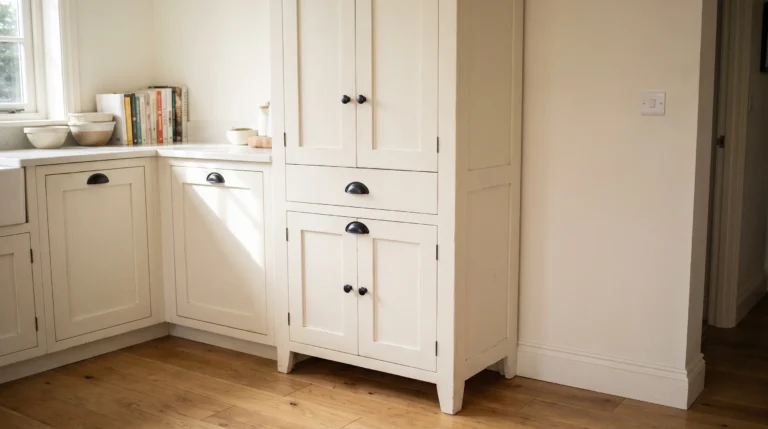
Gray Kitchen Cabinets: Choosing the Right Shade, Pairings and Finish
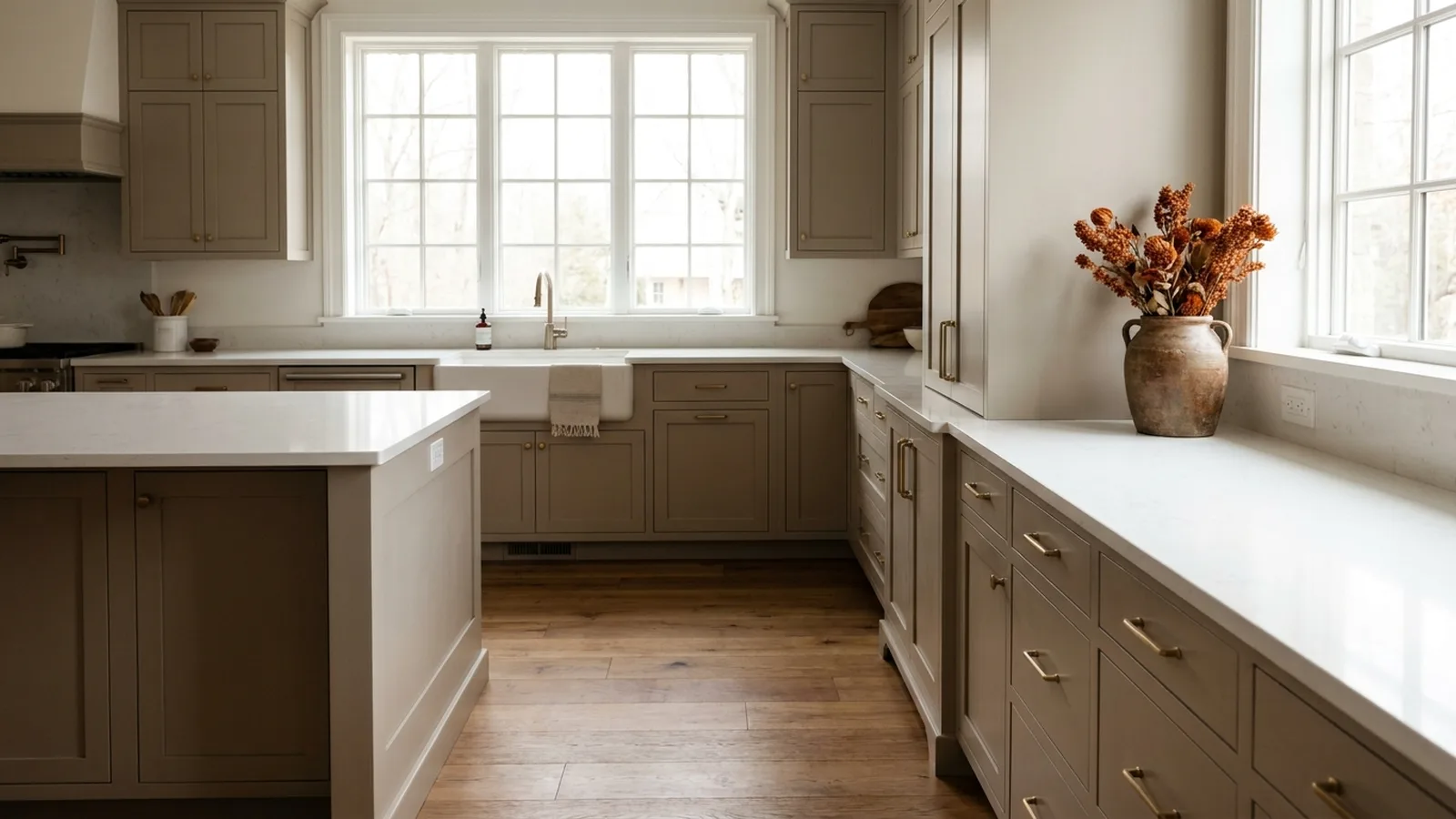
Two numbers decide whether gray kitchen cabinets look crisp or flat. The first is the paint’s light reflectance value, or LRV, which runs from 0 (absorbs all light) to 100 (reflects all of it). The second is the undertone, the hint of blue, green or brown that tells you if a gray feels cool or warm. Get both right and the room feels calm and finished. Get them wrong and you end up with the cold, office-furniture look that shows up in so many homeowner complaints.
This guide walks through which gray to choose for your kitchen, how light changes it, what belongs next to it on walls, counters, floors and hardware, what it costs, and whether it will date your kitchen. If cabinets are only one part of a bigger plan, our kitchen remodeling guide covers the wider budget and sequence.
Short answer
- Pick a mid-light warm gray or greige if you want the safest result. Go cooler or darker only when your light and fixed finishes support it.
- Check the undertone against your floor and countertop before you commit, and test a large sample for 24 to 48 hours.
- Avoid gray on every surface. Bring in at least one warm material, such as wood or brass.
Are gray kitchen cabinets still in style?
Yes, but the cool, blue-leaning "flipper gray" of the 2010s is what feels dated. Warm grays and greiges paired with wood, metal and a touch of color still look current.
The numbers give some context, though they are dated. In Houzz’s 2022 US Kitchen Trends Study, about 10 percent of renovating homeowners chose gray cabinets, compared with roughly 2 in 5 for white and 19 percent for wood. I did not verify a newer figure, so treat this as a 2022 snapshot. It shows gray as a minority pick next to white, yet still a regular one.
The loudest worry on homeowner forums is the "millennial gray" label. The counterpoint repeated just as often is that nobody can predict what looks dated in ten years, so choosing a color you like beats chasing a forecast. Back in 2018, a National Association of Realtors piece on "white kitchen fatigue" already expected more neutrals like gray and blue to take share from white. My view: the shade and the supporting materials date a kitchen far faster than the color family does.
Which gray is best for kitchen cabinets?
For most kitchens, a mid-light warm gray or greige is the safest pick because it holds up under both warm and cool light. Benjamin Moore Revere Pewter is the classic example. A cooler gray works best in a kitchen with strong, warm daylight where you want a crisper, more modern look.
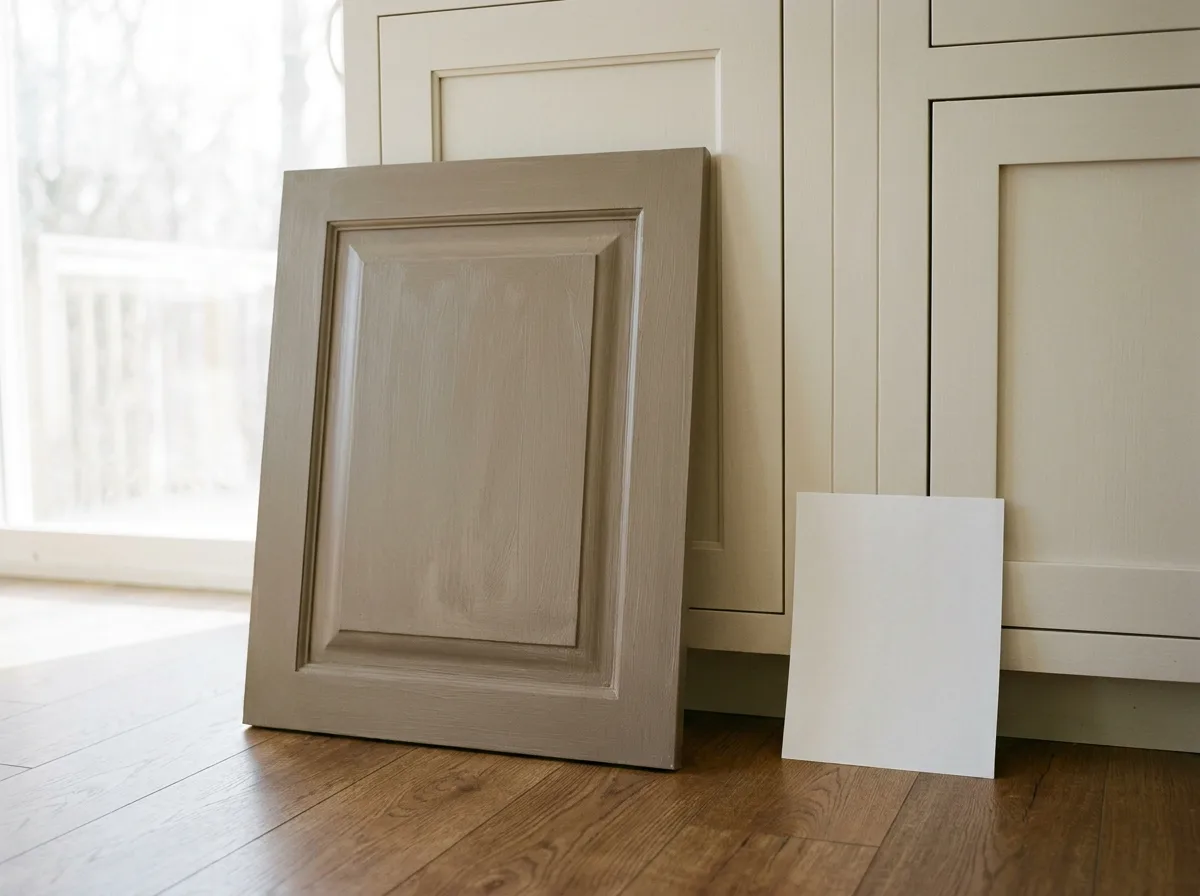
Warm gray, cool gray and greige
A warm gray carries a bit of brown or beige. A cool gray carries blue, green or purple. Greige sits between the two and tends to be the most forgiving. Benjamin Moore lists Revere Pewter at an LRV of 55.05 and describes it as a color that bridges warm and cool. Sherwin-Williams Agreeable Gray is another widely used greige. Chelsea Gray from Benjamin Moore is a deeper gray with a slight brown hint, which keeps it from feeling cold.
Cool grays aren’t wrong. They just need help. Homeowners who dislike them usually describe a "jail cell" or "filing cabinet" effect, and it almost always happens when cool gray cabinets meet cool gray walls and a gray floor.
How to match gray cabinets to your fixed finishes
You can repaint a wall in an afternoon, but you probably can’t change the floor or countertop. So treat those as the fixed items and match the cabinet undertone to them. Put a white sheet of paper next to your floor, then next to the gray sample, and ask what each one leans toward.
Say your oak floor has an orange cast. A blue-leaning gray beside it will make the floor look more orange and the gray look icier. A warm gray or greige calms both. The reverse also holds. If your countertop has cool gray veining, a very warm greige can look muddy next to it.
Light, medium or dark gray kitchen cabinets?
Light gray gives a brighter, larger-feeling kitchen, medium gray is the forgiving everyday option, and dark gray brings drama when you have plenty of light. Darker cabinets absorb light, so a small or dim kitchen with dark gray kitchen cabinets can feel smaller than it is.
The table below uses rough working bands, not an official standard. Only the two example LRVs come from Benjamin Moore’s published color data.
| Depth | Rough LRV band | Example | Best for |
|---|---|---|---|
| Light gray | About 60 and up | A pale greige | Small or north-facing kitchens |
| Medium gray | About 35 to 60 | Revere Pewter (55.05) | Most kitchens, most undertones |
| Dark gray | Under about 35 | Chelsea Gray (23.33) | Bright, large rooms and islands |
A practical rule: if you have fewer than two decent windows, stay at or above the middle band. Reserve the dark gray for an island, a tall cabinet run or one wall of lowers.
How does lighting change gray cabinets?
Light changes gray more than almost any other color, so gray kitchen cabinets can look like three different colors in one day. North-facing windows give cooler, bluer light that can make a gray read colder. South and west light is warmer and can pull a gray toward beige, especially in late afternoon. Your bulbs matter too, so check the sample at night.
Bulbs labelled warm white, usually about 2700K, push gray toward cream. Bulbs labelled cool white, often around 4000K, keep it crisp and can emphasize blue undertones. Check the label on your own bulbs. Pick one color temperature for the whole kitchen so the cabinets don’t shift from fixture to fixture.
A Quora answer on this topic gave a handy rule: warm, lighter grays suit dim or north-facing rooms, while cooler or deeper grays suit rooms with strong warm light. I’d add that under-cabinet lighting counts, too. Plug-in LED strips are a low-effort option, but hardwired fixtures and new circuits call for a licensed electrician, and permit rules vary by city and state.
What color walls go with gray kitchen cabinets?
Warm white, cream and soft off-whites are the easiest walls to pair with gray cabinets. They brighten the room and let the cabinets stand out. Benjamin Moore White Dove is one example of a soft warm white that suits this job. If you want color, muted greens, blue-greens and navy accents work well.
Here is how the common choices compare:
- Warm white or cream: the safest option, and it warms up cool grays.
- Pale yellow or light butter tones: a gentle warmth that works with mid-gray and darker cabinets.
- Sage or blue-green: earthy and calm, and best kept muted rather than bright.
- Navy or deep green: best on an accent wall or the island, not everywhere.
- Light gray walls: only if the cabinets are a clear step lighter or darker and share the same undertone.
Quora advice also leans on testing: take your wall color samples to the cabinet door itself. Hold each paint chip against a sample door and pick the shade that looks like a sibling, not a twin.
What countertops and backsplash go with gray cabinets?
White or off-white quartz is the dependable choice, and marble-look stone also suits gray beautifully. Butcher block adds warmth. Black or very dark counters work well with light gray cabinets. For backsplash, white subway tile with gray grout, marble-look tile or plain glass keeps things clean.
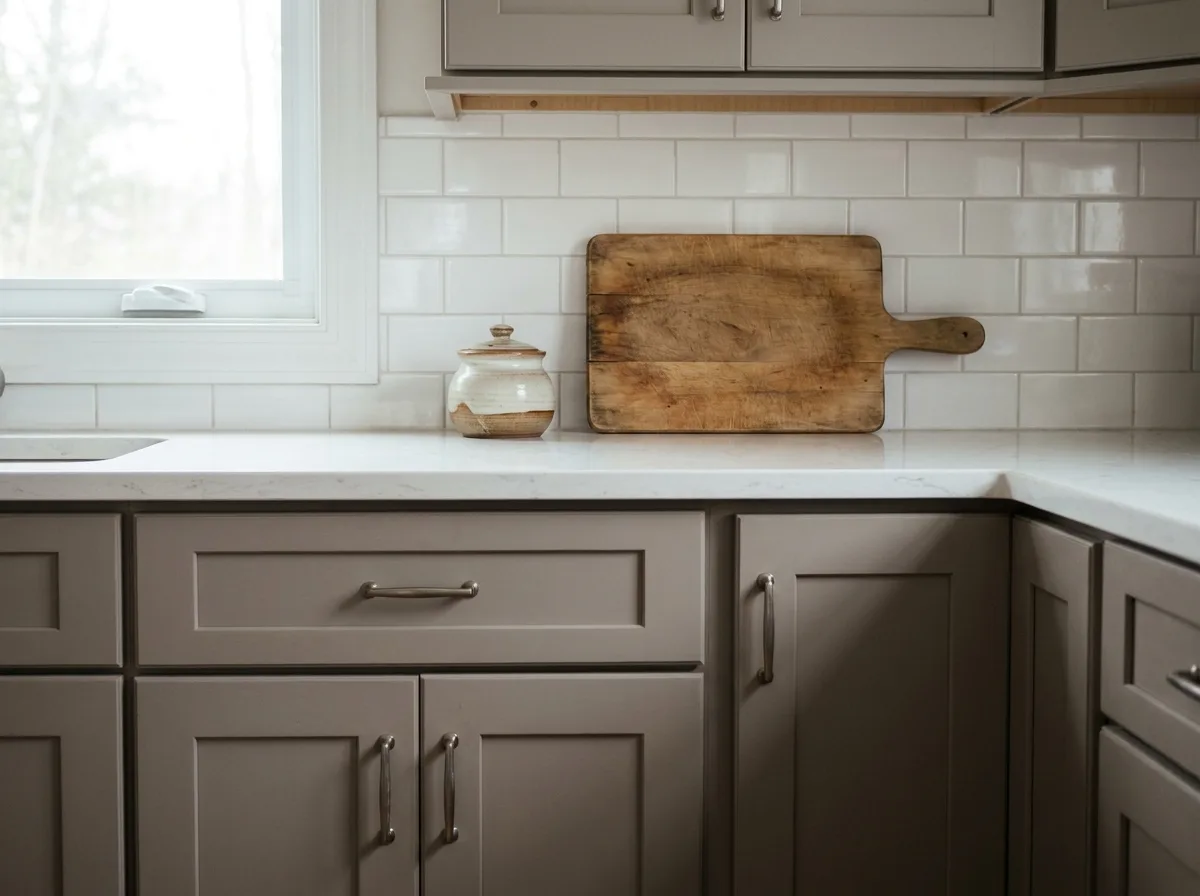
Real marble looks lovely but etches from acids like lemon juice and wine, so many homeowners choose a quartz that mimics it. Pick a counter with a visible undertone match to your cabinet. A warm gray with a stark blue-white counter can look mismatched.
If your counters have strong veining, keep the backsplash quiet. If the counters are plain, a patterned or textured backsplash is your chance to add interest. One busy surface per kitchen is a good limit.
What flooring works with gray cabinets?
Wood floors in medium to warm brown tones are the easiest match. They give gray cabinets contrast and warmth. Dark brown floors suit light and medium gray cabinets, and lighter oak floors work best with warm grays and greiges. Avoid gray cabinets, gray walls and gray floors all together.
Contrast matters more than a perfect match. Quora contributors pointed out that light gray cabinets look best when the floor and counters differ visibly in tone. If the floor is brown with a red or orange cast, go warm. If it’s a neutral tile, you have more freedom.
Painted, stained or glazed gray cabinets?
Painted gray is the most common and offers the widest color choice. Stained gray lets wood grain show through, which hides wear better. Glazed finishes add depth and highlight the edges of doors, giving a slightly aged look. How much character and maintenance you want should settle it.
| Finish | Look | Watch for |
|---|---|---|
| Painted | Smooth, solid, most shade choices | Chips at edges and near handles |
| Stained | Gray wood with visible grain | Open-grain woods like oak show texture strongly |
| Brushed glaze | Soft shadowing in corners and trim | Looks traditional, not minimalist |
| Rub-through | Worn edges, a vintage feel | Intentional wear can read as damage to some |
Door style shapes the mood as much as the color. A Shaker door with a simple recessed panel is the default for gray and fits traditional and transitional kitchens. A flat-panel door pushes the look toward modern, especially in a deeper gray. Ornate profiles tend to work better in warm, lighter grays.
Should you do two-tone gray and white cabinets or a gray island?
Two-tone is a smart option when you want gray without committing the whole room. Common splits are gray lowers with white uppers, or a gray island inside a white perimeter. Both lighten the room, ground it visually and hide the scuffs lowers pick up. They also hedge your bets on style.
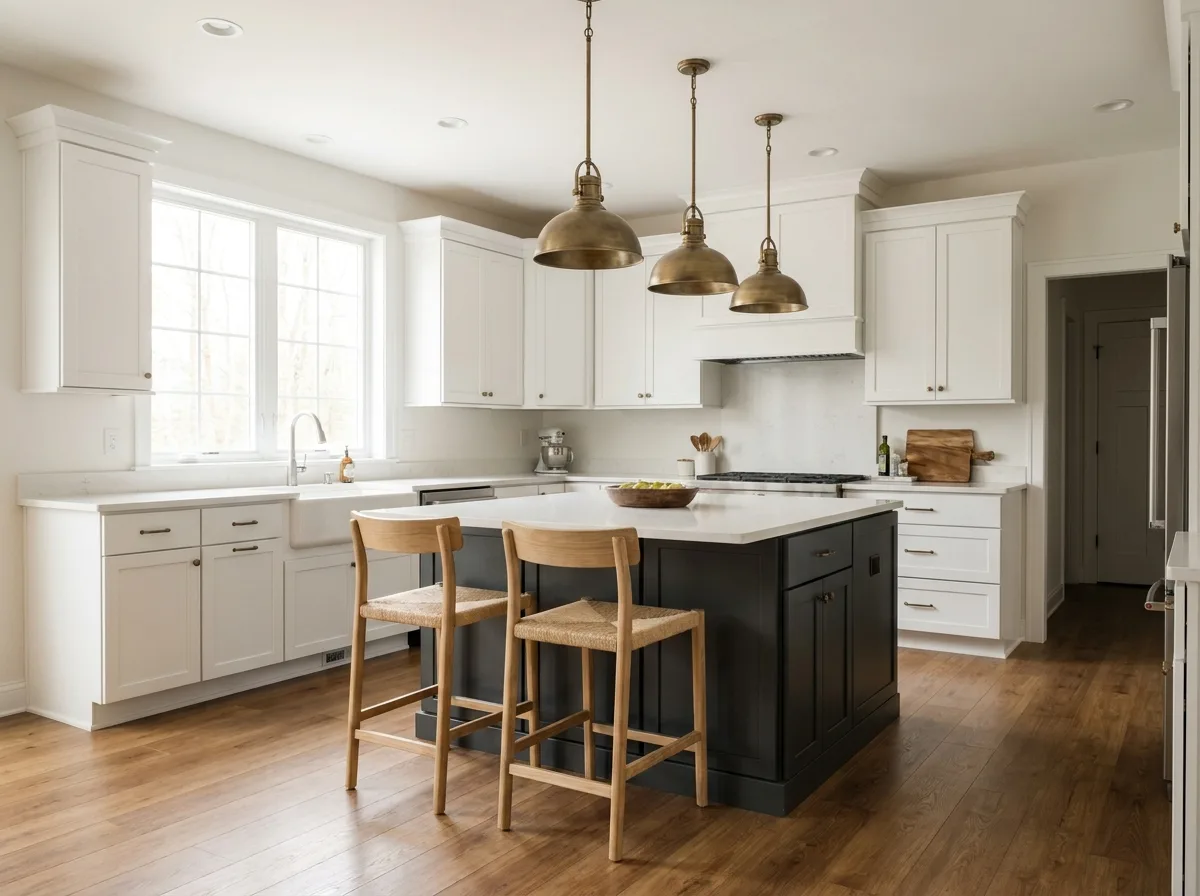
Say you have 12 feet of lowers and 12 feet of uppers. Painting just the lowers gray gives you half the color and the part of the kitchen that takes the most daily abuse. A contrasting island in dark gray makes a single focal point. A tall run for a hidden fridge or a pantry cabinet in the same gray also looks intentional. Our guide to pantry cabinet styles shows how those tall units fit into a layout.
Keep the gray and white undertones consistent. A cool gray island beside warm white uppers looks like two different kitchens.
What hardware looks best on gray cabinets?
Brass and gold hardware warm up gray and are the most popular way to keep it from feeling cold. Matte black gives a sharper, modern edge. Brushed nickel is a safe, quiet option. Match the metal to your faucet and light fixtures so the finishes feel related, not random.
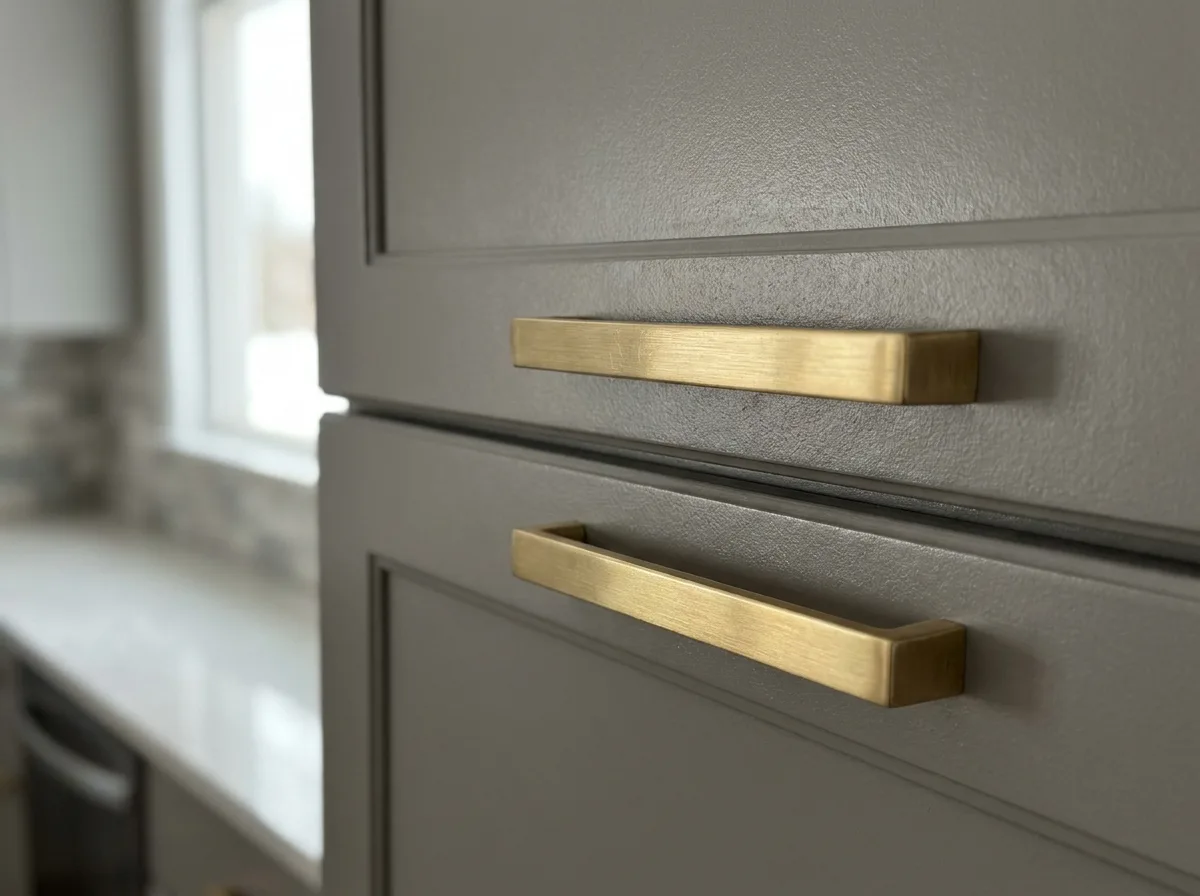
Homes and Gardens editors name swapping hardware as one of the cheapest ways to change how gray cabinets feel. Before you buy, measure the existing hole spacing. Pull sizes vary, so measure your own center-to-center spacing, because matching it saves you from filling and redrilling doors. Cool grays with chrome can read icy, so test a pull against the actual door first.
Do gray cabinets show dirt and chips?
It depends on the depth and sheen. Mid-tone, satin gray hides everyday dust and light splashes better than very dark or very light cabinets. Very dark grays show dust, fingerprints and water spots. Light grays show grease near the stove. Painted lowers can chip near handles and toe kicks.
White shows dirt too, and homeowners argue about which color is easier. A dark gray island in a house with kids and pets will need regular wipe-downs. A medium gray with a satin sheen is the easiest to live with.
To limit chips, ask whether the finish is factory-applied and catalyzed or brushed on, since factory finishes often wear better, but ask the maker. Keep a small jar of the exact paint, labeled with brand, color name and sheen, for touch-ups.
How much do gray kitchen cabinets cost?
Online ready-to-assemble (RTA) retailers typically list gray kitchen kits for basic layouts from about $1,450 to just over $5,000, based on listings from vendors such as CabinetSet and RTA Cabinet Supply. Single cabinets on sites like Kabinet King commonly run from under $100 to over $400. Semi-custom and custom cost more.
What moves the price:
- Material: plywood boxes cost more than particleboard or MDF, and solid wood doors more than engineered ones.
- Door style and finish: a flat slab is cheaper than a multi-piece profile, and a factory finish costs more than raw.
- Kitchen size and layout: corners, tall units and an island add up fast.
- Assembly and install: RTA kits save money up front, but you pay with your own assembly time or a contractor’s.
- Extras: soft-close hinges, drawer inserts and trim.
Repainting existing cabinets can cost much less than replacing them, but costs depend on prep work, finish type and whether you hire a pro. Get quotes to compare. Retailers such as Home Decorators at Home Depot and Cabinets.com offer cost estimators. For the bigger picture, see how cabinets fit into a full kitchen remodeling budget.
How do you test a gray before you buy?
Test it in your own kitchen, at full size, over at least a day. Order a sample door or paint a large board, put it beside your floor and countertop, and look at it morning, noon and night. A tiny chip under store lights tells you very little.
- Get the biggest sample you can. A full door is ideal, and a board at least a foot square is the minimum.
- Hold it vertically against the cabinet wall, since a flat sample on a counter reads differently.
- Place it next to the floor, countertop and backsplash samples.
- Check it in morning light, midday, evening and under your actual bulbs.
- Leave it 24 to 48 hours, then compare two finalists, not six.
What mistakes should you avoid?
The costliest mistakes are choosing from a screen, ignoring undertones and letting gray cover every surface. Fix them with a physical sample, a check against the floor and counter, and at least one warm material. Here are the usual slip-ups and the fix for each.
- Picking from a photo. Screens shift color. Fix: sample in person.
- Ignoring the undertone. Fix: compare to the floor with a white sheet of paper.
- Gray on gray on gray. Fix: add wood, brass or a muted green.
- Choosing the trend shade. A very cool blue-gray ages fastest. Fix: lean greige.
- Skipping prep when painting. Wrong paint over old oil-based finishes can peel, as one Quora answer warned. Fix: degrease, scuff, prime with a bonding primer and use a cabinet-grade paint.
- Forgetting the hardware plan. Fix: choose pulls with the cabinet color, not after.
Is gray a smart choice for resale?
Gray is a safe, broadly appealing neutral, particularly in medium, warm tones. White is still the dominant cabinet color in resale talk, and a bold dark gray can feel like personal taste to some buyers. Treat gray as a neutral that photographs well, not a guaranteed value boost. Local markets differ, so ask a local agent.
If you plan to sell within a few years, lean toward a light to medium warm gray with classic hardware. If you plan to stay, pick the shade you will enjoy daily. No reliable study shows a precise resale premium for gray, so ignore anyone quoting one.
Gray Kitchen Cabinets FAQ
Are grey kitchen cabinets a good idea?
Yes, if you choose the right shade for your light and fixed finishes. Grey kitchen cabinets are neutral, flexible and pair easily with wood, white and metal. They go wrong when the undertone fights your floor or when gray covers every surface. Test a large sample before you order.
What color goes best with grey kitchen cabinets?
Warm white and natural wood are the most reliable partners, with brass or matte black hardware to finish. For color, sage green, blue-green and navy work well in small doses. The goal is contrast in tone and texture so the gray doesn’t blend into a flat, single-note room.
What is the most popular grey for kitchen cabinets?
No public ranking settles this. Benjamin Moore Revere Pewter and Sherwin-Williams Agreeable Gray are two widely used examples. Both are warm, mid-tone grays or greiges. Popularity is a poor guide anyway, since your light and floor decide what works.
Are gray cabinets warm or cool?
Both exist. Gray is a mix of black and white with a tint, so the tint decides the feel. Blue, green or purple tints read cool. Brown or beige tints read warm. Greige sits between. Compare any sample to a plain white sheet to see which way it leans.
Do gray cabinets go with brown floors?
Yes. Brown floors are one of the best partners because the two tones contrast naturally. Warm grays suit orange or red-toned wood, and most grays suit dark brown. Avoid a gray that looks purple or very blue next to a reddish brown floor.
Are dark gray cabinets hard to keep clean?
They need more frequent wiping than mid-tone cabinets because dust, fingerprints and water spots show clearly. A satin sheen and a soft microfiber cloth make upkeep easy. Matte dark finishes can hold marks, so wipe spills quickly and avoid abrasive cleaners that burnish the surface.
Can I paint existing cabinets gray?
Often yes, when the doors are solid and the finish is sound. Clean off grease, sand lightly, prime with a bonding primer and use a cabinet-grade paint. In a home built before 1978, test for lead paint before sanding and hire a lead-safe certified pro if it’s positive. Rules vary by location.
Can gray cabinets work in a small kitchen?
They can, if you stay light. A pale warm gray with warm white walls and good lighting keeps the room open. Skip dark gray on every wall of cabinets, and consider going gray only on the lowers or the island to keep the space airy.
Do gray cabinets go with stainless steel appliances?
Yes. Stainless is a cool neutral and sits comfortably beside most grays. Warmer grays soften its coldness, while cool grays plus stainless can feel clinical. Add wood or a warm metal accent to balance the two.
Is matte or satin better for gray cabinets?
Satin is the better all-round choice. It resists marks and wipes clean without showing every flaw. Matte looks soft and modern but can show scuffs and grease. Semi-gloss cleans easily yet highlights surface imperfections, so it demands excellent prep.
The bottom line on gray kitchen cabinets
The opening question was how to keep gray kitchen cabinets from looking flat and cold. The answer is two checks: an LRV that suits your light and an undertone that suits your floor and counters. A warm, mid-tone gray or greige gets you there for most kitchens.
Your next step is simple. Narrow the list to two shades, order large samples and live with them for a day or two in your own light. Then fold the order into your overall kitchen budget so the cabinet choice isn’t made in isolation.
Which part of your kitchen is the fixed item that will decide your gray: the floor, the counter or the light?