Lemon Tree Ideas and Styles That Actually Survive Winter
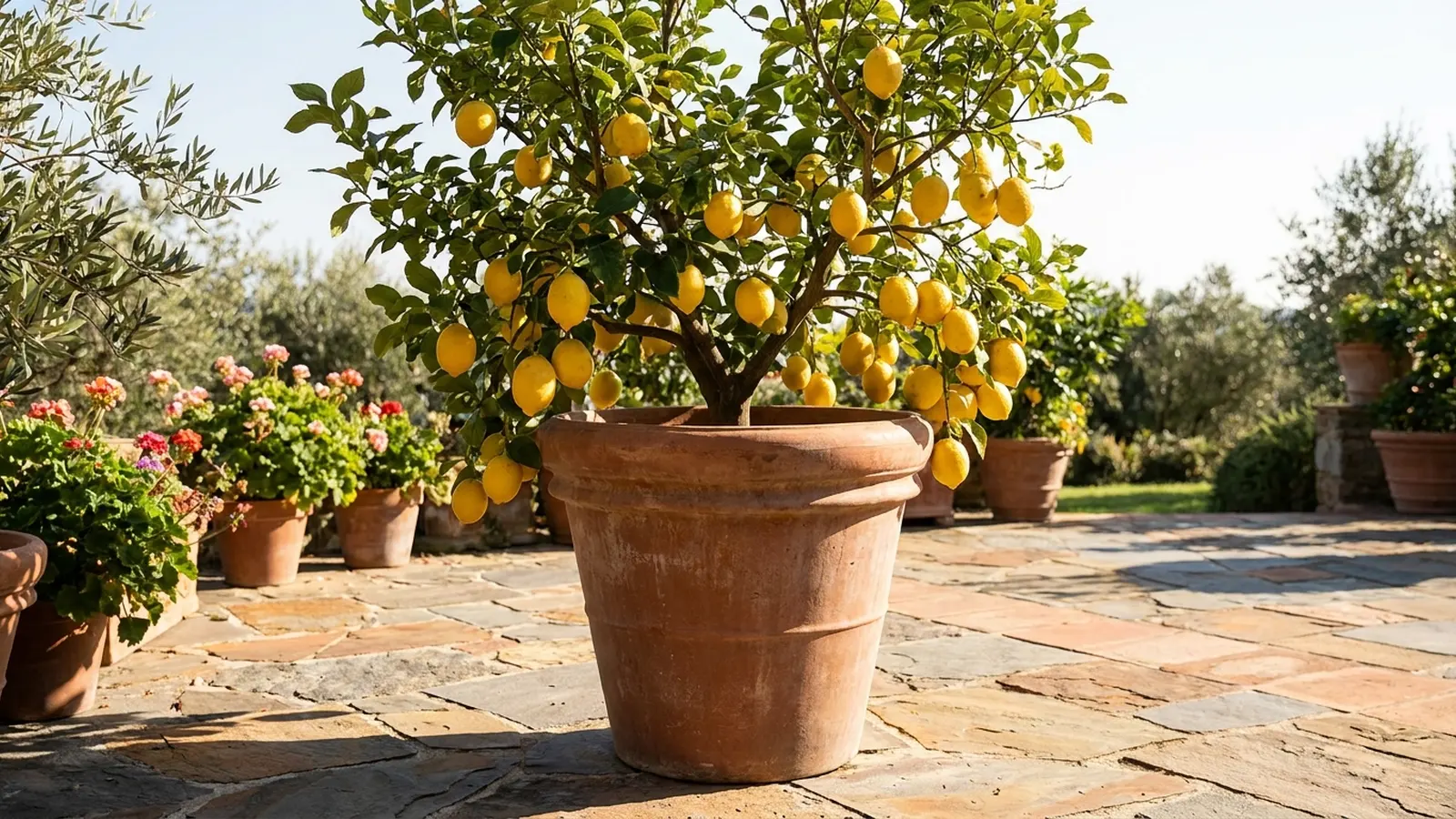
A small sapling is easy to carry home. A 30-gallon barrel of wet soil weighs more than most people want to lift. That gap is where the average lemon tree story goes wrong. Say you live in Ohio and buy a glossy potted lemon tree in May. It looks great on the patio through September. Then October brings a forecast of 28°F, the pot is heavier than you remembered, and the only warm spot is a dim hallway. By January the leaves are dropping like confetti.
Bad luck? Not really. It’s a planning problem, and you can solve it before you buy anything. The real question isn’t "can I grow one." It’s "what does my coldest night allow, and which style fits that limit?" This guide starts with winter and works backward to variety, pot, placement and care. It’s one piece of choosing trees for your yard, alongside a similar container-and-winter plan for an olive tree.
Executive Summary
You’ll leave with a clear setup for your climate: in the ground, in a wheeled barrel, or in a pot that moves between a porch and a sunny window. The key insight is that winter handling decides success far more than variety does. A Meyer, a lemon-mandarin hybrid commonly reported to handle cold better than true lemons, in a container on casters beats a "better" lemon planted in the wrong spot.
You’ll also get a placement and style menu, an honest cost picture for the tree, pot and lights, and a leaf-drop diagnosis that starts with one cheap test. Pests, pruning and feeding are covered briefly, because they matter less than the first three choices.
The biggest objection is usually "I’m in a cold zone, so why bother." Fair. Plenty of northern growers keep these trees alive, and the trick is a cool, bright, frost-free spot instead of a warm living room. In my opinion, weight, not skill, is the usual limit.
What Is a Lemon Tree and How Big Does It Get?
A lemon tree (Citrus limon) is a thorny, evergreen citrus that flowers and carries fruit at the same time. NC State Extension lists mature size at 10 to 20 feet. Dwarf grafted trees stay far smaller, and containers cap the size further. Plan for the full-grown tree if you plant in the ground, because it will not stay a sapling.
UF/IFAS makes the same point about buildings: citrus becomes a large tree, so give it room from walls, eaves and walkways. Most nursery trees are grafted onto a rootstock, which is why a seed-grown tree can take years to fruit and may never match its parent.
The blossoms are a bonus. They are fragrant, which makes a lemon tree near a seating area feel like a design choice, not just a crop.
Which Lemon Tree Variety Fits Your Yard or Patio?
Pick Meyer for pots and cooler climates, Eureka for warm yards, Lisbon for big ground-planted trees, and Pink Variegated Eureka when you want a showpiece. Meyer is a lemon-mandarin hybrid, so it tastes milder and is commonly reported to tolerate cold better than true lemons. Eureka and Lisbon taste sharper and suit mild-winter regions.
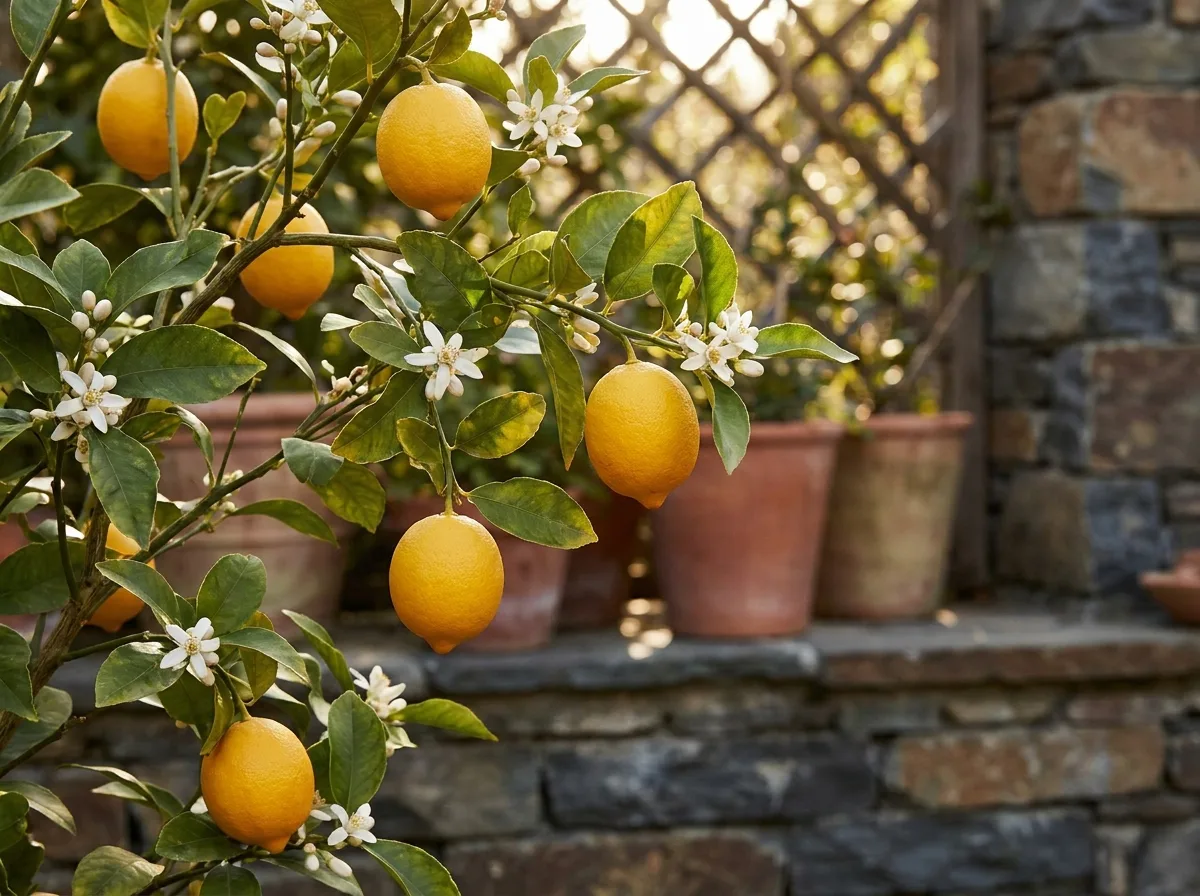
Here’s the contrarian bit: Meyer isn’t a "true lemon," and plenty of cooks prefer that. If you want tart, grocery-store flavor, go Eureka and accept the colder-weather risk.
| Variety | Best for | Honest trade-off |
|---|---|---|
| Meyer | Pots, zones with cold snaps | Milder, sweeter fruit |
| Eureka | Warm yards, patios | Sensitive to frost |
| Lisbon | Large in-ground trees | Needs room, like most lemons |
| Pink Variegated Eureka | Ornamental focal point | Costs more, same frost limits |
| Ponderosa | Novelty giant fruit | Mostly a novelty, so check size before buying |
Can You Grow a Lemon Tree Where Winters Freeze?
Yes, but only in a container you can move, unless your winters stay mild. Use your coldest expected night as the rule. Frost-free winters allow ground planting. Occasional light frost calls for protection. Hard freezes mean a pot that comes under cover. Check your USDA zone and local extension office for exact limits.
Exact hardiness numbers vary by source, and the most-quoted figures online are repeated without citations, so treat any single number as a rough guide. One Pacific Northwest gardener reports a mature potted Meyer riding out mid-teens nights, which is an anecdote, not a plan.
A simple decision rule:
- Winters rarely frost: plant in the ground, with frost cloth like Agribon ready.
- Short, light frosts: barrel on wheels, parked against a south wall.
- Hard freezes every year: pot plus a cool, bright, frost-free spot, such as a sunroom, garage with a window, or covered porch.
A common version of this mistake: a homeowner in zone 6 plants a Meyer in the ground "just to see." It looks fine until the first deep freeze, then it’s a very expensive stick.
Lemon Tree in a Pot or in the Ground?
Choose a pot if your winters freeze or your space is small, and the ground if frost is rare and you have 10 or more feet of room. Container trees can go in any time of year, according to UF/IFAS. The trade-off is weight and watering. Ground trees need far less babysitting.
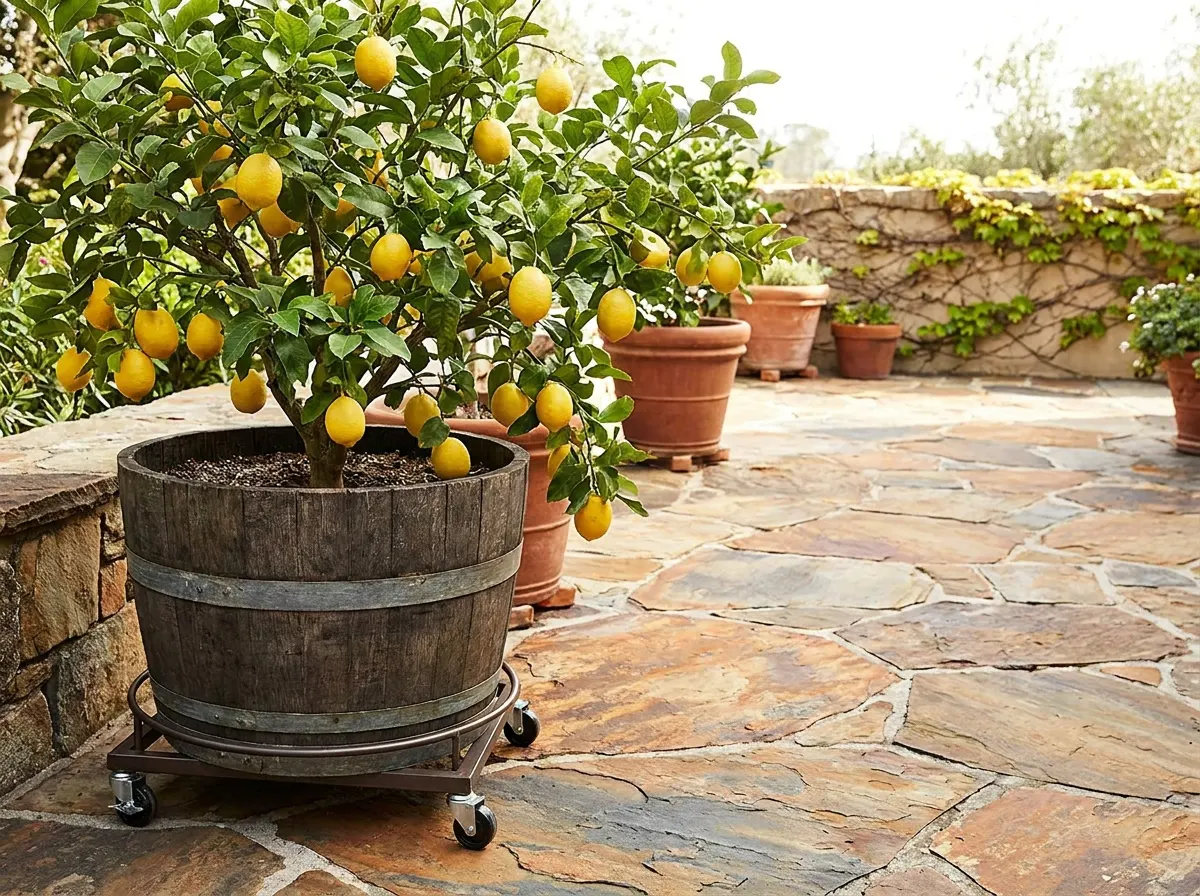
A pot gives you control. You choose the soil, move the tree out of a storm, and bring it inside before the first hard frost. It also caps size, so pruning is easier.
But containers get heavy. A big half wine barrel with wet soil can be a two-person job, so put it on a wheeled plant caddy before you fill it, not after. Terracotta breathes and forgives overwatering. Plastic self-watering pots have a bad reputation in citrus threads for causing root rot.
What Lemon Tree Styles and Placements Look Good?
The best-looking lemon tree styles are a barrel on wheels beside a patio, a single pot flanking a door, a trained tree against a sunny wall, or a bright sunroom specimen. Choose by sun and winter route first. A style you can’t protect in January is just a pretty plan.
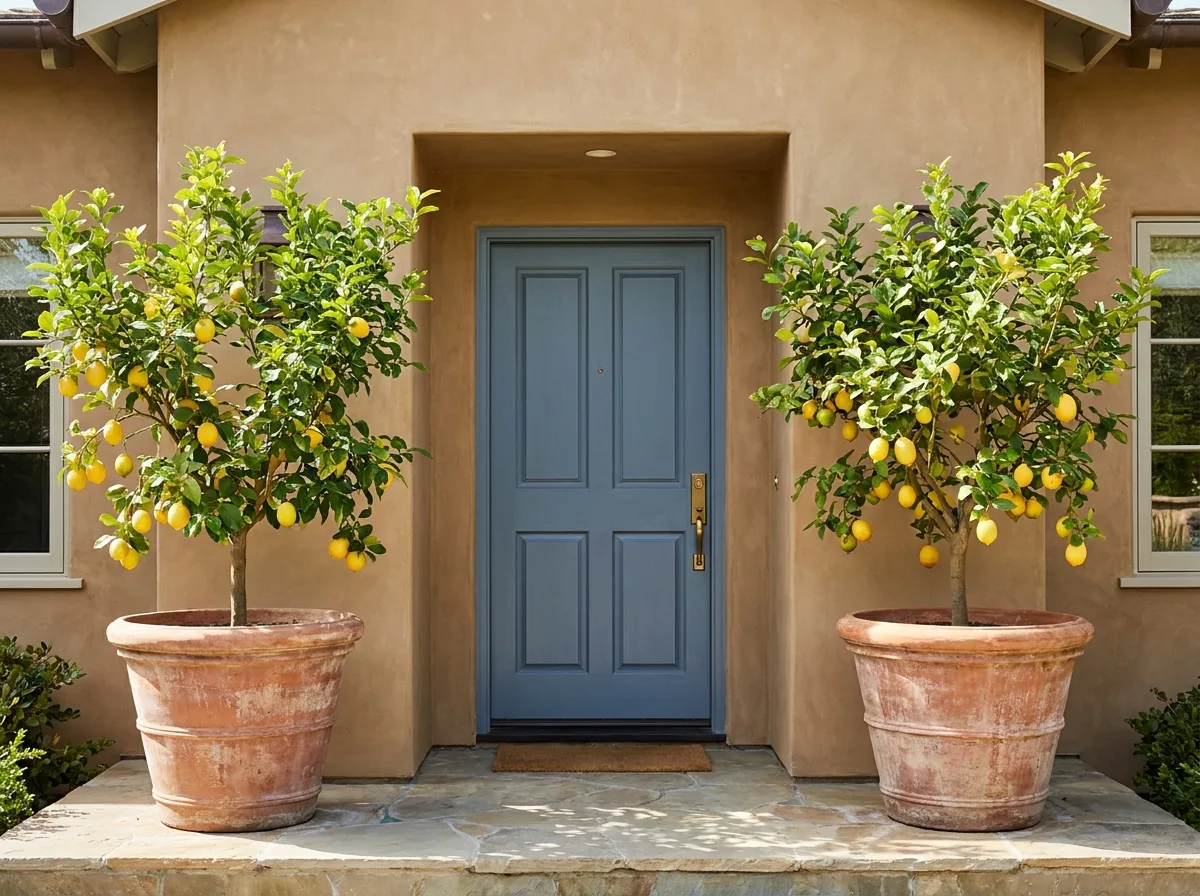
Here are five that work, with their catch:
- Wheeled barrel by the patio. Easy to move, great scent. Catch: weight.
- Pair of pots at an entry. Formal and symmetrical. Catch: both need the same winter spot.
- Espaliered against a south wall. Space-saving and warm. Catch: needs pruning skill and a mild climate.
- Sunroom specimen. Fruit in view all winter. Catch: pests if airflow is poor.
- Balcony tree. Small footprint, strong sun. Catch: wind dries the pot fast.
The holiday cousin of this is decorating a potted tree for the season, and a lemon tree in a wheeled planter can carry string lights just as well.
What Does a Lemon Tree Cost, Including the Pot and Lights?
Budget for three parts: the tree, the container and the winter setup. Prices swing by region, tree size and retailer, so treat any number as an illustration. The tree is often the cheapest part. The pot, wheeled base, citrus soil and a grow light add up faster than most buyers expect.
Skip the hunt for one magic price. Instead, think in layers: a small starter tree is cheap, a mature one costs several times more, and a quality pot with casters can rival the tree itself. A full-spectrum grow light is the third layer, and some growers report that a bright south window beats a cheap light anyway.
Here is a hypothetical worked example, not a quote. Say a starter tree runs roughly $30 to $100, a large pot with casters $60 to $200, and a grow light $25 to $100. That puts a first setup somewhere between about $115 and $400 before soil and fertilizer. Your local prices will differ, so replace these placeholders with real quotes.
The break-even idea is simple. If you only want to try, buy a smaller tree and a terracotta pot. If you want a decade-long feature, spend on the barrel and wheels once.
How Much Sun and Water Does a Lemon Tree Need?
A lemon tree needs full sun, meaning a sunny, bright spot for most of the day, and water only when the top of the soil dries. More lemon trees die from soggy roots than thirst. Remove the saucer, and let excess water drain out the bottom after each soak.
Wet feet is the term gardeners use for roots sitting in water. It’s the most repeated warning in Reddit’s citrus communities, and the reason is simple: a drowned root can’t take up anything, so the leaves yellow and drop, which looks like thirst and tempts you to water again.
For soil, aim for a pH between 5.5 and 6.5, per UF/IFAS. A gritty mix like the popular 5/1/1 blend (5 parts bark, 1 perlite, 1 potting soil) drains fast. Compost-heavy mixes hold too much water. Feed with a citrus fertilizer that includes nitrogen and micronutrients during growth.
How Do You Keep a Lemon Tree Alive Through Winter?
Move the tree to a cool, bright, frost-free place before nights threaten it. Skip the warm living room. Reduce watering, keep air moving and check for spider mites weekly. A garage window or covered porch just above freezing often beats a heated indoor spot.
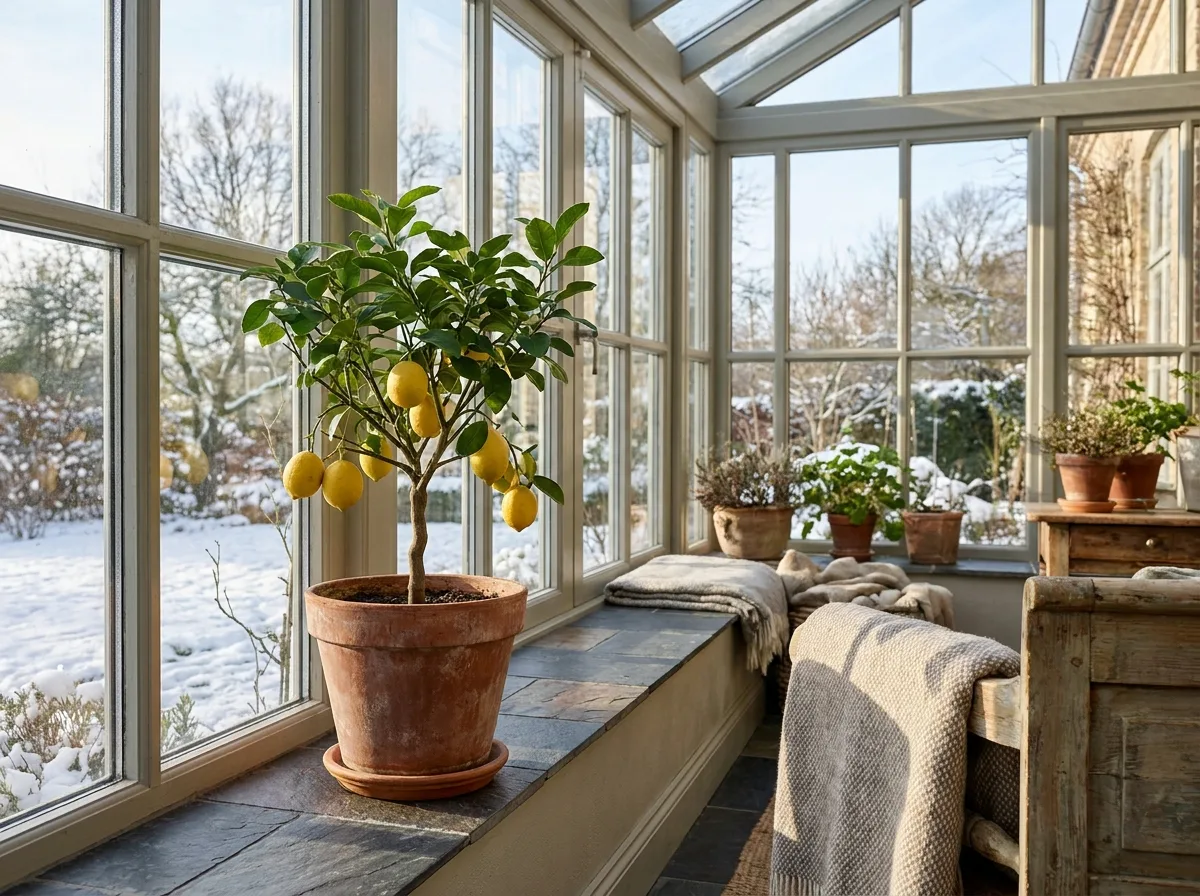
Many growers in colder zones bring trees in around 35 to 40°F, based on forum reports, though your local tree may differ. Warm indoor air dries leaves, invites mites and scale, and can push the tree to shed foliage.
A composite example: a zone 8 grower keeps a potted Meyer on casters under a roof and wheels it into the garage on the three coldest nights. It never sits indoors for more than a few days, and mites never show up. That’s the "boring" strategy, and it works.
Why Is My Lemon Tree Dropping Leaves?
Leaf drop usually means too much water, too little light or sudden change, not death. Try the petiole test first. If the leaf falls with its little stem attached, suspect stress. If the leaf falls but the stem stays on the twig, it’s often normal aging.
Run this checklist in order:
- Lift the pot. Heavy and wet means overwatering.
- Check drainage. Is there a saucer holding water?
- Look for tiny speckles and fine webbing under leaves, which signal spider mites.
- Consider light. A tree that came indoors may shed leaves that no longer "pay for themselves."
- Check for roots circling the pot, a sign it’s rootbound.
Horticultural oil or neem oil is a common treatment for mite and scale outbreaks. Follow label directions. Don’t panic if a third of the leaves go after a move. Many trees recover when spring light returns.
A few care notes round this out. Prune lightly in spring to open the canopy and remove dead twigs, and feed through the growing season, not in winter. Fruit ripens on its own schedule, often months after the blossoms, so harvest when the fruit is fully colored and slightly soft, and don’t expect a fixed month.
Frequently Asked Questions
Is a lemon tree easy to grow?
It’s easy to start and easy to overwater. Warm climates make it simple, while cold ones add winter logistics. Most failures come from soggy roots or a sudden move indoors, not from some hidden skill gap. Get drainage, light and a winter spot right, and a Meyer in a pot is a forgiving first citrus.
Does a lemon tree like sun or shade?
Sun. Give a lemon tree as much direct light as you can, ideally a south-facing spot. Shade slows growth, thins blossoms and weakens fruit. In very hot climates, a bit of afternoon relief helps young trees. Indoors, a south window often performs better than a weak bulb, so test your light before spending on gear.
Will a lemon tree come back every year?
In frost-free climates, yes, because it’s an evergreen perennial. In colder places it only returns if it is protected or kept in a movable pot. A tree left out in a hard freeze may die back to the rootstock, and what regrows may not be the lemon you bought.
How long does it take for a lemon tree to fruit?
It depends on the tree’s age, light and whether it’s grafted. Grafted nursery trees often fruit sooner than seed-grown ones, which can take many years. No dependable universal timeline exists, so beware of any promise of fruit by a specific month. Light and warm summers speed the process.
Is a Meyer lemon hardy enough to leave outside in the cold?
No, that’s a myth. Meyer is often reported to handle cold better than true lemons, but "better" is not "hardy." A hard freeze can still kill or cut back a tree, and one anecdotal mid-teens survival is not a plan. Check your coldest expected night, and bring a potted tree under cover before it arrives.
Can a lemon tree live indoors?
Yes, with bright light and good drainage. A south window is best. Indoor trees often fruit lightly and face more pest pressure, so many growers treat indoors as winter housing only. Move the tree outside once nights stay safely warm, giving it a gradual adjustment to sunlight.
Is a lemon tree self-pollinating?
Lemons are generally described as self-pollinating, so one tree can set fruit alone. Indoors, a gentle shake or soft brush helps move pollen when no insects visit. A second tree is usually not required. Fruit set still depends on warmth, healthy blossoms and steady watering, so a stressed tree may drop its flowers anyway.
What size pot does a lemon tree need?
Start with a pot just a few inches wider than the root ball, then step up as roots fill it. Oversized pots hold too much wet soil. A half wine barrel suits a mature tree. Drainage holes matter more than the exact volume. A common mistake is jumping from a nursery pot straight into a huge container, which keeps the soil wet for weeks and invites root rot. Step up gradually, and check the roots each spring.
How far north can I grow a lemon tree?
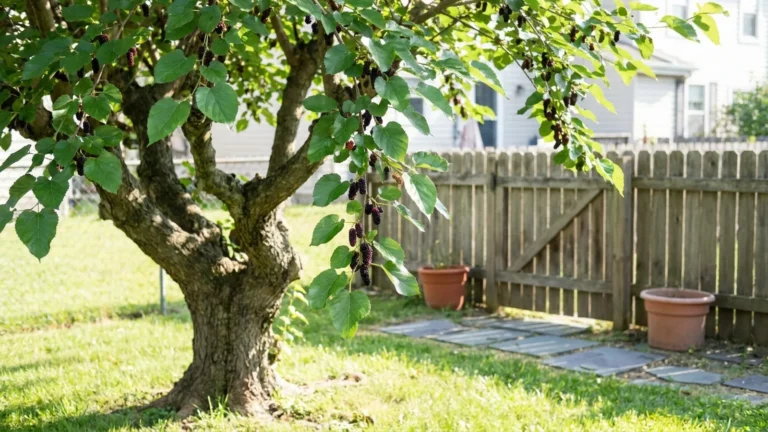
Anywhere, if it’s in a pot you can shelter. In the ground, the limit is your coldest nights, so check local extension advice. People in zones 4 to 8 do it with barrels, garages, sunrooms and patience. If you would rather skip the winter routine, see a mulberry tree guide for another option.
Why are my lemon tree’s leaves turning yellow?
Usually water, light or nutrients. Soggy soil is the top cause, followed by low light and nitrogen shortage. Check the pot’s weight and drainage first, then feed with a citrus fertilizer if the soil is fine. Pale new growth often points to missing micronutrients, while older leaves yellowing evenly can mean low nitrogen. Resist the urge to fertilize a sick, waterlogged tree, because feeding stressed roots can make things worse. Fix the water problem first, then feed.
Can I grow a lemon tree from seed?
You can, and it makes a nice experiment, but it’s slow and unpredictable. Seed trees often take many years to fruit and may not match the parent. For a patio feature, a grafted nursery tree is the safer buy. One forum grower reported a seed tree at about 5 feet after six years.
Conclusion
The winning lemon tree isn’t the fanciest variety. It’s the setup that matches your coldest night: ground planting for mild winters, a wheeled barrel for light frosts, and a cool, bright, movable pot for hard freezes. That’s the unique angle here, and it’s why the leaf-drop story in the opening didn’t have to happen.
Your next step is simple. Write down your lowest likely winter night, pick the matching style, and decide where the tree will sleep before you buy it.
Want more tree ideas for the same yard? Read how to plan an olive tree or what to know before planting a mulberry. So, where will your lemon tree spend January?