Mulberry Tree: Size, Mess, Local Bans and Whether to Plant One
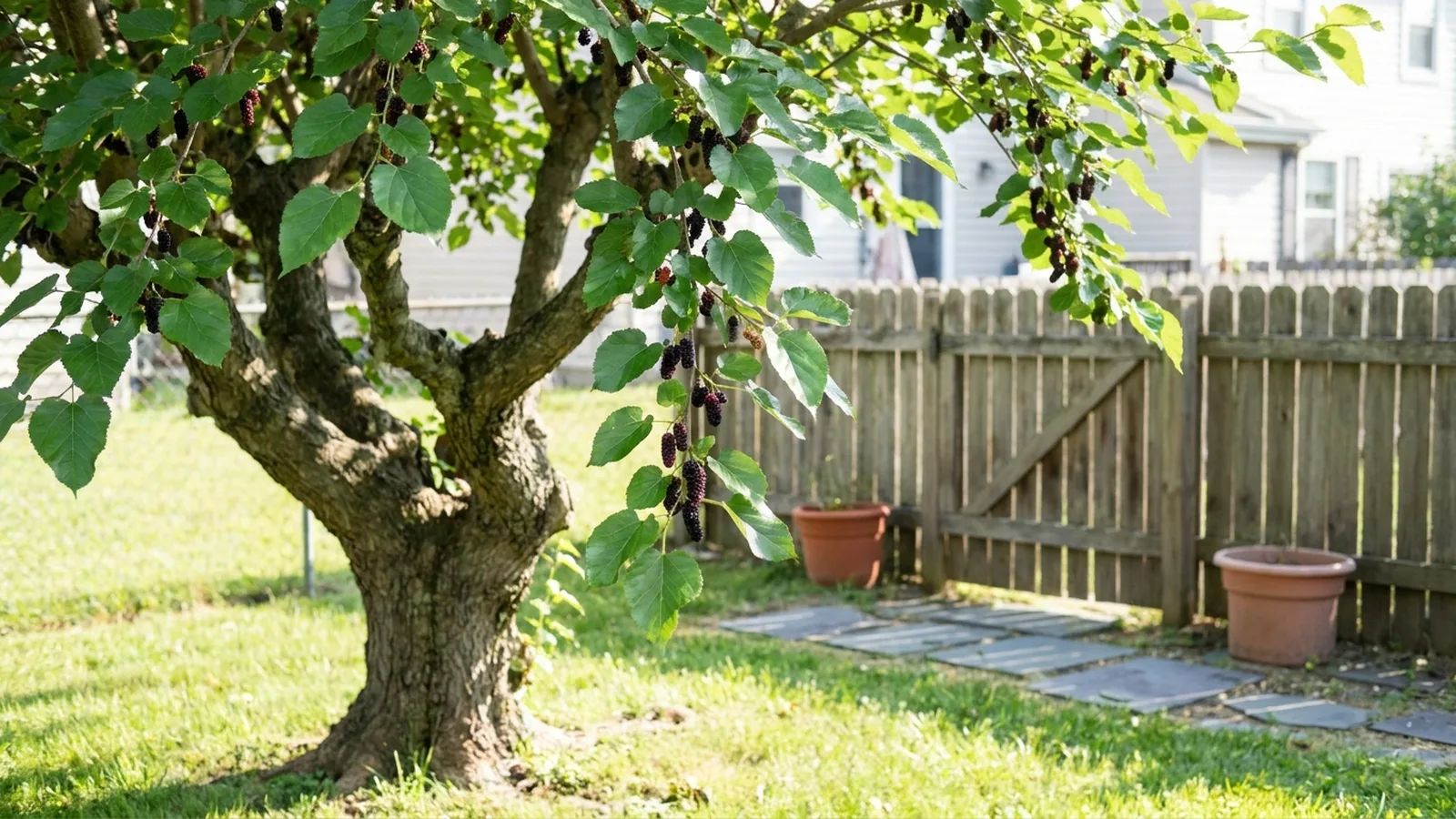
A full-grown mulberry tree can stand 40 to 60 feet tall and spread nearly as wide, which is why the question is rarely "can I grow one" and almost always "where on earth would it go." Mulberries are tough, fast and generous with fruit. They are also famous for purple-stained sidewalks, fruit-fly clouds and a few cities that have banned them outright.
This guide gives you the decision rules most plant pages skip. You’ll see which type suits a US yard, how much room it really needs, what the legal and allergy issues look like, what a nursery tree costs, and how to remove one you regret.
Quick answer
- Mulberry is a fast, low-care fruit tree, but most types get big and drop a lot of fruit.
- Red is the native choice, white is the one that spreads and gets banned, and black has the best fruit but wants a milder climate.
- Pick a named, grafted or fruitless cultivar, plant it far from paved areas, and check your city code first.
What is a mulberry tree and what does it look like?
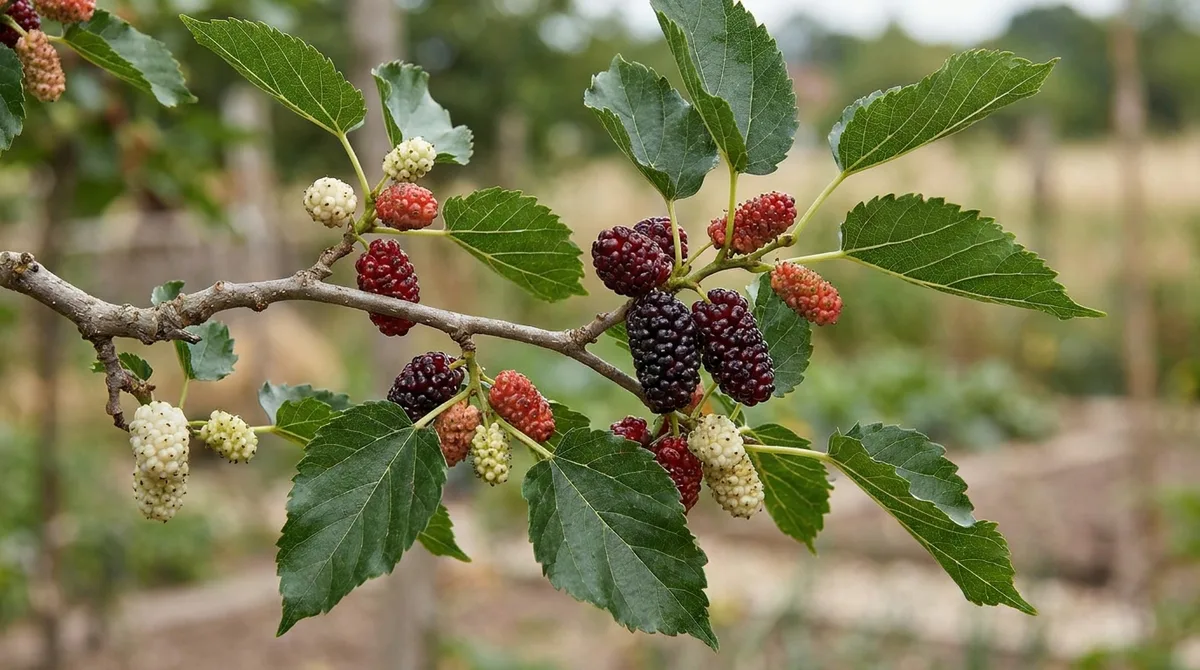
A mulberry is a fast-growing deciduous tree in the genus Morus, which Wikipedia describes as about 17 species. Look for broad, often lobed, heart-shaped leaves with toothed edges, a rounded canopy and short berry-like fruit that looks like a stretched blackberry. Fruit starts green or white, then turns pink, red or deep purple.
Leaf shape is the confusing part. One tree can carry plain heart-shaped leaves and deeply lobed, mitten-shaped ones at the same time, especially on young shoots.
Many mulberries are also dioecious, which means separate male and female trees exist. Female trees make the fruit and male trees make the pollen. That single fact explains most of the arguments you’ll read online.
Red, white or black mulberry: which one fits a US yard?
Pick red mulberry if you want a native tree, black if you garden in a milder climate and want the best-tasting fruit, and white only as a named, fruitless or tightly managed cultivar. White mulberry is the one that escapes into woods and causes most of the bans and complaints.
| Type | Typical size | Fruit | Watch-outs |
|---|---|---|---|
| Red (Morus rubra) | 35 to 40 ft in many yards, up to 60 ft in the open per Ohio DNR | Dark red to purple, rich and sweet-tart | Native to the eastern US, hard to find at nurseries |
| White (Morus alba) | About 50 ft tall and wide per Birds & Blooms, up to 60 ft per UF/IFAS | Often white, pink or purple, about 1 inch, milder and less sweet | Invasive in many areas, hybridizes with red |
| Black (Morus nigra) | 35 to 50 ft | Large, juicy, deeply colored | Native to southwest Asia, prefers milder winters |
| Texas (Morus microphylla) | About 25 ft | Small, about half an inch, sour, ripens early | Better scaled for smaller properties |
Sizes and traits follow Birds & Blooms and Ohio DNR. Gardeners on Reddit and Quora regularly call seedling fruit bland, while named cultivars such as Illinois Everbearing, Tehama and Pakistan get far better reports. If you want to eat the fruit, buy a named variety.
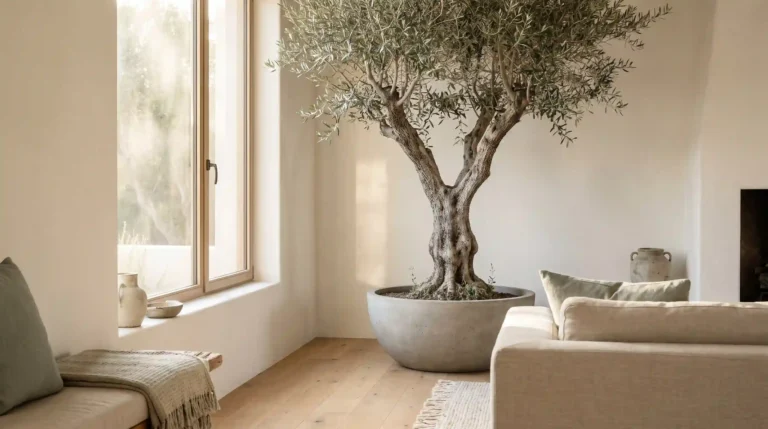
If you’re weighing other backyard trees, our guide to the olive tree covers a tree with a very different climate profile.
How big do mulberry trees get?
Most mulberry trees reach 25 to 50 feet, and the red and white types can approach 60 feet with a spread of 50 feet in open ground. That’s not a patio tree. Birds & Blooms puts white mulberry at about 50 feet, while UF/IFAS says up to 60, and it lists red mulberry at about 40. Plan for the larger number.
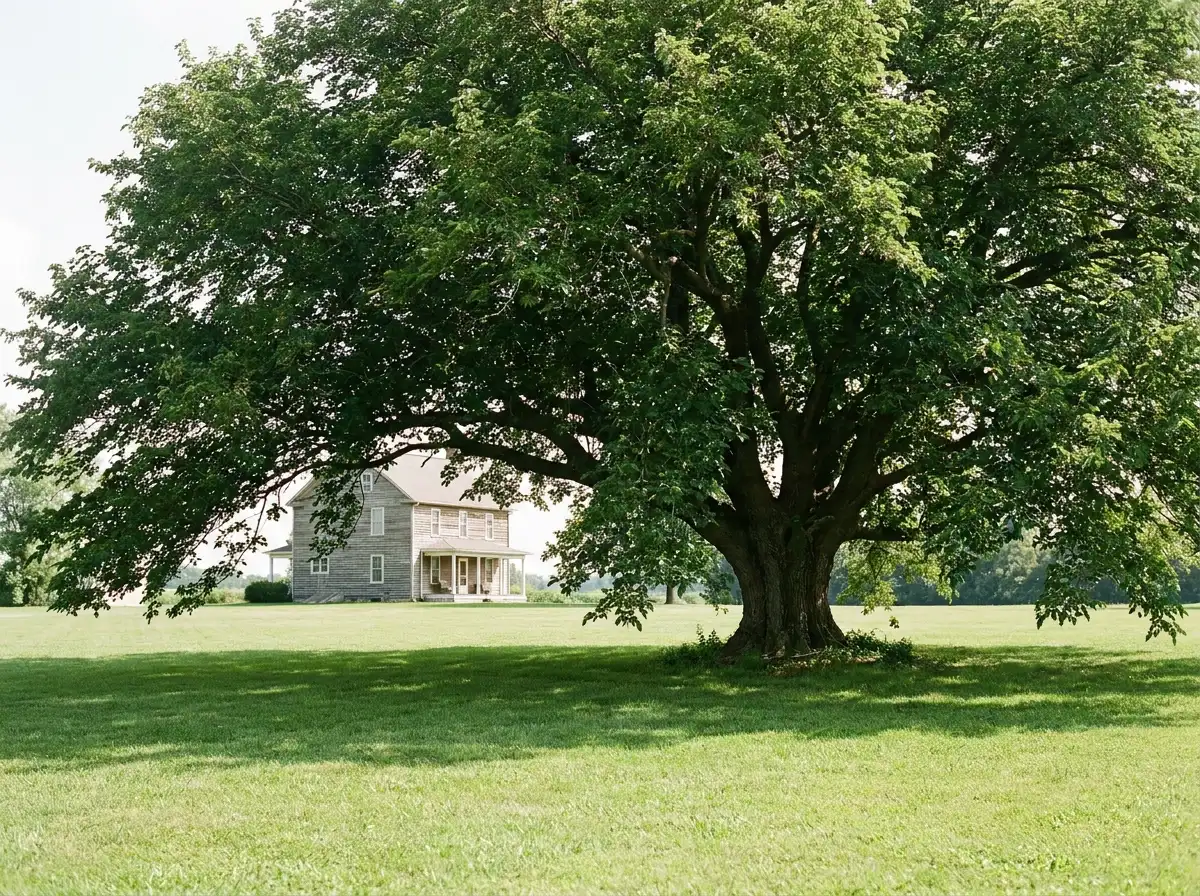
Here is a simple planning rule. Plant the trunk at least as far from your house, driveway and fence as half the mature spread. A 50-foot spread means a 25-foot canopy radius, so a trunk 25 feet from the nearest structure keeps branches from touching the roof by the time the tree is mature. This is a conservative guide, not a code figure, and your local rules on setbacks may differ.
Say your lot has a back corner 30 feet from the house and 12 feet from the neighbor’s fence. A standard white mulberry there will overhang the fence within a few years, which turns a fruit tree into a neighbor dispute. A dwarf cultivar or a pruned bush would fit far better.
Where do mulberry trees grow?
Mulberry trees grow in a wide band of the US, from cold northern states to the warm South and Southwest. White mulberry is rated roughly for US zones 4 through 8, red mulberry is native to the eastern half of the country, and black mulberry does best where winters are milder. Once established, they rarely need extra water.
Which mulberry hardiness zone fits your yard?
Your mulberry hardiness zone is the USDA zone for your ZIP code, and it tells you the average coldest winter temperature your tree has to survive. White mulberry is typically listed for zones 4 through 8 by Birds & Blooms. One nursery lists a Pakistan variety for zones 6 through 11, and a seller of a compact fruiting bush states zones 4 through 10 and hardiness to about -20°F.
Treat seller zones as a starting point, not a guarantee. If you sit on the edge of a zone, choose the hardier type.
When do mulberry trees fruit, and how long until the first harvest?
Mulberry trees fruit in late spring through summer, depending on type and region. Texas mulberry ripens as early as May, and bush forms are often sold for June through August fruit. A seed-grown tree can take 5 to 10 years to bear. A grafted tree often fruits in 1 to 3 years according to Birds & Blooms.
That timeline explains the many "my mulberry never fruited" posts. Gardeners on Reddit mention waiting 10 years or more on a seedling. Other usual causes are a male tree that only makes pollen, or too much shade.
Once fruiting starts, the harvest window is short. Homeowners commonly describe a season of about four weeks, with berries dropping as soon as they ripen.
Do you need a male and a female tree?
No. Most named fruiting cultivars sold today are self-fruitful, so one tree gives you berries. Some are female and make fruit with little or no pollen, while others carry both sexes. You only need a pair if you’re growing wild seedlings and want guaranteed fruit.
The Burnt Ridge Nursery catalog describes its named varieties as female with little to no pollen. That’s the low-allergy route.
The male side is where pollen trouble comes from. UF/IFAS notes that male red mulberry pollen is extremely allergenic. If anyone in your household has serious pollen allergies, check with your doctor and avoid unknown-sex seedlings.
Why are mulberry trees called illegal?
Mulberry trees aren’t illegal nationwide. A handful of cities restrict or ban them because of pollen. Albuquerque prohibits planting any Morus within city limits with no exceptions, and El Paso banned the sale and planting of new mulberries after September 1, 1992.
Albuquerque’s rule even covers buying a tree outside the city and planting it inside. Existing trees in El Paso weren’t removed, so old ones still stand. Those are two examples, and other cities have their own rules that differ and change.
Before you buy, search your city’s tree ordinance or call the planning department. Check HOA rules too, because they can be stricter than the city.
Is a mulberry tree messy, and how do you manage the mess?
Yes. Fruiting types drop large amounts of soft berries that stain pavement, cars, decks and pets’ paws. The fruit also draws flies, wasps, beetles and birds, and birds spread the seeds. Mess is the most common reason people remove mulberries, and a tree that fruits can’t be told to stop.
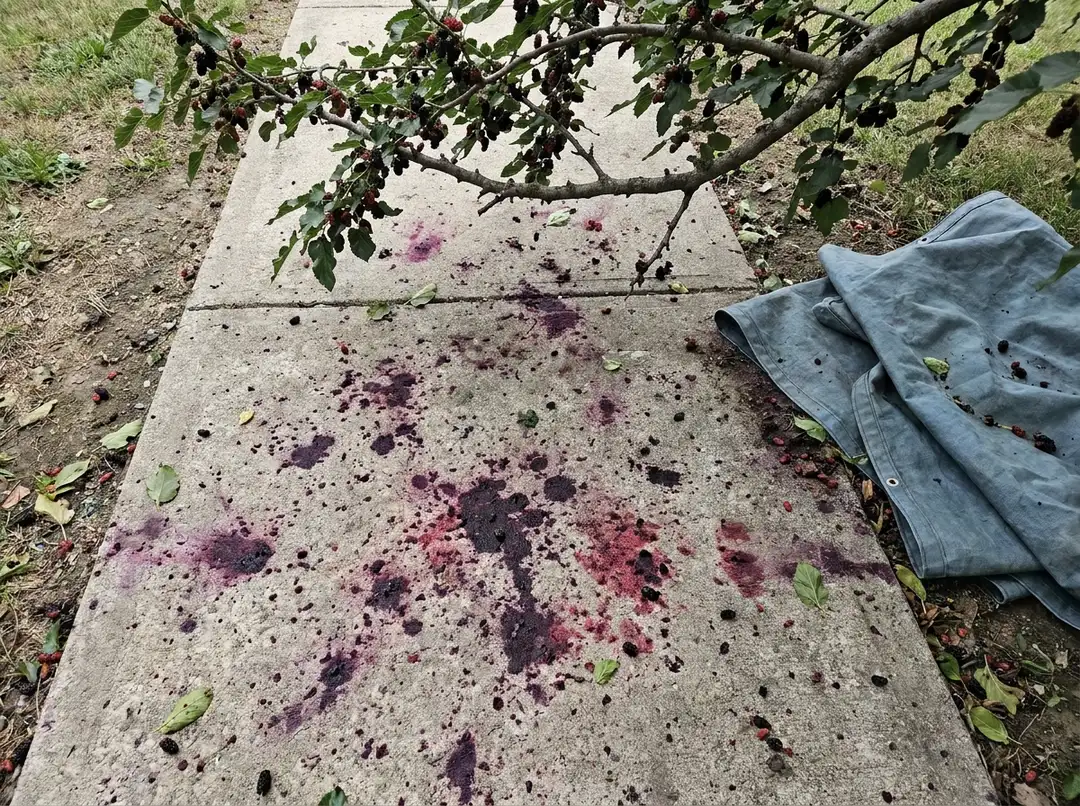
Reddit homeowners describe swarms of flies and stained dogs and driveways. Those are anecdotes, but they match what the fruit does when it drops. You can manage most of the mess with placement and habit.
- Keep it away from hard surfaces. Don’t plant over a driveway, patio, parking spot or the path to your door.
- Use a tarp and shake. Spread a sheet under the branches and shake the limbs weekly in season, then compost or freeze the berries.
- Choose a fruitless or near-seedless cultivar. Birds & Blooms lists Bellaire, Chaparral, Hempton and Urban as fruitless white types, and Illinois Everbearing and Tehama as near-seedless.
- Rinse stains fast. Wet berry juice sets quickly on light surfaces. If branches hang over the house, check light trim and a window sill for stains after a heavy drop.
One caution. A fruitless mulberry still gets large, still sheds leaves and still needs pruning.
Are mulberries invasive, and how do you check before planting?
White mulberry is invasive in many parts of the US. Red mulberry is native to the eastern states, and Birds & Blooms notes it can be crowded or hybridized out by white mulberry. Ohio DNR notes that white mulberry came from China and has escaped into the wild. Whether a given tree is a problem depends on your state.
A common mistake is assuming "mulberry" means one thing. A seedling white mulberry near a woodland edge can crowd out natives and cross-pollinate with them. Use this quick check before you buy:
- Search your state’s invasive plant list for Morus alba.
- Ask the nursery for the species name, not just "mulberry."
- Choose a named, grafted cultivar instead of a seedling.
- Skip any tree that backs up to natural woodland or a stream.
- Call your county extension office if you aren’t sure.
How do you plant and care for a mulberry tree?
Plant mulberry in full sun and well-drained soil, at the same depth it grew in the pot, with roots loosened if they circle. Water regularly the first year. After establishment, UF/IFAS says mulberries rarely need extra irrigation or fertilizer, which is why gardeners call them one of the easiest fruit trees.
Reddit growers warn about planting too deep, so keep the root flare visible at the surface. Tease apart circling roots before planting, and keep the tree away from foot traffic. Mulch the root zone, keep mulch off the trunk, and water during long dry spells in the first few years.
One safety note. Mulberry sap can cause a skin rash in some people according to UF/IFAS, so wear gloves when pruning. Unripe berries are mildly toxic per Birds & Blooms, so wait for fully colored fruit.
How do you prune a mulberry tree to keep it small?
To keep a mulberry small, prune lightly while it’s young, then trim a little every year to hold it to a lower framework. Some home growers keep a fruiting tree to roughly 6 to 8 feet so they can pick from the ground. Mulberries push vigorous regrowth, so light yearly trimming works better than rare, drastic cuts.
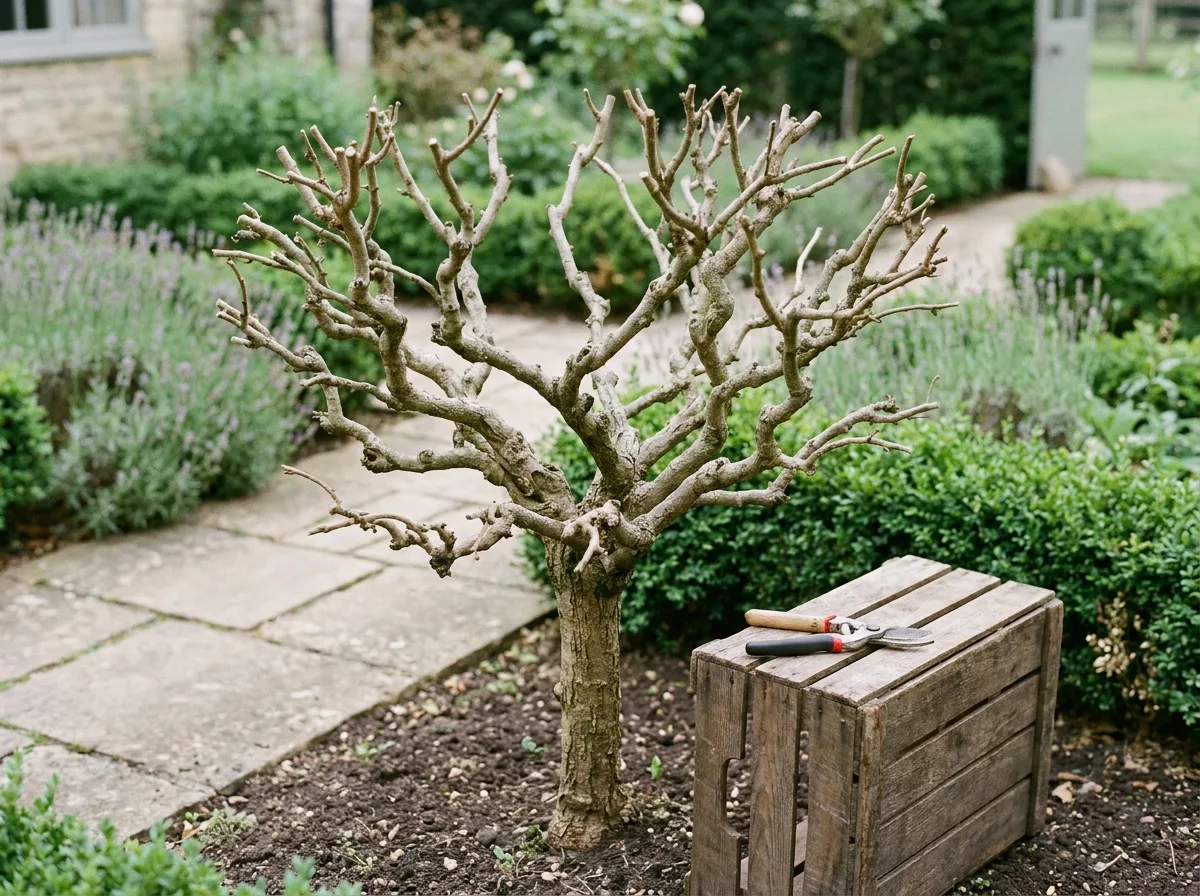
Choose a few well-spaced main branches early on and remove the rest. Each year, take out crossing and dead limbs and shorten the tallest shoots. Timing and how hard you can cut vary by climate and variety, so check with your local extension office. A tree left alone for years and then cut back hard tends to sprout a thicket of water shoots.
Large limbs, anything near a power line and any job that needs a ladder and a chainsaw belong to a licensed arborist. Call the utility about clearance around its lines.
Mulberry tree or mulberry bush: which is better for a small yard?
A mulberry bush is better for small yards. One seller describes an everbearing bush at about 15 feet tall and 8 to 10 feet wide, which is a fraction of a standard tree, and Burnt Ridge sells dwarf selections such as Gerardi Dwarf and Mojo Dwarf. Trees suit big lots where shade and wildlife count.
"Bush" is partly a pruning outcome and partly a variety. Dwarf cultivars stay smaller on their own, while a standard mulberry can be trained small with yearly work.
| Choose this | If your yard looks like this |
|---|---|
| Standard tree | Large lot, 30 or more feet from structures, you want shade |
| Dwarf or compact bush | Small yard, patio edge, or you want to pick fruit from the ground |
| Container mulberry plant | Balcony or limited space, with full sun and a big pot |
Container growing works for dwarf types, but the plant needs sun, steady water and regular pruning. Gardeners report mixed results when growing a mulberry plant from seed in a pot, so buy a named plant.
What do mulberry trees cost to buy?
Typical nursery listings run from about $12 to about $66 depending on variety, size and whether it’s bare-root or potted. Burnt Ridge lists named varieties from $12 to $40. Trees of Antiquity lists a black mulberry bush near $37 and Pakistan trees near $66. Shipping and sales change those numbers.
The tree itself is the cheap part. The real cost comes later in cleanup, pruning or removal. Free wild seedlings are tempting, but they may be the wrong sex, slow to fruit, or an invasive white type. Paying a little more for a proven variety makes sense for most homeowners. If you freeze, dry or preserve the harvest, a cool, dark pantry cabinet is a handy place to keep jars and dried fruit, since a good year produces more than you can eat fresh.
How do you remove a mulberry tree you don’t want?
For a small tree, cut it close to the ground and treat the fresh stump with a herbicide that is labeled for stumps, following the label exactly. Mulberry resprouts vigorously from stumps and roots. For anything large, near the house or near power lines, hire a licensed, insured arborist.
Cutting it down without treating the stump just gives you a multi-stemmed bush the next summer. Some cities and HOAs also require a permit to remove larger trees, so check first. Removal prices vary widely by tree size, access and region, so get at least two written quotes.
If the tree belongs to a neighbor, talk with them first. Rules on trimming overhanging branches differ by state, and cutting so hard that it harms the tree can create legal trouble.
Should you plant a mulberry tree? A decision checklist
Plant one if you have a large, open lot, want an almost no-fuss fruit tree and can live with berry mess. Skip it or choose a dwarf bush if the site is near paving, a pool deck, a shared fence or a woodland edge. The honest answer depends on your yard.
Run through this list:
- Does your city allow it? Check the tree ordinance first.
- Do you have 25 feet of clear space in every direction from the trunk?
- Can you keep it away from driveways, patios and parked cars?
- Are you buying a known variety rather than a wild seedling?
- Have you checked the invasive plant list for your state?
- Do you or a neighbor have serious pollen allergies?
- Will you actually pick up the berries every week in season?
If you answered no to the first two, don’t plant a standard mulberry. A fruitless cultivar or a smaller fruit tree will serve you better.
Mulberry Tree Frequently Asked Questions (FAQ)
What does a mulberry tree look like?
A mulberry has broad, toothed, heart-shaped leaves, sometimes lobed, on a rounded, spreading canopy. The bark is gray-brown and furrowed on older trees. The fruit looks like an elongated blackberry, ripening from green or white to red or deep purple. Leaf shape can vary on the same tree, so check several branches before identifying one.
How long does a mulberry tree live?
It depends on the type and the site. El Paso Matters reported that the city’s urban white mulberries live roughly 30 to 50 years. Stress from drought, storm damage and poor pruning can shorten a tree’s useful life.
Is a mulberry a tree or a bush?
Both. Species like red and white mulberry grow into full trees, while compact cultivars and trained plants behave like large shrubs. Nurseries sell everbearing mulberry bushes that stay around 15 feet. If you want a bush, check the label for dwarf or compact and expect to prune it every year.
What color are mulberries?
Mulberries ripen to red, purple or nearly black, but white mulberries can stay white or pale pink when ripe. Color doesn’t identify the species, because white mulberry fruit can be dark and some red types look nearly black. Fully ripe berries are soft, juicy and come off with a light tug.
Can you grow a mulberry tree in a pot?
Yes, for dwarf or compact cultivars. Use a large container with drainage, full sun and steady watering, and plan to prune hard each winter. Growing from seed is unreliable because you won’t know the sex or fruit quality. Standard trees don’t stay healthy in a pot for long.
Why hasn’t my mulberry tree fruited?
The usual causes are age, shade or the wrong sex. Seed-grown trees can take 5 to 10 years, and some gardeners report longer, while grafted trees often fruit in 1 to 3 years. A male tree never fruits. Give it full sun, and consider replacing a stubborn tree with a grafted one.
Are mulberries safe to eat?
Ripe, fully colored berries are widely eaten. Unripe berries are mildly toxic according to Birds & Blooms, and the sap can irritate skin. Only eat fruit from a tree you’ve positively identified, and don’t eat anything from a tree near a road or sprayed area. This isn’t medical advice, so ask your doctor if you have allergies.
Will a mulberry tree grow back after cutting?
Yes. Mulberry resprouts vigorously from stumps and roots, which is why removal takes more than a saw. Cut the stump low and treat it with a herbicide labeled for that use, following the directions. Check the area for several months afterward and remove new shoots promptly.
Can I trim my neighbor’s overhanging mulberry branches?
In many places you can trim branches that cross onto your property, but laws vary by state and city, and damaging the tree can create liability. Talk with the neighbor first. For large limbs, hire an arborist rather than climbing. If branches touch power lines, call the utility. Check local rules or an attorney for your situation.
Are fruitless mulberries a good shade tree?
They can be, if you accept the size. Fruitless white cultivars give fast, dense shade without berry mess. They still grow large, drop leaves and need regular pruning. Also check your city rules because some ban mulberries by genus or by pollen, and the fruitless label may not exempt a tree.
Conclusion
That 60-foot tree from the opening is the real decision. A mulberry tree rewards you with easy fruit and quick shade, but only if you give it space, pick a good cultivar and check your local code first. Choose a fruitless type or a good named variety and keep it away from pavement, and most of the mess stays manageable. If the yard is small, plant a dwarf bush instead.
Your next step is simple. Look up your city’s tree ordinance, find your hardiness zone, and measure the distance from your planned spot to the nearest house wall, fence and driveway. If it’s under 25 feet, plan on a smaller form.
Have you got a spot in mind that clears that 25-foot test, or will a bush have to do?