Magnolia Flower Ideas: Pick the Right Tree Before You Plant
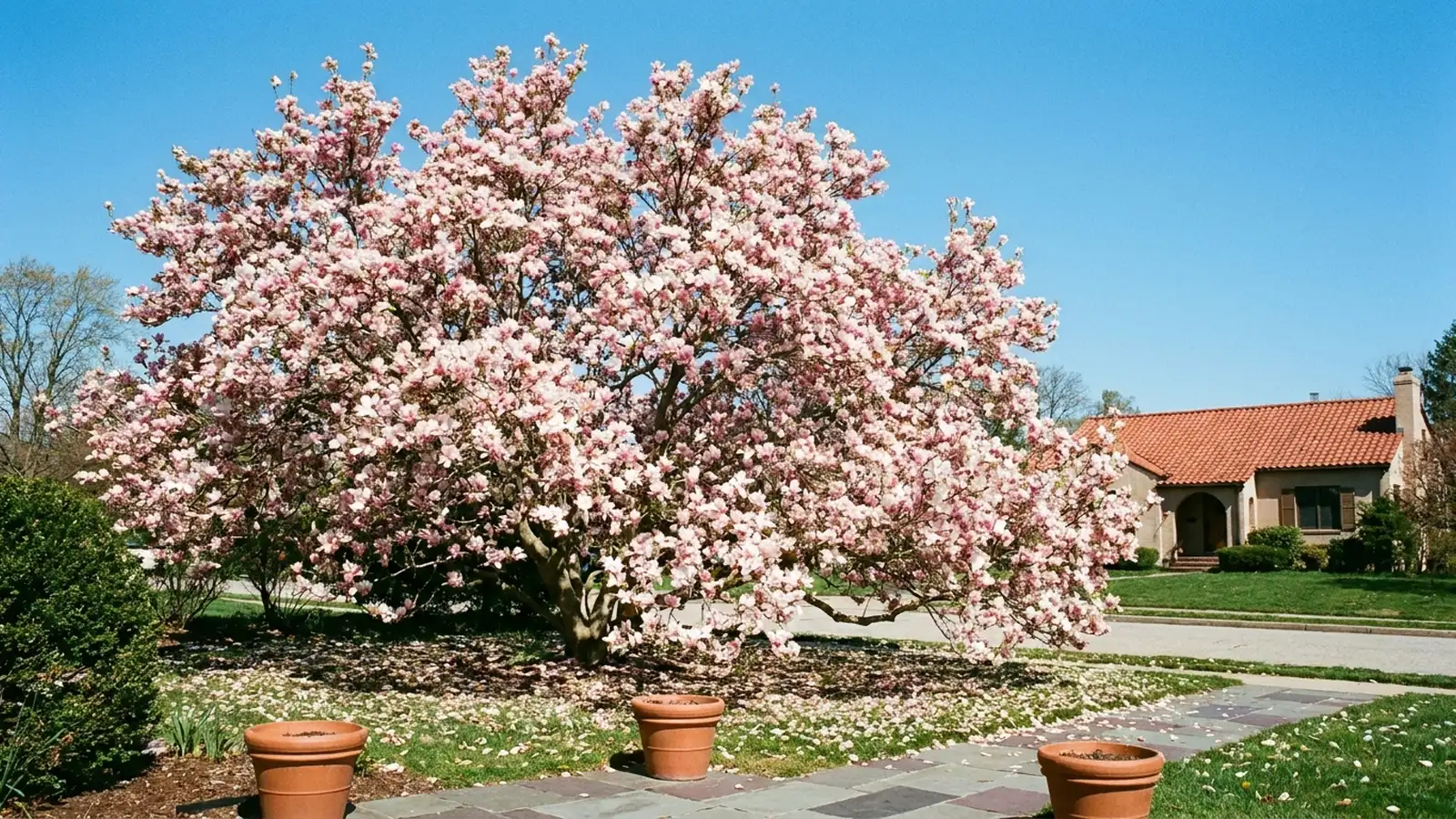
Say a nursery magnolia in a 15-gallon pot stands 8 feet tall and costs real money. Some species can eventually grow far taller, into the 50 to 70 foot range. Now say a homeowner plants one 10 feet from the front window because the tag shows a gorgeous magnolia flower and says "ornamental." Five years later the branches scrape the siding, the roots lift the walkway, and every May a carpet of leathery leaves needs raking.
Nothing was wrong with the tree. The choice was wrong. A magnolia is a decision about mature size, climate and mess, and the bloom is the reward at the end.
This guide is one part of planning your yard’s trees and flowering plants. You’ll get the types that fit US yards, bloom timing, landscape layouts with spacing, planting mistakes to skip, and the honest reasons a tree refuses to flower. Expect decision rules and specs.
Executive Summary
You can get a lasting magnolia flower display without regret if you match the tree to your zone and your lot before buying. Most failures come from three things: a giant tree in a small space, an early bloomer in a frost-prone area, and planting too deep.
Here’s what you’ll find below. Southern magnolia is usually a poor small-yard pick, while compact cultivars like Little Gem suit most suburban lots. Star and saucer types bloom on bare branches in early spring, so one late frost can ruin the show. Young trees often take years to bloom, which is normal. Leaf drop is also normal.
The biggest objection is "won’t it be messy?" Yes, somewhat. The fix is picking the right type and placing it away from pavement. Check your USDA hardiness zone and your local extension office before buying, because zone ranges here are general guides. You’ll also see what the raking routine looks like and when paying an arborist beats a weekend of risky ladder work.
What Does a Magnolia Flower Look Like and When Does It Bloom?
A magnolia flower is a large, cup- or saucer-shaped bloom, often 8 to 12 inches across on the biggest species, made of petal-like parts called tepals. Colors run white, pink, purple, green and yellow, and some types are fragrant. Asian deciduous types bloom in early spring before leaves appear. Southern and sweetbay types bloom from late spring into early summer.
Fragrance varies by species and cultivar, and as a general rule the larger Southern blooms are the ones people call lemony, so sniff before you buy if scent matters. The Smithsonian notes that magnolias trace back roughly 95 million years and were pollinated by beetles, which explains the tough, sturdy petals. Leaves on Southern magnolia run about 5 to 10 inches.
Timing matters more than looks for any magnolia flower you plan to enjoy. Early bloomers open when winter hasn’t quite left, and Harvard’s Arboretum points out that eastern North American springs have late frosts that brown open flowers overnight. Later bloomers dodge that.
Which Magnolia Types Fit a US Yard?
Four types cover most yards: Southern magnolia (M. grandiflora), saucer magnolia (M. x soulangeana), star magnolia (M. stellata) and sweetbay magnolia (M. virginiana). They differ in size, evergreen habit, bloom time and cold tolerance. Pick by mature size and zone first, flower color second.
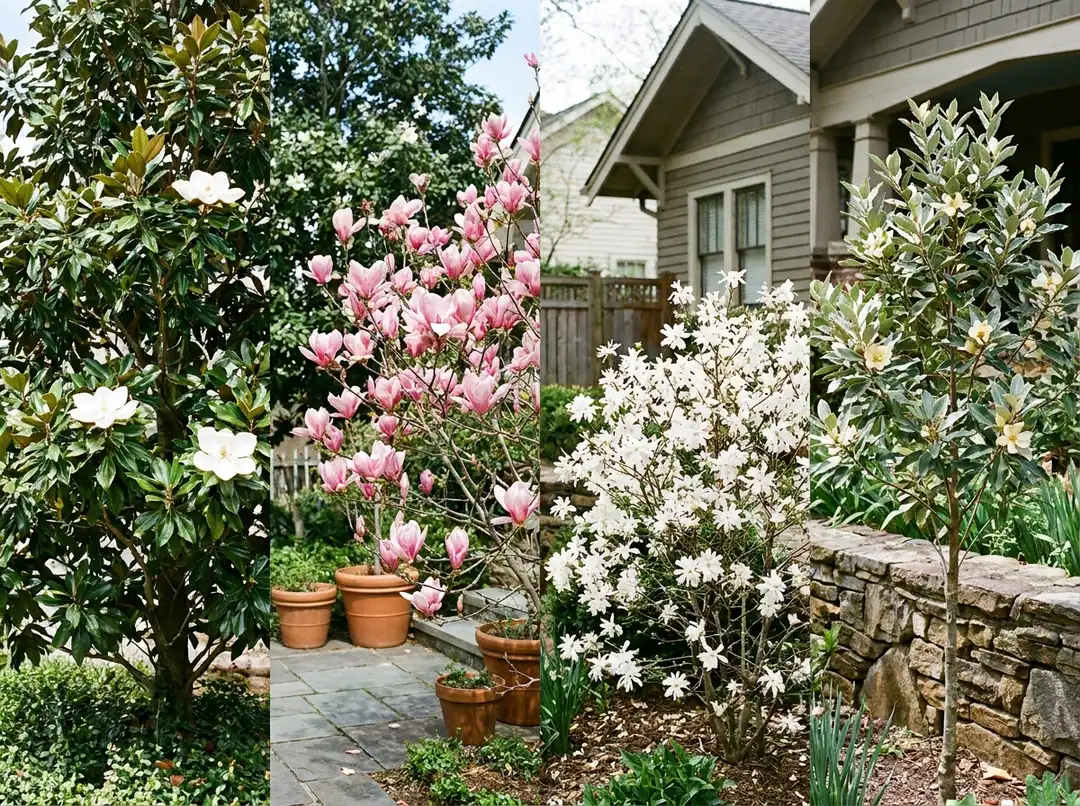
| Type | Habit | Bloom | Fit |
|---|---|---|---|
| Southern | Evergreen, 50 to 70 ft | Late spring to summer | Large lots, warm zones |
| Saucer | Deciduous, wide spreading | Early spring | Medium lots, mild springs |
| Star | Deciduous, compact | Late winter to early spring | Small yards, frost risk |
| Sweetbay | Semi-evergreen to deciduous | Late spring | Moist soil spots, check locally |
Zones are rough. Southern magnolia is commonly grown in zones 7 to 9 and barely survives in Boston, per Harvard. Check the USDA map for your address before you fall for a photo. Not sure what’s growing in your yard already? The cone-like fruit with red-orange seeds is a quick ID clue.
Which Magnolia Flower Works Best in a Small Yard?
For a small yard, Little Gem, a compact Southern magnolia cultivar, is the realistic choice for most suburban lots. Star magnolia also works if your spring frosts are mild. A full-size Southern magnolia is a poor small-yard tree, because it outgrows the space and drops heavy litter. Check the tag for mature width before you buy.
That’s my contrarian opinion, and I’ll defend it. Nursery tags rarely list the 50 to 70 foot ceiling of the species, which is why oversized trees end up in front of windows. Little Gem stays far smaller, and some growers report blooms from mid-spring until frost. Treat that as anecdotal.
A magnolia flower on a smaller tree looks just as showy as one on a giant. Other compact names to look at include Jane, a deciduous hybrid, plus yellow-flowered Yellow Bird and Butterflies. Cultivar sizes vary by source, so read the tag and ask the nursery for the mature width, not just height.
What Are the Best Landscape Ideas for a Magnolia Flower?
Use a magnolia as a specimen, a foundation anchor, a privacy screen or a container plant, and size the spacing to the mature width. Specimen trees need the most room. Compact cultivars suit foundations and screens. Containers work for small patios and for cold zones where you can move the pot.
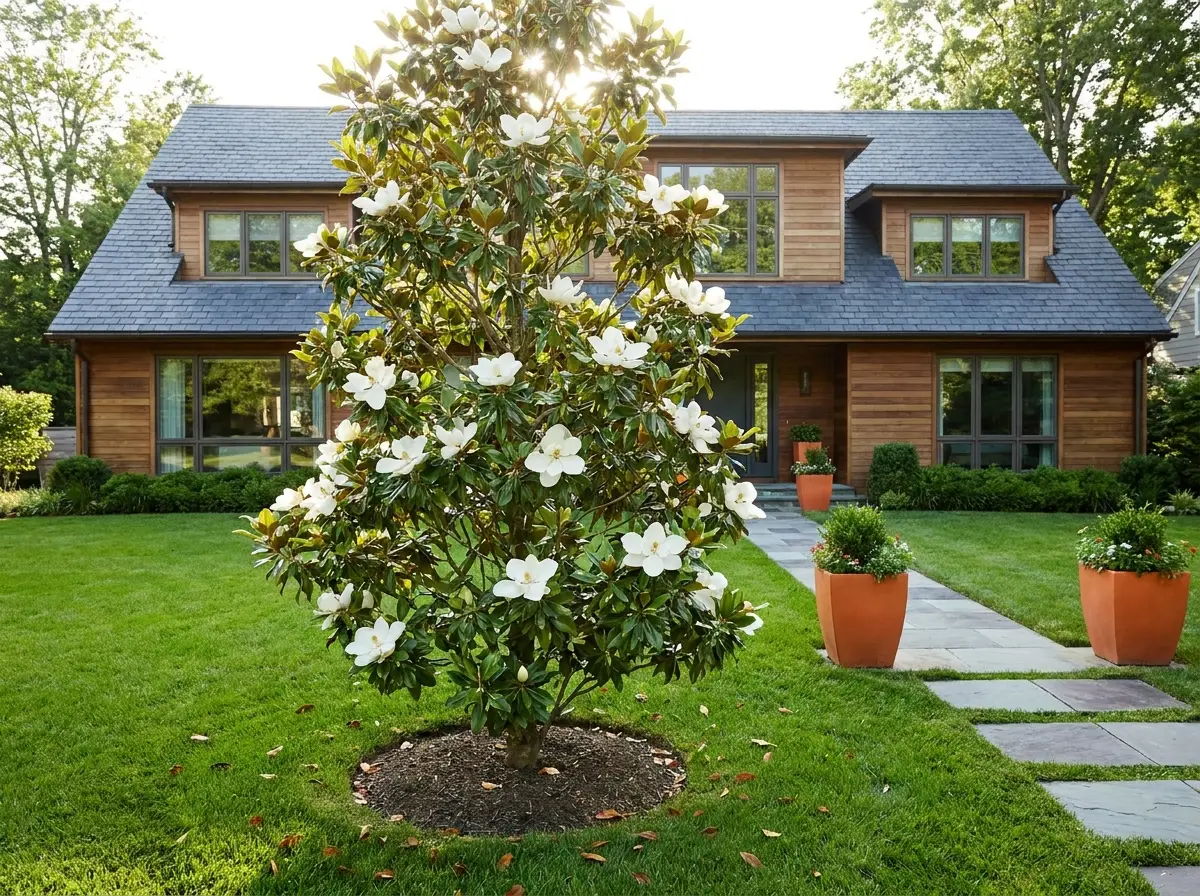
Here are layouts that work, using hypothetical numbers:
- Front-yard specimen: a tree centered on a lawn with a 20 foot setback from the house, so nothing touches walls or lines.
- Foundation corner: a compact cultivar, planted well out from the wall, with the mature width in mind.
- Privacy screen: a row of Little Gem, spaced by the tag’s mature width, behind a fence line.
- Formal pair: two matching trees flanking a path, evergreen so the frame holds in winter.
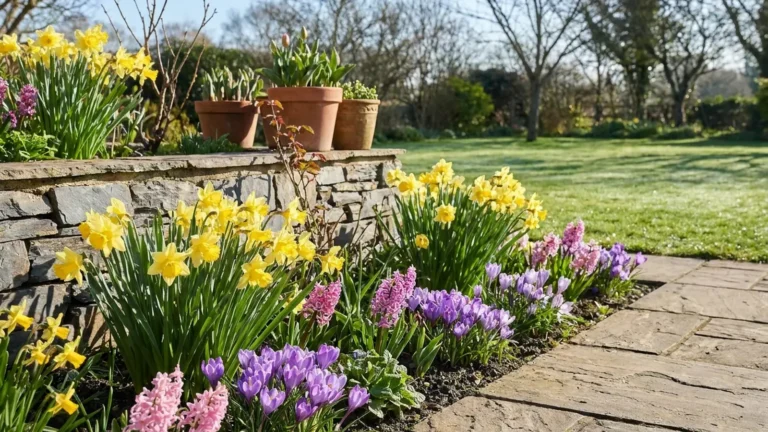
- Cottage mix: a star magnolia underplanted with bulbs and spring flowers for a layered early show.
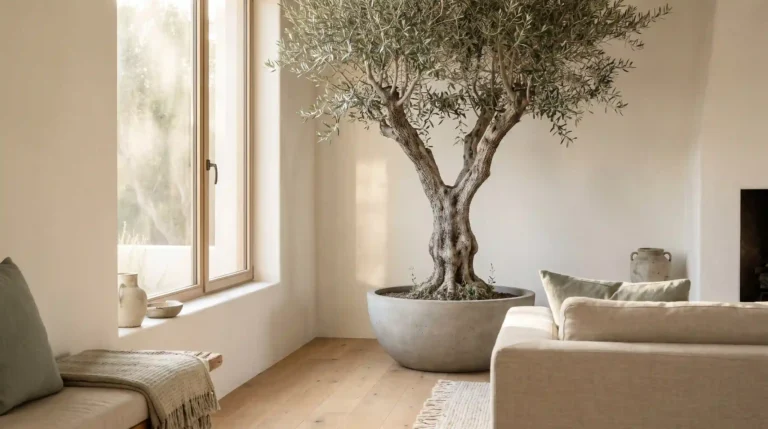
Evergreen anchors pair well with other trees too, like an olive tree in warm, dry regions or a lemon tree in a pot. Keep trunks away from pavement and septic lines.
Where and How Do You Plant a Magnolia Without the Common Mistakes?
Plant in full sun to partial shade, in well-drained, slightly acidic to neutral soil, sheltered from strong wind. Dig the hole about twice as wide as the rootball and no deeper. Set the tree slightly high, water to keep soil moist but not wet, and mulch about 1 inch.
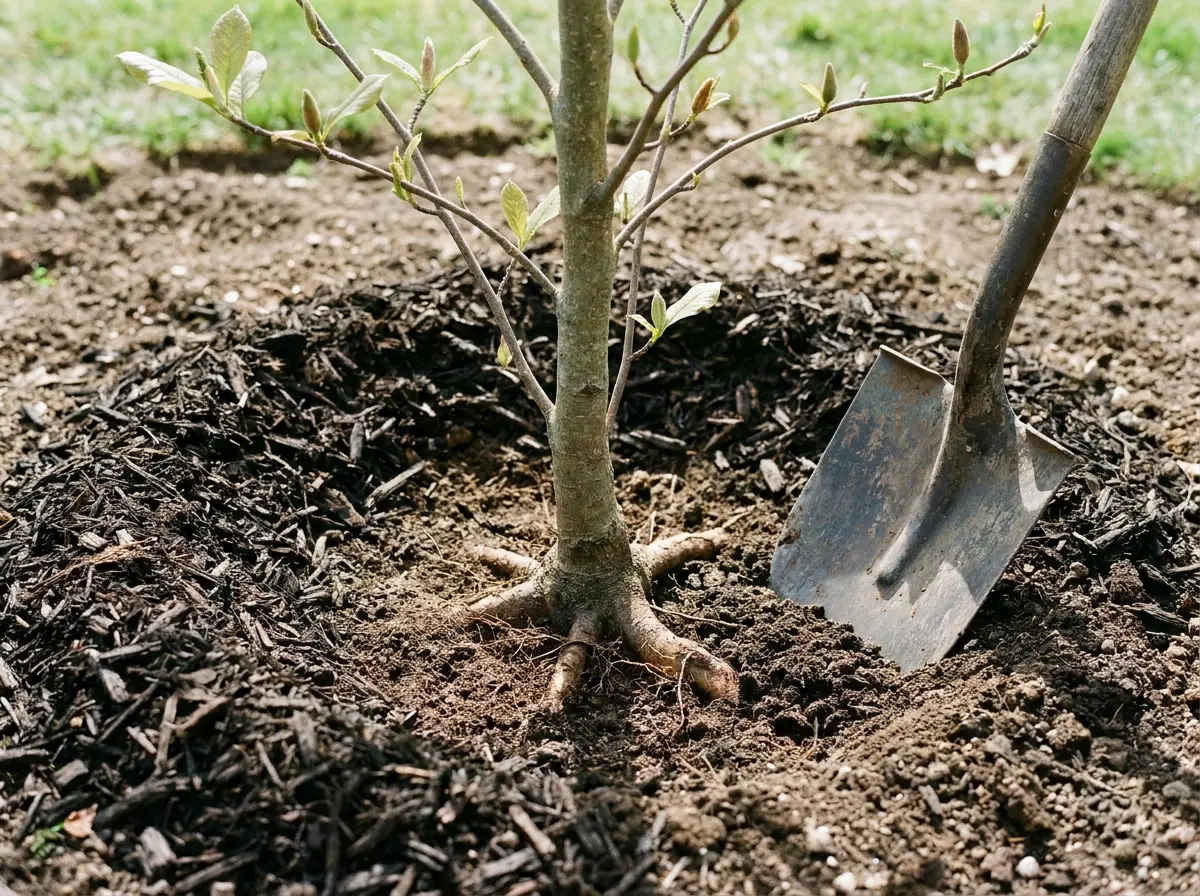
A pattern that keeps showing up in homeowner threads on r/Tree goes like this: a tree is planted too deep, extra stems sprout from soil, mulch is piled against the trunk, and white spots appear on leaves. The fix is simple. Expose the root flare, the flared base where trunk meets roots, and pull mulch back a few inches so it forms a donut, not a volcano.
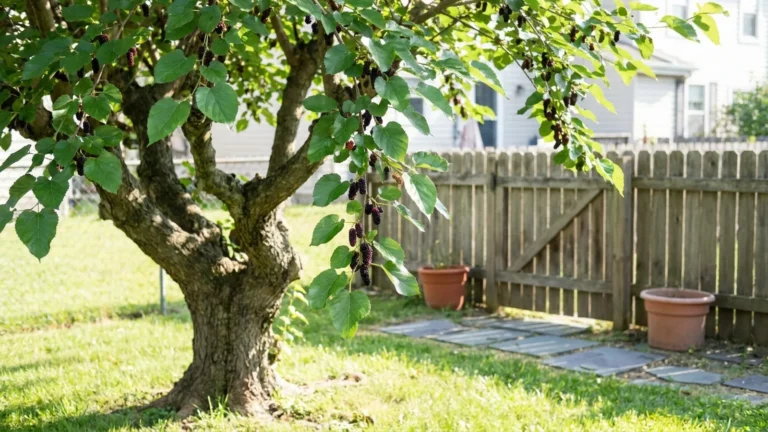
Other site rules: keep it clear of soggy spots, since constantly wet roots tend to struggle. Wind-shelter helps big leaves stay intact. Mulching more than a thin layer smothers roots. For a similar planting routine, our guide to the mulberry tree covers spacing habits that carry over.
Why Is My Magnolia Not Blooming?
A magnolia usually fails to bloom because it is young, frost killed the buds, it sits in too much shade, or it was planted too deep or stressed. Young trees often take several years to flower. Check age, light, frost history and planting depth before changing anything.
Take a typical case where the magnolia flower never shows. A homeowner buys a small star magnolia, sees nothing for a few springs, then sees brown buds one March. The tree was fine. A frost hit the open flowers. In frosty regions this repeats, so a later bloomer like Southern or sweetbay is the safer bet.
Also skip heavy nitrogen fertilizer, which pushes leaves over flowers. And remember the worry from a Denver-type cold climate thread: a saucer magnolia can occasionally flower off-season in fall. A few odd blooms are usually harmless and don’t mean the tree is sick.
How Do You Handle Leaf Drop, Pruning and Transplanting?
Leaf drop in May and June is normal for Southern magnolia, so plan a raking routine instead of fighting it. Prune right after flowering, since cutting earlier removes buds. Transplant in late winter to early spring or late fall, and move small trees, because large ones transplant badly.
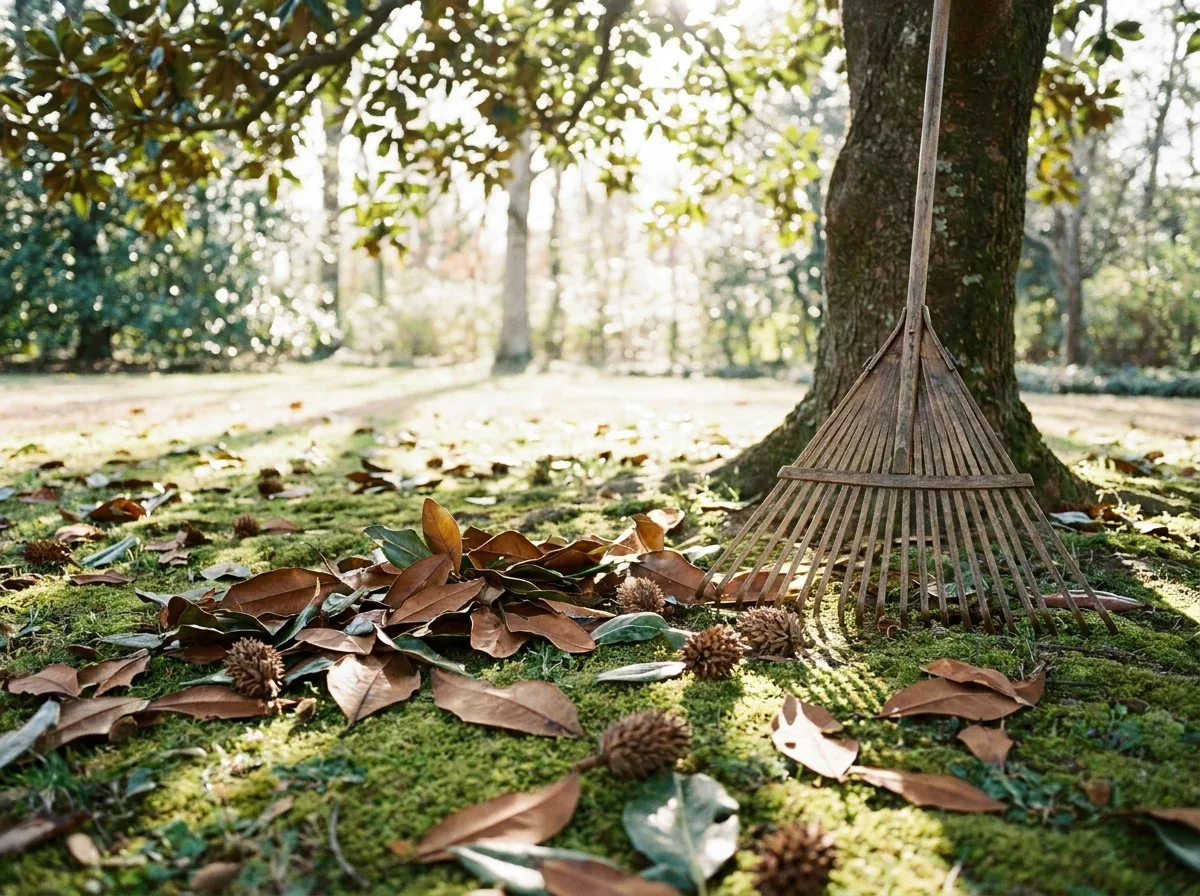
Litter is the honest cost of owning one. Leathery leaves decay slowly, and seed cones add more. Some owners leave leaves under the tree as natural mulch.
Can you cut the top off? You can reduce height, but "topping" leaves ugly regrowth and wounds. Light shaping after bloom is better. Bigger nursery trees also settle slower, which is why a smaller tree often catches up to a pricier one. Scale insects and leaf spot show up sometimes.
What Does a Magnolia Flower Mean, and Can You Eat It?
A magnolia flower symbolizes endurance, nobility and luck in many traditions, and it is the state flower of Mississippi and Louisiana. Some petals are edible and are pickled or used as a ginger-like spice. Identify the species first and never eat anything you aren’t sure about.
A nursery’s page on the magnolia flower ties it to Southern endurance, and the White House magnolia, planted in the 1820s from a Tennessee sprout, is a famous example. Forager Chef covers harvesting and pickling for edible blossoms.
For cut flowers, floral designers value the large blooms, though as a general rule large blooms are delicate, so handle them gently.
When Is It Cheaper to Call a Pro?
Call a certified arborist for large trees near the house, wires or septic lines, for suspected root problems, and for any pruning that needs a ladder or saw above your shoulders. A consult is cheaper than damage. Local codes and utility rules vary, so check yours.
Do the small stuff yourself: mulch, water, light shaping. Hire out the rest. Costs depend on tree height, access and region, so get a couple of quotes. If you suspect a utility conflict, call the utility before anyone cuts.
Frequently Asked Questions
How long do magnolia flowers last?
Individual blooms are short-lived, and weather changes how long. Heat, wind and rain shorten that. The tree’s overall show can run a few weeks because buds open in waves. Cold snaps cut it short on early bloomers, so a frosty spring may give you less than you hoped. Plant a later type if that keeps happening.
Do magnolias bloom more than once a year?
Most bloom once, in late winter to early spring or in late spring to early summer, depending on type. Little Gem is reported to keep producing blooms from mid-spring toward frost, but that is anecdotal. A random fall flower on a saucer magnolia is usually a one-off. For ideas that bloom in sequence, see our spring flowers guide.
What zones do Southern magnolias grow in?
Southern magnolia is generally grown in zones 7 to 9, per common gardener guidance. It struggles in colder places, and Harvard notes it is barely hardy in Boston. Treat those zones as a general range. Check the USDA hardiness map and ask your local extension office, since microclimates and wind exposure change the answer.
How fast does a magnolia grow?
Growth is moderate and varies by type, soil and water. Many magnolias add roughly a foot or less per year when young, which is a rough guess and not a measured figure. Compact cultivars are slower. Don’t expect a privacy screen overnight. Good drainage and steady moisture help more than fertilizer.
Can you grow a magnolia in a pot?
Yes, a compact cultivar or star magnolia can live in a large container for years. Use a heavy pot with drainage holes, a quality potting mix and regular watering, since pots dry fast. Expect to repot or root-prune eventually. In cold zones, move the pot to a sheltered spot for winter.
When is the best month to transplant a magnolia?
Late February to March, before growth starts, or late fall, are the usual windows, based on common gardener advice. Smaller trees survive moving far better. Dig wide, keep the rootball intact and water well afterward. For anything large, a professional crew is worth the cost.
Why did frost ruin my magnolia blooms?
Early bloomers open on bare branches before spring settles, so a hard frost browns open flowers. It’s the biggest myth-buster here: the tree isn’t dying, it just lost this year’s show. Next year’s buds usually form normally. If it happens every year, switch to a later bloomer or plant on a sheltered side.
Is magnolia toxic to pets?
Check the ASPCA list or ask a vet before letting pets chew any plant. Eating large amounts of leaves or seeds can upset a stomach on almost any plant. Keep pets from chewing on fallen cones and leaves, and rake litter where a curious dog hangs out. If your pet vomits, drools or seems off after chewing any plant, call a vet promptly.
How far from the house should I plant one?
As a general rule of thumb, give the tree room for its full mature width, and more for large types. The tag’s spread figure is the starting point. A full-size Southern magnolia needs far more room than a compact cultivar. Your local extension office can suggest setbacks for your area. Also keep roots clear of paving, pipes and septic lines.
What is the difference between saucer and star magnolia?
Saucer magnolia is a larger hybrid with big, cup-shaped blooms in pink, white or purple. Star magnolia is smaller, with narrow, strappy white petals, and it opens earliest. Both bloom before leaves, so both risk frost damage. Star suits tight spaces, while saucer needs more room. Compare the mature width on the tag before you buy either one.
Conclusion
Choosing a magnolia flower comes down to the same three checks: your zone, your frost pattern and your lot size. Get those right and the tree is one of the best flowering trees a US yard can hold. Get them wrong and you’re raking, trimming and repairing your siding.
Back to the homeowner from the opening. A compact cultivar, planted at the right depth and well away from the house, would have given the same bloom without the fight.
Looking ahead, smaller, hardier cultivars keep arriving, so tag-reading beats guessing. Your next step is simple: find your zone, measure your setback and read the mature width on the tag. For more yard ideas, see our guides to the olive tree and lemon tree.
So which is it for your yard: a tree that fills the sky, or one that fits the space?