Replace Sewer Line: How to Judge the Quote and the Method
Eighty feet of pipe, 8 feet down, and two quotes that sit $9,000 apart. Say a homeowner needing to replace sewer line pipe gets a camera report showing a cracked cast iron line, and the first bid is $6,000 while the second is $15,000. One plumber must be a crook, right? Not necessarily…
Most people who must replace sewer line pipe never see the real reason for the gap, which is depth, access and what sits on top of the pipe. The price tag is the least useful number on the page. The scope behind it tells you far more.
This is one part of keeping your home’s plumbing and drains healthy, and it pairs well with a plain-English guide to sewer inspections. Below you’ll get a repair-or-replace rule by defect, the factors that move the price, and a bid checklist. Grab your camera report if you have one.
Executive Summary
You can replace sewer line pipe without overpaying if you judge the scope first and the price second. This guide shows you how to match the fix to the defect. A belly (a sag that holds water) or an offset joint (two pipe ends that no longer line up) often rules out lining, while a cracked or root-filled pipe may suit it fine.
You’ll also see why quotes swing so widely. Depth, footage, concrete cutting, street tie-in and access drive most of the spread. One large vendor cites roughly $3,500 to $20,000, and homeowner stories run higher, so treat any single number with suspicion.
Finally, you’ll learn where insurance riders and home warranties quietly shrink payouts on old pipe, and what to do when a bad scope shows up during a home purchase. The biggest objection, "isn’t this just a plumber upsell?", gets a straight answer too: sometimes yes, and the camera footage settles it.
Where does your responsibility start when you replace sewer line pipe?
In many cities, you own the sewer lateral, the pipe running from your house to the city main, often all the way to the property line or street. The city owns the main. Rules differ by town, so confirm yours before you replace sewer line pipe because ownership decides who pays and who needs a permit.
Portland, Oregon is one example. Its building bureau says the owner is responsible for the line from the house to the curb, and the city can give notice that gives the owner 30 days to repair. Other cities draw the line differently. Some share cost at the right-of-way, and some cover the street portion.
Call your city or county building department and ask three things: where your ownership ends, whether the work needs a permit, and who locates the main. Five minutes on the phone saves you a bad surprise on a bid.
Does your sewer line need replacement or just cleaning?
Slow drains in one fixture usually mean a local clog. Multiple slow drains, gurgling toilets, sewage backups, sewer smell or soggy yard patches point to the main line. Cleaning clears blockages, but only a camera shows whether the pipe is cracked, sagging, offset or collapsed.
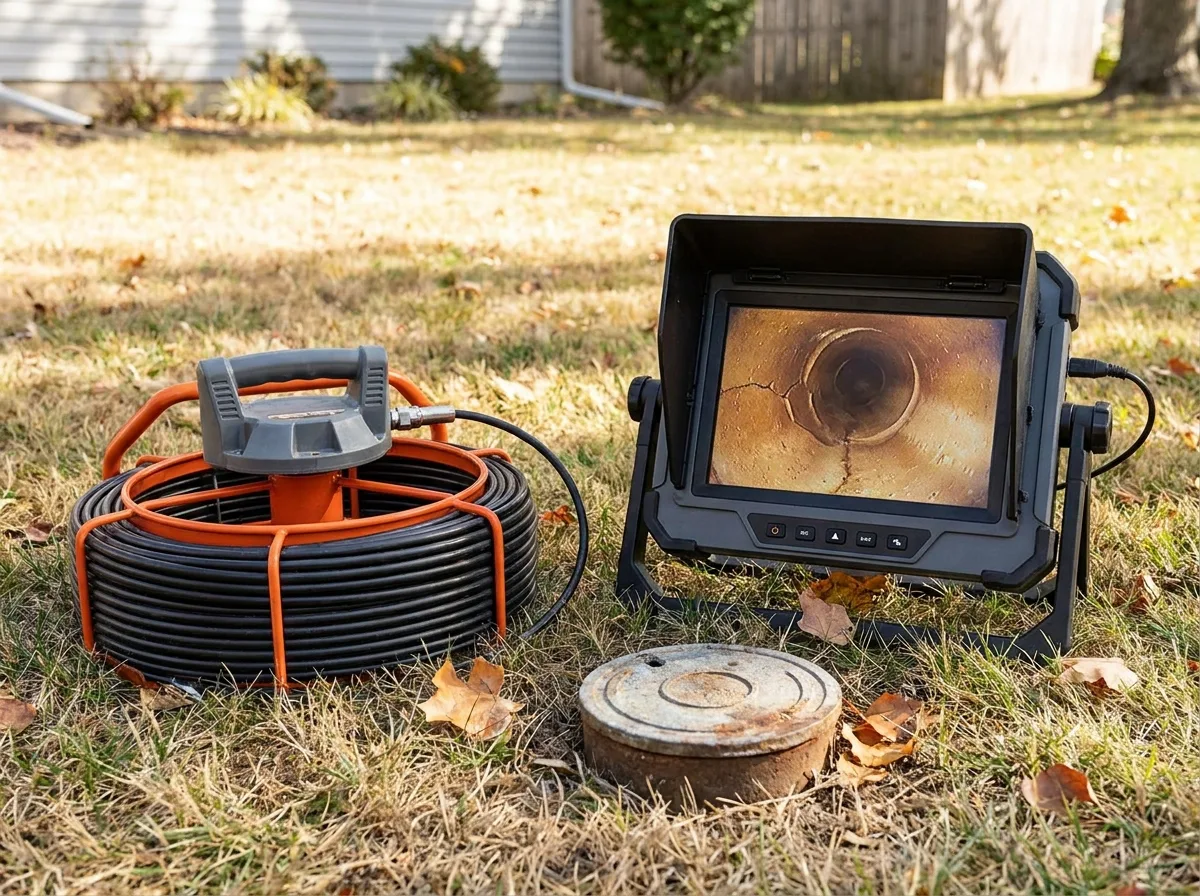
Here’s the part most people miss: a clog that keeps coming back is a symptom, not the disease. Rodding (snaking) or hydro jetting clears the pipe, then roots or a sag cause the next blockage.
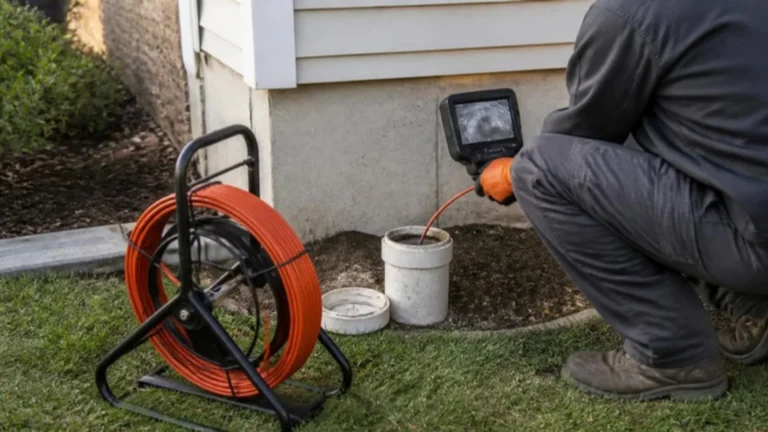
A camera run, covered in our sewer inspection guide, usually runs a few hundred dollars. Ask for the recording. Footage that shows the defect and its distance from the cleanout beats any verbal diagnosis. A plumber who "didn’t take pictures" is a plumber you can’t hold to a scope.
Should you repair, line or replace your sewer line?
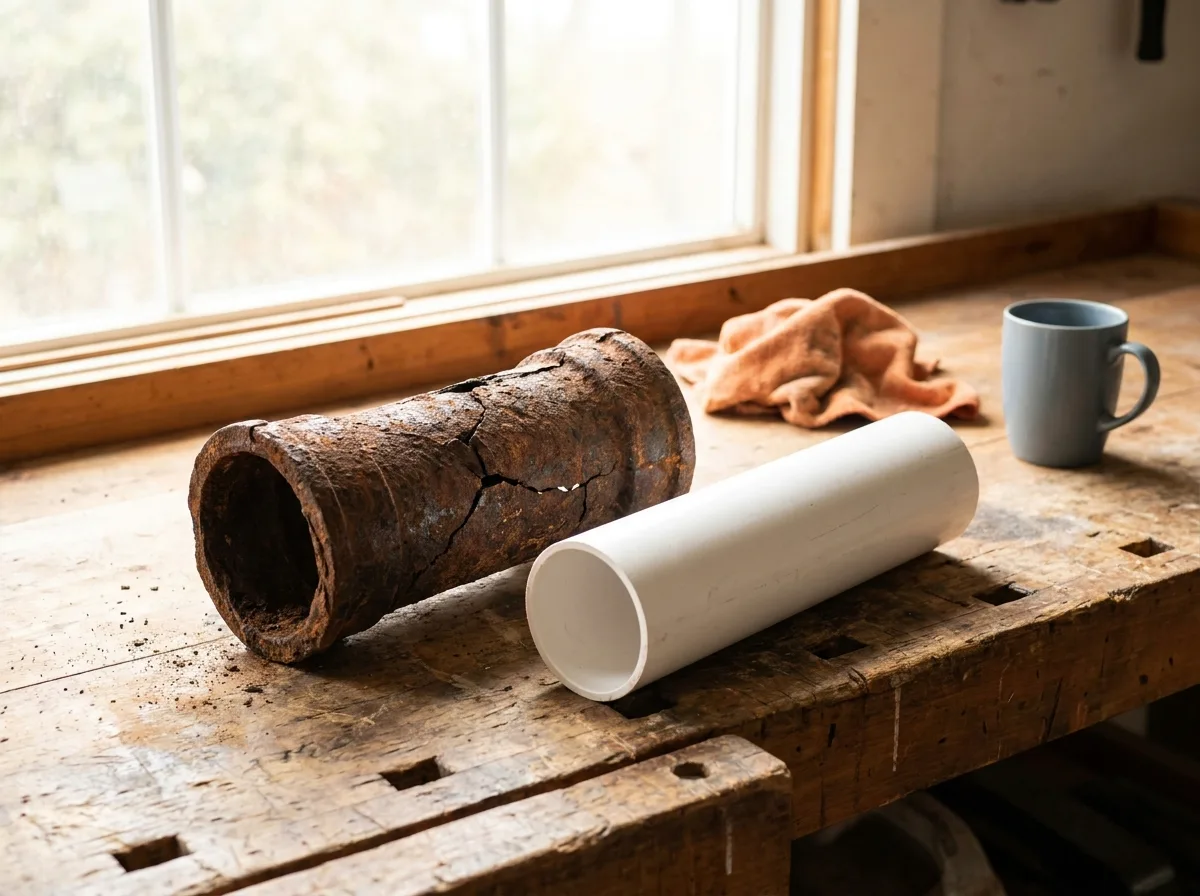
Match the fix to the defect. Spot repair suits one short damaged section. Lining (CIPP, a resin liner cured inside the old pipe) suits cracks and root intrusion in a pipe that is still straight. Full replacement suits collapse, bellies, offsets and Orangeburg, a tar-paper pipe common in mid-century homes.
| Defect on camera | Spot repair | Lining | Replace |
|---|---|---|---|
| One cracked section | Often fits | Possible | Overkill |
| Root intrusion, pipe straight | Short-term | Often fits | If pipe is failing |
| Belly (sag) | No | Usually no | Usually yes |
| Offset or separated joint | Only if single | Usually no | Often yes |
| Collapse | No | No | Yes |
| Orangeburg | No | Rarely | Usually yes |
The table is judged on one question: can the fix restore a straight, continuous slope? Lining follows the old pipe’s shape, so it can’t fix a bad slope. That’s why a lining quote on a belly deserves a hard question.
One myth deserves a correction. A belly isn’t automatically an emergency. A shallow one may work for years, so ask the camera operator how deep the standing water gets.
How much does it cost to replace sewer line pipe?
Expect a wide range when you replace sewer line pipe. One large vendor, Roto-Rooter, cites about $3,500 to $20,000, while homeowner stories regularly run higher once concrete, depth or a street tie-in enters the job. Treat any national number as a starting point. Your footage, depth and access set the real price.
Anecdotes from homeowner forums show the spread. One story had about $5,500 for 37 feet of cast iron under a slab. Another had $7,000 to $8,000 for a 30-foot dig that needed concrete cutting, and a deep front-yard run reached roughly $12,000. A line under a Chicago gangway went past $30,000. These are stories, not data, so use them to see the shape of the range, not to predict your bill.
Cleanup adds up too. Landscaping, driveway patching and sod restoration are often separate line items, so check whether they’re included.
Why do two quotes to replace sewer line pipe differ by $10,000?
Because the quotes often describe different jobs. Pipe depth, total footage, concrete or slab cutting, street tie-in, access for equipment and restoration scope each change labor and equipment. Two bids at different prices may be perfectly honest if one assumes a porch teardown and the other doesn’t.
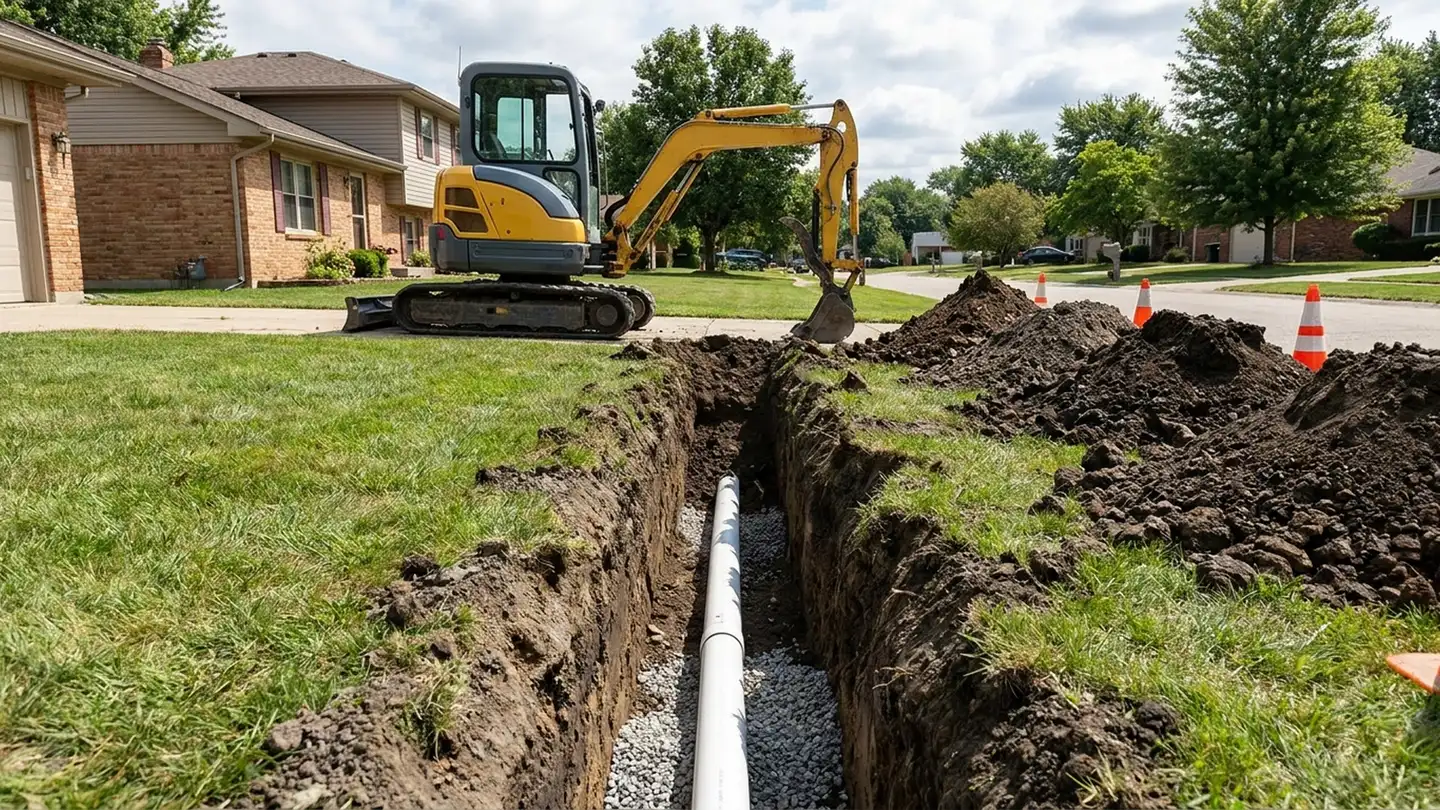
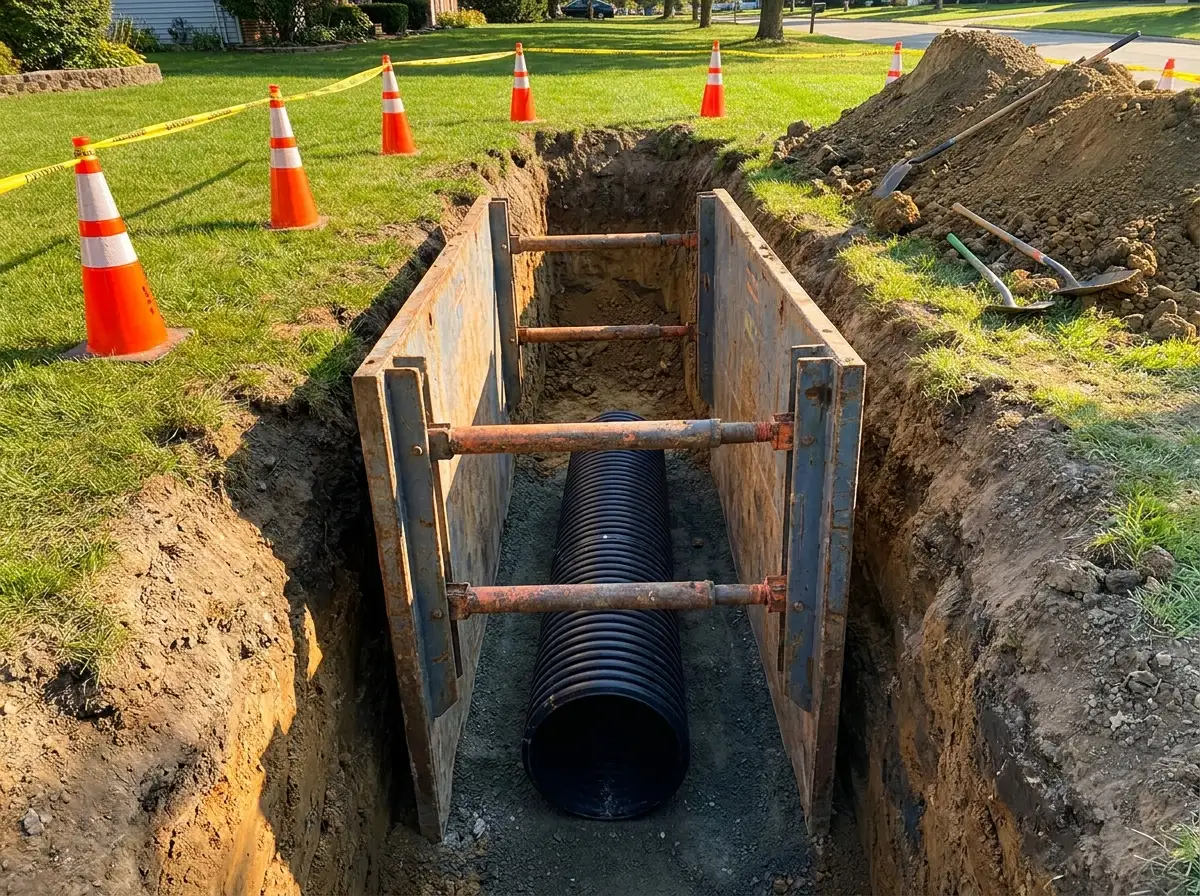
Take a typical 40-foot run. At 4 feet deep, an excavator opens a trench in a day. At 10 feet deep, the crew needs a trench box (a steel shield that keeps walls from collapsing), more soil hauled out, and more time. Add a concrete porch over the cleanout and the bid climbs again.
Here’s how to compare bids line by line:
- Camera proof: does the bid reference your footage and the defect location?
- Footage and depth: are both written down?
- Material: PVC or ABS, and which grade?
- Permit and inspection: who pulls it, and is it included?
- Restoration: concrete, landscaping, driveway, sod?
- Warranty: length, what voids it, and in writing?
- License and insurance: verify with your state board, not a card handed to you.
Get three quotes. If one is far below the others, ask what it leaves out.
Trench or trenchless: which way should you replace a sewer line?
Trenching digs up the whole path and works on almost any defect. Trenchless methods, lining or pipe bursting (pulling a new pipe through while breaking the old one), save your yard but need clear access points and suitable conditions. Choose by defect, depth and what is above the pipe.
| Method | Best for | Watch out for |
|---|---|---|
| Dig and replace | Bellies, offsets, collapse | Yard and driveway restoration |
| CIPP lining | Cracks, roots, straight pipe | Fails on sags and collapse |
| Pipe bursting | Aging clay or cast iron, straight run | Needs entry pits, nearby utilities |
Lining isn’t a cheap fake, and it can beat a full replace sewer line dig when the pipe is straight. Contractors quote warranties up to 50 years, though those are vendor claims and terms vary, so read the paper. It simply can’t straighten a bad slope. Roots can also return at the lateral connections if the liner doesn’t seal there, so ask how they’re handled.
What permits apply, and can you replace a sewer line under a slab?
Nearly all sewer work needs a permit and an inspection before the trench is backfilled. Under a slab, you have two choices: break out the concrete and replace the pipe, or tunnel beneath. Both cost more than a yard dig, sometimes by tens of thousands.
Permit rules vary by city, so ask the building department. In Portland, repairs need a permit and inspection before the pipe is covered. Skipping it can cause trouble at resale.
Slab work splits two ways when you replace sewer line runs under a house. Breakout is faster but means demolishing floors, then patching and finishing them. Tunneling digs two access pits and bores under the house. A contractor anecdote put tunneling near $20,000, and slab breakouts reportedly climb higher. Get both priced, then compare the disruption as well as the dollars.
Who pays: insurance, warranty plans and buying a house with a bad scope
Standard homeowners policies usually exclude wear, tear and root damage. Service line riders can help but often cut payouts on old pipe, and home warranties may cap or exclude failures caused by age. Read the exclusions before you need them, and ask in writing what counts as old.
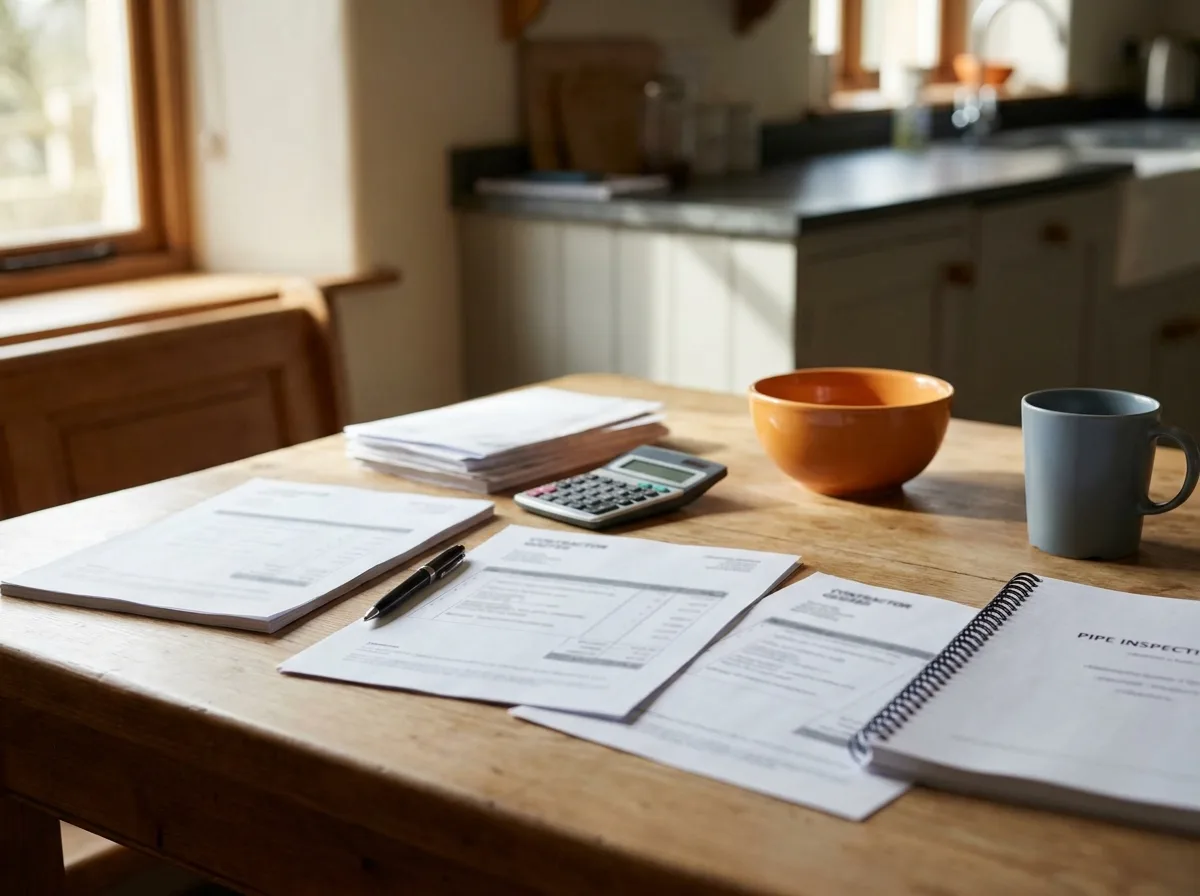
A common fine-print trap goes like this: a rider advertised at $10,000 pays only $2,500 when the pipe is deemed old. That’s a figure reported on forums, an anecdote and not a rule, so check your own paper for "pre-existing" and "age" clauses.
If you’re buying and the scope shows trouble, don’t let the seller patch it. Get three quotes, then negotiate a credit or price cut and hire the contractor yourself. A seller’s repair tends to be the cheapest bid, and it’s your pipe afterward.
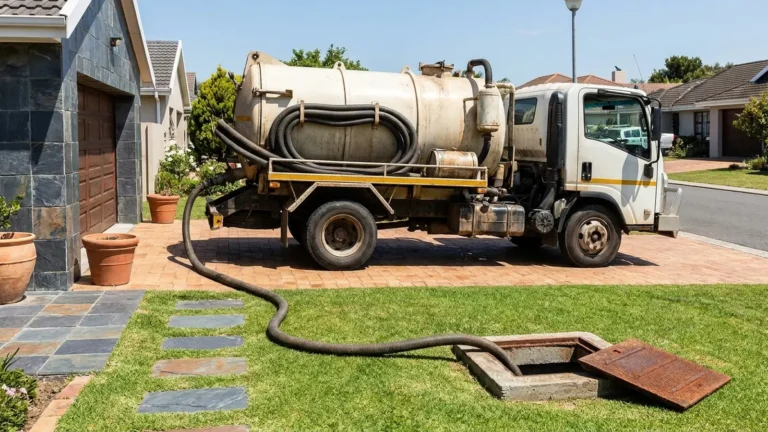
For comparison, if your home uses septic instead of a city sewer, septic tank pump-out basics cover a different set of duties.
Can you replace sewer line pipe yourself?
Technically yes, practically rarely. You need a permit, a utility locate through 811, trench safety, correct slope, and an inspection before backfill. Trench collapses are deadly. Most owners save little once equipment rental and mistakes are counted, so hire out the dig and shop the bid hard.
A common version of this mistake: an owner digs 6 feet down without a trench box, hits an unmarked line, and ends up paying a pro to fix both. Depth is where DIY plans fall apart.
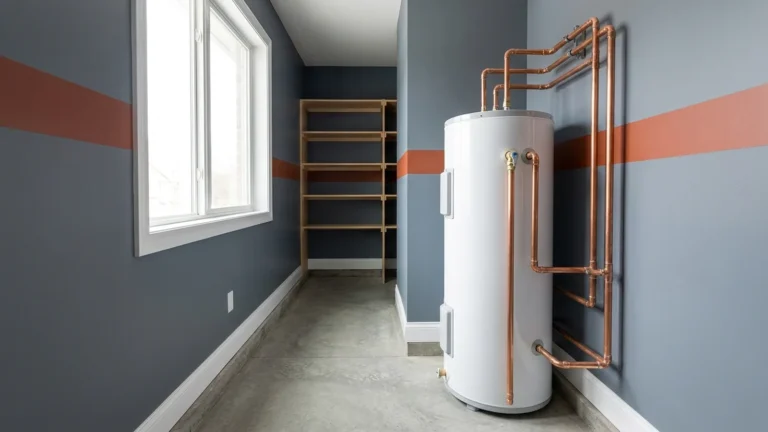
If you still want to help, handle the prep: clear the yard, photograph everything and call 811. Other home projects, like replacing a hot water heater, can involve permits or a licensed pro depending on local codes, and a sewer line is a bigger step still.
Frequently Asked Questions
How long does a new sewer line last?
Roto-Rooter puts typical line life near 50 years and warranties on trenchless work up to 50, which are vendor claims. Old materials fail sooner, and Noble Plumbing commonly cites Orangeburg at 30 to 50 years and clay at 50 to 60. Soil, roots and installation quality all change the real number.
Does lining stop roots?
Lining seals the pipe walls and joints it covers, which blocks most root entry. It doesn’t make the pipe root-proof forever. Roots can find unsealed lateral connections, so ask the contractor how those are finished. Pair the work with a camera check after the first year or two.
Is a belly an emergency?
Not by itself. A belly holds water and debris, which raises clog risk, but a shallow one can work for years. Ask for the camera footage and the depth of standing water. A belly that causes repeat backups is worth fixing. Ask the camera operator to mark its length and depth, and have the recording saved so every bidder prices the same defect and you can track any change over time.
Can the seller repair it?
Better to take a credit. A seller’s contractor is usually chosen for price, and you inherit the result with no say in method, materials or warranty. Get three quotes, negotiate the amount in writing, and hire your own contractor after closing, so the warranty is in your name.
Do city mains share the cost?
Usually the city handles its main and you handle the lateral, but boundaries differ. Some cities cover the portion under the street, and a few share costs for tie-ins. Call your public works or building department and ask exactly where ownership ends before you sign any bid.
How deep is a sewer line?
Roto-Rooter cites roughly 6 to 12 feet or more. Local conditions vary, and the pipe must also slope toward the main. Depth is a major cost driver, so get the measured depth written on the quote rather than assumed, and ask what happens to the price if the trench turns out deeper.
Do I need a permit?
Almost certainly. Portland, for example, requires a permit and an inspection before the pipe is covered. Requirements vary by city and county, so ask your building department. A licensed plumber normally pulls it, and unpermitted work can cause trouble with insurers and at resale.
How long does replacement take?
A straightforward yard dig often runs one to a few days, plus restoration. Slab work, deep pipe or street tie-ins take longer, and inspections can add waiting time. Trenchless jobs can be quicker on the pipe itself. Ask for a written schedule and when water service will be off.
Is a home warranty worth it?
Often not for sewer lines. Many plans exclude pipe failures tied to age, roots or pre-existing damage, and caps can be low. Read the sewer clause before buying. If your main worry is old pipe, a camera inspection tells you more than a warranty brochure.
Can you live in the house during the work?
Usually yes, with limits. Plan on limited water use while the line is open, and you may lose bathroom use for part of a day. Slab breakout is the exception, because floors and finishes are torn up. Confirm the plan with your contractor.
Conclusion
The cheapest way to replace sewer line pipe is to buy the right fix once. That means a camera report you can read, a repair-or-replace choice tied to the defect, and bids you compare on scope instead of headline price. The $9,000 gap from the opening usually comes down to depth, concrete and tie-in, and now you can see it on paper.
Looking ahead, trenchless methods keep spreading, which should give you more options, though they still can’t fix a bad slope. Next step: request three written quotes with footage, depth, permit and restoration spelled out.
Planning more plumbing work? Our guide to how septic tank pump-out timing works and the one on replacing a hot water heater make good next reads. Once you’ve set the scope, what will you ask the second contractor that the first one never mentioned?