Christmas House Ideas: Styles You Can Pull Off at Home
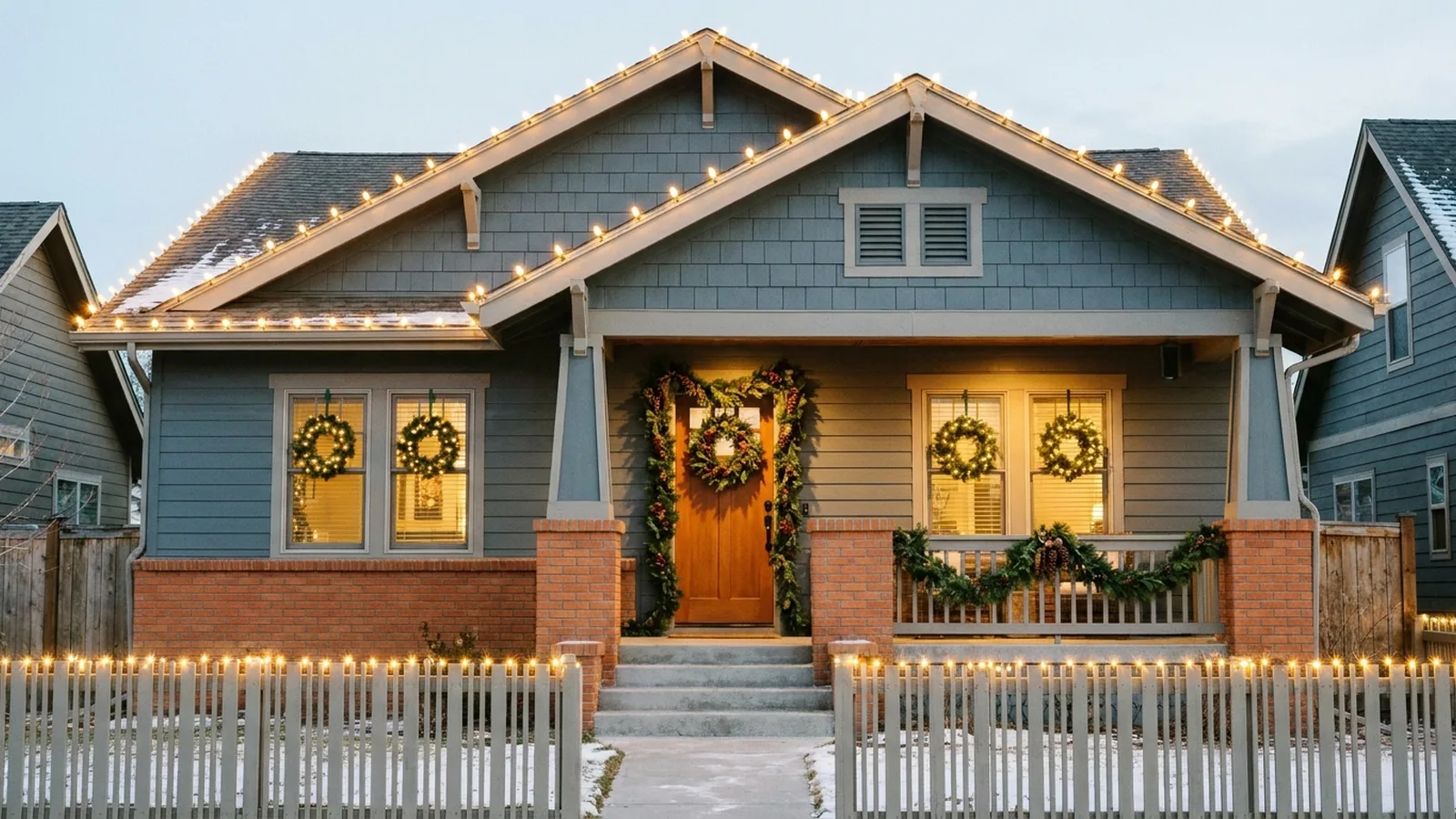
Say you drive home on the first of December and see it. Your neighbor’s roofline glows, a wreath hangs on every window, and a lit sleigh sits on the lawn. Your own porch has a single sad string of bulbs from last year, half of them dead. You wonder what it takes to get a christmas house of your own that looks that good, and what the January electric bill will say about it.
The houses that stop traffic are rarely the ones with the most stuff. They’re usually the ones with a plan: one style, one color story, and lights placed where the architecture already asks for them.
This guide gives you that plan. You’ll learn how to pick a style that fits your home, light the outside safely, estimate the cost to run it, and decorate the inside without a clutter explosion. It’s one part of the bigger job of choosing a suburban house layout and style that suits how you live.
Executive Summary
A good christmas house comes from restraint, a clear style and a bill you can predict. You can get there with one color palette, lights on the lines your house already has, and decorations you’ll reuse for years.
Here is what the guide covers:
- Style first. Five looks (classic, vintage, modern minimal, cabin, whimsical) with the effort and running cost of each.
- Safety and power. Outdoor-rated cords, GFCI outlets and timers matter more than any bulb count. A simple formula turns watts into dollars.
- Interior and budget. Mantels, garland and ornaments that survive pets, plus ways to reuse and DIY.
- The line. Where festive turns into "too much," and how to handle neighbors.
The biggest hesitation is usually money. Decorating can cost less than expected if you buy slowly and store well, as the hypothetical example in the cost section shows. Skim to the section you need, and use the table in the style section for the short version.
What does "christmas house" mean, and which one are you after?
A christmas house usually means a home decorated for the holiday, inside and out. The phrase also points to the 2020 Hallmark movie, a charity in Washington state, indoor Christmas attractions and miniature village houses. This guide covers the first meaning: decorating your own home so it looks festive and stays practical.
Search the term and you’ll find movie pages, a book by Erin Napier, ticket sites and shops selling tiny glittered cardboard houses. If you came for the film, it’s a Hallmark Channel release from November 2020, and it’s fiction. If you came for the miniatures, jump to the village section below.
Most readers want something simpler: ideas for their own front door, mantel and yard. That’s the thread here.
Which christmas house style fits your home?
For a christmas house, pick the style that matches your home’s architecture and your tolerance for upkeep. Classic red and green suits most homes. Modern minimal suits clean lines. Cabin style suits wood and stone. Vintage and whimsical suit people who enjoy fussing. Match the look to the house, not to a catalog.
Here’s how the five stack up. Effort and running cost are relative ratings I’ve judged from typical setups, not measured figures.
| Style | Look | Setup effort | Running cost |
|---|---|---|---|
| Classic | Red, green, wreaths, white lights | Medium | Medium |
| Vintage | Large bulbs, tinsel, glitter village | Medium | Medium to high |
| Modern minimal | White or warm lights, one wreath | Low | Low |
| Cabin | Evergreens, pine cones, candles | Medium | Low |
| Whimsical | Inflatables, Santas, color everywhere | High | High |
Classic and vintage
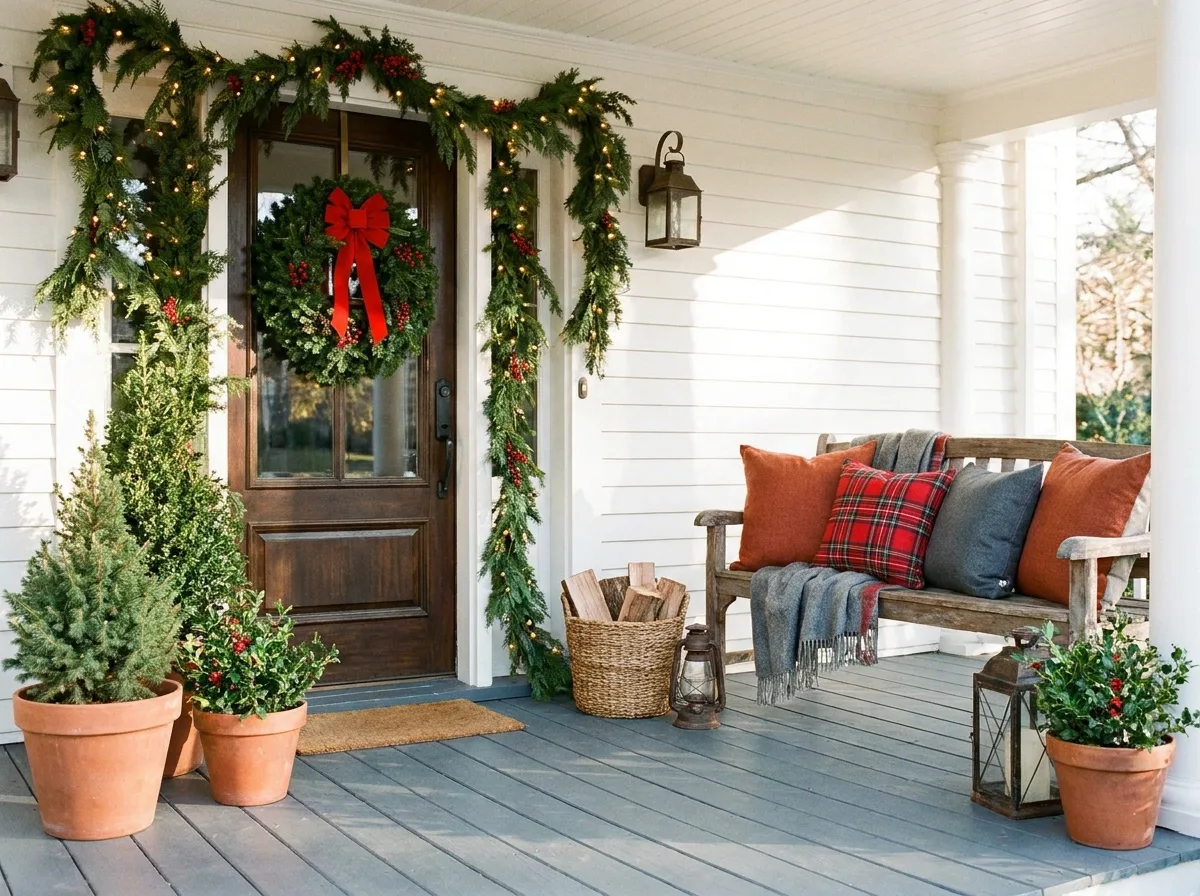
Classic is the safe choice for a reason. Evergreen garland on the door, a wreath on each window and warm white lights along the roofline read as Christmas from the street. Vintage adds oversized bulbs, nutcrackers and retro Santa figures. It’s charming, but it takes more storage space.
Modern minimal and cabin
Minimal means one oversized wreath, a lit tree in the window and maybe a ribbon. Cabin style leans on evergreens, frosted pine cones and wood. Both work well on homes with strong trim and porch lines, which carry most of the visual weight.
Whimsical
This is the multiple-Santas house, the inflatable snowman, the Candy Cane Lane look. It’s fun and it’s loud. One honest warning: it’s also the priciest style to power, so do the math below before you commit.
How do you plan and light a christmas house exterior safely?
Start with the roofline, then the door, then the trees and shrubs. Use outdoor-rated lights and extension cords, plug into a GFCI outlet, and put everything on a timer. Never run cords through a closed door or window. If you need new outdoor power, call a licensed electrician, since codes vary by location.
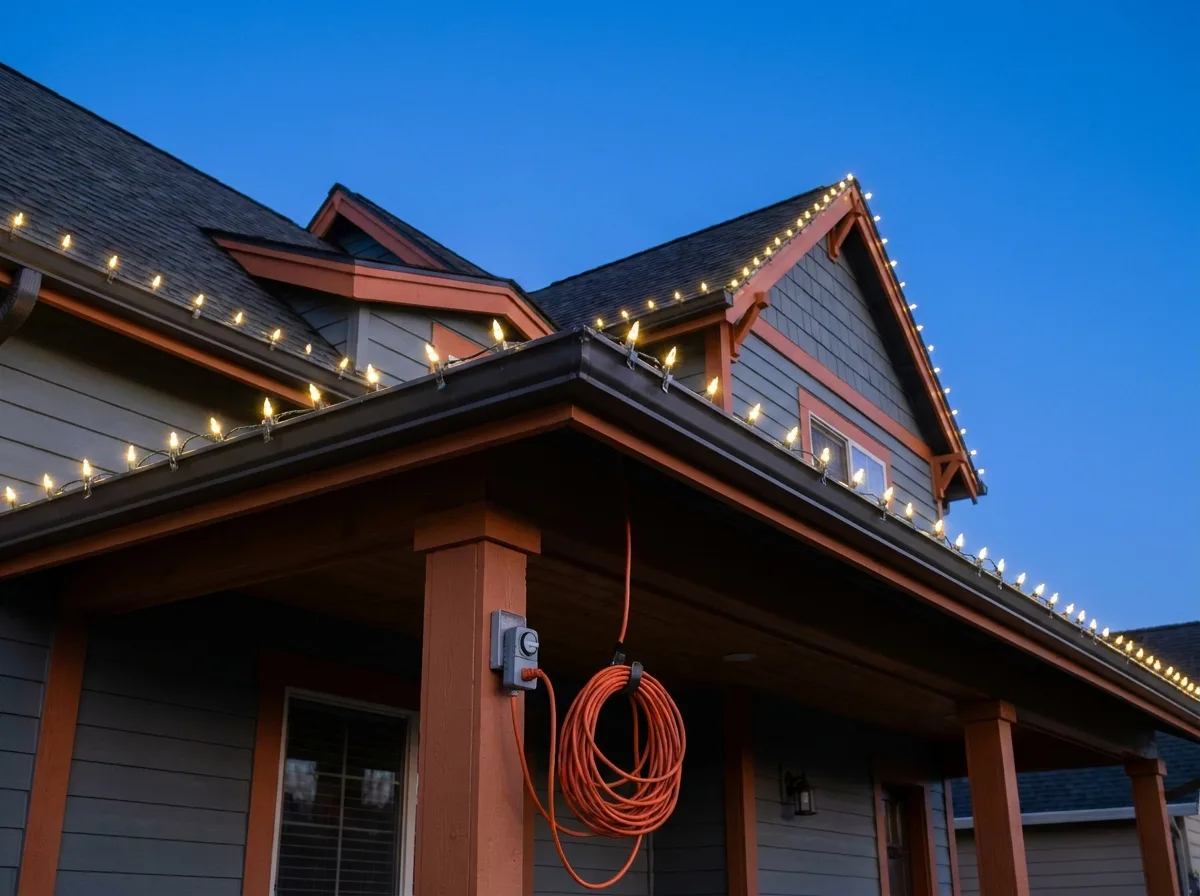
Walk the front of your house at dusk with a flashlight. Note where lines already exist: the eave, the porch posts, the window frames. Light those first. Roofline clips beat staples and nails because they don’t damage shingles or wire insulation.
A common version of this mistake goes like this. Someone buys indoor lights because they were cheaper, strings them across wet shrubs, and trips a breaker on the first rainy night. Outdoor-rated products carry that label for a reason, and a GFCI outlet cuts power fast if something gets wet.
Time estimate: a simple roofline and door take most people an afternoon. A full display takes a weekend. Stay off the ladder alone, and skip the roof when it’s wet or windy.
How much does a christmas house cost to run?
Running cost equals watts times hours, divided by 1,000, times your electricity rate. A modest display costs little to run, while a big one can add a noticeable amount to your bill. LED strings use far less power than incandescent ones, so they cut the number most people worry about.
Let’s do the math with hypothetical numbers. Say your display draws 400 watts for 6 hours a night over 30 nights. That’s 72 kilowatt-hours. At an assumed 16 cents per kilowatt-hour, you’d pay about $11.50. Check your own bill for your real rate, since it varies a lot by state.
Now picture the "Holy electric bill Santa" house from the Reddit threads: blow-up figures, motors, floodlights and thousands of bulbs. That setup draws many times more. The bill climbs with every inflatable fan and every incandescent string.
LED or incandescent? LEDs run cooler and use much less power. Warm white LEDs match the old glow well. A smart plug or timer is the cheapest savings tool you can buy.
How do you decorate the inside without clutter?
Choose one focal point per room, such as the tree, the mantel or the entry table, and repeat one or two colors. Add greenery in layers: garland first, then ornaments, then candles or lights. Keep breakables above pet and toddler height. Fewer items placed deliberately look richer than a crowded surface.
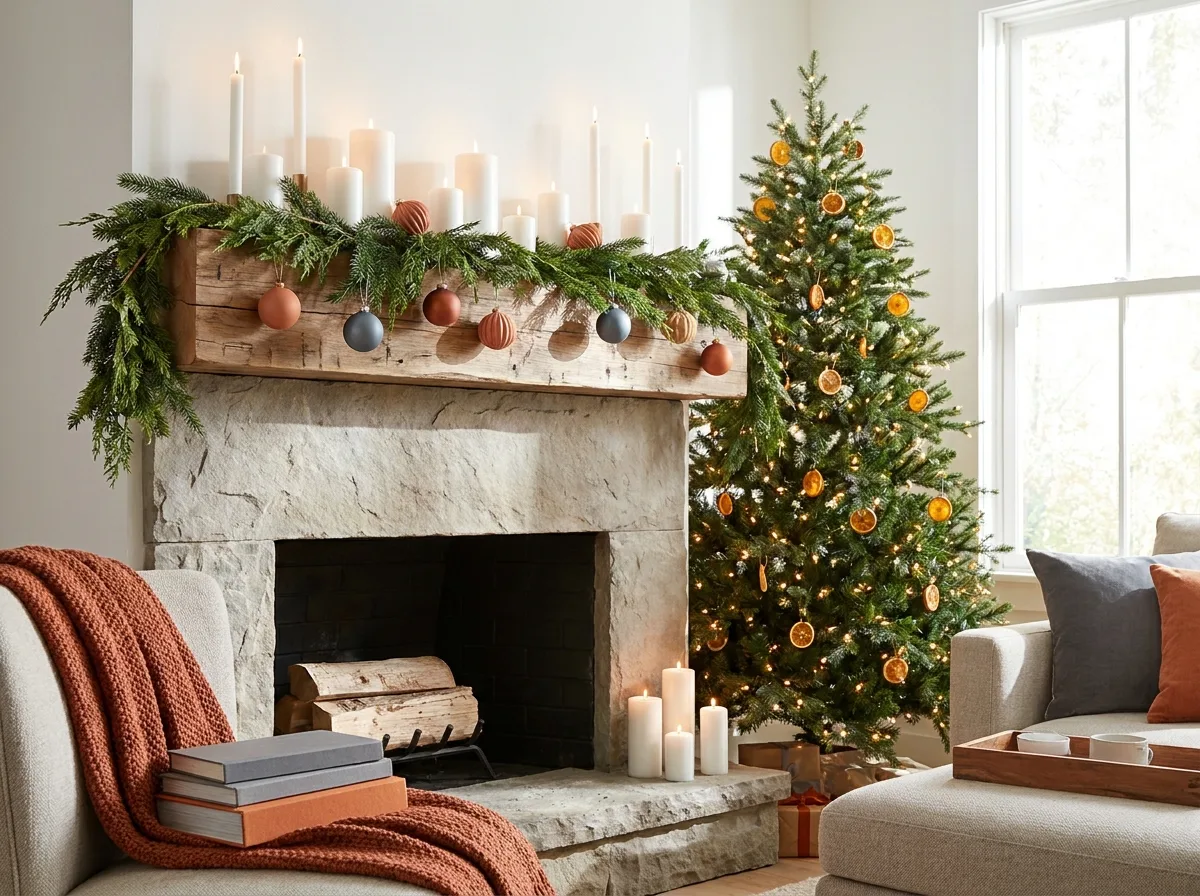
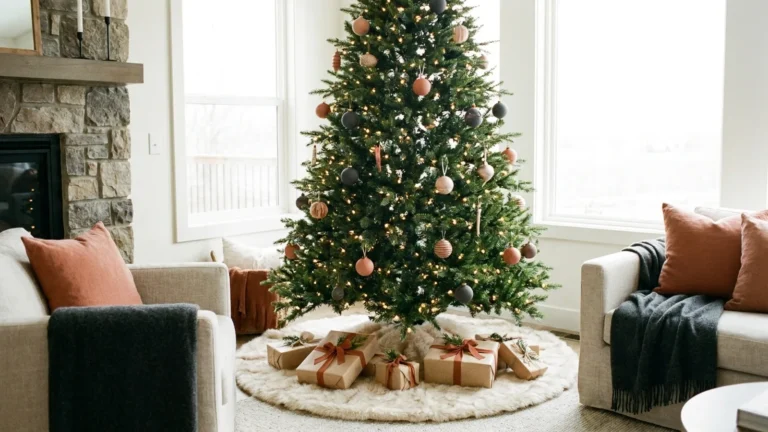
The mantel is the usual star. Hang garland, add a few evergreen sprigs and place candles or flameless lights at different heights. For the tree itself, see how many ornaments you need and in what order in our guide to Christmas tree decorations, and pick a tree skirt that covers the stand and fits your floor.
Pets deserve a plan. People often report cats and dogs destroying glass ornaments, so hang the fragile ones high and put shatterproof ones low. In an open-plan or small space, one big tree beats three small displays.
Can you decorate on a budget with DIY and reuse?
Yes, a christmas house can be built on a budget. Reuse what you own, buy a little each year, and make a few things by hand. Frosted pine cones, ribbon, cloth ornaments and fresh evergreens cost little. Good storage turns each purchase into a 10 to 25 year investment, which is how many people on Quora describe their baubles.

Take a typical first-year shopper with a small porch. A sensible plan: warm white LED strings for the roofline, one wreath, two outdoor-rated cords and a timer. Next year, add garland. The year after, add a feature. That slow build beats a single expensive haul, and nothing ends up in the garage unused.
DIY ideas that work: frosted pine cones from the yard, ribbon cut to a child’s height and tucked in a clear ball, and simple cloth ornaments. Photo printing is a small trap, since a Reddit poster found drugstore prints of the house looked poor on cards. Test a single print first.
Storage and takedown. Use labeled bins, wind lights around a piece of cardboard and keep wreaths in a bag. Takedown timing is personal. Some people start in October, and some leave trees up until Valentine’s. Pick a date and stick to it.
Where is the line between festive and too much?
The line is personal, but a good test is whether the display still looks intentional from the street. Neighbors, HOA rules and your own sense of calm set the limit. Joining a shared display like Candy Cane Lane lets you go big without carrying the whole load.
Reddit has a polite phrase for the maxed-out house: "too much and a bit tacky, but to each their own." Respect that spirit. Check HOA rules before you buy a giant inflatable, and keep lights off by a sensible hour.
Community displays flip the question. One West Allis street runs four blocks of lights, and some collect donations for children’s charities. A lone house that goes huge draws cars. A whole street spreads the work and the cost.
Miniature villages. Putz houses are small glittered cardboard buildings, and shops list about 45 models at roughly $60 to $150 each. They’re worth it if you love collecting. They aren’t if you wanted impact on a budget.
Frequently Asked Questions
Why do people decorate houses for Christmas?
People decorate for ritual, nostalgia and belonging. Some traditions trace back to Saturnalia, when Romans used evergreens and candles. Today a lit christmas house signals welcome to neighbors and gives families a yearly routine. That’s why decorations often hold sentimental value far beyond their price tags.
Do other countries decorate like the US?
Not usually at the same scale. Quora answers say the UK keeps decor quieter, and inflatables arrived from the US only in the last 20 to 30 years. Many Europeans admire the excess. Still, string lights and wreaths appear in homes around the world each winter.
Do LEDs always look cold?
No, that’s a myth. Warm white LEDs exist and match the glow of old incandescent bulbs well, while cool white ones suit icy palettes. Check the color label on the package before you buy. LEDs also use much less power, which keeps the running cost of a christmas house down.
Do you reuse decorations every year?
Yes, most people do. Quora answers describe keeping baubles for 10 to 25 years because decorations are expensive. Store them in labeled bins, wrap breakables in paper and test every light string before you hang it. A reused christmas house costs less each year, since only bulbs and cords need replacing. Start with the pieces you will use every year.
What colors work for a christmas house?
Red and green is the classic choice. White and gold feels elegant, and all-white looks modern. Pick two colors and repeat them outside and inside, so the whole christmas house feels like one idea. Warm white lights pair with almost anything, while cool white suits icy palettes and contemporary homes best.
How long do outdoor lights last?
It depends on the type and the weather. LED strings generally outlast incandescent ones, and outdoor-rated products survive rain better. Check the package rating and test strings each year before hanging them. Replace any set with cracked sockets or frayed wire, because a damaged cord is a fire and shock risk on any christmas house.
Can you leave lights up all winter?
You can if they’re rated for outdoor use and on a timer, but it’s rough on them. Snow, ice and wind wear down cords and clips. Many people take them down by mid-January, though some leave trees up until Valentine’s. Inspect plugs before you switch them on again.
What are putz houses?
Putz houses are small glittered cardboard houses arranged as a miniature Christmas village. Vintage ones are collected, and new ones sell for roughly $60 to $150 at specialty shops. They sit on mantels or shelves. Display them with a light source behind the windows. Many people use them on a mantel as a small indoor christmas house village, and some add cotton batting for snow.
How do I make easy DIY decorations?
Start with what you already have. Frost pine cones with white paint, tie ribbon into bows, or cut cloth into simple ornaments. A clear ball filled with ribbon cut to a child’s height makes a keepsake. All take under an hour and cost little. Mix a few handmade pieces with store-bought ones so your christmas house looks collected over time, not copied from a store window.
Is the Hallmark movie based on a real house?
No. The Hallmark movie is a fictional story about a family at Christmas, released in November 2020. The title is the same, but it isn’t a guide to a real home. If you wanted real decorated homes, look at your neighborhood or a Candy Cane Lane street.
Conclusion
A great christmas house isn’t the one with the most lights. It’s the one with a clear style, safe power and a bill you saw coming. Remember the neighbor with the glowing roofline? You can get there with one palette, lights on the lines you already have and a few decorations bought slowly.
LED strings and smart timers make a tidy display easy to manage. Your next step is small: walk the front of the house at dusk and sketch where the lights belong.
For more help, read about Christmas tree decorations for the interior, or explore a suburban house guide for street-level curb appeal. Which part of your house is begging for light first?