Casement Window Guide: Styles, Costs and the Downsides Nobody Mentions
Say you’re standing in a showroom with a quote for eleven replacement windows. The salesperson keeps tapping the casement samples and saying "tightest seal on the market." Meanwhile the number on the page is bigger than your last car repair. Is a casement window really worth the premium, or is that a sales line with a crank on it?
Here’s the honest answer: casements do seal better than most other types. They also have moving parts that wear out, a screen on the wrong side of the glass, and a habit of blocking window air conditioners.
This guide is one part of planning a window replacement, and it sits next to our look at the double hung window, the type you’re probably comparing it with. You’ll get the styles, the efficiency facts, a room-by-room decision rule, cost reality, egress basics and the failure points.
Executive Summary
A casement window is hinged on one side and opens outward with a crank. It gives the best airtight seal and the biggest ventilation opening of the common types, but it costs more, has parts that wear, and does not suit every wall.
You’ll learn how the hardware works, which styles exist (including double casement windows with no center post), and why "more efficient" depends on air leakage, U-factor and solar heat gain, not just the sash style. A comparison table settles casement versus double hung versus slider by room and climate. We cover the downsides most product pages skip, bedroom egress, frame materials, and how to read wildly different installed quotes.
The biggest objection is price, and that’s fair. A casement window carries a premium for its hardware and seal. The answer is that you don’t need casements everywhere. Mixing them with fixed units is often the smarter, cheaper layout.
What is a casement window and how does it work?
A casement window has a sash hinged along one vertical edge. You turn a crank, an operator arm pushes the sash outward, and the whole pane swings open like a door. A latch pulls it tight against a compression seal when closed. That design gives you full-glass ventilation and a snug seal.
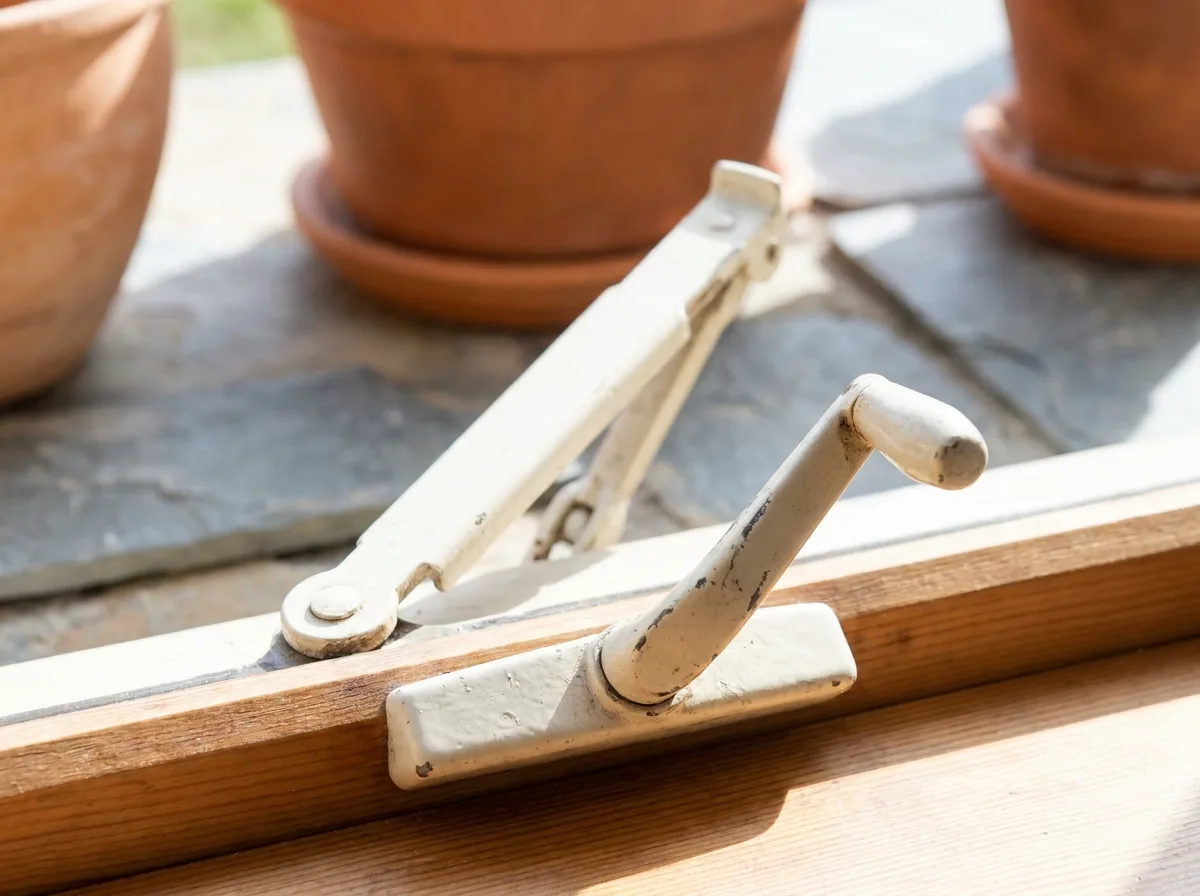
The parts are simple. A crank handle turns a gear, a hinge arm (scissor or friction type) moves the sash, and a multipoint lock pulls the sash into the frame at several spots. Because the sash presses into the weatherstripping instead of sliding past it, wind pushes it tighter.
One quick myth to clear: casement does not mean sliding.
What are the main styles, including double casement windows?
The main styles are the single casement, double casement windows (two sashes meeting in the middle with no post), the push-out casement that opens by hand, and casements paired with fixed glass. Each changes the view, the airflow and the cost, so match the style to the wall.
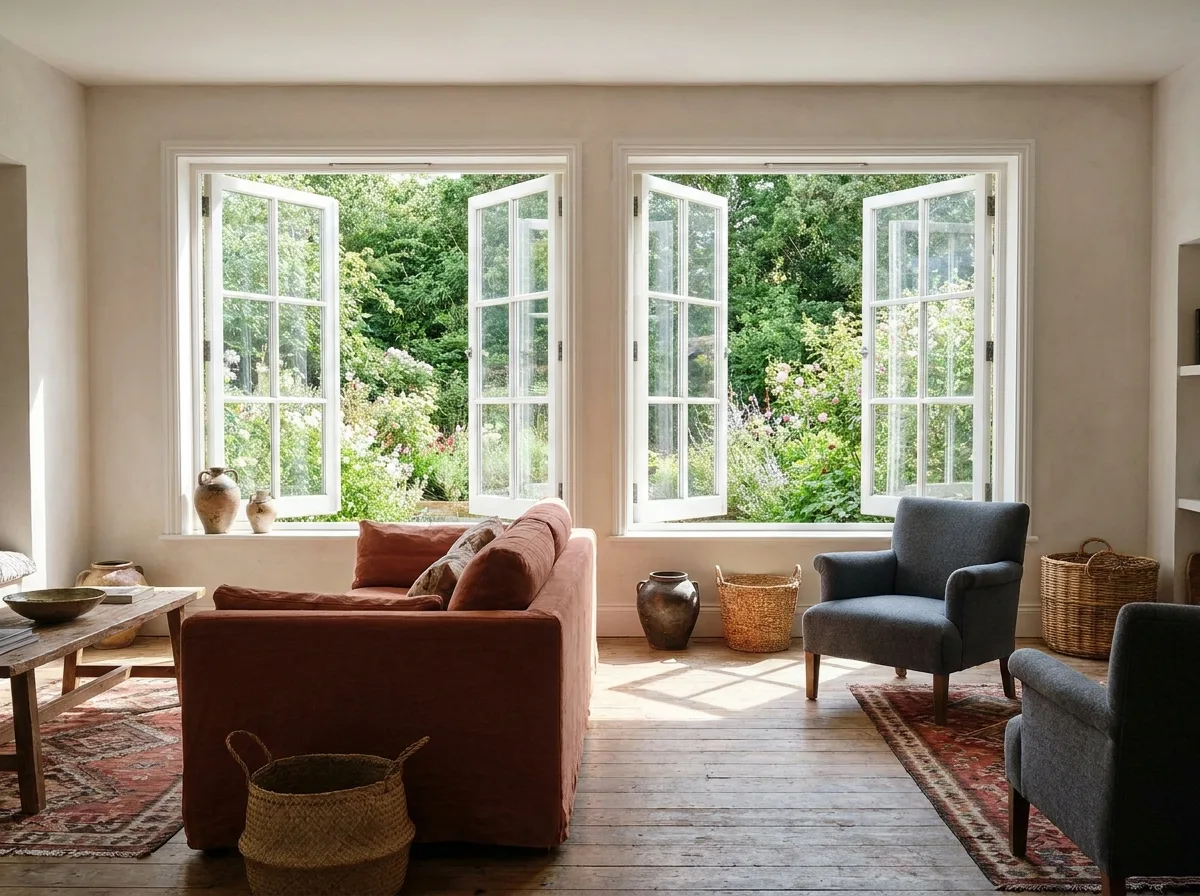
A single casement suits narrow, tall openings. Double casement windows, sometimes called French or twin casements, give a wide clean view when both sashes open. Push-out versions skip the crank and use a lever, which is cheaper and has fewer parts to break, though they feel less solid in wind. A third common layout puts a fixed picture window in the middle with a casement on each side. Those stationary flankers cost less than three operable units and leak less too.
Are casement windows more energy efficient than other windows?
Casements usually leak less air than sliders and hung windows, because the sash compresses against the seal. But total efficiency also depends on U-factor, solar heat gain coefficient (SHGC), glass coatings and frame material. A good casement beats a poor one of any type, so read the label.
According to the U.S. Department of Energy, casements are relatively airtight, and air leakage appears in the NFRC directory in cubic feet per minute per square foot. Lower is better. ENERGY STAR doesn’t require that figure, so you must look it up.
U-factor typically runs from about 0.2 to 1.2, and lower insulates better. SHGC runs from roughly 0.20 to 0.80. Cold climates want low U and higher SHGC. Hot climates want low SHGC. So "casements are always more efficient" is true for leakage, not automatically for the whole window.
Casement window vs double hung vs slider: which should you choose?
Pick a casement for tight sealing, full ventilation and hard-to-reach openings. Pick a double hung for lower cost, easy screens and window air conditioner use. Pick a slider for wide, low openings where a crank has no room. Climate, room and budget decide it.
Here’s a quick table, judged on what homeowners complain about most.
| Feature | Casement | Double hung | Slider |
|---|---|---|---|
| Air seal | Best | Fair | Fair |
| Ventilation | Full opening | Half | Half |
| Moving parts | Crank, hinges | Balances | Rollers |
| Window A/C | No | Yes | Sometimes |
| Screen | Inside | Outside | Outside |
My opinion: in a drafty cold-climate house, casements win. In a rental-style room with a window unit, don’t fight it. Sort out your window air conditioner plans before you decide.
What are the real downsides of casement windows?
Cranks wear out, hinge arms bend, ice can freeze a sash shut, screens sit inside, and you can’t mount a window air conditioner. Casements also open outward, which is a hazard over decks or walkways. Most casement window failures are hardware, not glass.
A common version of this story: a homeowner replaces a casement whose crank broke, and two winters later the new one strips too. Cranking a sash against ice or forcing it open in wind puts torque on the hinge arm. Over time that can stress the seal as well.
Kids are another weak point. A child leaning on an open sash can bend the arm. None of this makes a casement window a bad buy. It’s a reason to buy decent hardware and limit casements to rooms where you value the seal.
Which rooms and walls suit casements best?
Casements work best where you want strong ventilation or a clean view: over kitchen sinks, in tall narrow openings, in bedrooms needing egress, and beside fixed picture glass. Skip them where a deck, path or window air conditioner needs the space outside.
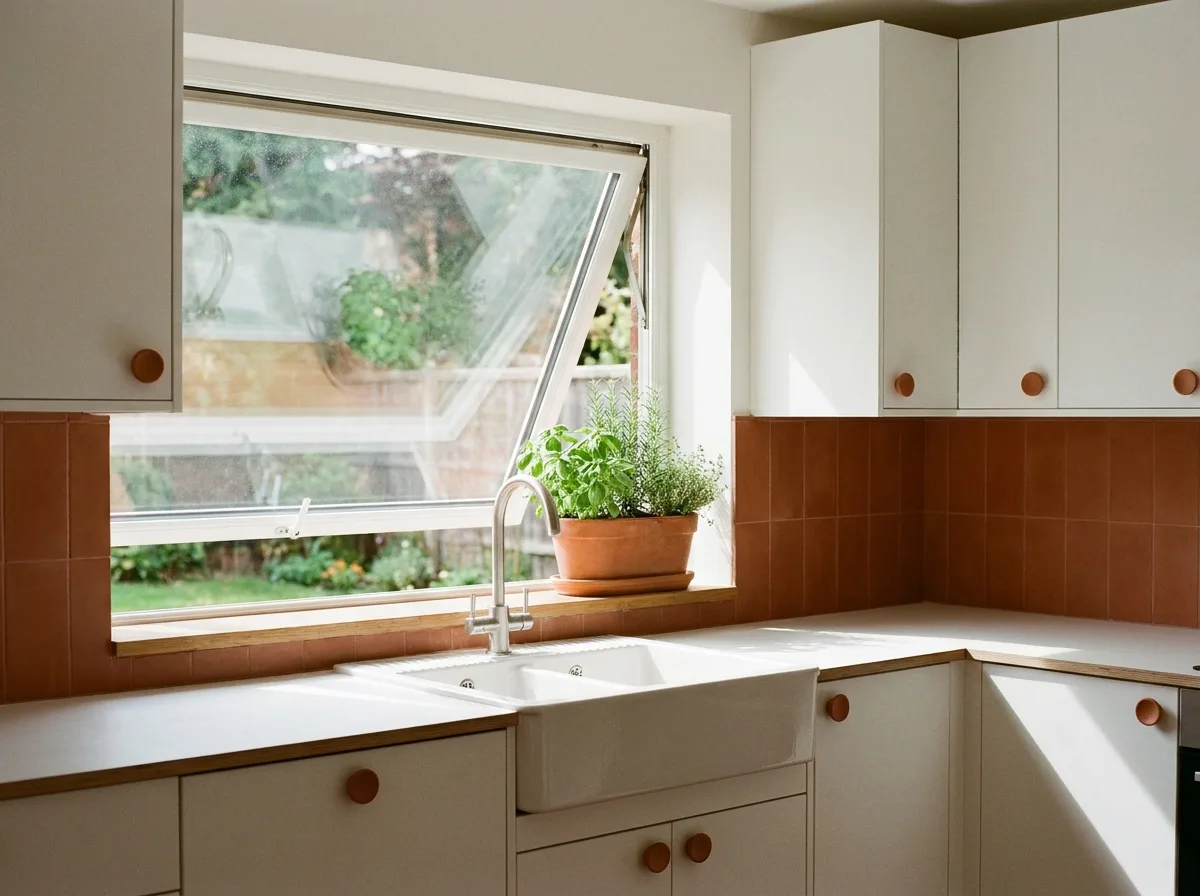
Over a kitchen sink a casement window crank saves you a long reach, and the sash can angle to catch a side breeze. Bathrooms like the awning-style cousin because it vents during rain. The room where a casement window shines least is anywhere you plan a window A/C unit.
For a window air conditioner, don’t try to force one into a casement. Use a portable unit with a vent kit or a split system. Blinds work if they clear the swing, and short window treatments or a sill-height shade are the safest bet. For adjacent sills, see how to choose and protect a window sill.
Do casement windows meet bedroom egress rules?
Often yes, because the whole sash swings open, but the hinged sash blocks part of the opening, so the clear size is smaller than the frame. Typical bedroom rules ask for about 5.7 square feet of clear opening. Codes vary, so confirm with your building department.
Typically a bedroom escape window needs about 5.7 square feet of clear opening, at least 20 inches wide and 24 inches high, with the sill no higher than 44 inches. Codes vary by town, so check locally. Check the manufacturer’s listed clear opening for the exact model, not the frame size, and confirm it before you order.
What frame material is best for casements?
Vinyl is the budget pick, fiberglass is the stable all-rounder, wood and clad wood suit period homes, and aluminum fits mild or coastal climates when thermally broken. Match the material to your climate and your tolerance for painting or upkeep.
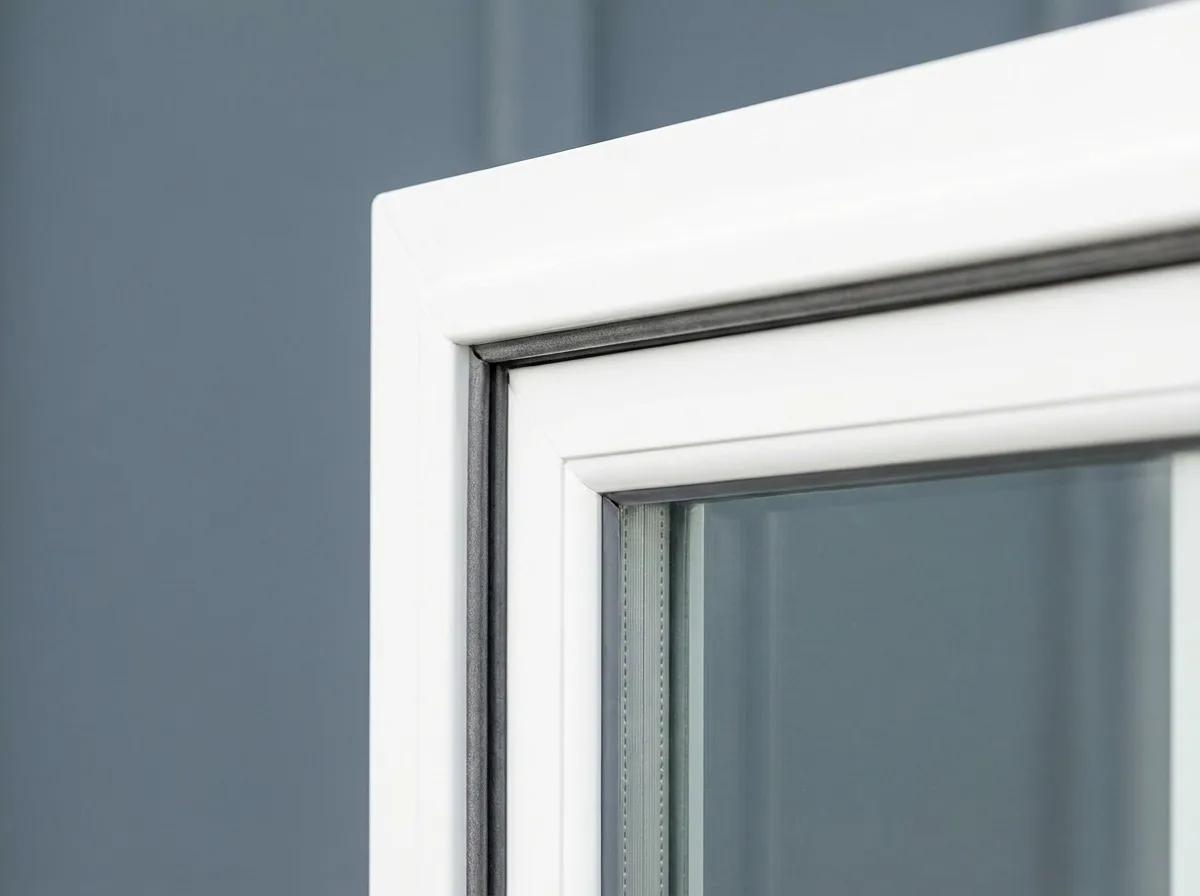
For a casement window, vinyl costs least and needs no paint, though large units can flex, and dark colors tend to absorb more heat. Fiberglass is generally considered dimensionally stable, which can help long-term seal life. Composite blends like Fibrex sit between the two. Wood looks great and insulates well but asks for finishing. Pair any frame with double-pane low-E glass, and consider argon fill. Triple pane can help in very cold regions, though it costs more.
How much does a casement window cost installed?
Casements usually cost more than comparable hung windows, and installation can rival or exceed the window itself. Price depends on size, frame, glass, brand, whether trim or siding must change, and who does the work. Exact figures vary widely, so compare line-by-line written quotes rather than totals alone.
Treat this as anecdote, not a price list. In Reddit homeowner threads, people report quotes as high as roughly $3,000 per window from a big national chain, with local installers often coming in far lower for similar work. Nearly identical jobs can swing by a factor of two or more, and national chains are commonly reported as the highest. Casements are also commonly reported to cost more than hung windows. A frequent pattern: the first quote drops sharply once a second and third contractor enter the picture.
Here is a purely hypothetical example. Say a homeowner needs eleven windows and one quote is double the other two. The gap usually traces to full-frame versus insert work, trim and siding repair, or a premium brand.
Costs jump when jamb extensions, siding repair or new trim are needed. Ask whether the quote is full-frame or insert, what’s included in labor, and whether the installer is on the manufacturer’s authorized list. Get three written quotes and compare line by line.
What breaks on a casement and how do you fix it?
The usual failures are a stripped crank, a bent or loose hinge arm, a worn seal, and a stiff or iced-shut sash. Most are fixable with replacement parts, but a broken lock or warped sash may mean replacing the unit.
If the crank feels stiff, clean and lightly lubricate the track and arm with a silicone-based product before forcing it. Never pry on an iced sash. Let it thaw. Replacement operators are sold by many manufacturers, so note the brand and model off the frame before you order.
Frequently Asked Questions
What does casement mean?
A casement window is a sash attached to its frame by hinges on one side. It swings open outward, usually by a crank. The word comes from the hinged design, not from sliding. If a window glides sideways on a track, you’re looking at a slider. That confusion is common, and it matters when you compare quotes and product pages.
Do casement windows leak more or less than double hung?
They usually leak less. The sash presses into a compression seal, and wind pressure makes the fit tighter. Double hung windows slide past their seals, which leaves small gaps. Still, a cheap casement with worn weatherstripping can leak, so compare the air leakage figure on the NFRC label instead of trusting the type alone.
Can casement windows open inward?
Yes, but they’re uncommon in the US. Inswing casements are often seen in other markets, and they can interfere with curtains, furniture and screens. Most American casements open outward so the sash seals against rain. If you want an inward-opening style, look at tilt-turn windows and expect a higher price and check who can install and service them locally.
Why does my casement crank feel stiff?
Usually dirt, dried lubricant or a slightly bent hinge arm. Clean the track and arm, then apply a silicone-based lubricant, not heavy grease. If the sash binds only in one spot, check for paint or swollen trim. A crank that still grinds after cleaning often needs a replacement operator. A replacement operator is cheap next to a new unit.
Do casements need special screens?
They need interior screens, since the sash swings outward. These sit inside the frame and are usually easy to pop out. The downside is that they sit near curtains and can get bumped. Most manufacturers sell matching screens, so measure the opening and order by brand if you ever lose or tear one.
Are casement windows safe from break-ins?
It depends mostly on the lock and the installation. A multipoint lock pulls the sash tight at several spots, which can be harder to defeat than a single latch. Still, glass is glass. Keep sashes locked, ask about laminated glass, and have the unit installed squarely so the lock engages fully.
Do casements work in hurricane areas?
Some do. Impact-rated glass and frames are available. Look for a rated design pressure and local approval for your area, since requirements differ by county. Never assume a standard casement qualifies. Ask the supplier for the product approval documents, and ask your building department which ratings apply where you live.
Is a sliding casement a real casement?
No. A side-sliding window is a slider, even if a retailer lists it under casement. A true casement is hinged and swings outward on arms. The distinction affects air seal, ventilation, screens and price, so read the product description and the operating type before you compare any numbers between two quotes.
How long do casement cranks last?
It varies with the quality of the operator, how often you use it, and whether it’s kept clean. Plan to replace a crank or hinge arm at some point, long before the glass or frame wears out. Parts are usually inexpensive compared to a full window, so a repair often beats a replacement.
Are casement windows worth the extra cost?
They’re worth it in the right spots. If you want a tight seal, full ventilation and a clean view, the premium can pay back in comfort. If you rely on a window air conditioner or hate cranks, skip them. If you want a bigger statement, a bay arrangement can mix casements with fixed glass, as these bay window ideas show.
Conclusion
Back to that showroom. The sales line about the tightest seal was mostly true, but it left out the crank, the screen and the A/C problem. A casement window is a good tool, not a universal upgrade. Use it where its strengths count, and put cheaper fixed or hung units everywhere else.
Your next step is simple: walk the house and sort each opening into three piles. Ventilation and seal matter, casement. Window unit or deck, hung or slider. View only, fixed. Then ask for three quotes on that mixed layout.
For your next read, start with the bay window guide or the window sill breakdown. Which opening in your house would you swap first?