
Olive Tree Ideas & Styles: How to Choose the Right One for Your Home
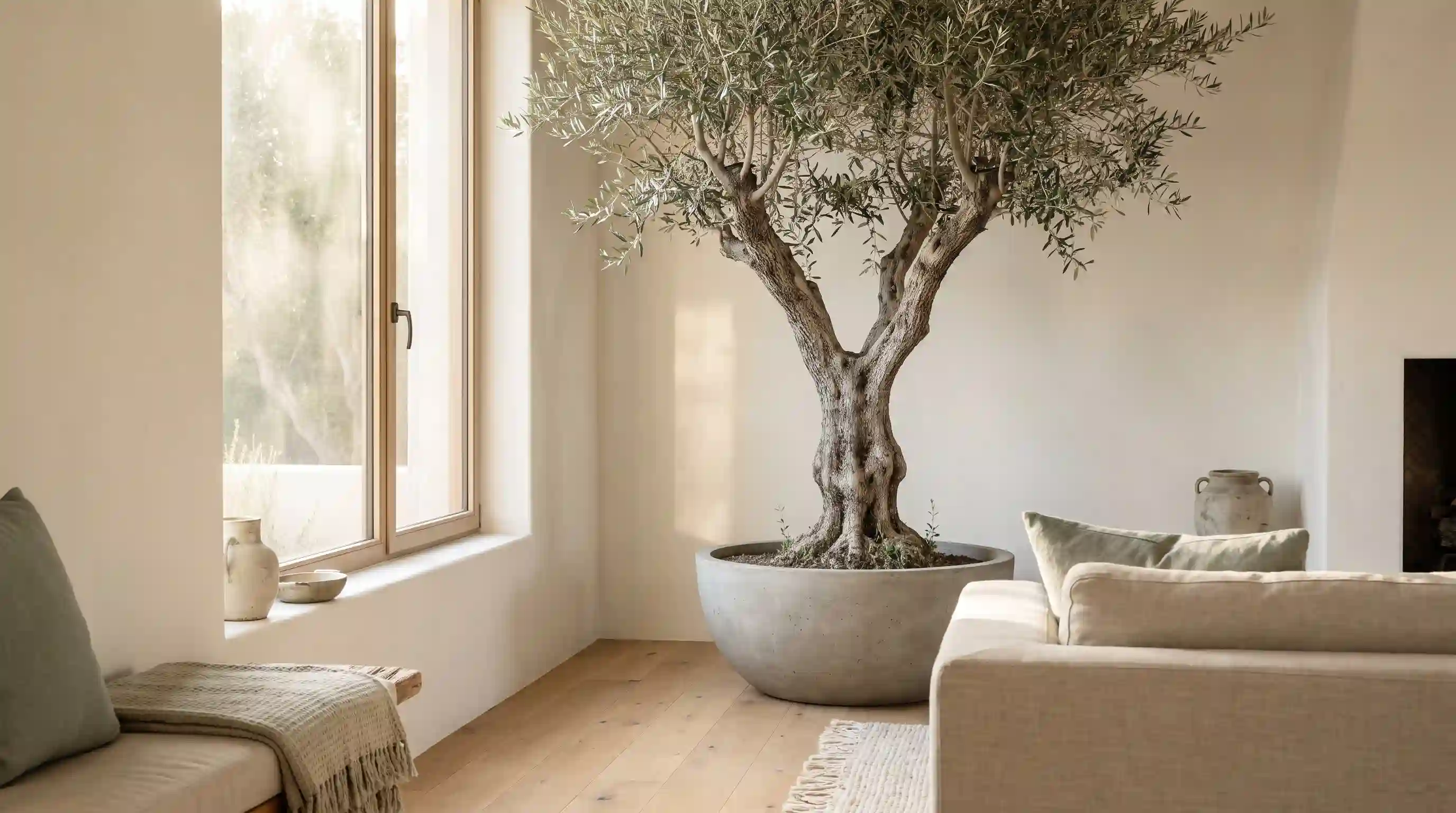
Walk into almost any home tour or design account right now and you’ll spot one: a tall, silvery-green olive tree anchoring a living room corner or flanking a fireplace. It’s quietly replaced the fiddle leaf fig as the statement plant designers reach for, and it’s not hard to see why. The gnarled trunk and soft, wind-brushed leaves do something a glossy ficus never could. They make a room feel collected instead of decorated.
Here’s the catch nobody mentions in the pretty photos. There isn’t just one olive tree. There’s the real Mediterranean kind that wants full sun and a specific climate, a totally different tropical tree that’s trending under the same nickname, and a growing world of faux versions good enough to fool a house guest. At Terrace Place, we get asked which one actually makes sense for a given room more than almost any other plant question. This guide breaks down the real varieties, the trendy look-alike, and the faux option, so you can pick based on your light, your climate, and how much fuss you actually want to deal with, not just how it looks in someone else’s living room.
Why the Olive Tree Became Home Decor’s Go-To Statement Plant
The look itself explains most of it. Olive tree leaves run a muted sage-to-silver color that reads as calm rather than lush, and that neutral tone is a big part of why it pairs so easily with linen, light wood, and stone. Design writers have started calling the broader look “Mediterranean modernism” or “quiet luxury,” and the olive tree sits right at the center of it. Where a fiddle leaf fig demands attention with big glossy leaves, an olive tree adds height and texture without shouting. It works in a minimalist space, a coastal-leaning room, or a warmer traditional one, which is a rare kind of versatility for a single plant.
There’s also a practical reason it’s everywhere. A gnarled, slightly asymmetrical trunk gives a room a sense of age and character that most nursery plants can’t fake, and that’s exactly the kind of detail people are chasing when they say they want a space to feel “collected” instead of freshly furnished.
The Classic Mediterranean Olive Tree: What It Actually Needs
The true olive tree, Olea europaea, is the same tree that’s been grown around the Mediterranean for thousands of years for its fruit and oil. As a houseplant or landscape specimen, it’s valued for its narrow silvery leaves, twisting silver-gray bark, and slow, sculptural growth habit. It’s also genuinely low-water once established, which is part of the appeal for anyone tired of babying finicky plants.
What USDA Hardiness Zone Does an Olive Tree Need?
A real olive tree is reliably hardy outdoors in USDA zones 8 through 11. Zone 8b and the warmer edge of 8a can work with some winter protection, but temperatures that dip much below the mid-teens Fahrenheit will damage or kill an unprotected tree. If you’re anywhere colder than that, the tree still isn’t off the table. It just needs to live in a container that comes indoors, or into a bright garage or sunroom, once nights turn cold.
Growing an Olive Tree Indoors: Placement and the Mistake Almost Everyone Makes
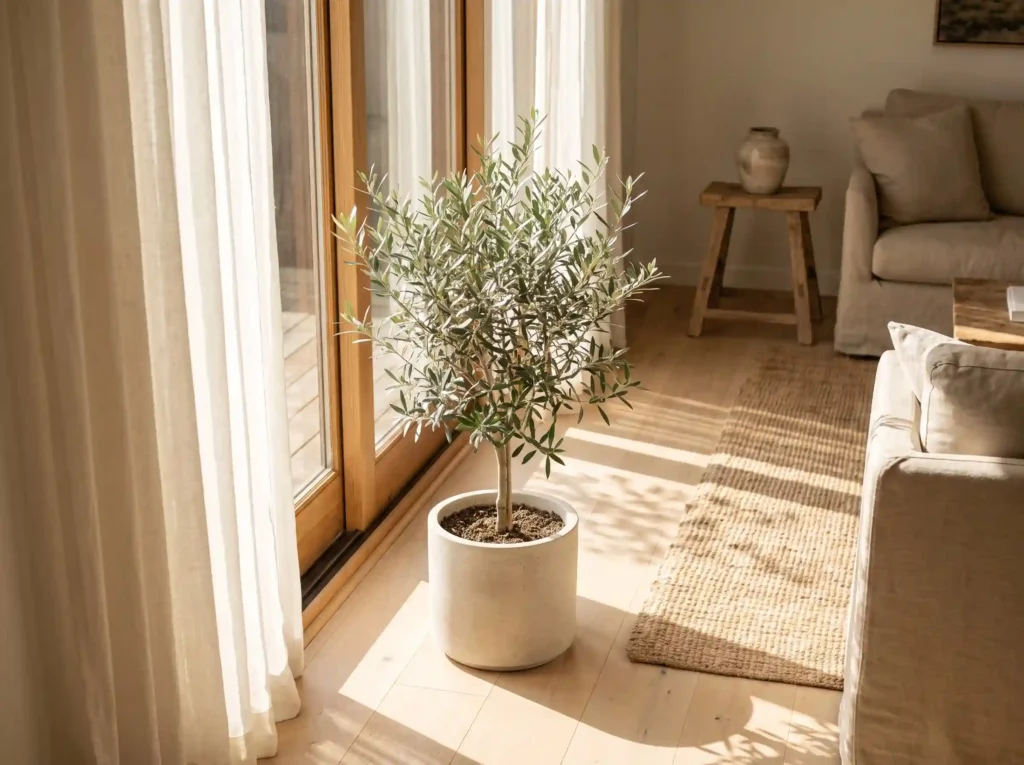
Indoors, light is the entire game. An olive tree wants your brightest window, ideally a true south-facing one, and it will tell you fast if it’s not getting enough. Thin, leggy new growth and a canopy that starts looking sparse instead of full are both signs the spot isn’t bright enough, not signs the plant is dying.
The single most common mistake is treating an olive tree like a typical houseplant that wants a consistent watering schedule. Real olive trees actually prefer to dry out noticeably between waterings, and soil that stays damp is one of the fastest ways to trigger yellowing leaves and root problems. A quick rule of thumb that works well: water deeply, then leave it alone until the top two inches of soil are dry to the touch.
A few placement basics that make a real difference:
- Put it near a south or west-facing window whenever possible. A bright window seat or garden window setup is often the best indoor spot in the house for it.
- Rotate the pot a quarter turn every couple of weeks so growth doesn’t lean toward the light source.
- Use a well-draining potting mix rather than standard indoor potting soil, which tends to hold too much moisture around the roots.
- Move it outdoors for the warm months if you can. Even a few months of real sun and airflow noticeably improves density and color when it comes back inside for winter.
Arbequina, Koroneiki, and the Other Varieties Worth Knowing
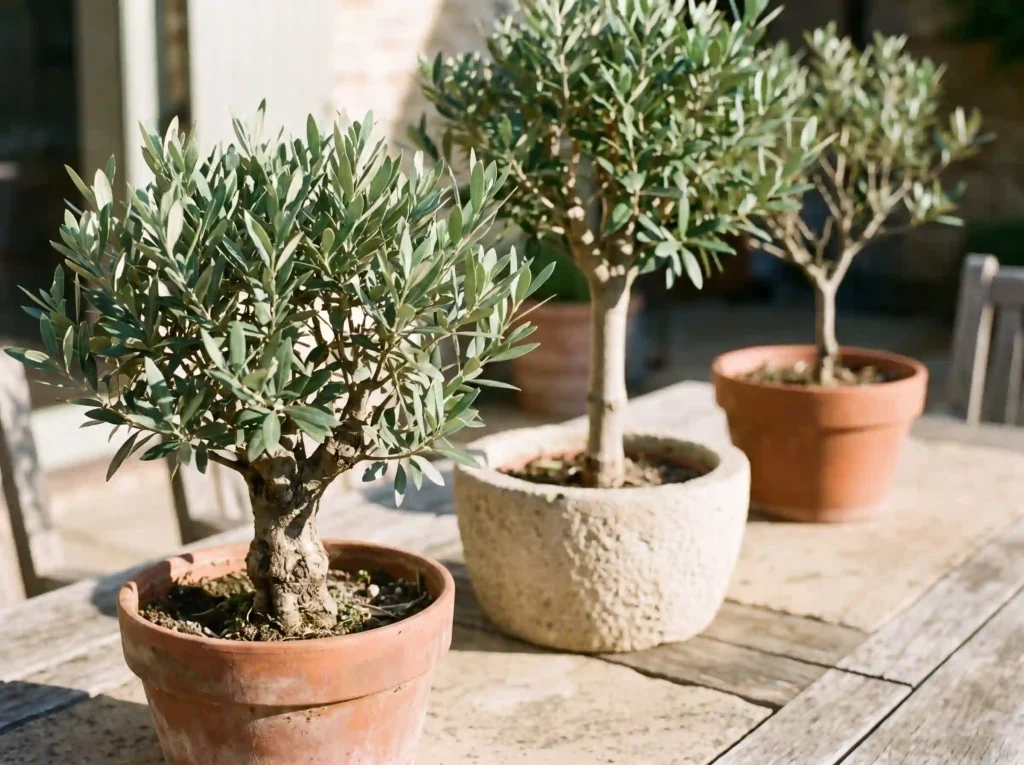
Not every olive tree sold in the U.S. is the same cultivar, and the differences actually matter for how it’ll look and behave in your space. Here’s how the most common ones stack up.
| Variety | Best For | Mature Size | Notable Traits |
|---|---|---|---|
| Arbequina | Pots, indoor growing, small yards | 4 to 8 ft. in a container | Compact, self-fertile, fruits young, the most common variety sold for home use |
| Koroneiki | Landscapes, oil-focused growers | 8 to 15 ft. | High oil content, disease-resistant, tolerates heat well |
| Mission | Larger statement landscaping | 20 to 30 ft. in-ground | Cold-hardier than most, classic full-canopy look |
| Manzanillo | Table olives, larger patios | 15 to 25 ft. | Broad, spreading form, one of the most widely planted commercial varieties |
For anyone shopping specifically for an indoor tree or a patio pot, Arbequina is almost always the right call. It’s the variety most nurseries and big-box garden centers, including Home Depot and Lowe’s, stock specifically for container growing, and it’s compact enough to actually work in a normal-height room.
The Black Olive Tree (Shady Lady): 2026’s Trendiest Look Isn’t an Olive at All
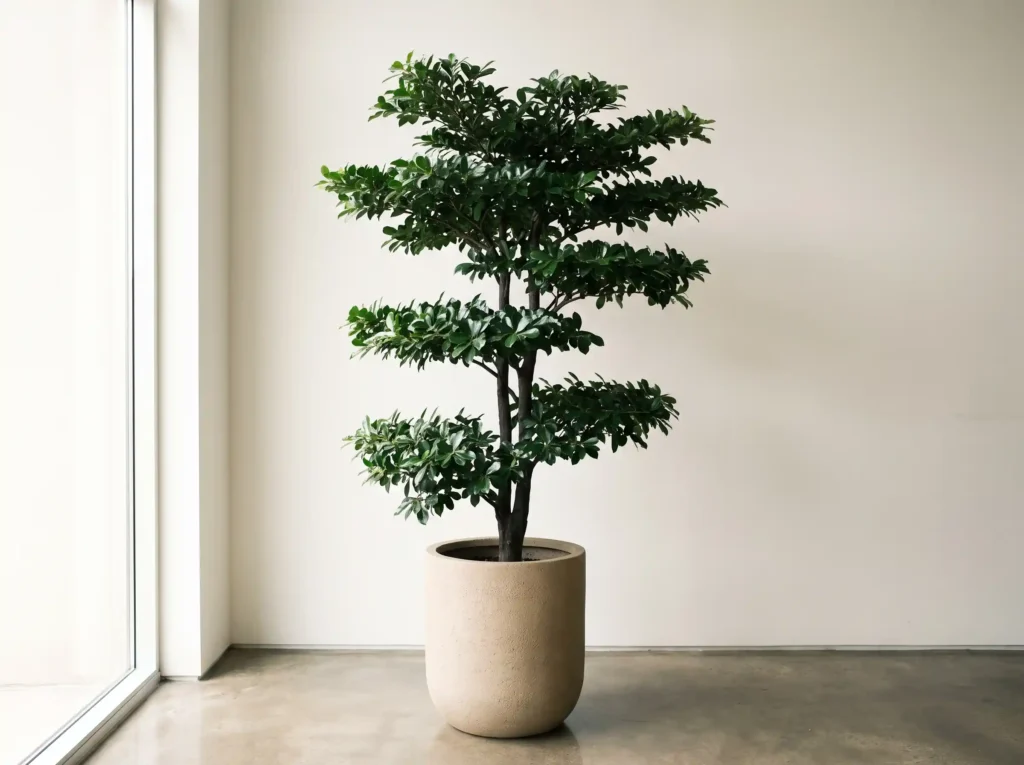
Here’s where a lot of buyers get genuinely confused, and it’s worth clearing up before you shop. The black olive tree, often sold under the nickname “Shady Lady,” has become one of the most in-demand statement plants in interior design right now. Design outlets have even called it the plant that’s taking over from the fiddle leaf fig. It has small, glossy, dark green leaves arranged in a distinctive tiered, layered pattern that reads as more delicate and architectural than a classic olive tree’s silvery canopy.
Is a Black Olive Tree the Same Species as a Regular Olive Tree?
No, and this trips up a lot of first-time buyers. The black olive tree is botanically Bucida buceras, a species native to the Caribbean, Mexico, and Central America, and it’s not related to Olea europaea at all. The University of Florida’s IFAS Extension notes it earned the common name from its small, dark seed capsules rather than any real botanical connection. It won’t produce edible olives, and it has a completely different care profile.
That care profile is worth knowing before you buy one. A black olive tree needs even brighter light than a classic olive tree, and it’s genuinely sensitive to change. Moving it to a new spot, even a slightly less bright one, can trigger noticeable leaf drop while it adjusts. It’s a striking plant, but it’s fair to call it the higher-maintenance, more dramatic sibling in this whole category. Outdoors, it’s hardy in zones 9 through 11 and holds up well in coastal, wind-exposed spots.
Fake Olive Trees: When a Faux Version Is the Smarter Style Choice
Real talk: a lot of homes simply don’t have the light an olive tree needs, and a lot of people don’t want to manage a finicky plant’s watering schedule around vacations and busy weeks. That’s exactly why the fake olive tree market has exploded over the past couple of years. Scroll through home decor content on TikTok or Instagram and you’ll see the same style of post repeatedly: someone unboxing a surprisingly realistic faux olive tree from Amazon and showing it off in a living room corner.
Quality varies enormously by price. Budget faux olive trees, generally in the $50 to $100 range, work fine for a smaller space or a first attempt at the look, though the leaves often have a flatter, more uniform shine that reads as artificial up close. Move into the $150 to $250-plus range from brands like Nearly Natural, or higher-end options from retailers like Pottery Barn and Crate & Barrel, and the difference in leaf texture and trunk realism is genuinely noticeable. Etsy also has a strong market of independent sellers doing hand-finished faux trees for buyers who want something less mass-produced.
A faux tree isn’t just a fallback for low-light rooms, either. It’s a legitimately good option for renters who can’t commit to permanent plant care, homes with pets or small kids where a live tree’s soil and leaf drop are a hassle, and anyone who’s genuinely killed one too many plants and wants the look without the guilt.
How to Spot a Realistic Fake Olive Tree Before You Buy
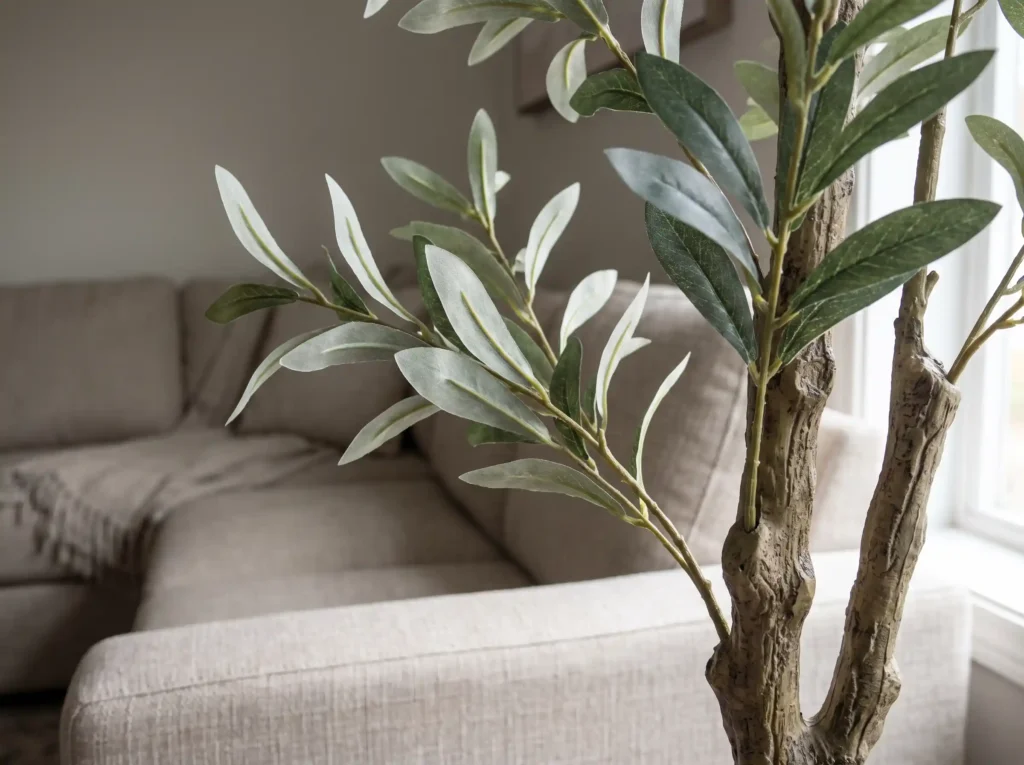
- Look for a matte finish on the leaves. Glossy, uniformly shiny leaves are the fastest tell that a tree is cheap.
- Check for tonal variation in the greens. Real olive leaves aren’t one flat color, and neither should a good faux version be.
- A real or realistic wood trunk with some irregular bend beats a smooth, obviously molded plastic one every time.
- Favor open, slightly asymmetrical branching over a tree that looks too symmetrical and full, which tends to read as fake from across a room.
- Read reviews for actual customer photos rather than relying on the staged listing images, since lighting and staging can hide a lot.
Where Olive Trees Actually Work Best in a Home
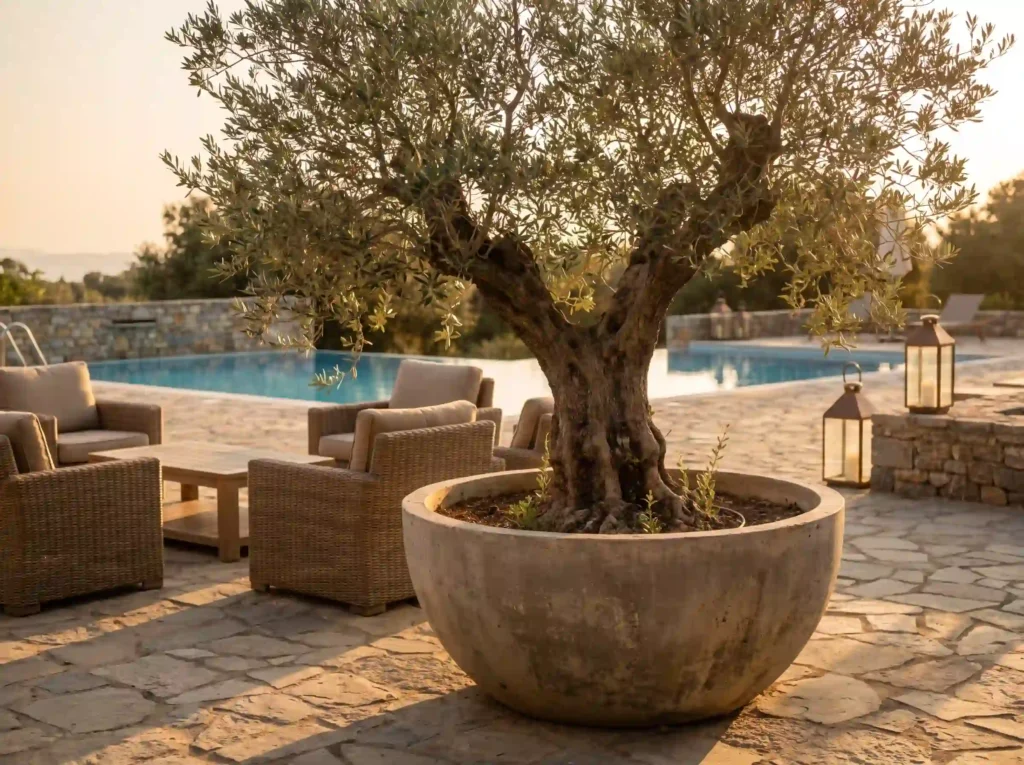
Placement makes or breaks the look, whether you go real or faux. A few spots that consistently work:
- Living room corners, especially an empty one that needs height without adding furniture. A 6 to 7-foot tree is usually the sweet spot for a standard-height room.
- Flanking a sofa or fireplace, where the vertical line balances out a wide horizontal piece of furniture.
- Entryways and foyers, where a smaller potted tree creates a first impression without blocking traffic flow.
- Kitchen windowsills, using a compact potted Arbequina rather than a full-size tree. This is one of the few spots where a genuinely small, young olive tree looks intentional rather than sparse.
- Patios and poolside areas, where a real olive tree in a large outdoor planter can handle heat and sun far better than most ornamental options.
- Bedrooms, a newer trend for smaller apartments, where a slim faux tree adds softness to a tight layout without eating floor space.
For pot and planter choices, concrete and stone-toned containers tend to read as the most intentional pairing with an olive tree’s silvery palette, and a wood planter box works well for a more casual, cottage-leaning look. On wall color, soft neutrals do the most favors for an olive tree’s tone. Warm off-whites and light grays let the leaf color read as the accent, rather than fighting a busy or saturated wall for attention.
Frequently Asked Questions About Olive Trees
Can you grow an olive tree indoors, or does it need to live outside?
Yes, an olive tree can live indoors year-round as long as it gets very bright, direct light, ideally from a south-facing window. It just won’t fruit reliably indoors, since fruiting requires a period of cool nighttime temperatures that most homes don’t provide.
Why are my olive tree’s leaves turning yellow, curling, or falling off?
The most common cause by far is overwatering or a pot without proper drainage. The second most common cause is insufficient light. Let the soil dry out more between waterings before assuming the tree is sick.
Does an olive tree need a second tree nearby to produce fruit?
Most common varieties, including Arbequina, are self-fertile and don’t strictly need a second tree, though having one nearby can improve fruit set. This mostly matters for outdoor, fruit-focused growers rather than indoor decor plants.
How fast does an olive tree grow, and how big will it get in a pot?
Olive trees are slow growers, typically adding under a foot per year in a container. A potted Arbequina usually tops out around 6 to 8 feet indoors, which is part of why it’s the preferred variety for home use.
Does a potted olive tree need to be repotted as it grows?
Yes, roughly every two to three years, or whenever roots start circling the bottom of the pot. Go up only one pot size at a time. An oversized pot holds too much moisture and can do more harm than good.
Is a black olive tree (Shady Lady) safe to have around pets?
It’s not commonly listed among the seriously toxic houseplants, but any plant material can cause mild stomach upset if chewed. If pets regularly get into your plants, keep it somewhere out of reach either way.
What’s the real difference between an olive tree and a tea olive plant?
They’re unrelated. Tea olive, or sweet olive, is an Osmanthus species grown mainly for its intensely fragrant flowers, not its foliage or form. It’s a common source of confusion because of the shared “olive” name, but the resemblance stops there.
Is a good fake olive tree really worth paying more than $100 for?
If it’s going somewhere you’ll see daily, like a living room or entryway, yes. The jump in leaf texture, trunk realism, and overall shape between a $60 tree and a $200 tree is usually obvious the moment you set them side by side.
Bringing the Olive Tree Look Home
The olive tree earned its spot as one of decor’s most requested plants honestly. It’s the rare statement piece that works in nearly any room style, but “olive tree” actually covers three fairly different choices once you look past the pretty photos: the real Mediterranean Olea europaea that wants sun and patience, the trendier black olive tree that isn’t botanically an olive at all, and the faux route that’s improved enough to genuinely fool people. None of them is the objectively right answer. The right one is whichever matches the light you actually have, the maintenance you’re actually willing to do, and the specific look you’re chasing in that particular room.
If your space gets strong, direct light and you don’t mind a slower-growing, dry-between-waterings routine, a real Arbequina is worth the investment. If you love the tiered, sculptural look but your light is inconsistent, know going in that the black olive tree will ask more of you, not less. And if you’ve killed one too many plants or you’re decorating a rental, a well-chosen faux tree isn’t a compromise so much as the practical, cost-honest choice. At Terrace Place will keep tracking this trend as it evolves, but for now, which one matches the corner you’re trying to fill?