
White Dove Benjamin Moore: Ideas & Styles
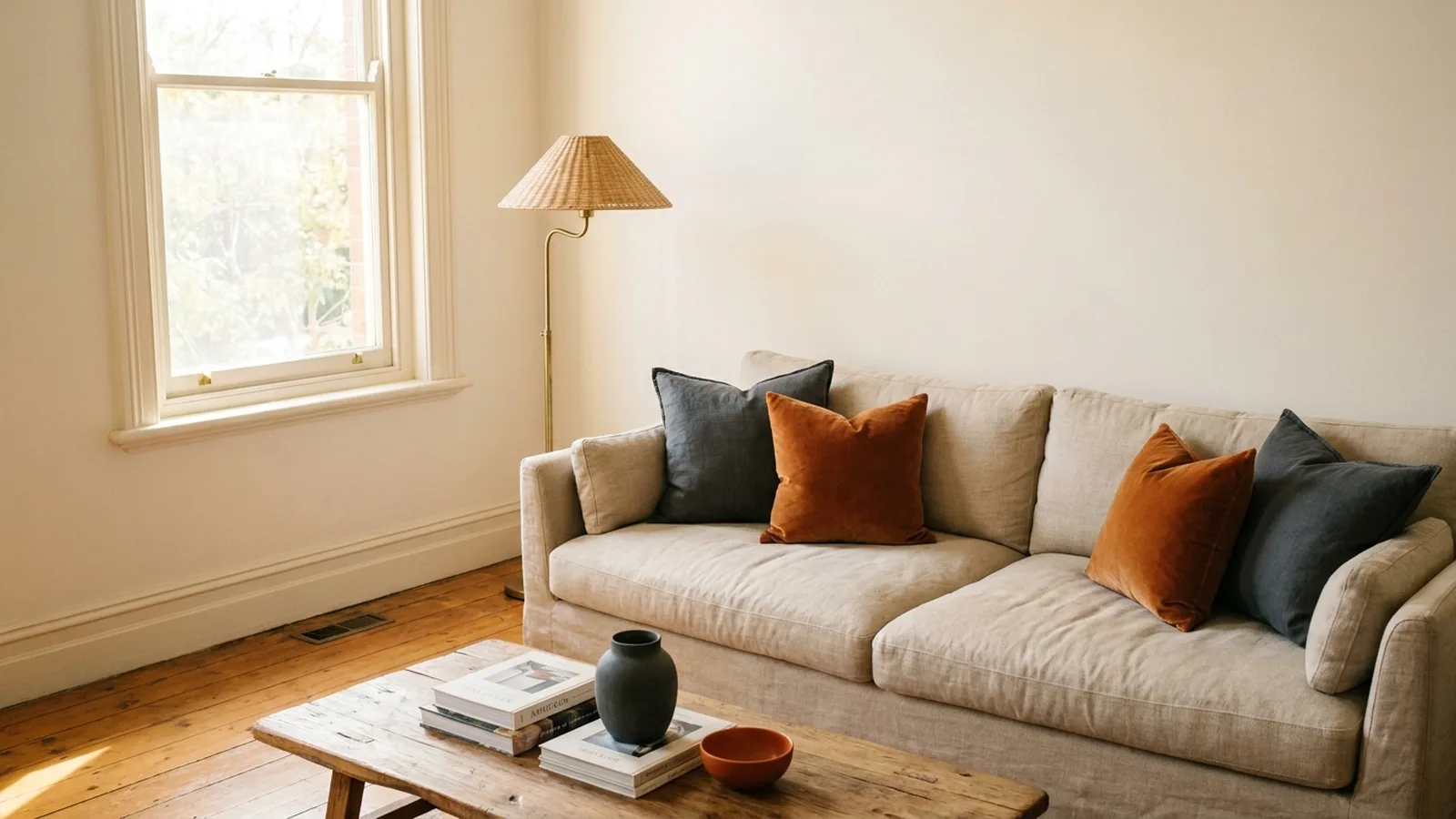
Benjamin Moore White Dove has an LRV of 83.16, which makes it bright but not blinding. That number is part of why it feels soft instead of stark on a wall, though your light and the undertone matter just as much. They also explain why people love it in one room and curse it in the next. If you’re staring at a fan deck and wondering whether white dove benjamin moore is the safe white you’ve heard about, this guide gives you the decision rules. You’ll get the undertone, the light-direction test, trim and ceiling pairings, cabinet advice, exterior limits, and a realistic cost plan.
Quick answer: White Dove (OC-17) is a balanced, soft white with a faint gray-yellow warmth. It works best in rooms with decent natural light, warm bulbs, and a palette that isn’t icy. Skip it if your room is cool-toned, if you want crisp gallery white, or if you plan to pair it with stark white tile and appliances. Always test two samples first.
What color is Benjamin Moore White Dove (OC-17)?
White Dove is code OC-17 in the Benjamin Moore Off-White Collection. On the official page its LRV is listed as 83.16, and the coordinating colors include Balboa Mist OC-27, Kendall Charcoal HC-166 and Revere Pewter HC-172. A color-matching tool lists it at RGB 239, 238, 229. Those numbers show a white pulled slightly toward warm gray, not a clean paper white.
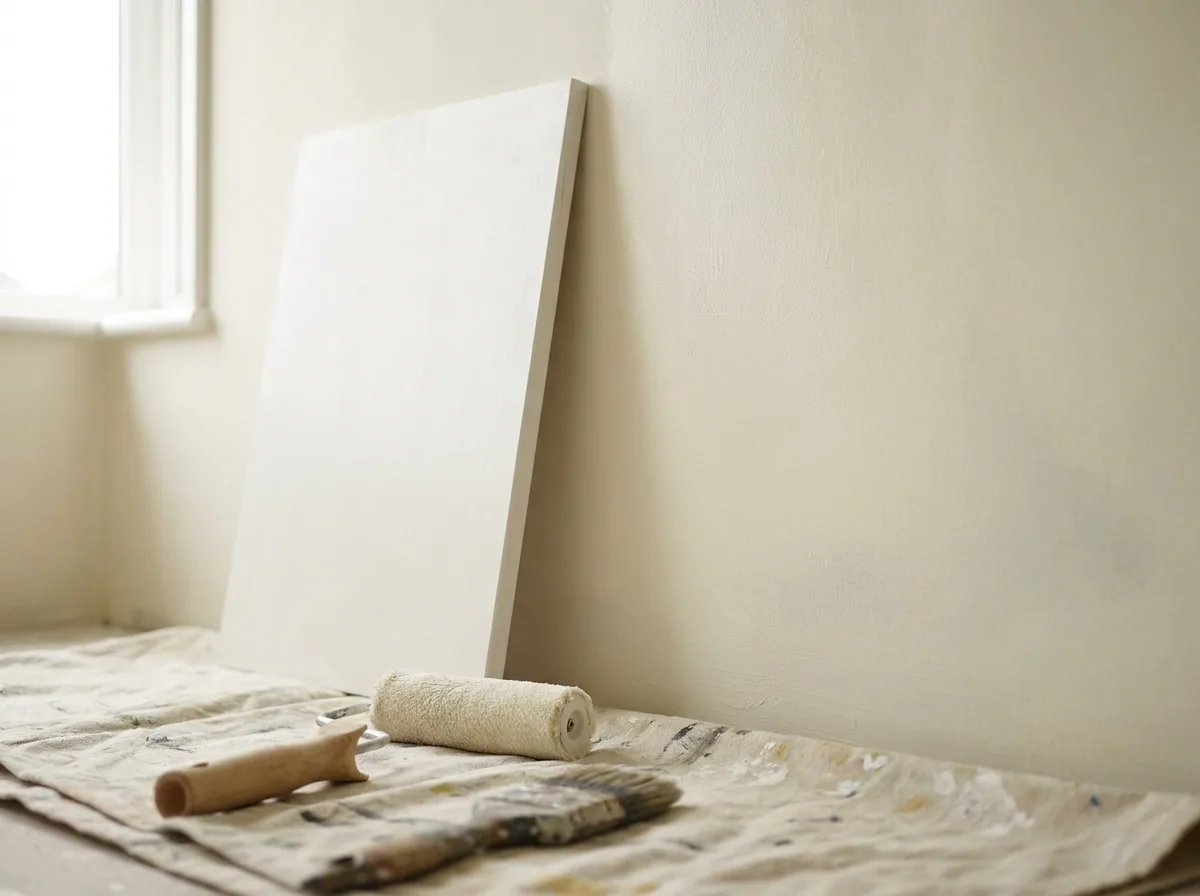
Think of it as white with the volume turned down. It reads as clean without feeling clinical.
White Dove paint color: the details at a glance
The white dove paint color sits between stark whites and true creams. Here are the quick facts worth saving before you buy.
| Detail | Value |
|---|---|
| Name and code | White Dove OC-17 |
| Collection | Off-White Collection |
| LRV (OC-17) | 83.16 |
| LRV (PM-19) | 85.38 |
| Approximate RGB | 239, 238, 229 |
| Character | Soft white, gray-yellow warmth |
RGB values vary a little from site to site, so treat them as a guide. Your screen will never match a painted wall.
Is White Dove warm or cool, and what is its undertone?
White Dove is warm, but only slightly. Benjamin Moore describes it in retailer text as a complex white with subtle gray undertones that lean warm. Designers usually describe a mix of soft yellow and gray. That gray is the reason it rarely looks buttery.
Here’s the part many guides skip. The same paint can look slightly greige in one room and faintly yellow in another. The undertone doesn’t change. Your light does. A common mistake is judging the color from a chip held up in a store, where fluorescent light flattens everything.
One misconception is worth clearing up. White Dove is not a cream. Cream reads yellow by itself. White Dove only leans that way when light and surroundings push it.
What is the LRV and why do OC-17 and PM-19 show different numbers?
LRV stands for light reflectance value. It’s a scale from 0 (black) to 100 (perfect reflection) that tells you how much light a color bounces back. A higher number means a brighter-looking room. White Dove at 83.16 is bright, but it’s well below the brightest trim whites.
You’ll also see 85.38 on some pages. Benjamin Moore lists White Dove under two codes, OC-17 and PM-19, and the two pages show different LRVs. The company pages don’t explain the gap. A likely reason is a difference in formula or measurement between the two lines, but that is a guess, not a published fact. For planning, treat the color as roughly 83 to 85 and expect it to look the same on the wall.
If you’re buying a sample, check which code the store pulls. Ask the counter to match OC-17 so everything you test is consistent.
Why is White Dove so popular?
White Dove is popular because it is a soft, low-risk white that suits many rooms and palettes. Many whites show every flaw in the room, from dull flooring to a cold north window. White Dove softens those flaws. It also pairs with warm wood, gray stone, brass and black hardware without demanding a matching color story.
Retailers call it one of Benjamin Moore’s most popular colors, but that’s a sales claim, not a measured fact. What you can say honestly is that it appears in some designer reviews, on cabinets, on trim, and in whole-house palettes. One Reddit homeowner who painted a whole house in it reported no regrets. That happy outcome has a pattern: warm bulbs, decent light, and a warm or neutral palette.
How does White Dove paint look in north, south, east and west light?
Use this rule first: the weaker and cooler your light, the more gray White Dove will look. The stronger and warmer your light, the more yellow it will drift. A simple walk-through of the room at three times of day answers most of the question.
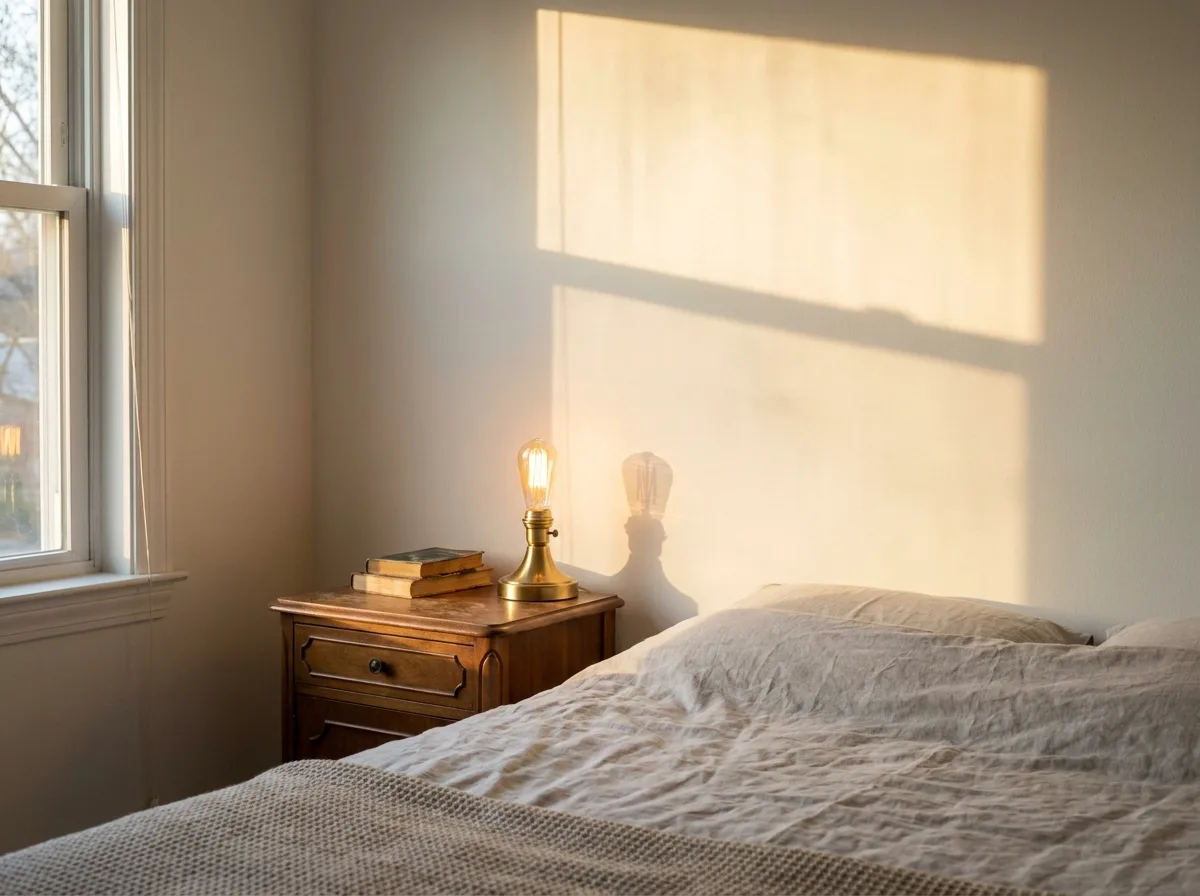
The table below is a set of general rules of thumb. It is typical, not guaranteed, and it varies by room, window size and what is outside the window.
| Window direction | Typical effect | What to do |
|---|---|---|
| North | Cooler and grayer, can look flat | Use warm bulbs and warm wood. Skip it if the palette is already cool |
| South | Brighter and warmer, can drift creamy | Test it near any white trim |
| East | Warmer in the morning, often flatter later in the day | Check it again at dusk |
| West | Warmer in the late day | Watch for a peach cast |
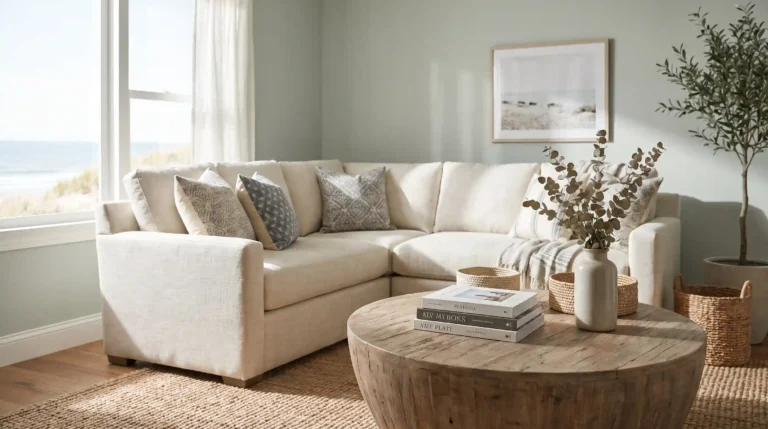
Most white dove paint complaints trace back to this table. Here’s a hypothetical example. Say you have a south-facing living room with a gray sofa and white uppers in the adjoining kitchen. The sun will warm White Dove, and the white uppers may make it look slightly dingy beside them. In that case, test Chantilly Lace or Simply White next to it before committing. A silvery-green olive tree in the corner is one easy way to add contrast to a soft white room.
What bulbs and sheens bring out the best in White Dove?
Bulbs change White Dove more than most people expect. One designer review suggests bulbs in the 2700K to 3000K range, which is the warm white band. That’s an opinion, but it matches what homeowners report. Bright cool bulbs at 4000K and above push White Dove gray and flat. Mixed bulbs in one room make it look inconsistent from lamp to lamp.
Sheen matters too. As general guidance, a higher sheen reflects more light and shows more wall flaws, while a flatter finish hides them.
- Flat or matte: a common choice for ceilings and walls with imperfections.
- Eggshell or satin: a common wall choice for living rooms, bedrooms and hallways.
- Satin or semi-gloss: easier to wipe clean, so often used on trim, doors and cabinets.
Check the label of the specific product you buy for the sheens it offers. Lines differ.
Is White Dove Benjamin Moore good for kitchen cabinets?
Yes, with conditions. White Dove is a common cabinet choice because it’s warm enough to feel like a kitchen and neutral enough to hold up for years. It also plays well with wood floors and soft stone. One commenter called it a safe choice for cabinets in a home you may sell, which fits its soft, subdued look. For the tall storage piece in that kitchen, see our pantry cabinet ideas guide.
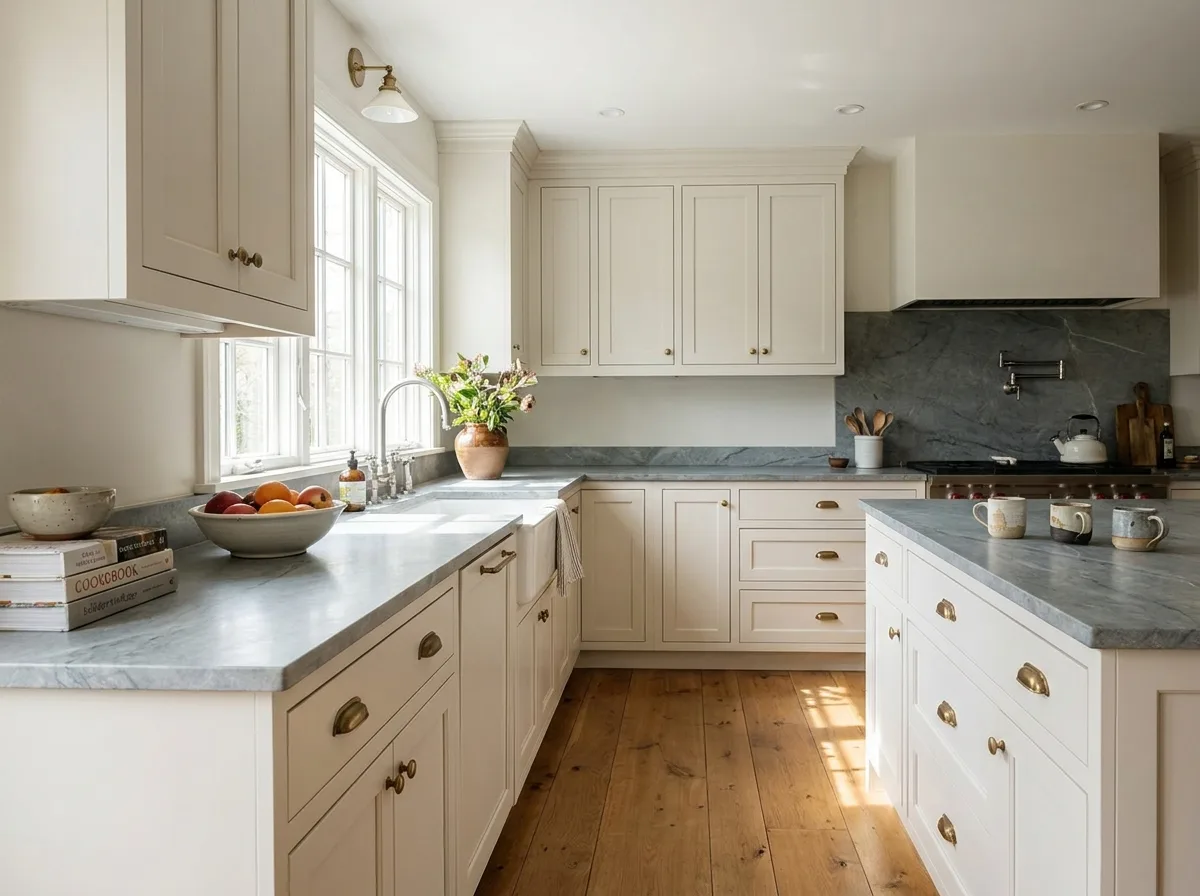
Here’s where cabinet projects go wrong. A common mistake is putting White Dove next to stark white appliances or bright white subway tile. The cabinets look dingy by comparison. One designer review also warns against pairing it with Carrara marble.
Cost and difficulty matter here. Painting cabinets is a patient job that needs degreasing, sanding, a bonding primer, and a durable cabinet-grade paint. If your cabinets are in poor shape, or you don’t want weeks of doors off the hinges, a pro finish is often the cheaper option compared with redoing a failed DIY job. Sprayed finishes also look smoother than brushed ones.
Safety note: sanding or stripping old cabinets in a home built before 1978 can disturb lead paint. Use lead-safe practices, and hire a certified pro if you are unsure or the rules require it. Local codes vary.
If you’re weighing other colors for the same kitchen, our guide to sea salt sherwin williams shows how a soft green-gray behaves next to white cabinets.
What trim and ceiling colors go with White Dove walls?
You have two sound strategies, and they give very different results. The first is to match: use White Dove on the walls, trim and ceiling, changing only the sheen. The second is to contrast with a brighter white on trim and ceiling. Both work. The failure comes from mixing them badly.
A bright trim white can make White Dove walls look yellow. A Reddit thread on this exact problem points the same way: using one color in different sheens avoids the clash. Flat for ceilings, satin or semi-gloss for trim.
| Option | LRV | Effect |
|---|---|---|
| White Dove on trim (satin) | 83.16 | Soft, seamless, low contrast |
| Simply White OC-117 | 89.52 | Slightly brighter, mild contrast |
| Chantilly Lace OC-65 | 90.04 | Crisp contrast, can show blue-gray in some rooms |
| Swiss Coffee OC-45 | 81.91 | Creamier and a touch darker than White Dove |
Remember the monotone risk. If everything is one color, the room can read flat or gray. The fix is a brighter ceiling or trim, more contrast in sheen, or warm bulbs. Designers also suggest Oxford White CC-30 and Steam AF-15 as trim options, though those are opinions to sample, not rules.
White Dove vs Simply White vs Swiss Coffee vs Chantilly Lace: which one?
Use a decision rule. Pick White Dove if you want a soft white that hides flaws. Pick Simply White if you want brighter and cleaner. Pick Swiss Coffee if you want creamier. Pick Chantilly Lace if you want crisp.
Simply White is only slightly brighter on paper (89.52 versus 83.16), yet people notice the difference more on walls than on a chip. One Reddit poster said the change between the two was not huge, and that White Dove was a tad darker. That matches the numbers. Swiss Coffee at 81.91 is lower, and designers read it as creamier.
Sherwin-Williams fans often ask about Alabaster. Opinions on a match vary by source, so sample the two side by side.
Living room and bedroom ideas: how to style White Dove
White Dove suits calm, layered rooms. These are style ideas to try, not rules, and each one is worth sampling first.
- Living room: pair White Dove walls with a natural linen sofa, warm oak floors and brass lamps. Add one deeper accent, such as navy or charcoal, for contrast.
- Bedroom: keep the palette soft with layered white and cream bedding, wood nightstands and warm 2700K bulbs. A west or east window can add a gentle glow, so view the walls at bedtime.
- Open-plan rooms: carry the same wall color through every space and change only the sheen on trim and ceilings. It keeps the flow quiet.
- Cool-light rooms: if the room faces north, lean on warm textiles and wood to keep White Dove from looking gray.
What colors go with White Dove (wall, floor, countertop, accent)?
White Dove is a flexible partner. The best pairings share its softness instead of fighting it.
- Blues: deep navy such as Hale Navy HC-154 gives a clean, classic contrast.
- Grays: Balboa Mist OC-27, Revere Pewter HC-172 and Kendall Charcoal HC-166 are the coordinating colors listed on the official page.
- Woods: warm oak, walnut and mid-tone floors suit the slight warmth.
- Metals: brass, black iron and brushed nickel all sit comfortably against it.
- Stone: soft gray or warm-veined stone works better than stark white quartz.
If your kitchen has honey oak cabinets, a few homeowners worry that White Dove will look pink or yellow next to them. Sample it on the wall near the wood before painting.
Can you use White Dove Benjamin Moore outside?
Sometimes. White Dove is used on trim and on light-colored siding, and several reviewers say it works as an exterior trim color. One designer cautions against using it as the main siding color, because direct sun and surrounding greenery change how white reads outdoors. I’d treat it as a trim color first.
Check that the exact exterior paint line is offered in this color before you buy. Exterior jobs also involve ladders, prep and sometimes lead paint on older homes. If your house predates the 1978 lead paint ban, follow the EPA’s lead-safe rules and hire a certified renovator when required. Local codes and rules vary.
Always paint a large sample on the wall and view it in morning, noon and evening sun.
When not to use White Dove, and what to do if it looks gray, yellow or peach
Skip White Dove in three situations: cool-toned rooms with blue or icy gray finishes, spaces that need stark gallery white, and rooms beside bright white tile or appliances. Those settings make it look dingy.
If it already looks wrong on your wall, diagnose by symptom.
- Looks gray or flat: the light is probably weak or cool. Swap in 2700K to 3000K bulbs and add a brighter ceiling or trim.
- Looks yellow: a bright trim white may be sitting beside it, or warm sun is hitting it. Match the trim to the wall color in a different sheen.
- Looks peach: check for warm wood reflections, red-toned floors or a bad batch. One Reddit user wondered about a batch. Ask the store to re-tint or re-mix if the can doesn’t match your sample.
- Looks patchy: you likely need a second coat. Some homeowners say this color needs two good coats.
If the palette is cool at the root, no fix beats repainting in Chantilly Lace or another neutral white.
How much paint and how many samples should you plan for?
Plan on samples first, then gallons. Retailer pages list samples from $5.99 to $9.95 depending on the format. A half-pint or peel-and-stick sample is the usual range. Gallon prices vary by line, store and sheen, so check the current price at your retailer.
Coverage math is simple. A common retailer rule is that a gallon covers about 400 square feet, with roughly 20 square feet subtracted per door. Here’s a hypothetical. A room measures 12 by 14 feet with 9-foot ceilings, so the perimeter is 52 feet and the wall area is about 468 square feet. After a door and two windows you might have around 430. Two coats is about 860 square feet, or a little over 2 gallons.
Buy a little extra for touch-ups, and keep the label for the future.
How should you test it?
Test with a large sample, not a chip. Paint two coats on a poster board or use a peel-and-stick sample, then move it around the room. This takes about two days from start to finish and costs far less than repainting.
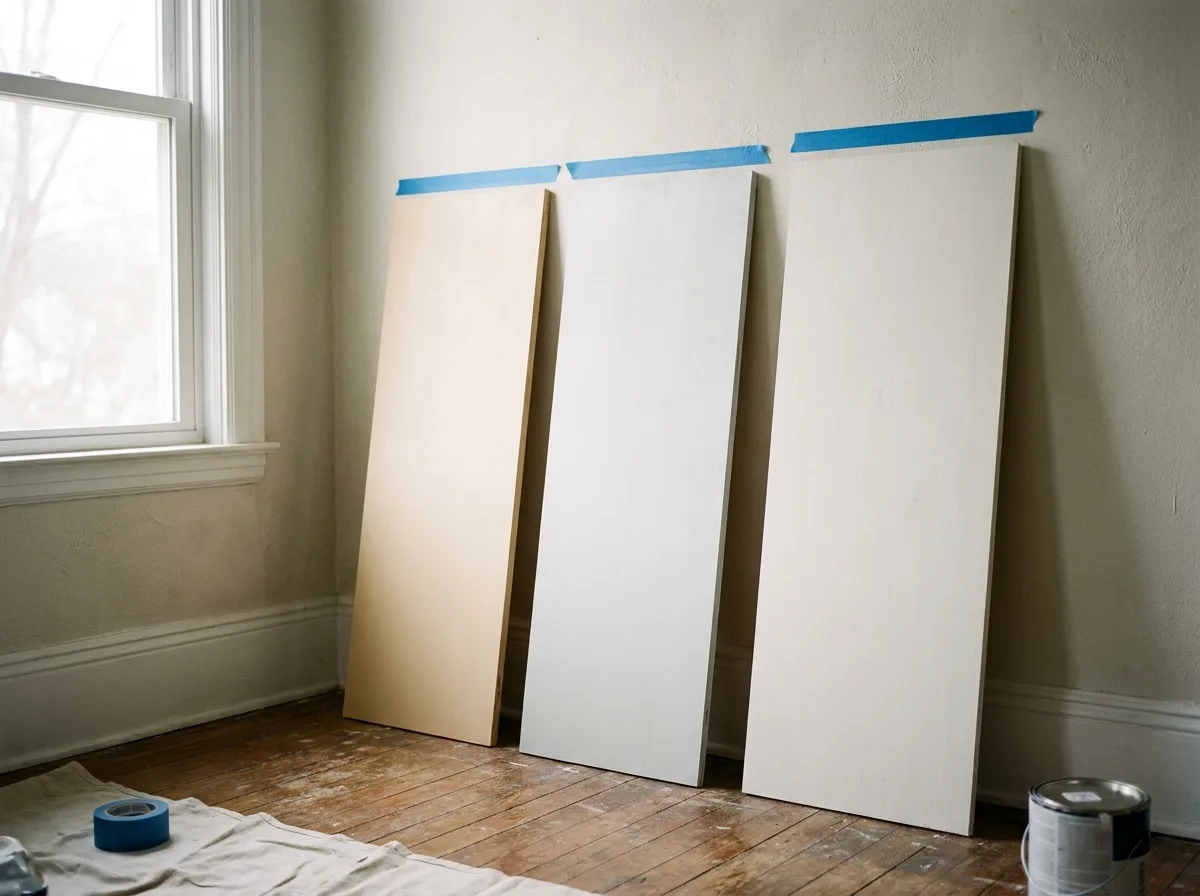
- Put the sample on at least two walls, including the darkest corner.
- View it in morning, midday and evening, plus under your actual bulbs at night.
- Hold it next to your trim, floor, cabinets and countertops.
- Compare it with one brighter white and one creamier white on the same wall.
Then decide. If it still looks right after two days of watching, it’ll look right on the wall.
White Dove Benjamin Moore FAQ
Is White Dove warm or cool?
White Dove is slightly warm. It leans soft yellow with a gray base, so it reads as a balanced, gentle white. In weak or cool light it can look neutral or gray, and in strong warm light it can look creamier. Test it in your own room.
What is the undertone of White Dove?
The undertone is a subtle gray with a touch of yellow. Benjamin Moore text on retailer pages calls it a complex white with subtle gray undertones that lean warm. The gray keeps it from looking buttery in most light.
What does LRV mean for White Dove?
LRV is light reflectance value, a 0 to 100 scale for how much light a color reflects. White Dove OC-17 is listed at 83.16, and the PM-19 page shows 85.38. Both are bright, but both are softer than pure trim whites like Chantilly Lace.
Is White Dove too yellow?
Not usually. It can drift yellow beside a brighter white or in strong warm sun. If that happens, match the trim to the wall in a different sheen, or switch to cooler-feeling bulbs within the warm range. Sampling beside your real finishes shows it quickly.
What trim color goes with White Dove?
White Dove itself in a satin or semi-gloss finish is the safest match. For contrast, try Simply White. Chantilly Lace is crisper but can make the walls look warmer or even blue-gray in some rooms. Sample each next to the wall.
Is White Dove good for cabinets?
Yes, many people choose it for kitchen cabinets. It’s soft and warm, and it works with wood and soft stone. Avoid pairing it with stark white appliances or tile. Cabinet work needs proper prep and a durable paint, so consider a pro for a sprayed finish.
Can White Dove be used on exteriors?
It’s commonly used on trim and on very light siding. Direct sun changes how whites read outdoors, so test a large sample first. Confirm that your chosen exterior product line offers the color, and follow lead-safe rules on older homes.
Should I pick White Dove or Simply White?
Pick White Dove for a softer, more forgiving white. Pick Simply White for a brighter, cleaner look. Their LRVs are 83.16 and 89.52, a visible but modest gap. Put both on the same wall and look at them under your real lighting.
What color is White Dove in a north-facing room?
In north light, White Dove tends to look cooler and grayer. It can feel flat if the room has cool bulbs. Warm bulbs, warm wood and a brighter ceiling help a lot. If the room is already cool-toned, consider a different white.
How many coats does White Dove need?
Plan on two coats over primed or previously painted walls. Some homeowners say that a thin first coat leaves the color looking patchy. A change from a dark color may need primer first. Follow the label on the paint you buy.
The bottom line
The opening number was 83.16, and now you know what it means. White Dove is bright enough to feel clean, soft enough to feel kind, and fussy only about cool palettes and bright white neighbors. If your light is decent, your bulbs are warm, and your finishes lean neutral to warm, white dove benjamin moore is one of the lowest-risk whites you can pick.
Your next step is cheap. Buy two samples, put them on large boards, and watch them for two full days. Which room are you painting first, and does it face north or south?

2 Comments