
Concrete Paint: Pick the Right Type and Make It Last
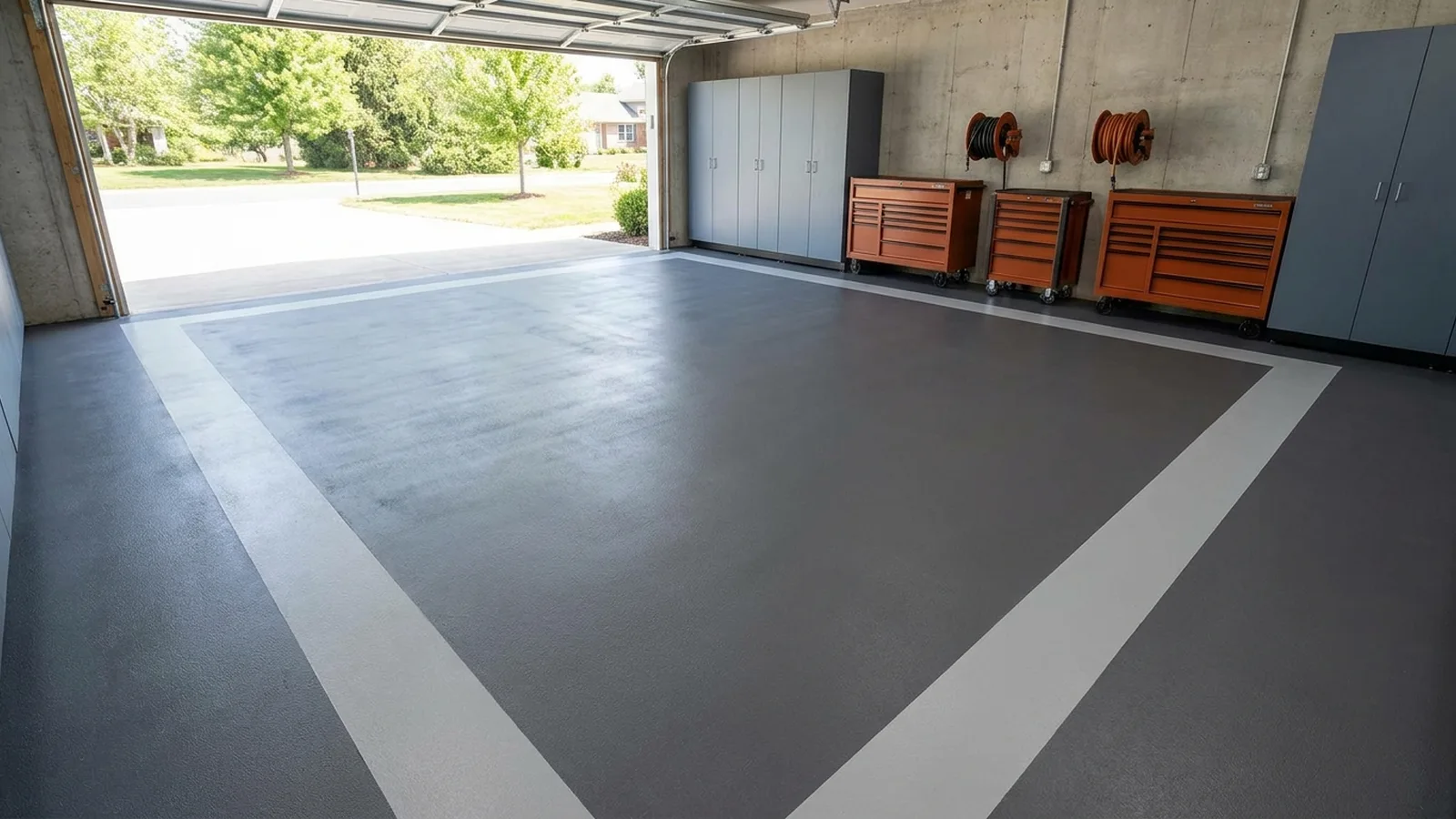
Say you spend a Saturday painting a gray garage floor a clean, satin charcoal. It looks sharp for about three weeks. Then the first warm afternoon arrives, you pull the car in, and the tires lift a ribbon of paint off the slab like a bad sunburn. It’s a story that shows up often in DIY forums, and the paint is rarely the villain.
Concrete paint fails because of what’s under it: moisture, a slick surface, oil, or a slab that hasn’t finished curing. Color and finish are the easy part. This guide flips the usual order. You’ll test the slab first, pick the coating second, and choose the style last. It’s one piece of the bigger job of choosing and using paint around your home, and it’s the piece where prep matters most.
Executive Summary
You can get a painted concrete floor, porch or patio that lasts years instead of weeks, and most of the work happens before you open a can. Here’s what this guide covers.
- A simple plastic sheet moisture test that predicts peeling before you spend money.
- Why "1-part epoxy" is often an acrylic with a marketing label, and when a true 2-part coating or stain is the smarter buy.
- Which coating suits a garage, a patio, a porch and a driveway (the driveway is the hard one).
- Typical cost ranges, honest lifespans, and the styles that actually work on a slab, including traction fixes.
The biggest objection is "it’s just paint, so prep is optional." It isn’t. Plan on a weekend for a one-car garage, plus a cure window before the car goes back in. Skip the prep and you’re signing up for a repaint, not a rescue.
What is concrete paint, and how does it differ from stain and epoxy?
Concrete paint is a film-forming coating that sits on top of the slab and hides it. Stain soaks in and changes the color without a surface film. Epoxy is a two-part resin coating that cures hard and chemical-resistant. Sealers protect the surface, with or without color. The film is the key difference, because a film can peel and a stain cannot.
Most concrete paint products and floor paints are acrylic latex. They’re easy to roll, low in odor and forgiving. Two-part epoxies, such as Epodex’s 2K mix (5 parts to 1 by weight, per the maker), cure harder but come with pot life, solvents and ventilation rules. Polyaspartic and polyurethane topcoats add UV stability and abrasion resistance.
Here’s the part marketing blurs. Some "epoxy" paints, like Drylok’s E1 floor line, are single-container products. Owners on Reddit’s paint forums call that label "epoxy in marketing only." I’d treat it as a good acrylic and judge it that way.
Should you use concrete paint or stain instead?
Pick concrete paint when you want solid color, a smooth finish or a design such as stripes. Pick stain when the slab is outdoors, sees tires, or you don’t want a coating you must maintain. Choose by how much you need to hide and how much upkeep you will accept.
Say a homeowner has a sound but ugly patio. Acid or water-based stain plus a sealer gives a mottled, stone-like look. Owners report these lasting several years with low odor and easy resealing. Say instead the garage floor is stained with old oil and patched in six places. Paint hides that. Stain won’t.
My rule: paint what you need to hide, stain what you only need to recolor. A slab coated in concrete paint is a maintenance contract. If you won’t repaint every few years, choose stain or a clear sealer.
Why does paint peel off a slab, and how do you test moisture first?
Concrete paint peels mainly from moisture vapor pushing through the slab, slick laitance on the surface, oil or curing compounds left behind, and hot tires. You can predict most of it with a plastic sheet test, run on a dry day, and any sign of moisture is a stop sign before you buy a gallon.
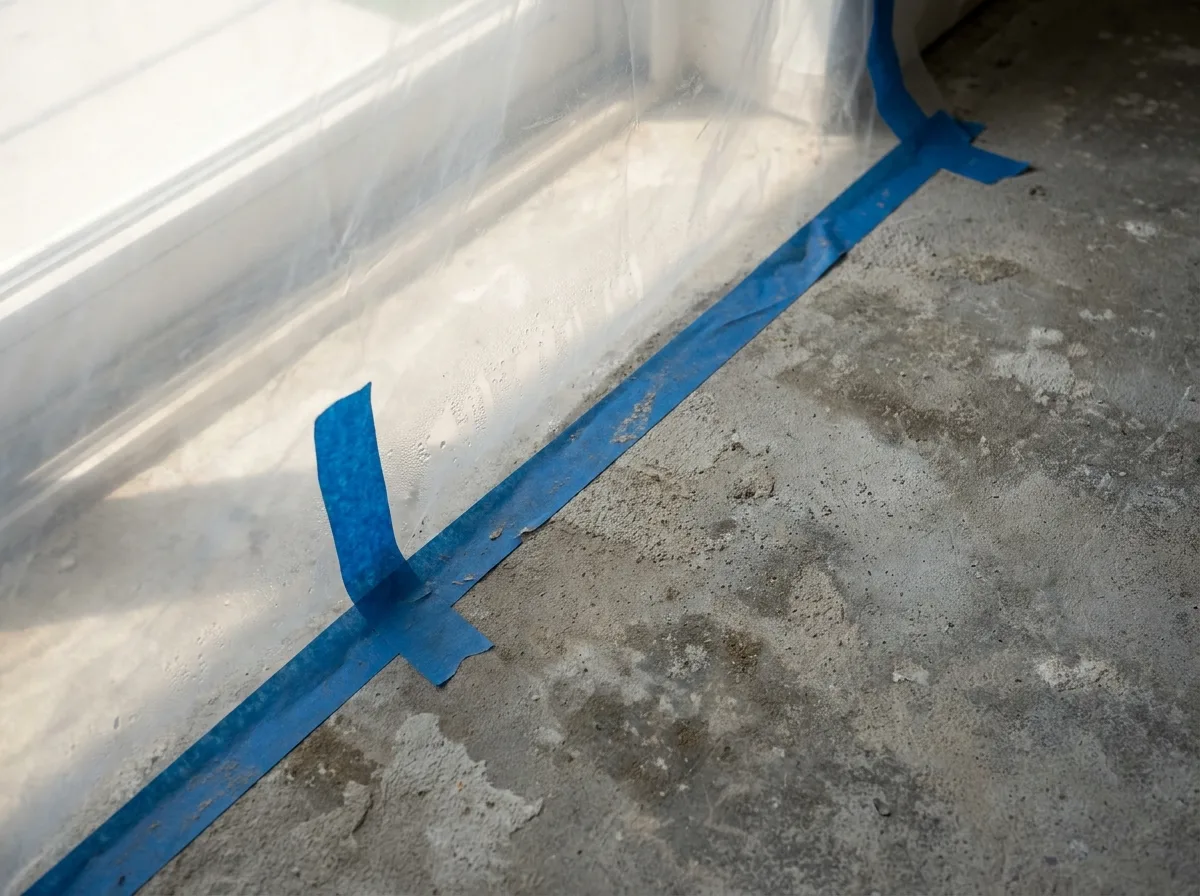
Tape an 18 by 18 inch polyethylene sheet flat on the slab for at least 16 hours, a method based on ASTM D4263. Condensation underneath or a darkened patch means too much moisture. Coating maker Tnemec also lists calcium chloride and in-situ RH probe tests for pros, and advises roughly 28 days of cure on new concrete unless moisture is within the product’s published limit.
A common version of this mistake: a basement slab passes a quick glance, gets painted, and blisters by spring because water vapor was moving through all winter. A wet slab is a poor candidate for most coatings. The cure is a vapor-tolerant product or a different floor altogether.
Hot tire pickup is the other classic. Heated tires soften weak film, which is why concrete paint labels matter more than shelf price.
How do you prep and apply paint so it lasts?
Clean the slab, degrease it, profile it, repair the cracks, prime if the label says so, then roll two thin coats in mild, dry weather. Profiling means roughing the surface until it feels like 120-grit sandpaper, which gives the coating something to grip. Skip any one step and most failed floors begin right there.
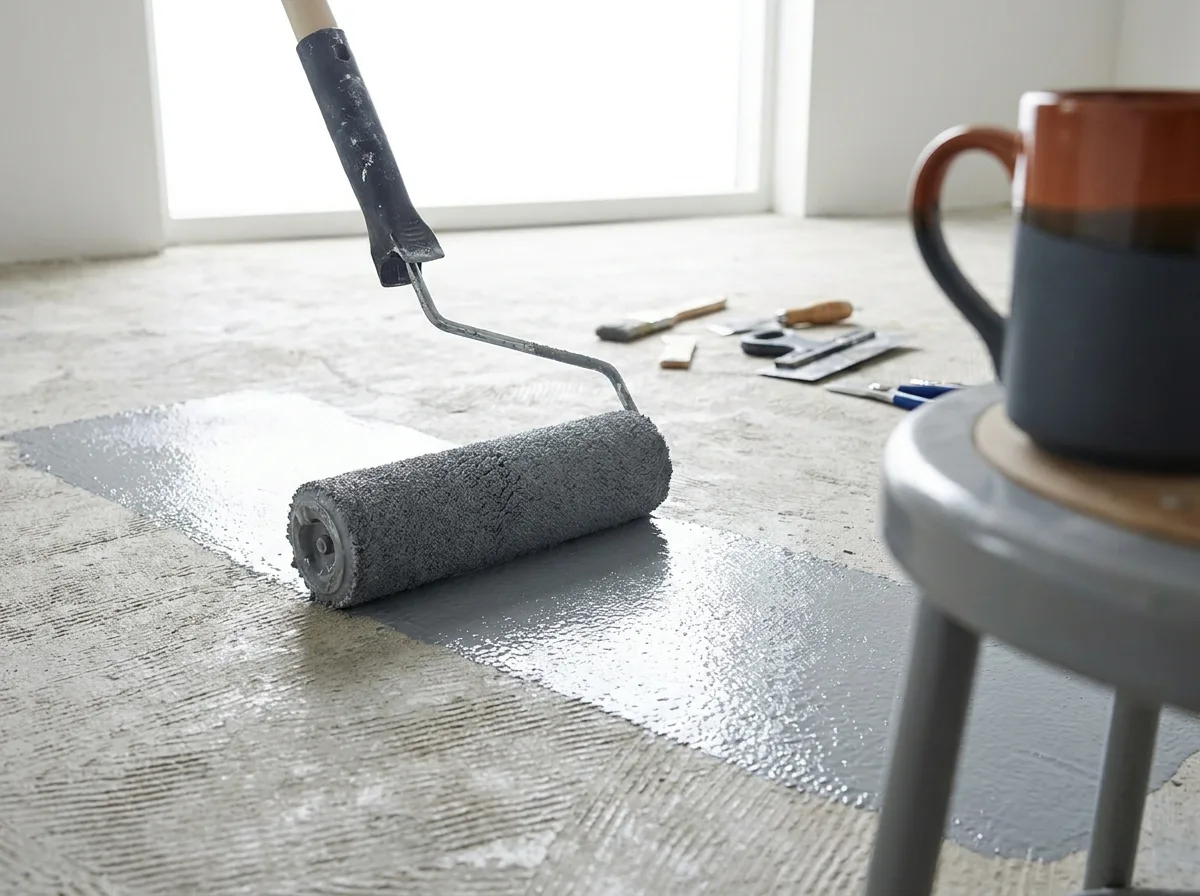
Here’s the order that works:
- Sweep, then degrease. Oil stains need a real degreaser and a scrub brush, not just water.
- Pressure wash if you like, but stay under 1,750 psi, which is Drylok’s stated limit.
- Etch with a phosphoric-acid product or grind the surface. Wear a respirator, gloves and eye protection, and ventilate. If the slab has an older coating from before 1978, test it for lead first, since grinding can release lead dust. Use dust control and check your local rules.
- Rinse until the water runs clear, then let the slab dry fully.
- Fill cracks with a patching compound made for concrete.
- Prime if the paint needs it, then roll two thin coats rather than one thick one.
Expect a full weekend for a one-car garage. Check your label for the minimum temperature (one owner quoted 45 F on theirs, and cold slows curing). Plan light foot traffic after a day or so and car traffic after several days or longer, per your product’s sheet. On dense, glassy slabs, I’d pay for a rented diamond grinder over acid.
What is the best concrete paint for a garage, patio, porch or driveway?
The best concrete paint depends on the surface: a 2-part epoxy or polyaspartic for garage floors, a latex porch and patio paint for outdoor slabs, a masonry paint for walls (general guidance), and stain for driveways. Match the coating to the surface, then check the label for indoor or outdoor use and its moisture limit.
| Surface | Good fit | Main risk | Judged by |
|---|---|---|---|
| Garage floor | 2-part epoxy or polyaspartic, or a quality latex | Hot tire pickup | Chemical and heat resistance |
| Patio or porch | Acrylic latex porch and patio paint (Behr and Valspar sell them) | UV fading, slick when wet | Weather and traction |
| Basement slab | Vapor-tolerant coating after testing | Moisture blisters | Moisture limit on the label |
| Driveway | Stain or sealer | Tire peeling | Wear and slip resistance |
| Walls and steps | Masonry paint (general guidance, check the label) | Trapped moisture | Breathability |
Behr and Valspar cover the porch and patio latex side, Drylok and Rust-Oleum sell floor-grade lines, and Rust Bullet’s DuraGrade is a polyaspartic urethane aimed at tougher jobs. "Garage floor paint works outdoors" is a myth. UV breaks it down.
How much does a painted slab cost, and how long does it last?
Owners report about $200 in materials for a 2-part epoxy kit, about $500 for a DIY polyaspartic job and $1,600 to $3,700 for professional polyaspartic quotes. They also report roughly five years of life with good prep. These are anecdotes, not quotes or guarantees, so treat them as rough ranges and compare costs over ten years.
Treat every figure here as an owner-reported anecdote, not a quote. Prices swing with region, slab condition and kit quality.
| Option | DIY idea | Pro install idea | Main cost driver |
|---|---|---|---|
| Latex floor paint | Lowest | Rarely hired | Gallons and primer |
| 1-part "epoxy" | Low | Rarely hired | Coverage per gallon |
| 2-part epoxy | Moderate | Higher | Prep and mixing |
| Polyaspartic | Moderate to high | Highest | Grinding and topcoat |
| Stain plus sealer | Low to moderate | Moderate | Resealing schedule |
For concrete paint jobs, garage owners in forum threads reported pro polyaspartic quotes of about $1,600 to $3,700, against about $500 for DIY materials and about $200 for an epoxy kit. Rental grinders add to that.
Which colors and styles work on concrete?
Solid gray and charcoal hide wear best, a two-tone border adds polish, stencils and faux stone suit patios, and whitewash gives a soft, aged look. Satin or matte finishes hide wear and give grip, while gloss shows every scuff. Pick the finish for traction first and for looks second, because a floor that is slick when wet is a fall waiting to happen.
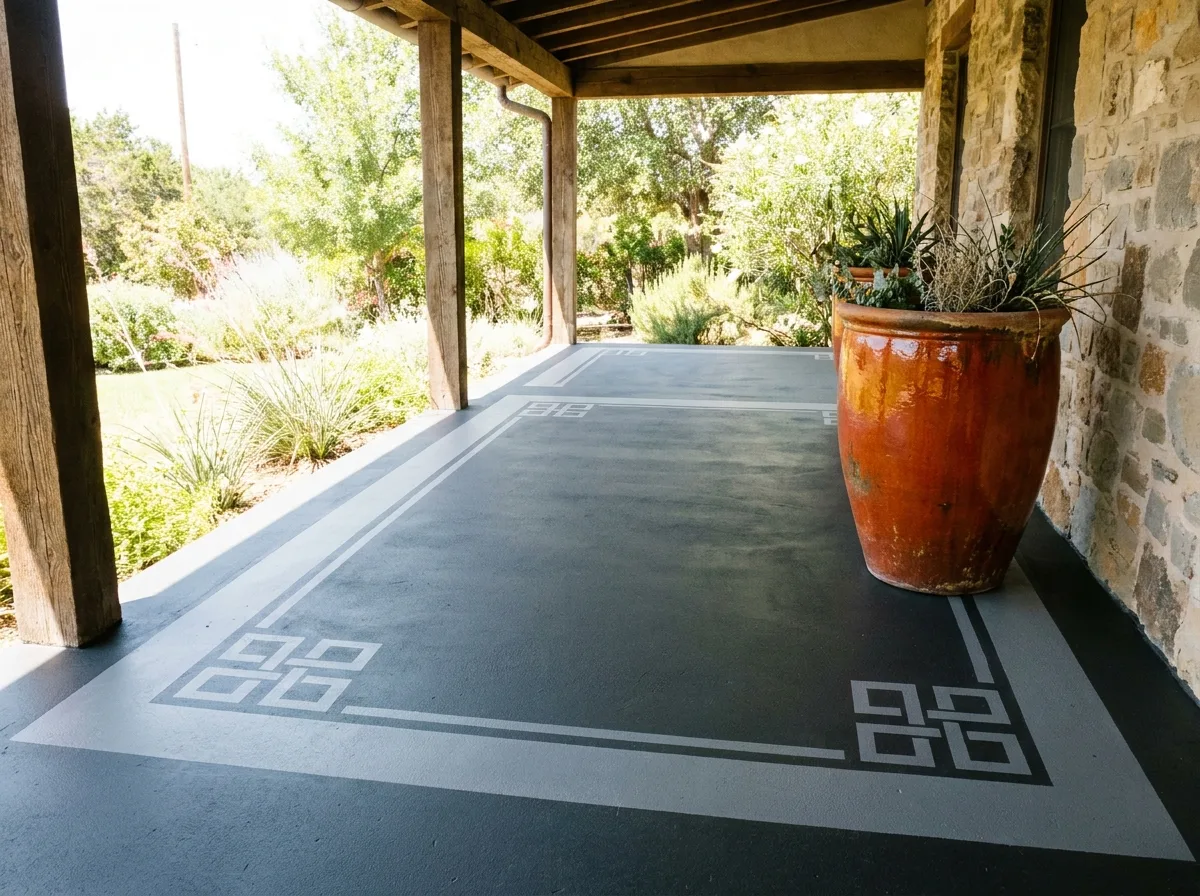
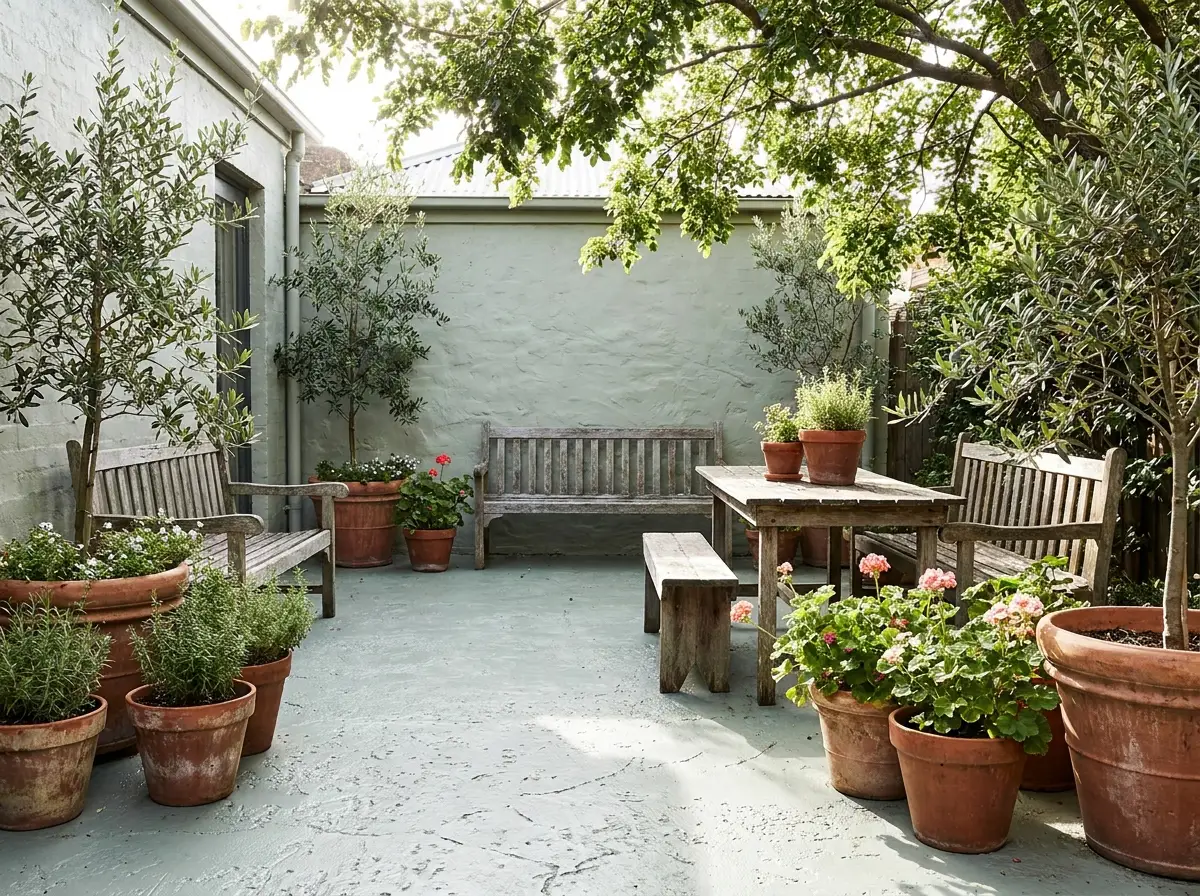
Solid colors of concrete paint are the safest for a garage. A contrasting border or stripe makes a plain slab look planned. On a patio, a stencil pattern or a faux-stone or tile layout can disguise cracks, though a crack under any pattern will return eventually (shrinkage cracks can telegraph through a coating, as Tnemec notes). Whitewash, a thinned light paint wiped on, suits a covered porch.
Color pairing helps. If your siding or trim already uses a warm neutral, the logic in this Benjamin Moore white walkthrough carries over to a pale concrete finish. For a coastal, soft green-gray porch floor, check how that shade behaves in daylight before you commit. Test a small corner first. Concrete reads cooler than the chip.
Mix a fine silica sand or an anti-slip additive into the final coat for traction. In my view, satin usually beats gloss outdoors because it hides wear and grips better.
What are the most common mistakes, and when should you hire a pro?
The most common mistakes are skipping the moisture test, painting a glossy slab without profiling, using indoor paint outside and ignoring slip resistance. Fix them with a test, a rougher surface, the right product and a grit additive. Hire a pro for structural cracks, and consider tile or rubber mats when the slab is too damp to coat.
Say a homeowner paints a smooth patio in gloss and slips after the first rain. The fix is to recoat in satin with a grit additive. Another common version: paint goes over a dusty slab and peels in sheets, so the slab needs cleaning and a primer next time. Outdoor tile or interlocking mats avoid the moisture problem, at the cost of a bigger project.
How do you maintain painted concrete, and when should you skip paint?
Sweep, wash with mild soap, spot-touch up chips quickly, and recoat on a schedule. Skip paint when the slab is damp, cracked, driveway-grade, or you won’t maintain it. Small chips spread into peels, so repair edges early and plan a full recoat before the surface turns chalky.
Feather the edges with sandpaper, clean, and dab on matching paint. Grinding is the fastest way to remove old paint from a whole floor.
For concrete paint jobs with large cracks, structural movement or a floor that fails the moisture test, hire help. Check local rules on acid and solvent disposal, since they vary.
Frequently Asked Questions
Can you paint over painted concrete?
Yes, if the old paint is sound. Scrub off dirt, sand glossy spots, and scrape anything loose. Test a small patch for adhesion first. Fresh paint over peeling paint will peel with it. If the old coating is a 2-part epoxy, you’ll likely need to grind it lightly first.
Do you need primer?
Often, but not always. Many floor paints are self-priming on a properly etched slab, and others call for a concrete primer on bare or very porous surfaces. Read the can. A primer helps most on dusty, powdery or patched concrete, where it locks down the surface and improves grip for the topcoat.
Can you paint new concrete?
Only after it cures. Coating makers usually advise at least 28 days, and earlier only if moisture tests meet the product’s limit. Fresh slabs also carry alkalinity and moisture that can ruin a coating. Rushing is the quickest way to blisters, so be patient and test with the plastic sheet.
Is 1-part epoxy real epoxy?
Not in the way a 2-part kit is. A true epoxy mixes resin and hardener, which gives you a chemical cure. Many 1-part products are acrylic latex with epoxy added or just named. They can be fine floor paints, but expect less chemical resistance than 2-part epoxy.
Can you paint a concrete driveway?
You can, but it’s the hardest case. Hot tires, road salt and rain wear paint fast, and painted driveways get slippery when wet. Most owners do better with stain and a sealer, plus a light grit additive if they paint at all. If you do use concrete paint here, pick a satin finish, expect frequent touch-ups, and keep it away from the tire tracks where heat and weight do the most damage.
Is concrete paint waterproof?
No. Most paints resist water on the surface but aren’t a waterproofing system. Moisture vapor can still push through the slab from below, and that’s what causes blistering. Waterproofing a wet basement means fixing drainage first, then painting. Some masonry coatings resist water pressure better than floor paint, but read what the label actually claims and fix gutters and grading before blaming the coating.
What is the best paint for outdoor concrete?
An acrylic latex porch and patio paint is the usual pick for patios and steps, while stain suits driveways. Outdoor slabs need UV and weather resistance and a textured finish. Garage floor products often chalk or fade in sun, so don’t swap them in. If you want the lowest peeling risk on a sunny slab, stain plus a penetrating sealer is the lower-maintenance route.
How long before you can walk or park on it?
Follow the can. Many latex floor paints allow light foot traffic after about a day, but tires need several days or longer to avoid pickup. Cold or humid air slows curing. When in doubt, wait one more day. Waiting is cheaper than repainting, and tire marks in a fresh floor are permanent. Cool garages and damp basements take noticeably longer than a warm, dry afternoon.
Can you paint damp or cold concrete?
No. Damp slabs trap moisture and cause bubbles, and cold air slows curing and weakens adhesion. Check the label’s minimum temperature, and wait for stable, dry weather. Run the plastic sheet test if you aren’t sure the slab is dry. Painting in cold, damp conditions is one of the quickest ways to get bubbles, weak adhesion and a repaint within a season, so waiting for a stable stretch of mild weather is cheap insurance.
Is garage floor paint the same as patio paint?
No, that’s a myth. Garage products are built for oil, tires and chemicals indoors. Patio paints handle sun, rain and traction. The wrong one outdoors chalks and fades, and the wrong one in a garage lifts under hot tires. Match the product to the surface.
Conclusion
Concrete paint isn’t a color decision first. It’s a surface decision, then a product decision, then a style decision. Back in our opening, that garage floor failed because the slab was never tested, not because the charcoal was wrong. A plastic sheet and a weekend of prep would have saved the repaint.
The safest next step is simple: tape down a plastic sheet tonight, then decide between paint and stain tomorrow.
Planning the colors next? Start with easy painting ideas for the wider project, then see how Sea Salt looks in real rooms. And once your slab is dry, which finish will you pick: the bold charcoal, or the softer stain that never peels?