Kitchen Mat Guide: Pick by Floor, Stance and Lifespan
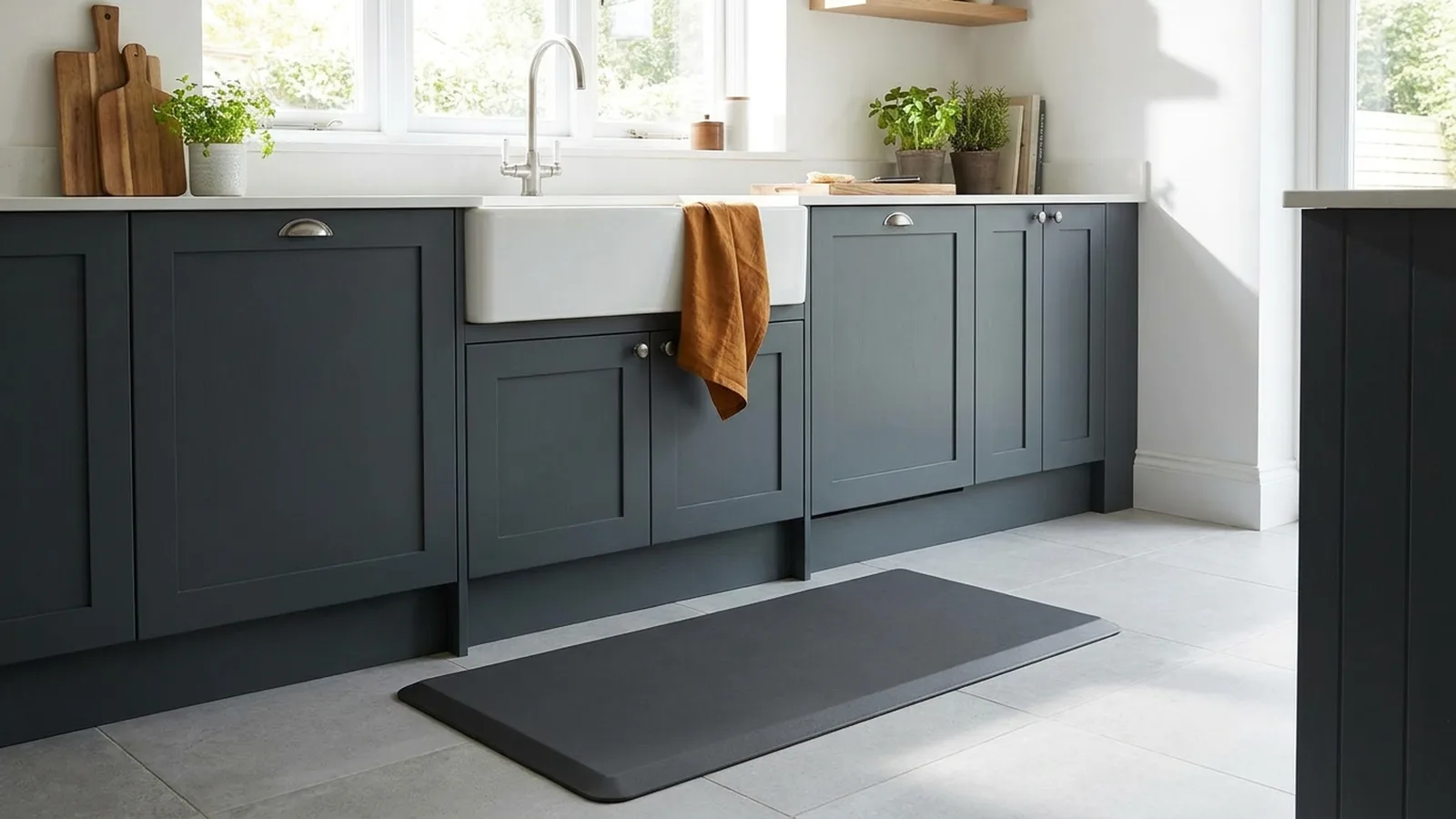
Say you cook for forty-five minutes every night on a hard tile floor. By week three your arches ache, so you order a budget set of two from a marketplace listing with 4.6 stars. Six months later the top layer peels, a corner curls, and you’ve nearly tripped on it twice. You tossed the pair and bought another.
The average kitchen mat fails for boring reasons: the wrong material for the floor, the wrong spot, or a surface that was never built to last. Looks come last, not first. A good kitchen mat does a job.
This guide is one small part of planning a good kitchen, the same way kitchen remodeling is the big picture. We’ll cover when you should skip a mat entirely, which materials earn their keep, what can stain your floor, and how to size and place one. Expect opinions. I’d rather tell you "skip it" than sell you something.
Executive Summary
The short version: buy by floor and by where you stand, not by photo. A mat helps most when you stand on a hard floor for long stretches, such as 30 minutes or more of prep. If you only pass through the kitchen, good shoes may beat any mat.
Three insights shape everything below. First, softer is not better. A CDC-hosted 2013 study of standing workers found that discomfort ratings did not differ among the mats tested, while weight shifting did, so firm and supportive wins over pillowy. Second, some rubber or latex backings can discolor sealed hardwood and luxury vinyl plank, so floor type decides your material. Third, cheap sets often cost more over time than one durable mat.
Your biggest objection is probably "aren’t mats just tripping hazards?" Fair. Beveled edges, a grippy backing and a clean, dry floor fix most of that. We’ll show how.
Do you need a kitchen mat, or just better shoes?
You need a kitchen mat if you stand on a hard floor for long stretches, such as tile, concrete or sealed wood, and your feet or back complain. If you cook in bursts shorter than 30 minutes, supportive shoes or insoles cost less and carry no tripping risk. Try the shoes first, then decide whether a mat still earns its floor space.
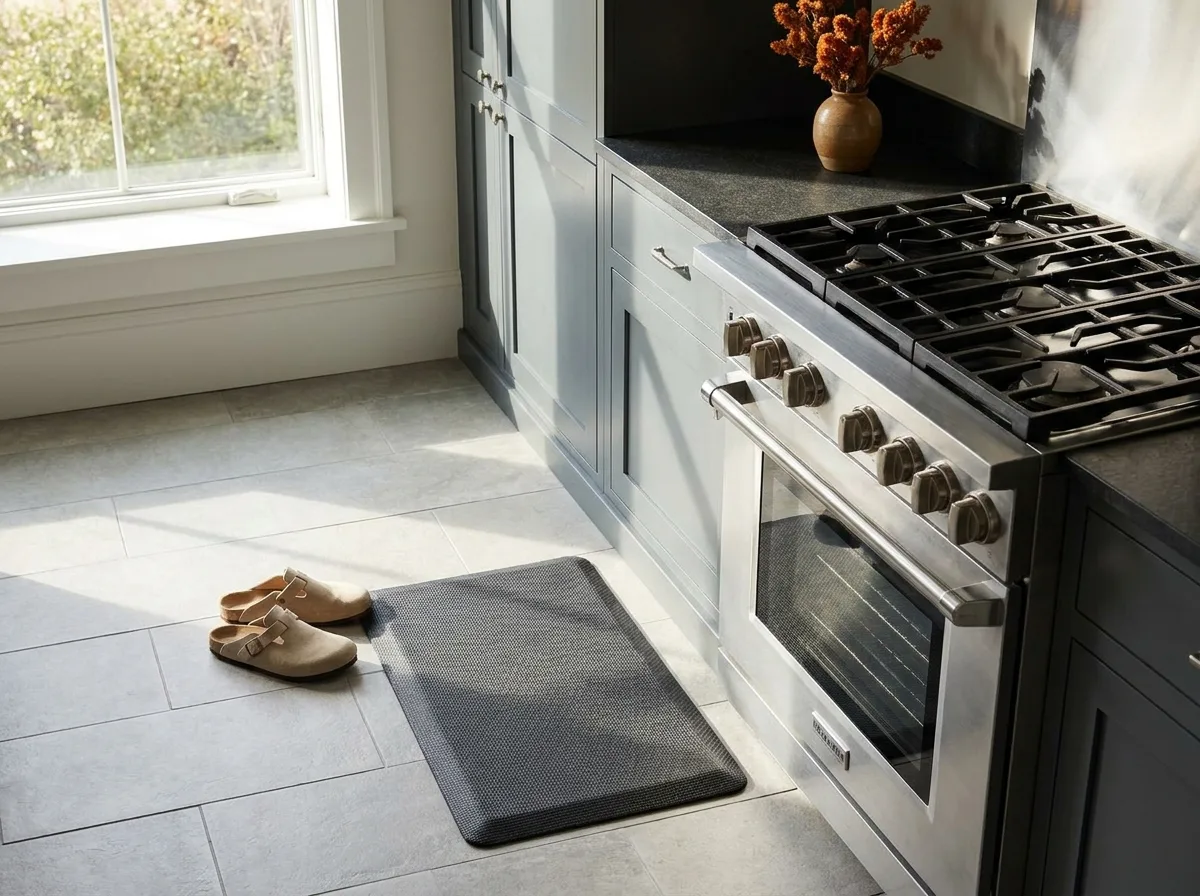
A decision rule beats guesswork here. Count your longest daily stretch at one spot. Under 30 minutes, skip the mat. Past 30 minutes on hard flooring, a mat is worth testing. Barefoot cooks gain the most, since shoes already do part of the work.
Plenty of Reddit cooks insist shoes and insoles beat any mat, and some call mats a hazard nobody cleans. They have a point. Still, research gives mats credit: a Loughborough University study of 14 people standing 90 minutes on concrete, reported by EHS Today in 2012, found significant benefits with mats. Short sessions are a different story.
Which types and materials work best?
Kitchen mats come in two main families: anti-fatigue mats built from foam or gel for standing comfort, and decorative rugs or runners built for looks. Closed-cell foam, polyurethane and gel suit long standing. Vinyl and rubber clean easily. Cotton, jute and polyester fabrics look nicer but trap spills.
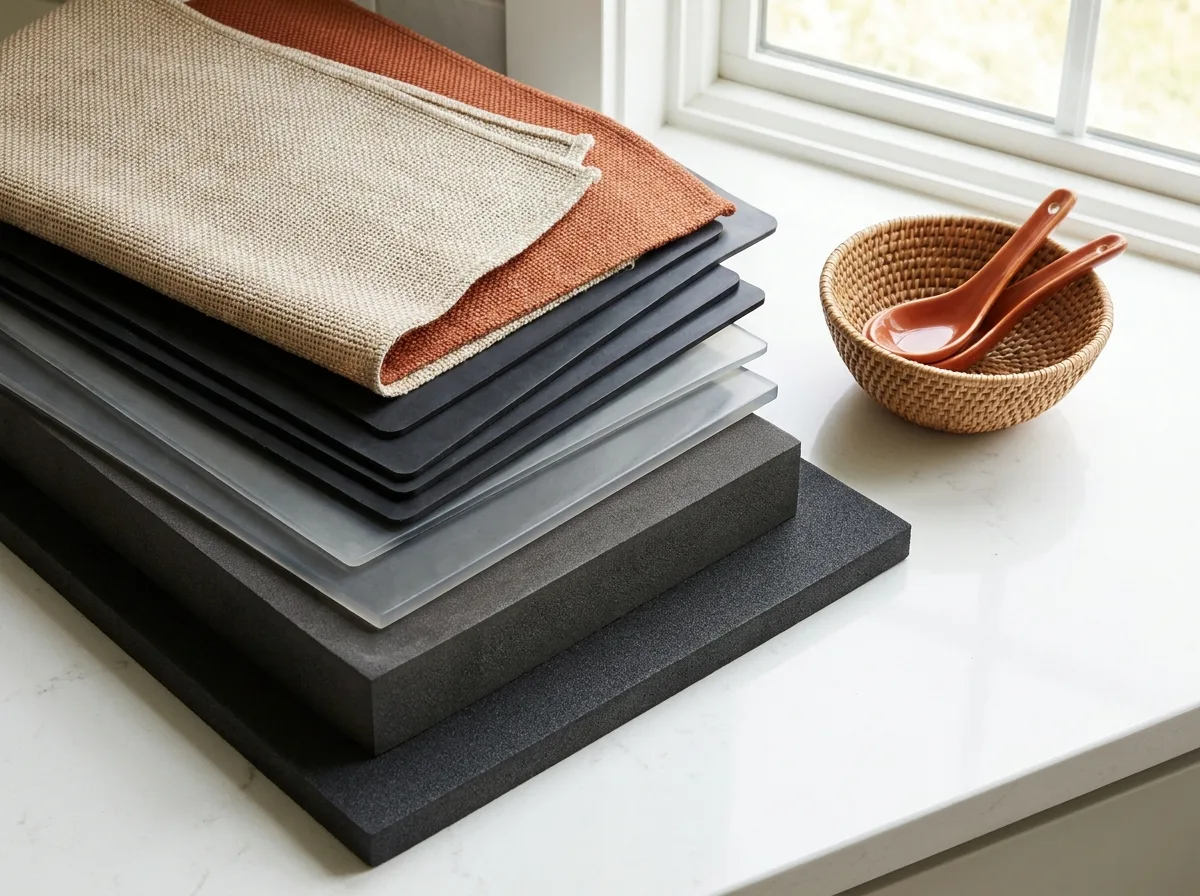
Pick the family first, then the material. Gel options such as Gel-Pro feel supportive and often cost more. Vinyl mats wipe clean but can feel stiff. Washable rugs from Ruggable look great, though threads in r/BuyItForLife and r/BIFLfails report curling edges and large sizes that won’t wash clean at home.
| Material | Best for | Watch out for |
|---|---|---|
| Polyurethane or closed-cell foam | Long standing | Cheap versions smell or shed |
| Gel | Heavy daily use | Higher price |
| Rubber or latex-backed | Grip, hosing down | Backing can stain some floors |
| Vinyl or PVC | Spills, easy wiping | Peeling top layer on cheap sets, can feel stiff |
| Cotton, jute, polyester | Style, runners | Stains, slower drying |
I rank them by how well each handles water, grip and standing. That’s my judgment, not a lab test.
How thick and firm should the mat be?
Choose a firm, supportive mat with a thickness that doesn’t squash flat when you stand on it. Very soft mats let you sink and wobble, while very hard ones barely help. A very tall mat can feel awkward to walk across, so look for a beveled edge, not a big number.
Here’s the myth to retire: more cushion equals more comfort. In the 2013 study by Keyserling and Wiggermann, discomfort ratings did not differ among the mats, yet weight shifting did, and it tracked discomfort. Translation: if you keep shifting foot to foot, the mat isn’t working, whatever the star rating says.
Test it at home. Stand on it for a good while. Notice whether you rock side to side. Quora users also advise buying where returns are easy, and I agree.
Is a kitchen mat safe for hardwood, tile and vinyl floors?
Tile and concrete handle almost any mat, but hardwood and luxury vinyl plank need care. Rubber or latex backings can release plasticizers that discolor sealed finishes, and waterproof mats can trap moisture. Choose foam, felt or natural-fiber backings on finished wood, and lift the mat now and then.
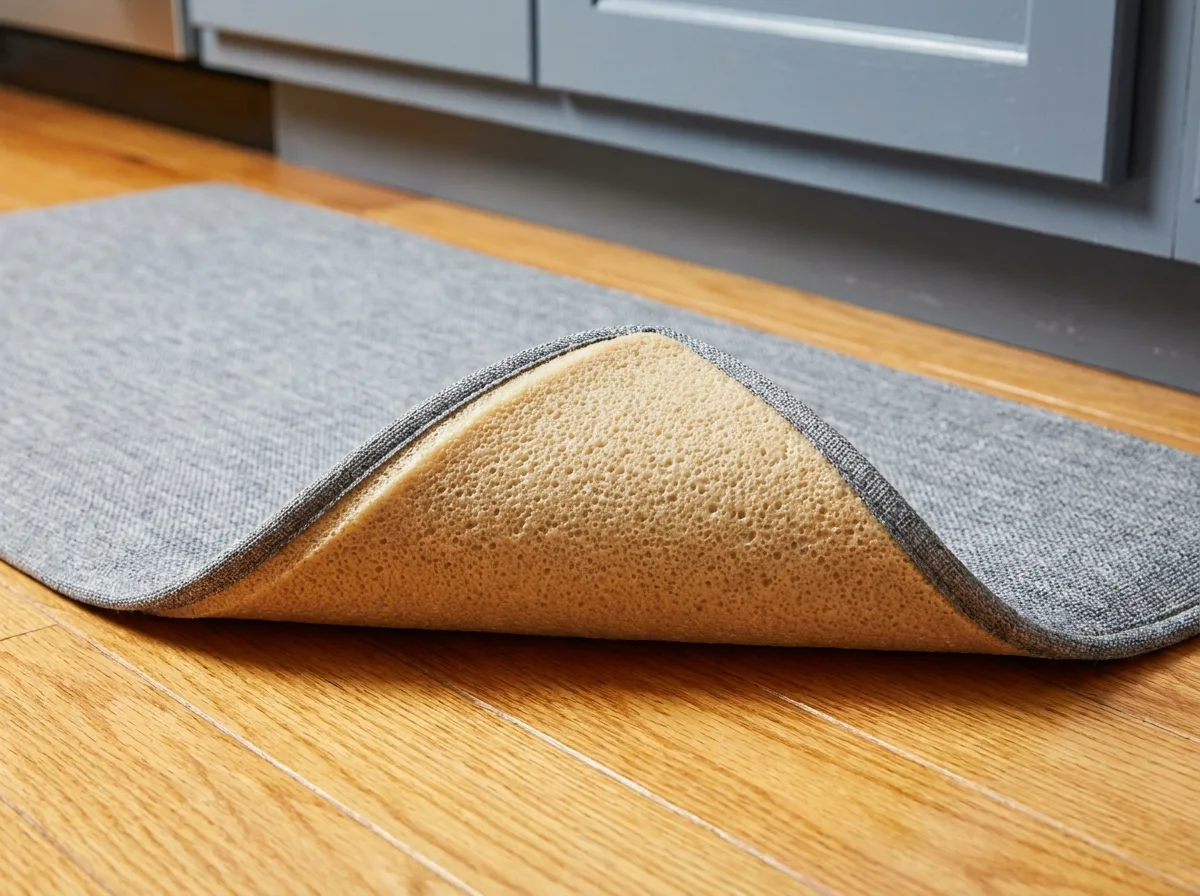
This is the gap most guides skip. Flooret’s support guidance warns that plasticizers in some rubber or latex backings migrate into sealed finishes and discolor floors. Its safer picks include foam pads, adhesive-free natural rubber and natural-fiber backings. A Reddit thread on r/HomeImprovement adds another worry: a waterproof mat over hardwood may trap moisture.
Say you put a cheap rubber-backed mat on new LVP by the sink and leave it for a year. Peel it up and you may find a cloudy outline. Check your floor maker’s care page before buying, and lift any mat weekly to let the floor breathe.
What size do you need, and where does it go?
Size the mat to your standing zone, not the whole room. Some buyers suggest roughly 20 by 30 inches for one spot, such as the sink or the range, though sizes vary widely. Galley kitchens suit a long runner, islands suit a mat on the working side, and an L-shape often wants two small mats.
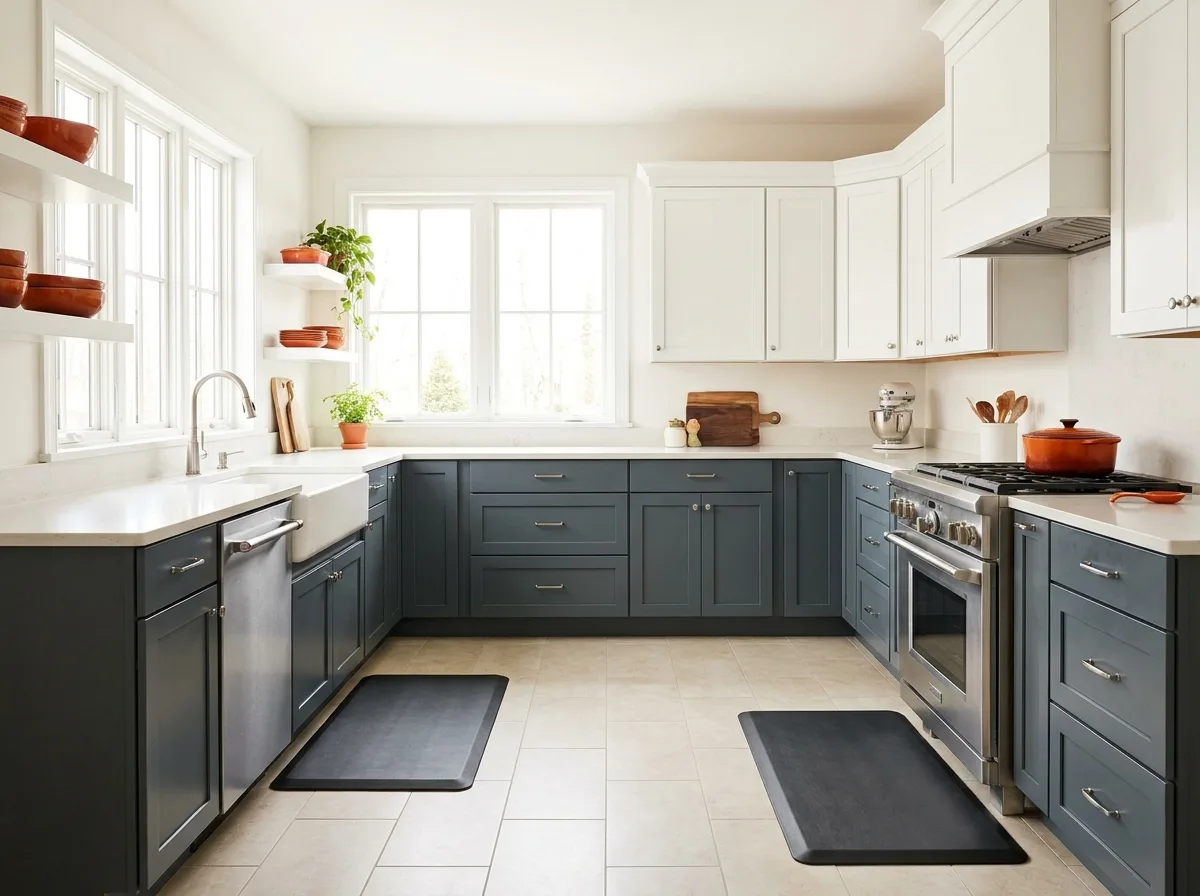
Measure where your feet actually land during a normal dinner. Most people stand at the sink and the stove, so a pair covers most of the pain. Keep at least a few inches of bare floor between a mat and cabinet toe kicks so doors and drawers don’t catch.
Layout rules of thumb: put the main mat where you stand longest, keep walkways clear, and avoid placing a mat where the dishwasher door swings. If you’re also planning storage, check how a pantry cabinet door swing crosses your mat path.
How do you stop a mat from slipping or curling?
Start with a clean, dry floor, then add a rug grip, double-sided flooring tape or a mat with a textured, non-slip backing. Lightweight mats slide and trip people, so weight and grip matter more than looks. Replace any mat whose corners keep curling after a few weeks.
Dust is the usual culprit. Wipe the floor, let it dry, then place the mat. On finished wood, skip sticky tape that can lift the finish and pick a felt-and-rubber-free grip instead.
A common version of this mistake: a buyer tapes down a curling corner, then trips on the tape edge. If the corner keeps rising, the mat is the problem, not you.
Are washable mats worth it?
Washable mats suit light-traffic kitchens, kids and pets, where spills are weekly. Small sizes go through a home washer easily. Large ones may not wash clean, and edges can curl. For a standing spot, a wipe-clean foam or vinyl mat is usually the lower-effort choice.
"Washable" sounds like a promise, but it hides a chore. You will carry a wet rug to the machine, dry it flat, and repeat. For decor value, a washable runner is lovely. For comfort, a foam mat you hose down wins.
Which styles look good?
Dark and patterned mats often hide stains better, while checkerboard, stripes and flat weaves suit farmhouse or classic rooms. Match the mat to your cabinet and floor tones, then pick texture last. In modern kitchens, a plain, low-profile mat looks cleaner than a loud rug.
Style comes in a few clear lanes. Farmhouse kitchens suit checkerboard or striped flat weaves. Modern kitchens suit a plain, low-profile mat in a solid tone. Boho and vintage runners work well in a galley, though their texture holds crumbs. Patterns hide dropped food, while solid light colors show every splash. Whatever lane you choose, settle the material first, then pick the look from what that material offers.
How much should a kitchen mat cost and how long does it last?
Retail listings typically show cheap multi-packs at the low end and single commercial-style mats well above them, and the pricier ones tend to last longer. Cheap multi-packs often peel within a year, while a single durable mat can run several years. Judge cost per year, not sticker price, and expect to replace worn mats when edges crack.
One r/homeowners buyer said two flimsy mats died in a year, while another called a five-year mat expensive but worth it. These are anecdotes, but the pattern is clear. Say a cheap pair lasts one year and a pricier single mat lasts four: the pricey one costs less per year, even at triple the sticker price. Reader anecdotes mention commercial mats around 50 to 75 dollars and premium gel options starting near 79 dollars, but retailer prices change, so check listings. As a hypothetical, a 30 dollar pair replaced yearly costs 30 per year, while a 90 dollar mat lasting four years costs about 22 per year.
What are the common kitchen mat mistakes?
The big kitchen mat mistakes are buying for looks, choosing a mat that is too soft, ignoring floor compatibility, picking a size that is too small, and never lifting it to clean underneath. Each one is cheap to avoid if you decide before you buy.
Fix them in order: choose material by floor, size by standing zone, firmness by weight shifting, grip by slide test. Clean the mat weekly with mild soap and water, dry the floor under it, and replace it when corners crack. A mat is a tool, not a decoration, even when it looks good.
Care is simple. Wash or wipe the mat weekly with mild soap and water, let it dry fully, and lift it so the floor underneath can dry too. Trapped damp is how stains and odors start. And if anyone at home has balance or mobility trouble, skipping the mat altogether is a sound call.
Frequently Asked Questions
Is an anti-fatigue kitchen mat worth it?
Yes, if you stand on hard flooring for more than 30 minutes at a time. In studies of standing workers, mats have shown benefits. A CDC-hosted study found three of four mats reduced discomfort compared with bare floor. For short cooking sessions, supportive shoes cost less. Try one with a return policy first, and weigh whether the extra floor clutter bothers you.
Can I use a bath mat or rug as a kitchen mat?
You can, if it’s dry, grippy and flat. Bath mats often have soft pile that traps crumbs and grease, and a thin rug slides easily. For long standing, a foam or gel kitchen mat gives better support than either one.
Should a kitchen mat go in front of the sink or stove?
Put it where you stand longest. For most cooks that’s the sink, then the range. A pair works well, with a few inches of clear floor around each. Skip the spot in front of the dishwasher, where the door swings.
Will a rubber-backed mat stain my floor?
It can, and floor staining is the hidden cost of cheap backings. Plasticizers in some rubber or latex backings may migrate into sealed finishes and discolor them, according to Flooret’s support guidance. Hardwood and LVP are the most at risk. Choose foam, felt or natural-fiber backings, and check your floor maker’s care instructions first. Lifting the mat weekly lets trapped moisture escape, which protects wood as well.
Is a softer kitchen mat better?
No, that’s the biggest myth. Study participants rated discomfort about the same across different mats, while weight shifting varied. A firm, supportive surface that keeps you from rocking beats a squishy one. If you sink or wobble, move to a firmer option. A good kitchen mat should feel supportive, not like a bed.
How often should you replace a kitchen mat?
Replace it when the surface peels, the foam stays flat, or corners crack. Cheap sets can last about a year, while durable mats may last several, according to homeowner reports. Don’t trust a fixed number. Check wear every few months and rotate it so one spot doesn’t take all the pressure.
Can washable kitchen mats go in the washer?
Small ones usually can, if the label says so. Large washable rugs often do not wash clean at home, and some users report curling edges and pads that shed black bits. Follow the care tag, air dry flat, and keep a spare in rotation so a wash day never leaves you standing on bare tile.
Are kitchen mats a tripping hazard?
They can be, especially lightweight or curling ones, which is the fair point behind the Reddit complaints. Pick a beveled edge, use a rug grip or tape, and keep the floor clean and dry. If anyone in the house has trouble walking or uses a cane, skip loose mats entirely and rely on supportive footwear.
Can I put a kitchen mat over heated floors?
Check with the floor or mat maker first. Some mats insulate heat, and some backings may react to warmth, so approvals differ from product to product. A quick look at the manual or a call to support is wiser than guessing.
Does thicker mean better for a kitchen mat?
No. Thick mats can feel unstable and become a trip edge, and a tall edge catches toes. Firmness and a beveled edge matter more than the number on the box.
Conclusion
The best kitchen mat isn’t the prettiest one. It’s the one that fits your floor, sits where you stand, stays firm enough to stop that foot-to-foot rocking, and lasts more than one season. If you only cook in short bursts, good shoes may be all you need, and that’s a fine answer.
Your next step with any kitchen mat: measure your longest standing spot, check your floor maker’s care page, and buy one mat you can return.
For the bigger picture, read our guide to kitchen remodeling or the one on gray kitchen cabinets. So which spot in your kitchen is quietly wearing you out?