Shaker Cabinet Doors: How to Pick the Right Frame Width and Style
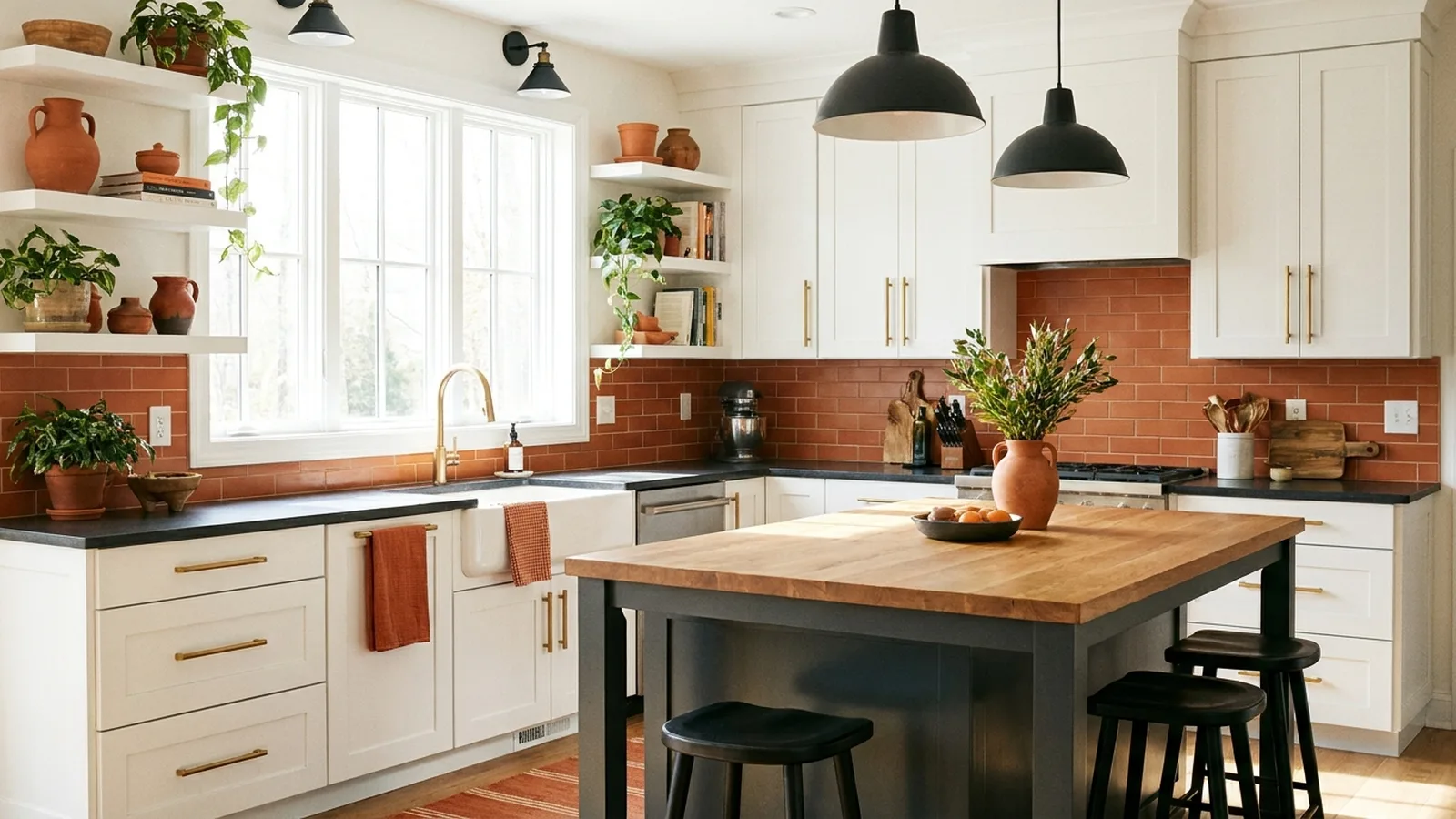
A 2 1/8 inch frame and a 3 inch frame look almost identical in a catalog photo. On your kitchen wall they don’t. Say a homeowner orders a full set of shaker cabinet doors from a thumbnail, and the doors arrive looking like slabs with a thin trim line. Or they arrive so chunky that the upper cabinets feel heavy. Either way, the money is spent and the doors are cut.
The frustrating part is that the style name tells you almost nothing. "Shaker" covers a family of profiles, from a mini frame to a wide traditional one. Which one fits depends on your house, your cleaning habits and your budget, in that order.
This guide treats the choice as a decision, not a trend report. It is one part of planning a full kitchen remodel, but doors are the part you see every day. You’ll get the build basics, a frame width rule, material trade-offs, cleaning honesty and an ordering checklist.
Executive Summary
Shaker cabinet doors are flat-panel doors in a square frame, and the frame width is the decision that matters most. Wider frames tend to read traditional, slimmer frames read modern, and the thinnest frames sit close to slab. Pick the width from your home’s architecture first and the color second.
Here’s what you’ll learn below:
- How the five-piece build works and why it matters for durability
- A simple rule for choosing standard, slim or mini frames
- Why a slim frame can cost more and whether resale justifies it
- How the groove traps dust, and which profiles clean easiest
- How to measure overlay and order replacement doors without errors
- When sliding cabinet doors beat hinged ones
The biggest hesitation is usually "will this look dated?" Short answer: the plain profile has lasted because it is neutral, and the parts that date a kitchen (lights, hardware, backsplash) are the cheap ones to change.
What Are Shaker Cabinet Doors?
Shaker cabinet doors are doors made of a square-edged frame with a flat, recessed center panel. The frame is four pieces, two vertical stiles and two horizontal rails, and the panel is the fifth piece. There is no raised profile and no ornate carving, which is why the design suits almost any room.
The name comes from the plain furniture of the Shaker religious communities, and the idea survives in the proportions: simple, square, useful. Think of a picture frame with the glass replaced by a flat board.
Two terms to know. A stile is the vertical frame piece and a rail is the horizontal one. Frame width means how wide those pieces are, and it sets the whole look. A thin frame shows more panel, a wide frame shows more border.
How Is a Shaker Door Built?
Most shaker cabinet doors use a five-piece build. Four frame pieces join at the corners with a cope and stick joint, and a flat panel floats in a groove cut along the inside edge. The floating panel can expand and shrink with humidity without splitting the frame, which is why the construction lasts.
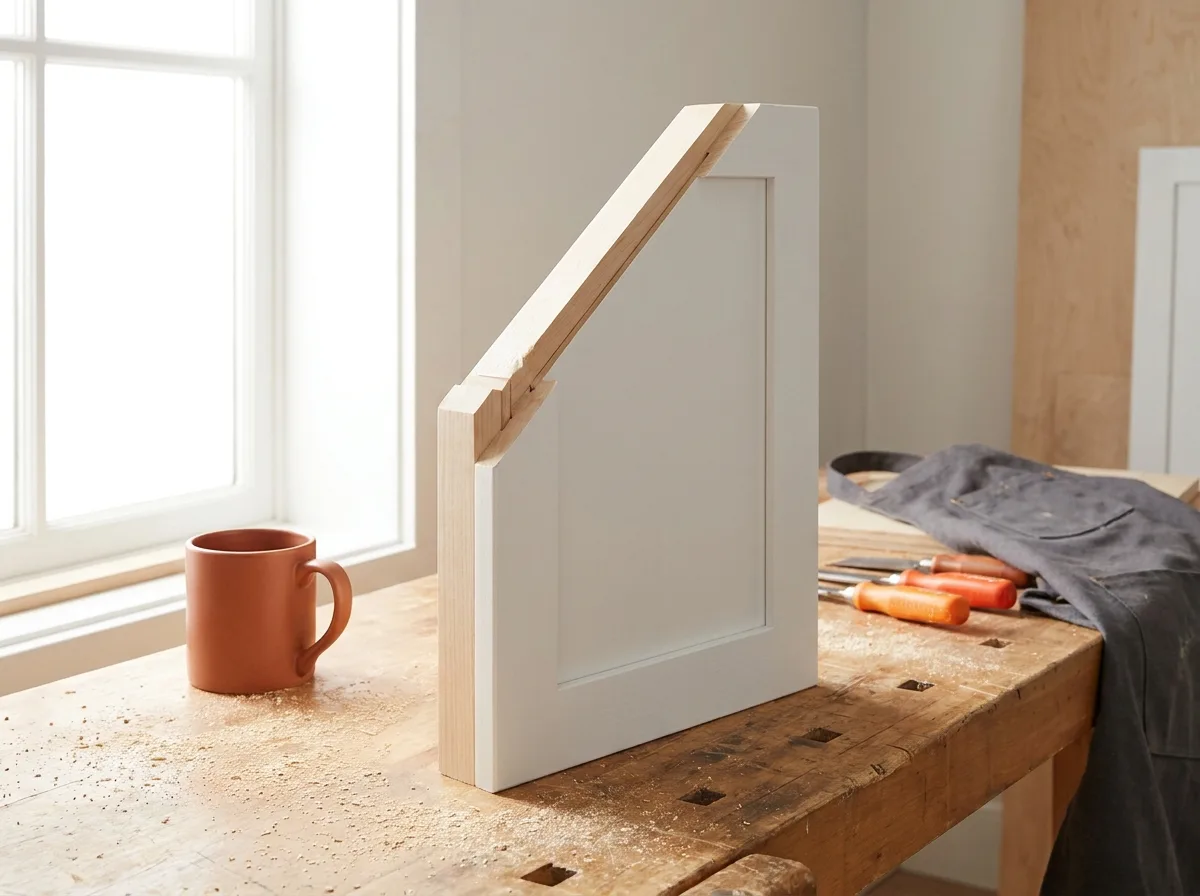
A cope and stick joint is a profile cut on the end of one piece that nests against the face of the next. Some shops use other joint styles, so ask what a listing means by "five-piece". One shop’s listing describes a 1/4 inch plywood panel insert, which is common on paint-grade solid wood doors.
Cheaper doors use a two-piece construction, where a routed or molded panel mimics the frame. They look fine from across the room. Up close, you can sometimes see the missing seam. For uppers in a rental, it can be a reasonable save. For a kitchen you plan to keep, I’d pay for the five-piece.
Standard, Slim or Mini: Which Frame Suits Your House?
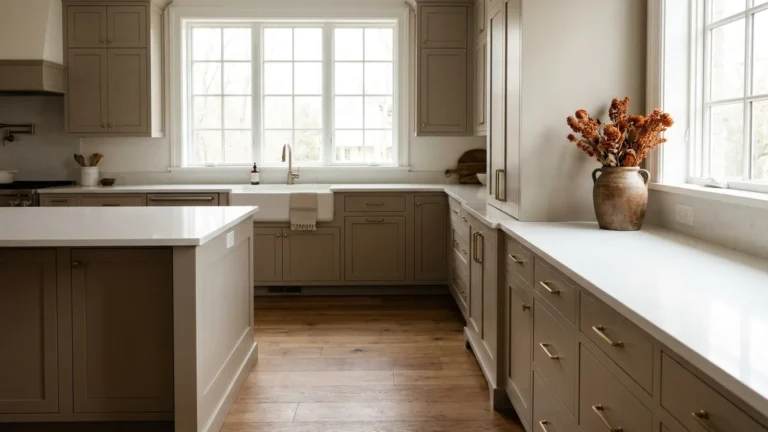
Choose frame width by architecture. Standard frames, often around 2 to 3 inches wide, suit traditional, farmhouse and historic homes. Slim frames suit modern and transitional spaces. Mini frames lean toward contemporary. Exact cutoffs vary by shop, though retailers list frames from 1/2 inch up to 3 inches.
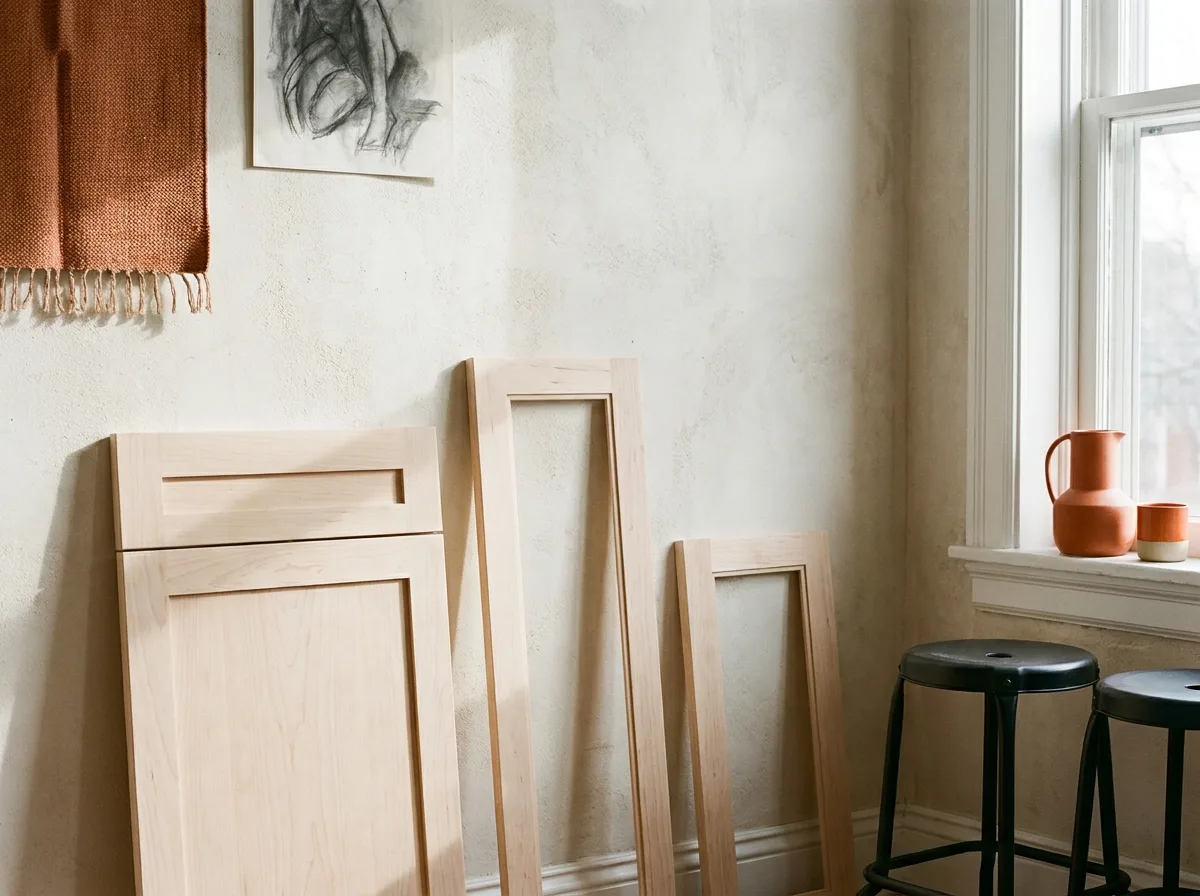
Commenters in kitchen remodel threads give a useful rule: take cues from the exterior, the staircase and the fireplace. A 1920s bungalow with chunky trim looks odd with skinny frames. A new build with flat-panel interior doors feels natural with them.
Use this decision rule:
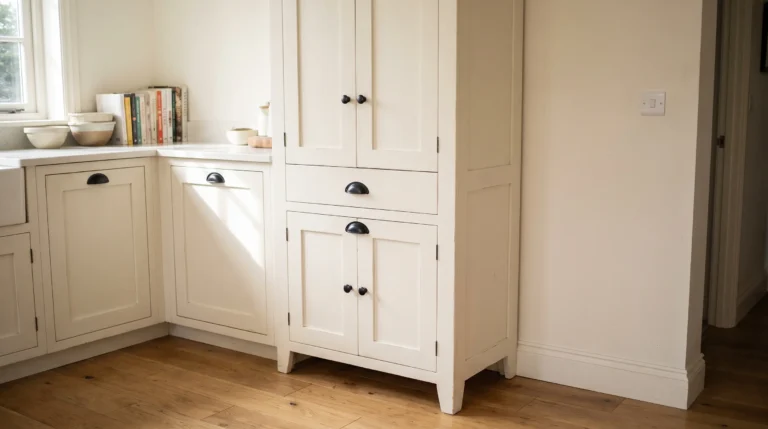
- Standard frame: pick it if your trim is wide, your home is older, or you want the safest resale look.
- Slim frame: pick it if your trim is narrow and you want modern without a totally flat face.
- Mini frame: pick it only if you love the slab look and want one soft line of detail.
Some people call slim shaker "trim slapped on a slab." Others love it. Both are opinions, so hold a sample against your actual walls before you decide.
Is Slim Shaker Worth Paying More For?
Slim shaker is worth it only if you’d otherwise choose slab and miss the detail. Some shops charge more for it, and the reasons vary by shop and material. Resale value is unclear, so treat the premium as a taste purchase, not an investment.
One homeowner thread described a quote around $8,000 higher for slim than standard on a light blue kitchen, and the poster doubted buyers would pay that back. That is one anecdote, not a market number, but the skepticism is sound. Nobody has solid data showing frame width moves a sale price.
A common version of this mistake goes like this: a buyer upgrades to slim for "modern appeal," then sells to someone who wanted classic. My view is that plain standard shaker is the safer long-term bet, and money is better spent on drawers, hinges and good hardware.
What Materials Work Best for Shaker Cabinet Doors?
Paint-grade solid wood or MDF suits painted shaker cabinet doors, while red oak, hard maple or cherry suit stained ones. RTF (a type of thermofoil) wraps a vinyl coating over MDF for a lower price. Real wood is generally easier to repair, and wrapped doors wipe clean easily but can be harder to fix if damaged.
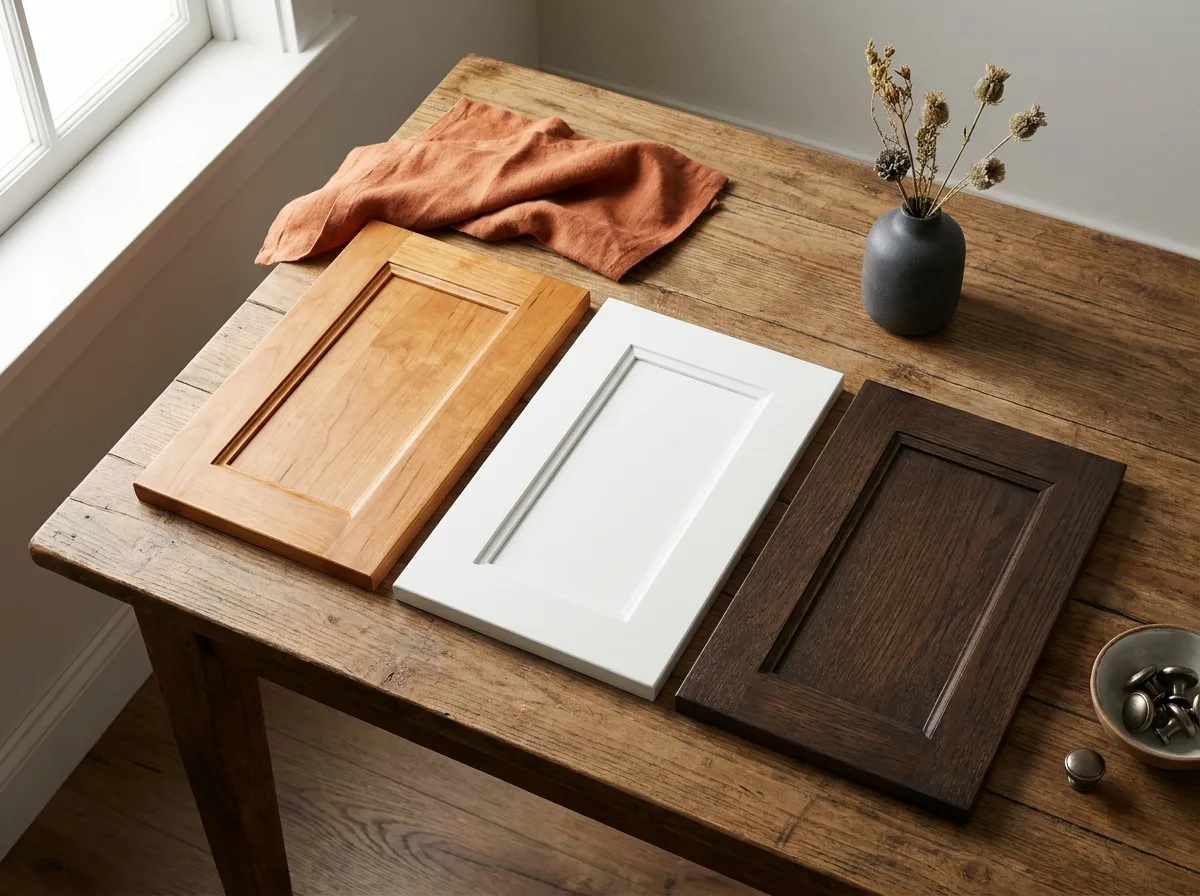
One large retailer lists more than 22 materials, including 10 woods plus paint-grade options. Most homeowners only need to choose among a few.
| Material | Best for | Watch out for |
|---|---|---|
| Solid wood (maple, oak, cherry) | Stained or painted, long life | Cost, seasonal movement |
| MDF (paint-grade) | Smooth painted finish | Swelling if water gets in |
| RTF / thermofoil (wrapped MDF) | Budget, easy wiping, uniform color | Generally harder to repair, ask about heat near ovens |
| TFL (laminate) | Budget boxes | Check edges and finish on a sample |
These are general tendencies, so check a sample. Painting? MDF gives the cleanest finish. Staining? Wood is the only real option.
Shaker vs Slab vs Raised Panel: How Do They Compare?
Shaker sits between slab and raised panel on detail, cost and cleaning. Slab is simplest and easiest to wipe. Raised panel is ornate and traditional. Shaker’s square frame suits the widest range of homes, which is why it dominates kitchens and why the trend has not moved on.
| Style | Look | Cleaning | Typical cost |
|---|---|---|---|
| Slab | Flat, modern | Easiest | Lowest |
| Shaker | Square, neutral | Moderate | Middle |
| Raised panel | Ornate, formal | Hardest | Highest |
Cost here is relative, not a price. The shaker’s extra work over slab is the frame, and the raised panel adds shaping on top of that. Shops commonly ship all three unfinished, so finishing adds to the total.
Are Shaker Cabinet Doors Hard to Keep Clean?
Shaker cabinet doors are slightly harder to clean than slab doors because the inside corners of the recess collect dust and grease. A shallower groove and a smooth paint or wrapped finish reduce the problem. Expect a quick wipe with a soft cloth and a small brush every few weeks.
Cooks complain that the bottom inside corner near the stove gets a film that looks fine until you light it from the side. Groove depth drives this: a deeper recess holds more.
Three habits help. Wipe cooking-zone doors weekly with mild soap and water. Use a soft toothbrush on the corners. Dry them, because standing water is what harms MDF. If you cook daily with oil, ask for shallow shaker or choose slab for the cabinets beside the range. Mixing is allowed.
How Do You Measure and Order Replacement Shaker Doors?
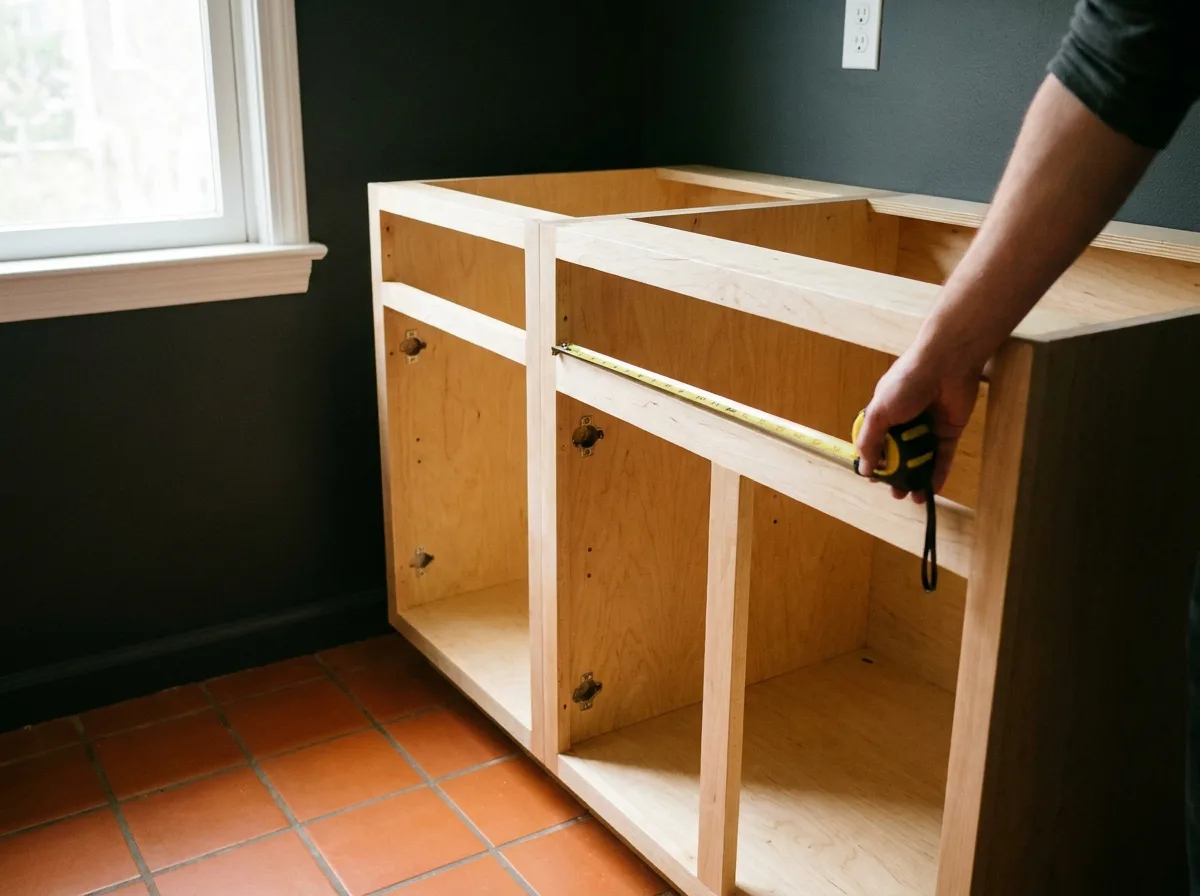
Measure the opening, then add the overlay. Overlay is how much of the cabinet frame the door covers: full, partial or inset. Record each door’s width and height, drawer fronts, hinge type and how many doors are on each cabinet. Double-check every number with a second measurement before you order. Lead time varies, and one shop quotes about 2 to 3 weeks.
Replacing doors on sound boxes, often called refacing, can cost far less than new cabinets. One online shop lists unfinished doors from $17.45 per square foot, with a $30 adjustment per door for certain changes. Treat those as one retailer’s numbers, since finish, wood and size push the total up.
Here’s the checklist:
- Measure the opening width and height in inches, to the nearest 1/16.
- Decide the overlay and add it to each side.
- Note hinge boring. A common 35 mm hinge cup sits about 3 inches from the top and bottom.
- List drawer fronts separately, since they are usually five-piece or one-piece slabs.
- Confirm lead time. One shop quotes 2 to 3 weeks.
Hinge boring is the step I’d never skip. Unbored doors mean drilling a precise cup hole yourself, and one slip ruins a door. For a larger refresh, our pantry cabinet guide shows how doors and interiors work together.
What Drives the Cost, and When Should You Hire a Cabinetmaker?
Cost depends on the material, frame width, door size, finish and whether doors ship bored for hinges. Refacing, which means new doors on sound cabinet boxes, often costs far less than new cabinets. Hire a cabinetmaker when boxes are damaged, walls are out of square or you want custom sizes.
Say a homeowner has solid boxes with dated doors. Refacing keeps the boxes, so the spend goes into doors and hardware. Now say the boxes sag or the layout annoys them daily. New doors would only polish a problem, and a cabinetmaker or new cabinets make more sense. This is an illustrative case, not a quote, and prices vary by region and shop.
A pro also helps when you want a flawless sprayed finish. If you need standard sizes and can paint, ordering doors yourself is a fair DIY job.
Which Colors and Hardware Go With Shaker Doors?
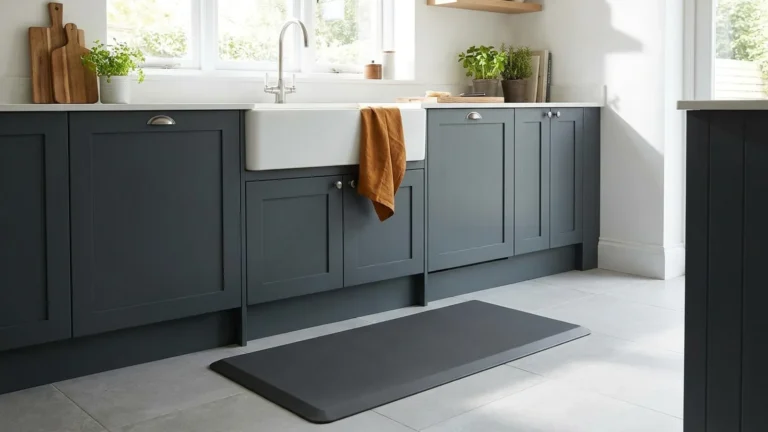
White, navy, dark green and sage are the most common colors for shaker doors, but frame width matters more than color. Pair a standard frame with cup pulls or bar pulls, and a slim frame with slim bars. Hardware is the cheapest way to change the style later.
A designer’s point worth repeating: plain shaker stays solid for a decade, so put the personality in lights, backsplash and hardware, all easy to swap. Try a brass pull on a navy door and the whole kitchen shifts, no new doors needed.
Shaker Cabinet Doors or Sliding Cabinet Doors?
Sliding cabinet doors work where hinged doors would hit something, such as narrow aisles, tight garage shelves or media units. They are not shaker alternatives, since shaker is a style and sliding is a movement. You can have sliding doors in a shaker profile, so the real question is how the door moves.
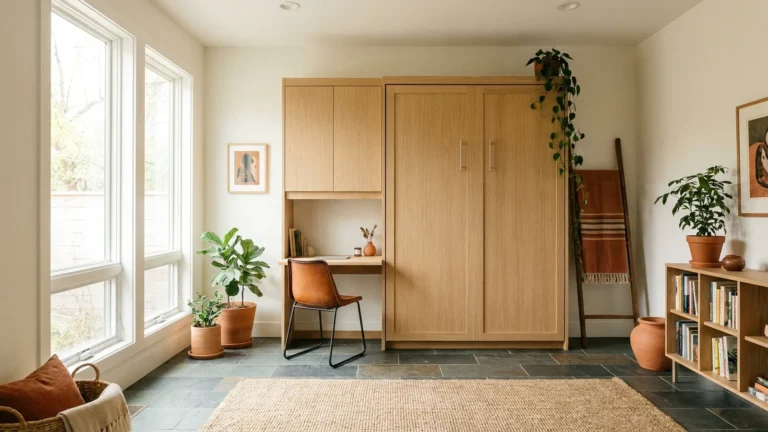
Hinged doors need swing room, usually the width of the door. Sliding doors need none, but they only open half the cabinet at a time and the track collects dust. They suit wide, shallow storage, and murphy bed cabinet builds are another case where swing room is tight. In a normal kitchen, hinged is easier and cheaper to repair.
"Shaker vs overlay" and "shaker vs sliding" are the same mix-up: style is the look, the rest is mechanics.
Frequently Asked Questions
Are shaker cabinet doors outdated?
No, they are the baseline of kitchen design rather than a fad. Their square frame and flat panel have stayed in use because they work with almost any color or hardware. If you worry about a dated look, change the lights, backsplash or pulls first. Those cost less than new doors and shift the style more.
What is the difference between shaker and overlay?
Shaker is a door style, and overlay is how much of the cabinet face the door covers. They are not alternatives. You can have a shaker door in full overlay, partial overlay or inset. Full overlay covers most of the face frame and gives a clean look, while partial leaves more frame visible. Pick the style first, then measure for the overlay your cabinets already use.
Do shaker doors arrive finished?
Often not. Many shops ship unfinished doors, so you sand, prime and paint or stain them yourself. Some sell factory-finished or RTF doors that arrive ready to hang. Finishing is the hardest DIY part, since sprayed paint looks smoother than brushed. If you hate finishing work, pay for a finished door or hire a painter. Check the listing before you add to the cart.
Does slim shaker cost more than standard?
Often yes, though not always. Some shops charge more for narrow frames, and the reasons vary by shop and material. One homeowner reported a gap of several thousand dollars on a whole kitchen, but that is a single anecdote. Request a quote for both widths from the same shop, same material, same finish. That’s the only comparison worth trusting.
Is MDF or solid wood better for shaker doors?
It depends on the finish. MDF gives a smooth painted surface and costs less, but swells if water soaks in. Solid wood is stronger, easier to repair and the only choice for stained doors. For painted kitchens away from the sink, MDF holds up well. Near the dishwasher or sink, solid wood is the safer pick. Seal every cut edge either way.
Do shaker cabinet doors collect dust?
Yes, in the inside corners of the recess. Grease collects too near the stove. A shallow groove and a smooth finish make wiping easier, and a soft brush clears the corners. Myth-buster: the claim that slab doors never get dirty is false, since they show fingerprints and smudges instead. If cleaning is your top concern, choose slab or shallow shaker for cooking zones. See our gray kitchen cabinets guide for finishes that hide marks.
Can I add glass to shaker doors?
Yes. Mullion doors replace the flat panel with glass divided by thin bars, commonly in 1, 4 or 6 lite patterns. They suit upper cabinets that display dishes. Glass shows clutter, so keep the inside tidy or choose frosted glass. Ask the shop whether it cuts the glass opening or sells the door complete, since sizing and hinge boring change with a glass insert.
Can I mix slim and standard shaker in one kitchen?
You can, but keep it purposeful. Myth-buster: the idea that slim is only for modern rooms is false, but mixing frames at random looks like a mistake. A safer plan is standard doors on the main run and slim on a feature piece, like a pantry or hutch. A pantry door is a good place to try the different frame.
Should lower cabinets be drawers or doors?
Drawers are usually better on lowers, since you see everything without kneeling. They cost more because they use more parts, including slides and boxes. Doors cost less and suit sinks, where pipes block drawers. A good mix is doors under the sink and drawers everywhere else. Drawer fronts in shaker style match the doors, so the set looks even.
How long does it take to get replacement shaker doors?
Plan for about 2 to 3 weeks for custom orders at one shop, and longer in busy seasons. Finished doors can add time. Measure twice, confirm overlay and hinge boring before ordering, because errors restart the clock. If your kitchen is torn up, ask for a written ship date. Build that date into your remodel schedule.
Conclusion
The doors on your cabinets are the largest surface in the kitchen, so choose them like a decision, not a catalog scroll. For shaker cabinet doors, frame width comes first, material second, cleaning habits third, color last. That ordering fixes the problem from the opening, where a thumbnail led to a mismatch.
Standard frames stay the safe pick, slim frames are a taste choice, and sliding doors solve space problems rather than style ones.
Your next step is cheap: order one sample door in each width and hold them against your trim for a day. When you’re ready, read our kitchen remodeling guide for the wider plan or the pantry cabinet guide for storage. Which frame width does your trim already point to?