
Window Sill: Types, Styles, Costs and Repairs
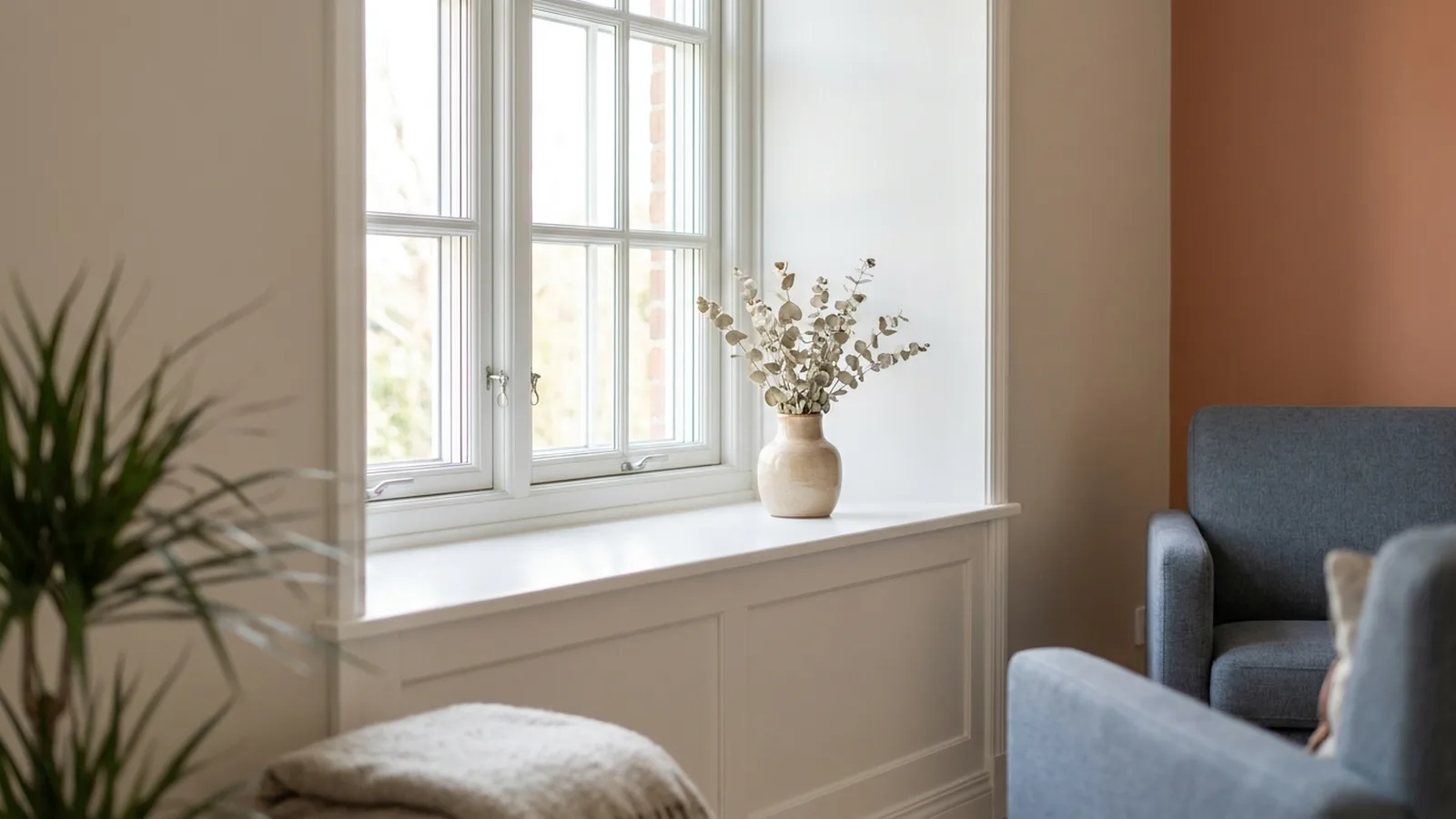
A healthy window sill sheds water away from the wall. It slopes outward and projects past the wall below, so rain drips clear instead of running back toward the siding. When yours stays damp, feels soft under a screwdriver or sheds paint in flakes, that job has failed. The cause is often a small leak, not a bad board.
This guide covers the parts and the confusing names, the materials, the sizes that work, and styles you can use inside your home. You’ll also see realistic cost drivers, a repair-or-replace rule, and the steps for the most common fix. I write for US homeowners, so expect inches, dollars and a plain note on when hiring a pro is the cheaper path.
The short version
- The outside sloped piece is the sill. The flat inside shelf is technically the stool. The trim under the stool is the apron.
- Wood, cellular PVC, stone and tile all work. The right pick depends on moisture, paint or stain, and weight.
- Rot is usually a symptom. Find the water source before you buy a single board.
Is it window sill or windowsill?
Both spellings are correct. Both are in everyday use, and the two-word form appears often in product listings. The part itself is the horizontal ledge at the bottom of a window opening. Outside, it slopes away from the glass and sheds rain. Inside, most people use the same word for the flat shelf you can set things on.
Trade usage is stricter. Wikipedia and moulding suppliers such as Westcoast Moulding separate the outside sill from the interior stool, so look at your window from both sides before you shop or repair.
What is the difference between a window sill, stool, apron and ledge?
The sill is the sloped, weather-facing piece at the bottom of the window frame. The stool is the interior shelf that sits against the glass frame. The apron is the trim board mounted flat under the stool. A ledge is a casual word for any shelf-like projection, so it can mean a stool, a sill or a brick course.
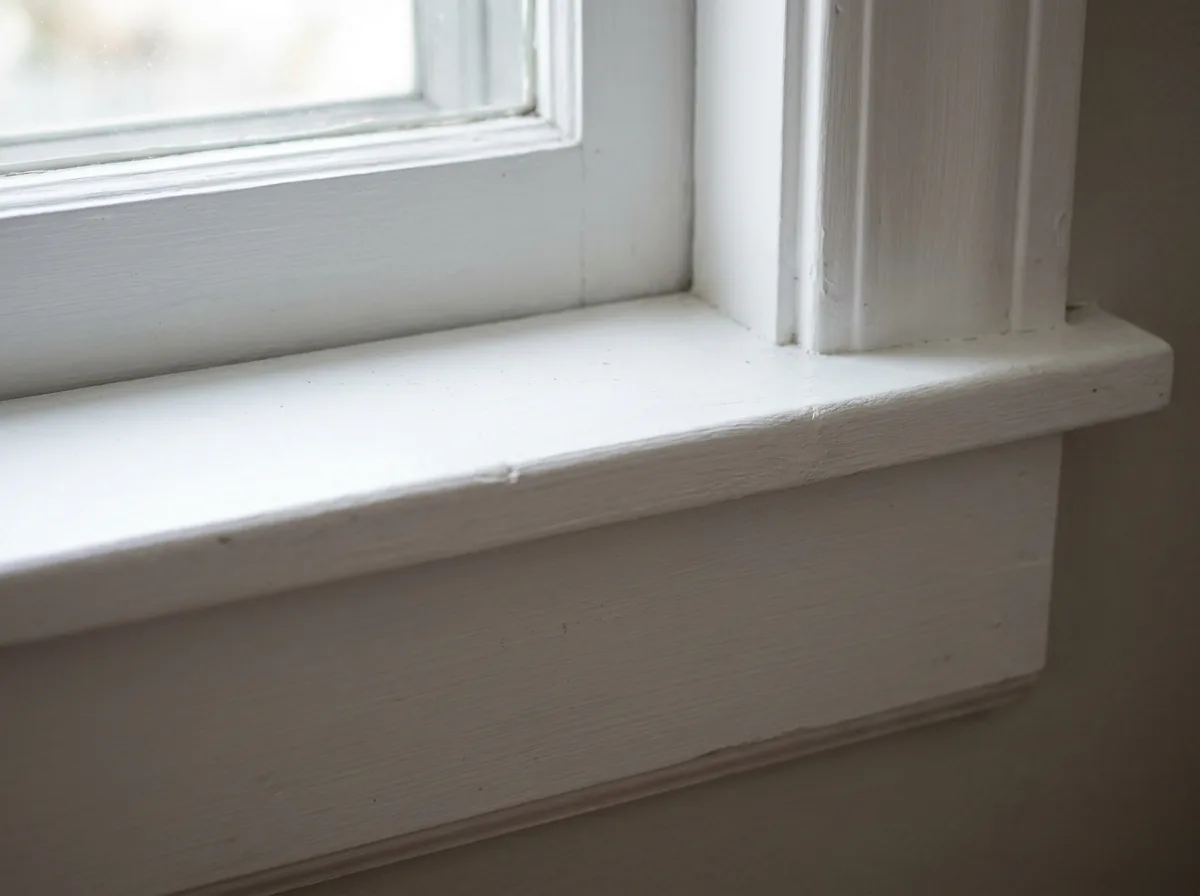
Trade vocabulary matters when you order parts or read a quote. A contractor who says "sill" may mean the exterior piece, while a retailer listing "window sill" may be selling a stool. Ask which one is meant.
| Part | Where it sits | Main job | Common material |
|---|---|---|---|
| Sill | Outside, at the bottom of the frame | Sheds water away from the wall | Wood, PVC, stone, aluminum |
| Stool | Inside, against the lower frame | Finished shelf and trim | Painted wood, stained hardwood, stone |
| Apron | Inside, under the stool | Covers the gap and supports the stool | Wood or paint-grade trim |
| Casing | Around the sides and top | Hides the jamb gap | Wood or PVC |
| Ledge | Informal term | Any shelf-like projection | Varies |
What does a window sill actually do?
A sill carries rain off the window and away from the wall. Its slope and its overhang do the work, and a drip notch or drip edge underneath keeps water from creeping back along the underside. It also gives the window frame a solid base and finishes the opening, which helps stop air leaks when it’s sealed properly.
The details are easy to overlook. Many windows hide a sill pan, a shallow flashing tray under the frame that catches stray water and sends it back out. Wikipedia describes these pans as steel, vinyl or PVC. If the pan or the flashing was never installed, a sill can look fine for years and then rot from the inside.
What are window sills made of?
Window sills come in wood, cellular PVC, vinyl, polyurethane, stone, tile and aluminum. Wood is the traditional choice and the easiest to match in an older house. PVC and polyurethane resist rot and need little upkeep. Stone and tile suit wet areas and give a heavier, more finished look.

Mouldings One notes that softwoods such as pine and fir suit painted trim, while hardwoods such as oak, maple, cherry and mahogany suit stain. Brands like Fypon sell polyurethane trim, and several moulding suppliers sell cellular PVC sills in lengths up to 16 feet. Here’s how the main options compare.
| Material | Strength | Limit | Best for | Cost tier |
|---|---|---|---|---|
| Painted pine or fir | Cheap, easy to cut and match | Rots if paint or caulk fails | Interior stools, dry rooms | Low |
| Stained hardwood (oak, maple) | Durable, attractive grain | Needs sealing, costs more | Visible interior stools | Medium |
| Cedar or pressure-treated board | Good outdoor wood | Must be primed on all faces | Exterior sills you build | Low to medium |
| Cellular PVC | No rot, takes paint | Expands with heat, can look plain | Exterior sills, wet climates | Medium |
| Polyurethane or vinyl | Light, low upkeep | Limited profiles, can crack | Replacement trim | Low to medium |
| Marble or granite | Premium look, waterproof | Heavy, needs support, costly | Deep interior sills, bathrooms | High |
| Tile | Handles water and heat | Grout needs sealing | Kitchens, window seats | Medium |
Stone deserves a caution. A slab weighs far more than a wood board, so a swap from wood to stone often needs added support underneath. Ask a mason or a carpenter before you commit.
What size should a window sill be?
Depth should match the wall thickness plus a projection past the casing. Stock depths at windowsills.com run from about 5 to 18 inches, so measure your wall first and pick the closest size. For a sill you build, many DIY guides call for about 3/4 inch of overhang past the wall below. Thickness depends on the material and the profile you choose.
Lowe’s suggests building an exterior sill from a 2×4 (actual size 1-1/2 by 3-1/2 inches) or a 2×6 (1-1/2 by 5-1/2 inches) in cedar or pressure-treated lumber. Measure the opening at the front, middle and back, because old windows are rarely square. Here are the points to check before you cut.
- Opening width, plus the overhang you want at each end
- Wall thickness, so the depth reaches the casing
- Slope, commonly about 14 to 15 degrees on exterior boards
- Clearance for blinds, a radiator or a window crank
Which window sill styles and ideas work for interiors?
Interior styles are really stool and apron styles. The simple flush stool tucks neatly into the wall and suits modern rooms. A traditional stool extends past the casing with small returns on the ends, which gives a crisp shelf. A stone slab or a deep sill seat turns the window into a feature, and a tile sill suits kitchens and baths.

Pick the style that matches your trim and your use of the space. Here are ideas that work in most homes.
- Craftsman look: a thick stained stool with a square apron and a plain casing.
- Painted white stool: brightens older rooms and hides small dents.
- Deep sill seat: a deep stool that doubles as a cushioned perch.
- Stone or quartz slab: easy to wipe clean and good behind a kitchen sink.
- Rounded edge stool: safer in homes with small children.
A window above the sink is a classic case. If you’re planning kitchen remodeling, choose a moisture-friendly sill early, because it affects the trim, the backsplash and the faucet clearance. If a tall pantry cabinet will stand next to the window, check that its door swing and depth clear the stool before you fix the projection.
Decorating has its own rules. Keep plants in saucers so water can’t reach the wood, and avoid heavy pots on thin stock. A large potted tree, such as an olive tree kept indoors, belongs on the floor beside a bright window, not on the sill. Watch for heat too, because glass magnifies afternoon sun and can scorch paint.
How much does a window sill cost to buy and to replace?
Costs depend on material, size and who does the work. Lowe’s puts a typical DIY replacement under $100 per window and a professional job at several hundred dollars. Those are retailer estimates, so treat them as a starting point. Retail wood sill stock starts anywhere from a few dollars to around twenty dollars per linear foot, depending on profile and species, according to Mouldings One.
Say you have a 36-inch wide wood window with a soft corner, a straightforward first-floor opening. A board, primer, caulk and screws fit a small budget, and a handyman’s labor adds to it. Now say the sill is rotten because the window frame leaks. The quote can jump quickly, since the pro now fixes the window, the trim and sometimes the siding. As one anecdote, a homeowner thread on Reddit mentioned a contractor quoting about $250 to $350 for a simple sill swap, while another poster was quoted about $2,000 when the whole window was part of the job. Treat those as single stories, not rules.
- Material: wood is cheapest, PVC mid-range, natural stone highest.
- Size: long sills and deep stools cost more per piece.
- Access: second floors and tight spots add labor.
- Hidden damage: rot in the frame or wall raises the price.
- Finish: paint, stain and new trim add time.
How do you know a window sill needs replacing instead of repair?
Probe it. Press a screwdriver into the wood in several spots, especially at the corners and the joint with the frame. If the tip sinks in easily or the wood crumbles, the board is rotten. Small soft areas can be repaired. Widespread soft spots, missing chunks or a sill that no longer slopes should be replaced.
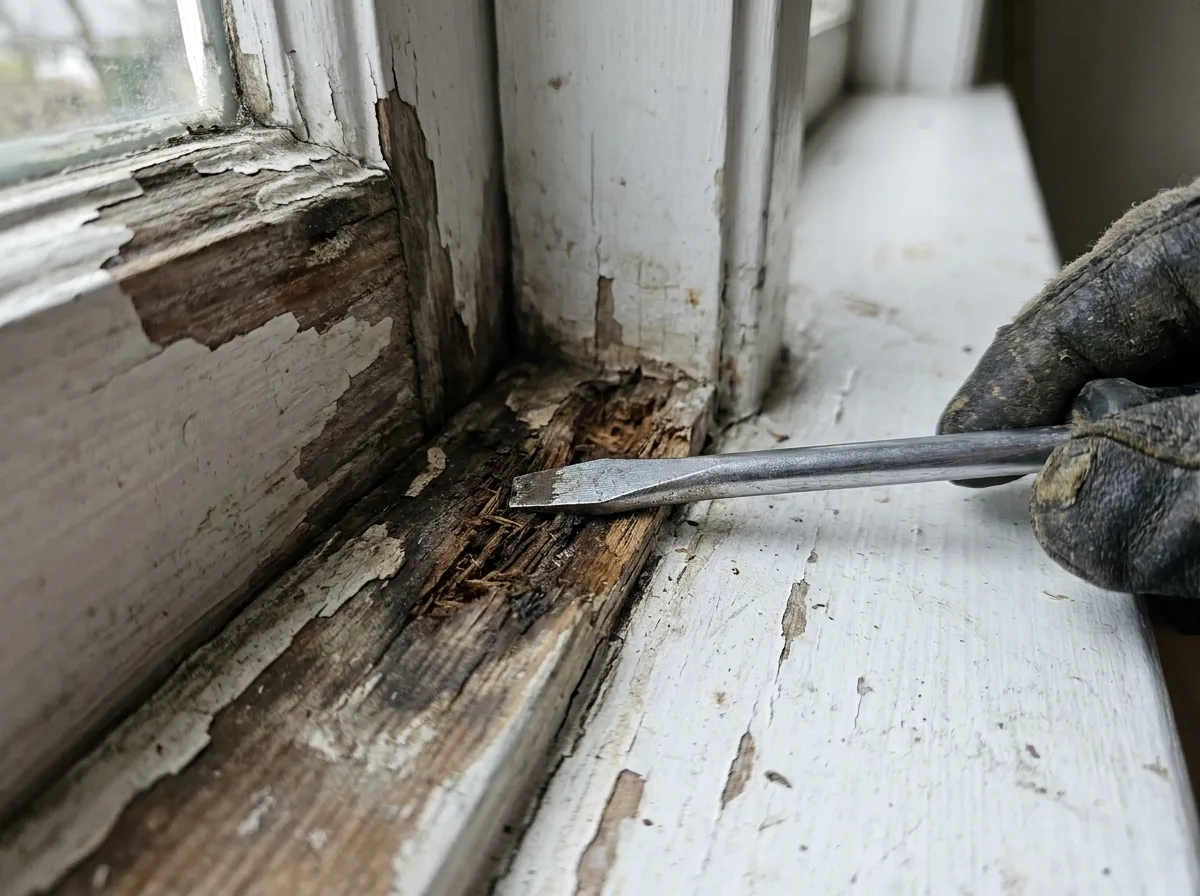
Use these rules as a guide, not a law. Windowsills.com offers a rule of thumb that replacement makes sense once rot covers around 10 percent of the sill. I’d go further when the rot runs under the window frame, since you’re no longer fixing a board.
- Repair if: damage is shallow, limited to one area, and the rest of the wood is firm.
- Replace if: the wood is spongy, the sill has lost its slope, or repairs keep failing.
- Call a pro if: rot touches the framing or the sill is on an upper floor.
A common misconception is that you must replace the whole window to fix the sill. Usually you don’t. A sill can often be replaced on its own, though some units have the sill built into the frame. In that case a pro will advise on the window itself.
Can you replace a window sill without replacing the window?
Yes, in most cases with traditional wood windows. You remove the damaged sill, fix the cause of the leak, and install a new sill with the right slope, flashing and caulk. Some vinyl and fiberglass windows have a sill that’s part of the frame, so those can be harder. Then you may only be able to replace trim or a sill cover.
Do replacement windows come with sills? Sometimes. Some replacement units include their own sill or sit within the old one, so ask the installer what happens to the old sill and the trim in the quote.
How to replace a window sill, step by step
This is a moderate DIY project for someone comfortable with a saw, a pry bar and caulk. Plan on a weekend including cure time. Wear gloves and goggles, and check your paint age first. If the home was built before 1978, it may have lead paint. In that case test the paint, follow EPA lead-safe practice or hire a certified pro, and never dry-sand or dry-scrape. A dust mask is fine for non-lead work but does not stop lead dust.
- Find the water source. Look for failed caulk, gaps in the siding, a bad flashing or an overflowing gutter above. A new sill won’t last if the leak stays.
- Cut out the old sill. Score the paint and caulk, then pry gently. Cut the old board into pieces if it fights you.
- Check what’s underneath. Probe the frame and the wall framing. Remove all rot you find. If it reaches the structure, stop and call a pro.
- Cut the new sill. Trace the old one or use cedar or pressure-treated stock. Cut the slope, commonly about 14 to 15 degrees according to Lowe’s, and add a drip groove underneath if the old sill had one.
- Prime every face and end. Raw wood is how most replacements fail early.
- Set the sill. Apply sealant or flashing tape, fit the board, and drive exterior wood screws about 6 inches apart, countersunk.
- Caulk and paint. Seal the joints, wait about 24 hours for the caulk to cure, then paint.
If you need a sill where none existed, such as a plain wall opening, the same steps apply. For paint, use primed pine or cedar. For stain, choose a hardwood and seal it well. Keep a modest overhang so water drips clear of the wall.
Can you repair a rotted window sill with epoxy and wood hardener?
Often yes, when the rot is limited. A wood consolidant soaks into soft fibers and hardens them. Then you fill the voids with epoxy filler, shape it, sand it and paint. Homeowners with older houses like this approach because it keeps the original profile, which can be hard to match with new stock.
The method has limits. It fits damage you can fully dig out and reach. It won’t fix a sill that has lost its slope, and it won’t stop a leak. Remove all the soft wood first, because rot left behind keeps spreading. A common mistake is to fill a hole with filler and never address the water. Epoxy then hides the problem for a season.
Why does a window sill rot or grow mold?
Water is the cause, and it arrives from three places. Rain can get behind failed caulk or missing flashing. Indoor condensation can run onto the stool when the glass is cold. And a leak from above can soak the whole opening. The EPA says to keep indoor humidity below 60 percent, ideally between 30 and 50 percent, and to dry wet materials within 24 to 48 hours to avoid mold.
Watch for the signs Bob Vila lists for window trouble: persistent condensation, fogged glass between panes, mold, and sawdust that hints at carpenter ants or bees. Metal storm windows and tight weatherstripping can also trap water against old wood. If you see black spots or smell mustiness, treat it as a moisture problem and look for the source.
How do you keep a window sill in good shape?
Check it twice a year, in spring and fall. Look for cracked caulk, peeling paint and soft spots. Repaint any bare wood quickly, and reseal gaps between the sill and the wall. Painted and sealed wood can last a long time, but unpainted ends and exposed undersides are common weak points.
For cleaning, a soft cloth and mild soap work on most surfaces. Dry the sill afterward. Avoid harsh acids on marble and limestone, and seal tile grout so it doesn’t hold moisture. Wipe condensation from the stool on cold mornings, and run a bath or kitchen fan when you cook or shower.
When should you call a pro?
Call a pro when the damage goes past the sill itself. That includes rot in the frame or wall, a leak whose source you can’t find, a sill on an upper floor, and a heavy stone installation. A pro can also fix flashing and siding properly, which is where many DIY repairs fall short.
Permit rules vary by city and county, and I can’t tell you what yours requires. Simple like-for-like repairs often need no permit, but structural changes, and some jobs in historic districts or condo buildings, might. Call your local building department before you start. Ask for two written quotes and make sure each one states what happens to the trim, the flashing and the old sill.
Window Sill FAQ
Is it sill or cill?
Sill is the American spelling. Cill is the British spelling of the same word, and you’ll see it on UK sites and in older texts. If you’re shopping in the US, search for "sill" to find parts, trim and replacement stock. The pronunciation is the same either way.
What do Americans call a windowsill?
Most Americans say windowsill or window sill, whether they mean the outside piece or the inside shelf. Builders are more precise and say stool for the inside part. If you want to sound clear on a job, say "interior stool" or "exterior sill" so the contractor knows which one you mean.
What is the difference between a window sill and a window ledge?
A ledge is a general term for any narrow shelf that sticks out, so it’s less exact than sill. People use it for a stool, a stone sill or a brick course. A sill is a specific part of the window assembly, with a slope and a water-shedding job when it’s on the outside.
Do replacement windows come with sills?
Sometimes. It depends on the window type, so have the installer list the sill, stool and trim in the quote.
What wood is best for a window sill?
For exterior sills, cedar and pressure-treated lumber hold up well if you prime every face. For interior stools, painted pine is cheap and easy, while oak and maple look better with stain. Mahogany and cherry cost more. Whatever you choose, seal the end grain and keep the finish intact.
Can a wood sill be replaced with stone?
Yes, but stone is much heavier than wood and the opening often needs extra support. See the materials section above, and have a mason or carpenter check the framing before you order a slab.
Do I need a permit to replace a window sill?
It depends on your location, and codes vary. Check the pro section above, then call your local building department before you start.
What is a sill pan?
A sill pan is a shallow tray or flashing set under a window to catch water that gets past the frame and send it outside. If yours is missing or poorly sealed, leaks can rot the sill from underneath.
Can I use spray foam around a window sill?
Use low-expansion foam made for windows and doors, if you use foam at all. Regular expanding foam can sometimes bow the frame. Foam isn’t a substitute for flashing or caulk, and it shouldn’t be left exposed to weather. Cut and cover any foam that oozes out.
Can plants stay on a window sill?
Yes, with care. Use saucers and check the wood under the pots now and then, as covered in the styles section above.
Conclusion: Read the Sill Before You Replace It
A window sill is a small part with a big job. The slope, the overhang and the flashing keep water out of your wall, and the stool and apron finish the room. Remember the screwdriver probe. A firm board with a clear slope is fine, a soft one is a warning, and the leak behind it is the real repair.
Start by probing each sill in your home this weekend. Note where the wood is soft, where the caulk has split and where the glass drips with condensation. Fix the water source, then choose the repair or the replacement that suits the damage. If the rot reaches the framing, bring in a pro. Which window in your house worries you the most right now?