Murphy Bed Cabinet: How to Choose One That Fits and Lasts
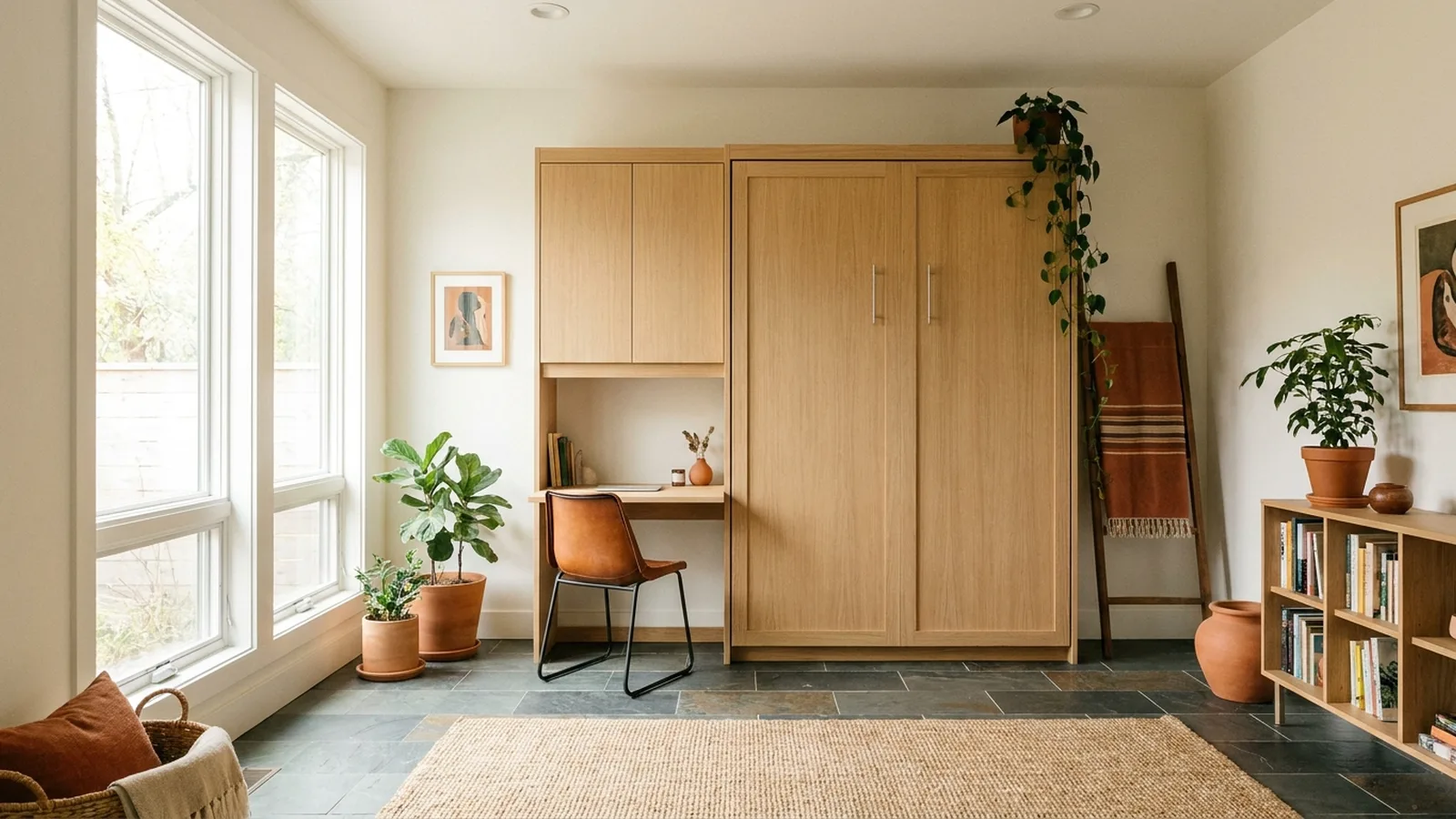
Measure the wall first. Then measure the door swing, the ceiling and the spot where your guest’s feet will land. Say you own a 10 by 12 spare room that doubles as an office. You fall for a picture of a murphy bed cabinet with a built-in desk, order it, and discover three weeks later that the open bed blocks the closet door by four inches. Now you own a very handsome obstacle.
That story is common because most buyers shop by style and check fit last. It should go the other way around. A murphy bed cabinet is a piece of cabinetry that hides a full bed, and cabinetry lives or dies on measurements. This guide is one part of the bigger job of planning cabinets and storage in a home, and it puts room math, mattress choice and safety ahead of the style gallery.
Is it the right purchase for you? Or would a humble daybed do the job for less money? Start with the short version.
Executive Summary
A murphy bed cabinet gives you a real bed for guests or daily sleep without surrendering a room to it. Done right, it folds into a cabinet roughly 24 to 27 inches deep, according to one major maker, and opens to roughly 80 to 83 inches of floor projection. Done wrong, it blocks a door, sleeps badly or tips.
Here is what you’ll get below. First, the difference between a freestanding cabinet bed and a wall bed, which most sellers blur on purpose. Second, a room-fit rule you can test with a tape measure before you spend anything. Third, honest cost ranges, including the 2 month wait on custom orders. Fourth, the mattress fix for the number one complaint, plus the safety checks that a 2018 federal recall made hard to ignore.
The biggest objection is "won’t it be uncomfortable?" Sometimes, yes. Usually it’s the stock mattress, and that part can be swapped.
What is a murphy bed cabinet, and how is it different from a wall bed?
A murphy bed cabinet is a bed that folds up into a cabinet-style box, hiding the mattress behind doors or panels. Some are true wall beds bolted to studs. Others are freestanding cabinet beds that sit on the floor, need no drilling and usually come in queen only. Sellers use both names loosely, so check which one you’re buying.
That distinction decides almost everything else. A wall bed pivots on hardware fixed to the wall and floor, which allows deeper mattresses and bigger sizes. A cabinet bed carries its own weight, so you can roll or slide it, take it with you when you move and skip the installation. One competitor, Lori Beds, makes this same split in its own comparison, though it naturally favors its wall beds.
| Feature | Freestanding cabinet bed | Wall-attached murphy bed |
|---|---|---|
| Installation | None, set it in place | Anchor to studs, often a pro job |
| Typical sizes | Mostly queen | Twin to king |
| Mattress | Thin tri-fold foam or latex | Thicker options on some models |
| Best for | Renters, guest rooms | Daily sleepers, permanent rooms |
If you rent, the left column probably wins. If you sleep on it nightly, I’d lean right.
How much room does a murphy bed cabinet need?
Plan for the closed depth plus the open footprint. A murphy bed cabinet is typically roughly 24 to 27 inches deep when closed, according to one maker, and projects about 80 to 83 inches into the room when open. Add clearance for door swings, a walkway and anything on the opposite wall. Tape the open outline on your floor first.
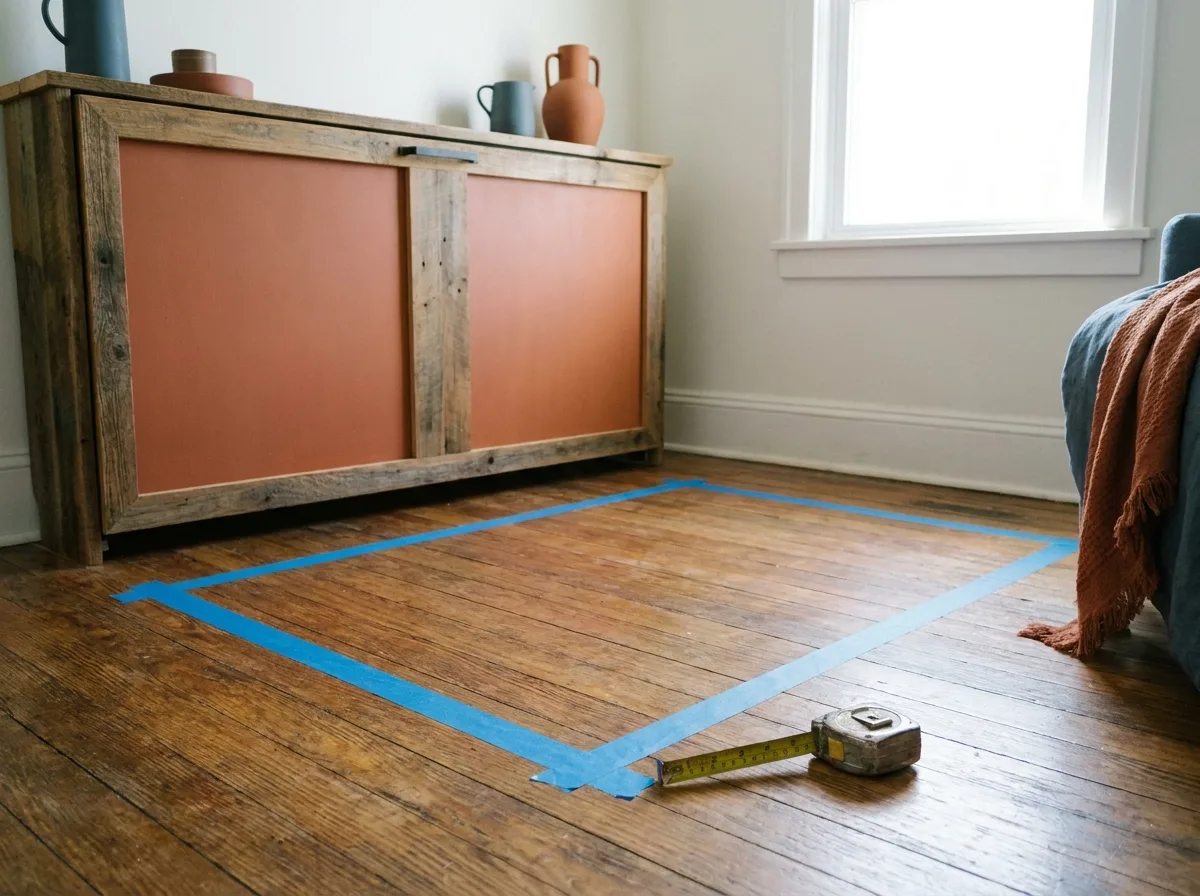
Here’s the part most product pages skip. The open bed is a rectangle roughly as long as a person is tall, plus the cabinet. In a 10 by 10 room, a vertical queen leaves you a thin strip of floor. A horizontal, side-tilt version needs more wall width, so it suits a long wall better than a short one.
Try this five-minute test with painter’s tape:
- Mark the cabinet’s closed width and depth on the wall and floor.
- Mark the full open length from the wall, about 83 inches out.
- Open every door and drawer in the room and see what the tape touches.
- Leave a clear path of about 30 inches on at least one side of the bed.
If any outline hits a door, move the bed or choose a different style. Don’t hope. Also check ceiling height against the cabinet’s listed height, since vertical models pivot up and need room above them.
What sizes and styles can you buy?
Most murphy bed cabinets are queen, since that is what guests expect, with full, twin and some king options in wall-attached lines. Styles include plain cabinets, desk combinations like the Olympia, bookcase fronts, rolling cabinet beds on casters, and units with side or overhead cabinets for storage.
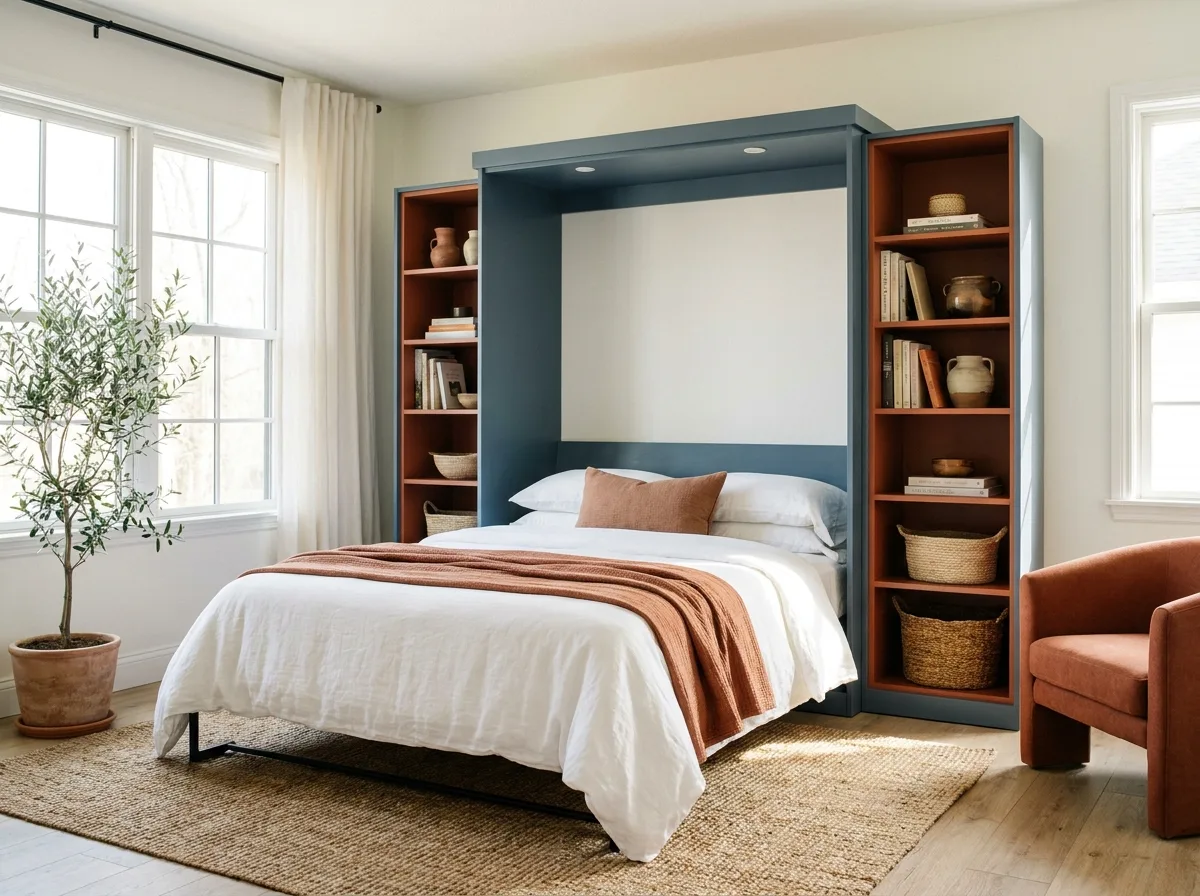
Makers such as Wilding and Night & Day sell models with names like Clover, Daisy, Poppy and Cube, all variations on this theme. A few pairings worth knowing:
- Desk beds suit a home office that hosts guests a few weekends a year. Expect a shallower workspace and a heavier unit.
- Bookcase or library fronts hide the bed well but add weight and depth.
- Rolling cabinet beds move easily, though newer wheeled designs often skip the storage drawer.
- Side and overhead cabinets turn a bedroom wall into storage, a nice trick if the cabinet look appeals to you the way a pantry cabinet layout does in a kitchen.
My pick for a typical spare room is a plain queen with side storage. It’s quiet, forgiving and easy to resell.
Are murphy bed cabinets worth it?
A murphy bed cabinet is worth it when floor space is scarce and the bed gets occasional or moderate use. It pays off in studios, guest rooms and home offices. It is a poor fit for someone who needs a premium mattress nightly, or for rooms where guests may force the mechanism without reading directions.
Consider a composite example. A couple has a 10 by 10 office and hosts relatives about six nights a year. A daybed with trundle would hold the same guests, but it would live in the room all year. The cabinet bed frees the floor for the other 359 days. That’s the value.
Now the other side. A host described in a Reddit thread said roughly one in five guests damage the bed, and preferred a daybed with a trundle. That is one anecdote, not a statistic, but it points at a real design rule: assume the user never reads instructions. Pick sturdy hinges, simple latches and nothing fiddly.
Who should skip one? Side sleepers on a firm tri-fold, renters who can’t drill, and anyone planning nightly use with the stock mattress.
How much does a murphy bed cabinet cost?
Expect a wide range. One maker lists models from about $2,000, and one retailer’s in-stock cabinet beds ranged from about $1,899 to $3,908 in an earlier snapshot. One buyer reported a custom order over $7,000 with a two-month build. Mattress upgrades and delivery are extra.
Those figures are retail prices and they change. That retailer’s range has since moved, so treat every number here as a snapshot, not a quote. What drives the spread is wood versus engineered board, hardware quality, size, built-in desk or cabinets, and lead time.
Build or buy? A DIY hardware kit looks cheaper, but you pay in time, a pickup truck and risk. If you build, I’d spend money on the hardware and let the cabinet be plain, a view echoed by an owner on Reddit who said hardware is the part that must last.
Is a murphy bed cabinet comfortable enough to sleep on?
It can be, but the stock tri-fold foam mattress is the most common complaint. Fixes include swapping to a firmer latex tri-fold, adding a 4-inch memory foam topper, or choosing a model that takes a thicker mattress. Thickness limits matter, since the bed must still close.
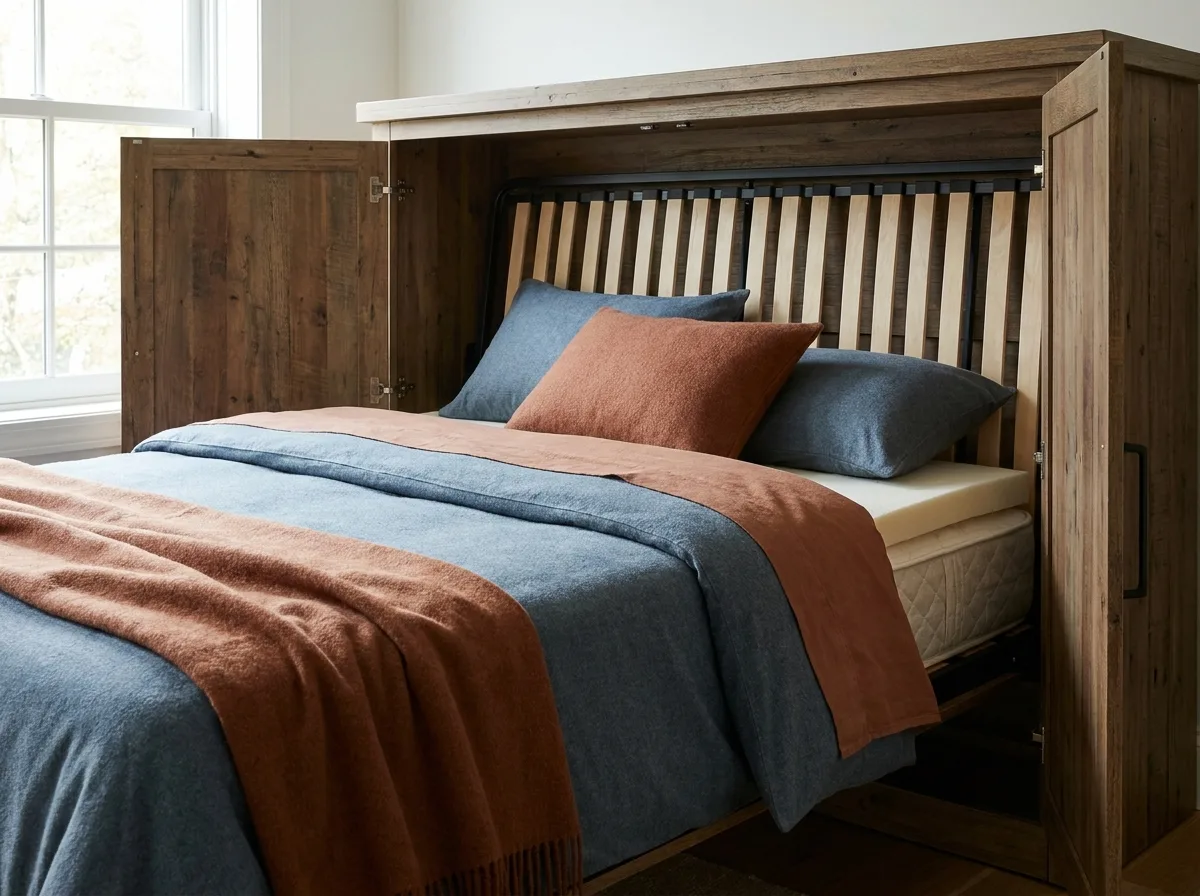
A typical Reddit story: someone sold a murphy bed because the stock mattress was too soft, forced side sleeping and hurt their back. A firm latex tri-fold would have solved it. Quora answers echo that a bar across some designs can be felt, and a thin mattress in a rented studio felt "terrible" with no room for a thicker one.
The myth that murphy beds are always uncomfortable is just that. A decent mattress on a slatted frame beats most pull-out sofa bars. The catch is the thickness cap, often about 6 inches on cabinet models, and up to 12 inches on some wall beds.
A tip on bedding: a thinner mattress than the maximum lets you leave sheets on when closed. As a general expectation, a quality latex mattress that is folded only occasionally should hold its shape, though foam quality varies, so check the maker’s guidance.
What should you check for safety before you buy or build?
Confirm how the unit is secured, who tested it, and whether it can close on a child or tip forward. Wall beds must be anchored to studs per the maker’s instructions. For installation or structural questions, hire a qualified pro, and remember local codes vary.
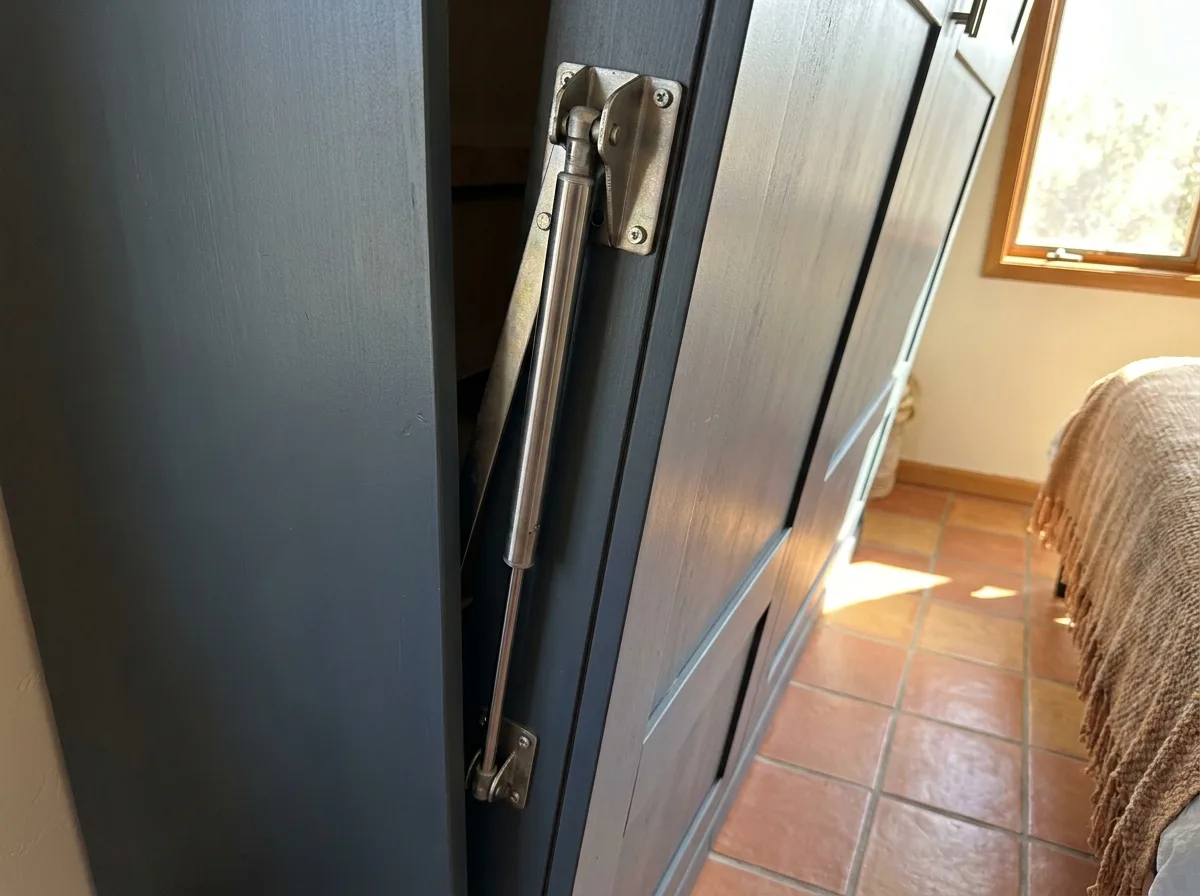
The best-known warning is a federal one. In January 2018, the Consumer Product Safety Commission announced that Rockler recalled about 2,300 I-Semble murphy bed hardware kits because the wall enclosure lacked enough bracing to attach to studs. That created tip-over and entrapment hazards for children. The agency reported five instances of the enclosure falling and one injury. A voluntary ASTM wall bed safety standard is reportedly in development, but I couldn’t verify its status, so don’t count on it.
Practical checklist before you buy or build:
- Ask whether the cabinet is freestanding or must be anchored, and how.
- Find the weight rating and the type of lift mechanism (springs or gas pistons).
- Keep kids away from the mechanism, especially while it’s open or closing.
- Follow the instructions for bracing exactly, since a missing step is how that recall happened.
Skimping here is the one place I’d say never DIY from a sketch.
Should you buy from Costco, IKEA, Amazon or a specialist?
For a murphy bed cabinet, specialists give better hardware warranties and sizing help. Costco and Amazon offer convenience and returns, with many options and less fit guidance. Check each seller’s mechanism, mattress, delivery terms, warranty and return policy for bulky furniture before you compare prices.
Costco lists wall beds with bookcases and overhead shelving, and Amazon has dozens of "3-in-1 queen with drawer" listings. Specialists such as Wilding advertise lifetime warranties on hardware for some models, which owners praise. I couldn’t verify current IKEA or Costco cabinet bed prices, so check live listings.
When is a daybed, sofa bed or trundle the better call? If guests come quarterly and the room can spare the floor, a daybed with trundle costs less and has fewer moving parts. If the room is truly tight, the cabinet wins. Nothing wrong with the humble option… it just doesn’t vanish.
Frequently Asked Questions
Is there a Murphy bed that is also a cabinet?
Yes, and they come in two forms. Freestanding cabinet beds sit on the floor and fold the mattress inside a box, no drilling needed. Wall-attached models hide the bed behind cabinet doors, bookcases or a desk. Both are sold as a murphy bed cabinet. Check which you’re getting, because the size, mattress and installation differ.
Does Costco have a Murphy bed?
Costco has listed wall beds online, including units with bookcases, side storage and overhead shelving. Stock changes often, so check the live category page. Some are wall-attached and some are not, so read the specs for anchoring needs and mattress type. Delivery can be separate from standard shipping, and returns on bulky furniture follow different rules than small items. Always confirm the measurements against your room.
Is it cheaper to build or buy a murphy bed?
Building can cost less in cash, but not always in total. You’ll buy hardware, lumber, a finish and tools, then spend several weekends. Mistakes cost more than the savings. A kit with good hardware and a plain cabinet is the sensible middle ground. If you buy, retail cabinet beds start around $2,000 from one maker.
Does a murphy bed cabinet need to be attached to the wall?
Freestanding cabinet beds do not, which is their main selling point. True wall beds do and should be anchored into studs exactly as instructed. When in doubt, ask the maker. A cabinet bed can still tip if the weight shifts or a child climbs it, so read the manual. Anchoring rules and codes vary by place. If you’re unsure about studs or wall type, hire a qualified installer.
How deep is a murphy bed cabinet when closed?
Typically roughly 24 to 27 inches, according to one maker, though desk models like the Olympia run closer to 38.5 inches. That’s about the depth of a dresser plus a bit. Always check the exact spec sheet and add clearance for the doors and baseboard. A mattress thicker than 6 inches will usually push the depth up, so confirm before buying.
Can bedding stay on when the bed is folded?
Often yes, if the mattress is thinner than the maximum the model allows. A little room to spare lets the folded pillow and sheets tuck in. Heavy comforters usually need to come off. Check the maker’s guidance, because bedding that blocks the latch can strain the mechanism. A thin quilt and a flat sheet are the safest bet.
Will the mattress sag if the bed is rarely used?
Often not, as a general expectation, but it depends on the mattress. Quality varies, and cheap foam may develop a dent over time, so check the maker’s care guidance. Rotate guests across the surface, air it out now and then, and open it fully a few times a year. A firm latex tri-fold resists dips better than soft foam.
Can I use my own mattress?
Sometimes. Cabinet beds generally need a tri-fold mattress made to fit, since a regular one won’t bend. Wall beds can take standard mattresses if they fit the thickness and weight limits, which can reach 12 inches on some. Check the listed maximum. A mattress that’s too thick keeps the bed from closing. Ask the maker before you buy a new one.
Is a murphy bed cabinet safe for kids?
It can be if installed and used correctly, but kids should never play on or near it. The 2018 Rockler recall involved entrapment and tip-over hazards for children. Use anchoring that the maker approves, keep latches working and teach older kids to leave it alone. Many parents keep the bed folded during play.
Are murphy beds always uncomfortable?
No, that’s a myth. Most complaints trace back to a soft stock mattress or a thin one. A firmer latex tri-fold or a 4-inch topper changes the experience a lot. Plenty of owners sleep on theirs nightly for years. A murphy bed also tends to beat a pull-out sofa bar. Comfort depends on the mattress, your sleeping position and the frame slats.
Conclusion
The best murphy bed cabinet is the one that fits your room, supports a decent mattress and is anchored or built the way the maker intended. Style comes third. That’s the "measure first, style second" rule, and it would have saved our office owner from the blocked closet door in the opening.
Looking ahead, expect more freestanding and rolling designs as renters and small-space buyers push for no-drill options. Expect safety expectations to tighten, too, if a voluntary standard takes hold.
Your next step is simple: tape the open outline on your floor tonight. If it fits, shortlist a plain queen with a firm latex mattress option and confirm the anchoring method. If you’re still planning cabinetry elsewhere, our kitchen remodeling guide makes a good next read. And what will the tape tell you about your room?