Whirlpool Washer Parts: Find the Right One Before You Buy
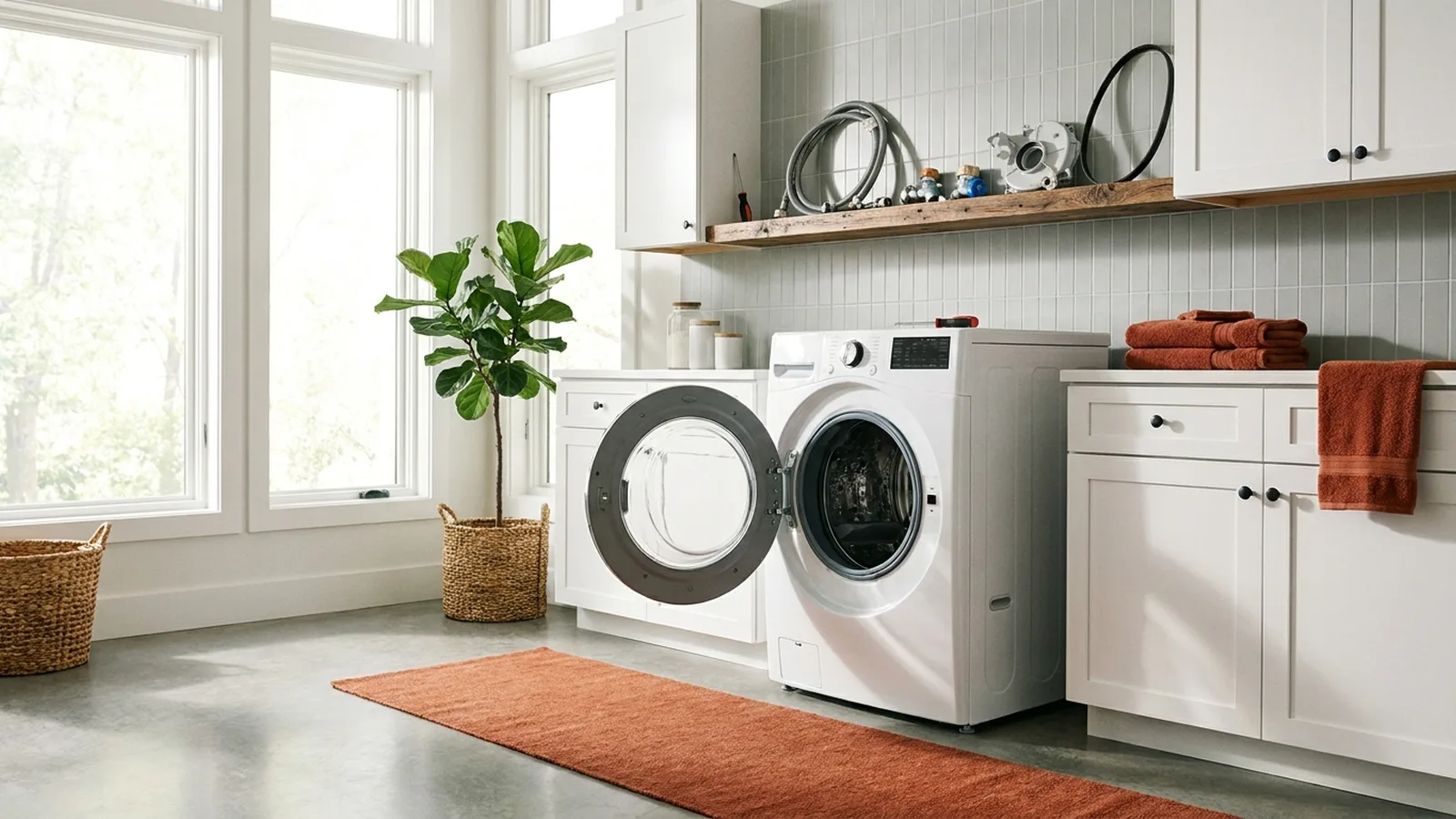
Say your top-loader quits with ten minutes left on the clock. A forum says "hub," a video says "stator," and a parts site shows six near-identical pictures. You order the one that looks right. It doesn’t fit.
The picture of a part matters far less than the model number behind it. A common cause of a failed order is a wrong revision, not a bad part.
This guide covers whirlpool washer parts the way a repair-forum regular would explain them to a neighbor: what each part does, how to confirm a fit, what it costs, and when to stop repairing. It’s one piece of the bigger job of diagnosing a failing washer and dryer, so start there if you’re still unsure the washer is the problem.
Executive Summary
You can buy the right Whirlpool washer parts the first time if you work in this order: model number, symptom, part name, source. Skip any step and you’re guessing with your wallet.
This post gives you a symptom-to-part table, the real split between top-load and front-load failures, and a plain decision rule for repair versus replace. You’ll also see why OEM isn’t always the smart buy, and why a Whirlpool part often fits a Maytag or Amana but only if the numbers match.
The biggest objection is "I’m not a technician." Fair. A door strike, a hose, or a drain pump filter are beginner jobs. Bearings and stators are where you slow down, price the whole job, and compare it with a new machine. Safety first: unplug the washer and shut off the water before touching anything.
What are the main parts inside a Whirlpool washer?
A Whirlpool washer has a tub and drum, a motor, a drain pump, water inlet valves, a control board, and a door or lid switch. Top-loaders add an agitator or impeller, a hub, and a transmission or coupling. Front-loaders add a door boot, latch, and bearing. Each part has one job.
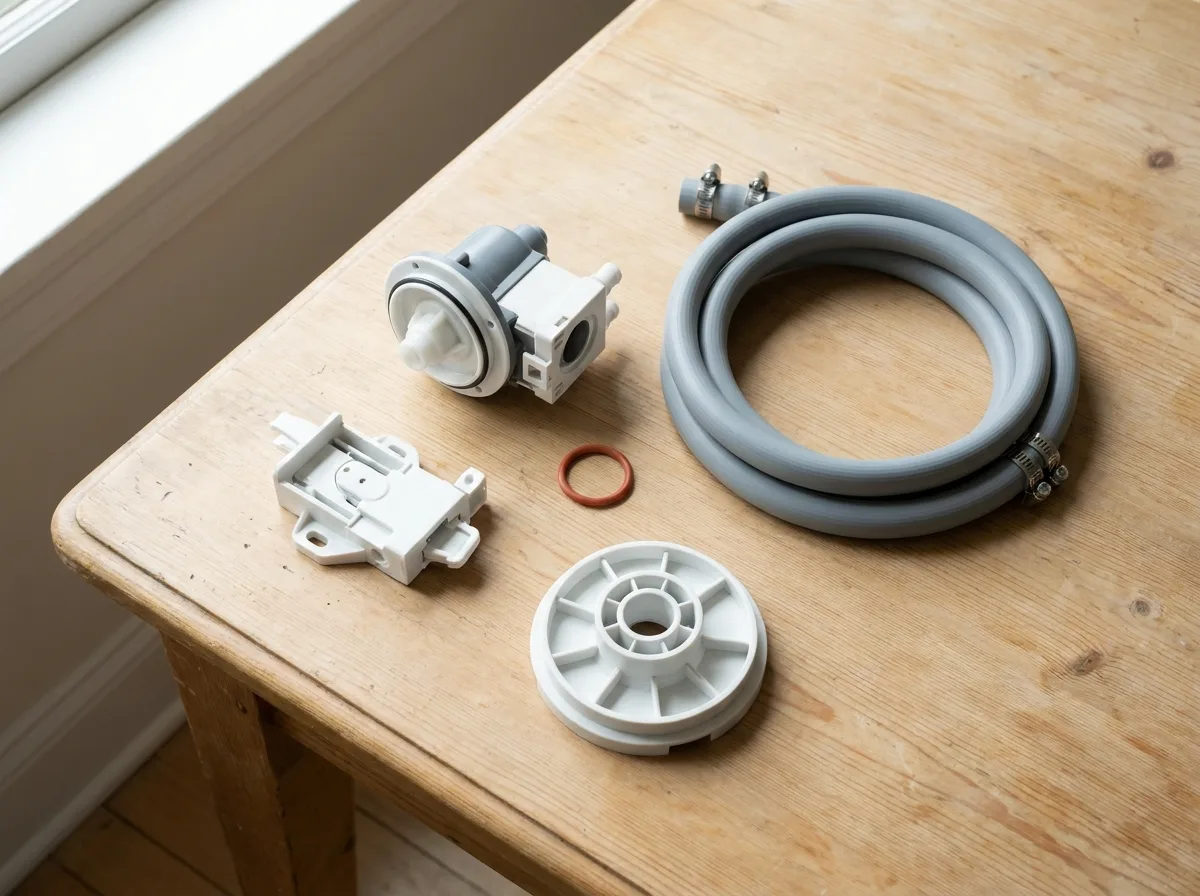
Think of three systems. Water in: fill hoses and inlet valves. Motion: motor, coupling, hub, and agitator or impeller. Water out: drain hose and pump. The control board tells all three when to start.
Whirlpool’s own blog on the parts of a washing machine lists the same core set. It skips part numbers and costs, which the next sections add.
How do I find the right Whirlpool washer parts for my model?
Find the model and serial number first, because every listing of Whirlpool washer parts depends on it. On a front-loader it sits inside the door, on the rim of the opening. On a top-loader it’s beneath the lid, on the tub rim. Then search that exact model number in a parts list and match the part number, not the picture.
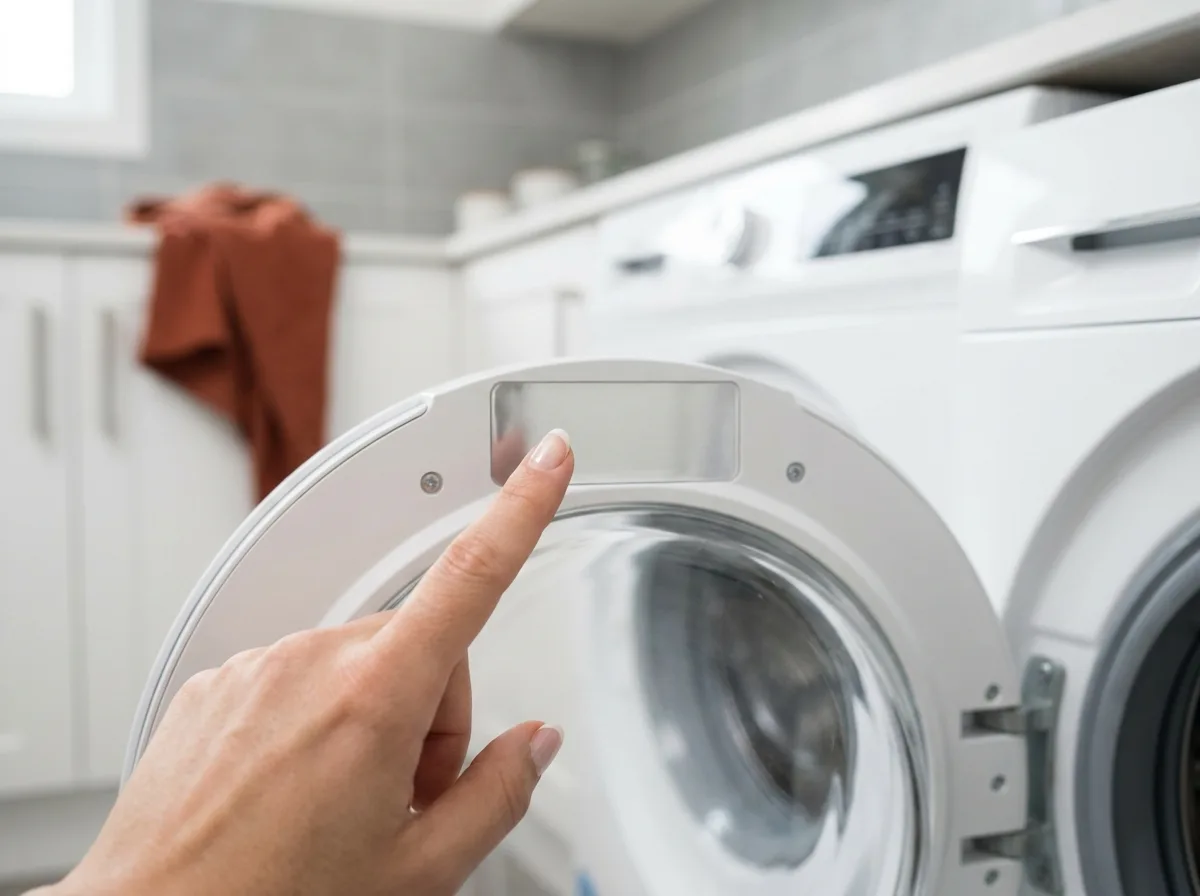
Whirlpool’s product help page gives those spots. Photograph the plate first.
Part numbers often start with a W-number, and some carry a WP prefix. Treat the two as one family, but confirm in the model’s parts list (an exploded diagram). Parts get revised, so a lookalike may carry a newer number.
If a listing won’t show which models it fits, move on.
Which parts fail most often in top-load and front-load Whirlpools?
Top-loaders usually wear at the hub, coupling, lid switch, and drain pump. Front-loaders usually wear at the door boot, latch, drain pump filter, and bearing. Bearings and stators are the ones that change the repair math.
Top-load (agitator or impeller): a cracked basket hub or a worn coupling lets the motor spin while the drum doesn’t. A bad lid switch makes the washer act like the lid is open. Cabrio-style direct-drive models add a costly stator and rotor.
Front-load: a torn door boot leaks, a weak latch refuses to lock, and a clogged drain pump filter stops the drain. A failing tub bearing sounds like a growl on spin and is the part most people regret chasing.
Watch the stacking effect. A common version: a homeowner replaces the hub, then sees a code, then buys a stator. Each part is plausible, and each is a real money decision on a machine that may be 15 years old.
How do I match a symptom to a part?
Start with what the washer does, then pick the likeliest part and its difficulty. Won’t drain points to the pump or filter. Won’t fill points to inlet valves. Spins loose with no drum movement points to the coupling or hub. Leaks at the door point to the boot.

Use this as a shortlist, not a verdict. Error codes vary by model, so check your own manual. Cost bands are rough guides based on the listed prices below: low is roughly under $30, mid is roughly $30 to $100, and high is above that.
| Symptom | Likely part | DIY difficulty | Cost band (typical) |
|---|---|---|---|
| Won’t drain | Drain pump or clogged filter | Easy to moderate | Low to mid |
| Won’t fill or fills slowly | Inlet valve or fill hose | Easy | Low |
| Motor hums, drum won’t turn | Coupling, hub or clutch | Moderate | Low to mid |
| Leaks at the front door | Door boot or boot clamp | Moderate | Mid |
| Door won’t lock | Latch or door strike | Easy | Low |
| Loud growl on spin | Tub bearing | Hard | High, often not worth it |
Check the simplest cause first: a kinked hose or a clogged filter costs nothing.
How much do Whirlpool washer parts cost?
Whirlpool washer parts range from under $20 for a door strike to over $100 for a suspension rod in listed prices at one retailer, with pumps, boots and boards in between. Prices vary by model and seller, so treat any figure as a guide and compare two or three sources for your exact part number.
One Whirlpool parts retailer listed a door strike at $19.98, a clutch at $42.83, a shift actuator at $58.32, and a suspension rod at $101.63 when this was researched. Those are listed prices, not a promise.
Complexity, OEM status, and discontinued revisions drive the price. A bearing kit looks cheap until you add the hours of labor.
The number that matters more is the total job: part, shipping, any second part you’ll need, your time, and a service visit if you hire a tech. Compare that total with a new washer.
OEM, aftermarket or used: which is worth buying?
For Whirlpool washer parts, buy OEM for control boards, bearings, and anything electrical or load-bearing. Aftermarket is usually fine for hoses, clamps, and door strikes. Used is a gamble I’d only take on hard-to-find parts, and only if the seller states the model and tests it. Never buy a part you can’t match by number.
That’s my opinion, so weigh it yourself. If you go used, ask for the tested model match in writing. OEM means made for Whirlpool, aftermarket means a third party built it to fit, and used means pulled from another machine.
Whirlpool itself advises Whirlpool-specific components. That’s sensible for safety parts, but a cheap hose doesn’t need a brand halo.
Where can I buy Whirlpool washer parts safely?
Buy from the Whirlpool shop, an established appliance-parts retailer, or a marketplace seller who lists your model number and a return policy. Always confirm the part number against your model’s parts list before paying.
The brand shop is safest for fit but leans toward accessories. Sears Parts Direct and similar stores usually give diagrams. Amazon and eBay have the widest stock, but listings mix new, used, and cross-brand parts.
Before you pay, confirm the listing names your model or part number, offers returns, and says whether the part is new, used or refurbished.
Also remember that not everything "for your washer" is a part. Hoses, shipping bolt kits, stacking kits and Affresh tablets are accessories. If you’re tuning your wash routine rather than fixing it, our guide to choosing a laundry detergent helps more than a new pump will.
Do Whirlpool parts fit Maytag, Kenmore and Amana washers?
Often yes, because Whirlpool builds many Maytag, Amana, and some Kenmore and Crosley washers on shared platforms. But fit depends on the model, not the badge. Check the part number against your own model’s parts list, since similar-looking parts differ between revisions.
Same platform, different badge. That’s why eBay cross-lists Whirlpool, Amana, Crosley and Kenmore for one part, and why Kenmore and Amana washer parts searches often land on Whirlpool numbers.
Here’s the myth to drop: "if it looks the same, it fits." A hub that matches by shape can still differ in spline count or bolt pattern. Whirlpool discourages cross-brand swaps of its washer parts, and I’d treat that as a reason to verify, not a ban.
One more clarifier. "Washer parts" in a search can also mean pressure washers, such as Ryobi or Craftsman. Those are different machines, and nothing here applies to them.
Is it worth fixing a Whirlpool washing machine?
Fix it when the part is cheap, the washer is mid-life, and the problem is clear. Replace it when one repair costs around half of a new washer, when the machine is old, or when the issue is a leak past the tub seal or a failed bearing.
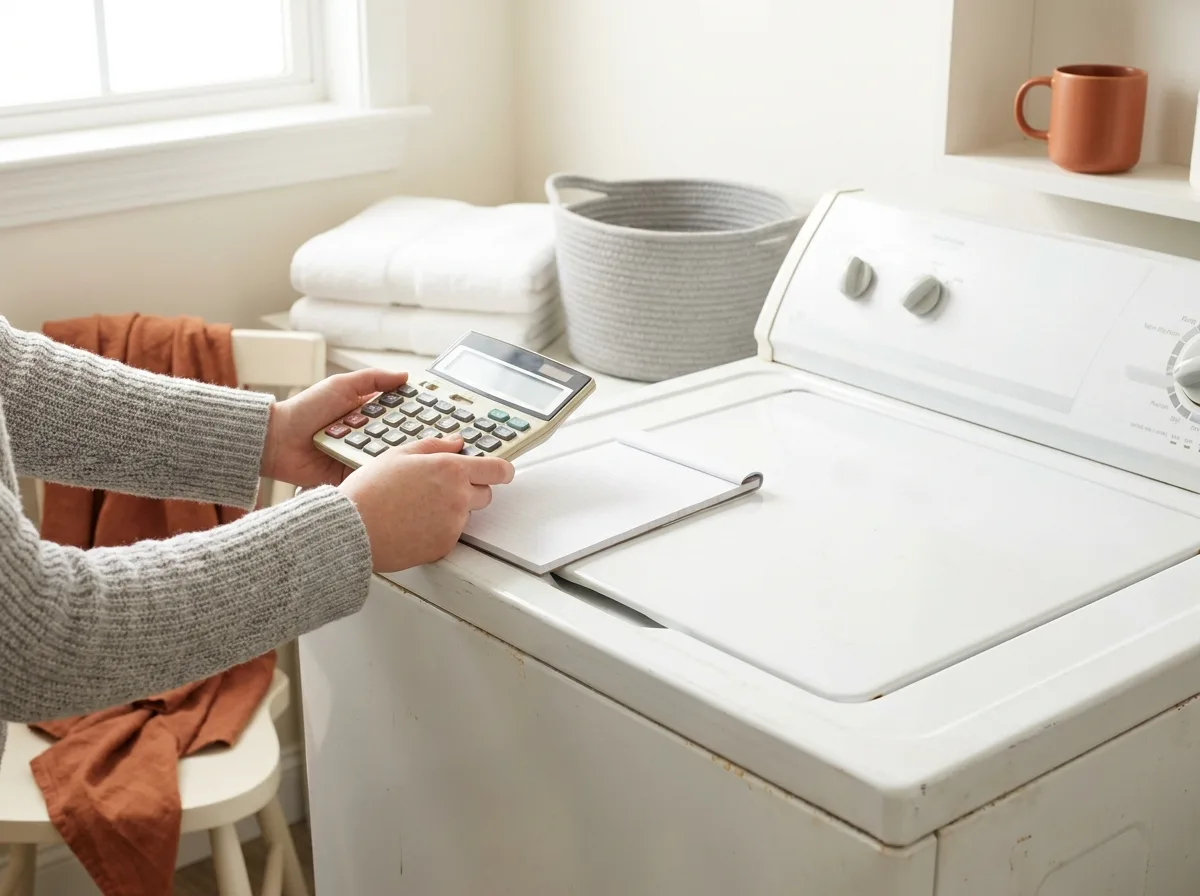
Many repair pros use a half-of-new-price rule of thumb.
Take a composite case of pricey Whirlpool washer parts. Say a 15-year-old Cabrio-style top-loader already got a new hub. Now it shows a code and quits near the end of the cycle, and a stator is next. A cracked stator can mean water got past the tub seal, so a bearing kit could follow. One forum reply put it bluntly: dryers can be fixed almost forever, but washers have a hard life. Think of a car: radiator, then alternator, then clutch.
My opinion, with no magic age: a younger washer with one clean fault is easy to repair. On an older one, price the whole job first.
Which Whirlpool washer repairs can I do myself, and when do I call a pro?
A door strike, a fill hose, a drain pump filter clean and a lid switch are usually beginner jobs. Couplings, hubs and boots are moderate. Bearings and stators are advanced. Unplug the washer and shut off the water first, and call a licensed pro for wiring, gas or anything you can’t isolate safely.
Local codes and permit rules vary, so check yours before touching hardwired or gas-connected work. Washers hold water, so lay towels down and tilt nothing heavy alone. If a step makes you hesitate, that’s your answer: hand it off.
What mistakes should I avoid when ordering Whirlpool washer parts?
The big ones are ordering by picture, skipping the model number, swapping parts in sequence without testing, and ignoring settings. Check the simple causes first, confirm the part number, and price the whole job before you click buy.
A common version of this mistake: a coin-operated Whirlpool keeps misbehaving after the owner replaces the the coin board, main board and coin slide. The settings were never checked. Commercial units have their own service channel.
Match by part number, not shape. Change one thing, test, then decide. Check the filter, hoses, and level before ordering. Run the repair-or-replace math first.
Frequently Asked Questions
What is a common problem with Whirlpool washers?
Drain and leak issues come up most. A clogged drain pump filter, a worn door boot on front-loaders, and a cracked hub or worn coupling on top-loaders are typical. Bearings and stators cost more and appear on older machines. Start with the cheap checks before you spend anything.
Is it worth fixing a Whirlpool washing machine?
Usually yes for a cheap part on a mid-life washer, and usually no for an old machine needing a bearing or stator. Add part, shipping, and any labor, then compare that total with about half the price of a comparable new washer. If it passes, repair. If not, replace.
Where can I buy Whirlpool spare parts?
Buy from the Whirlpool shop, an established appliance-parts retailer, or a marketplace seller who lists your model number and accepts returns. Match the part number to your model’s parts list first. A listing with only a photo and no fit information is a gamble, however cheap.
How long does a Whirlpool washer last?
It depends on the model, load size, and upkeep, so there’s no single honest number. Front-loaders and top-loaders wear differently, and heavy use shortens life, though both points are anecdotal rather than measured. Cleaning the filter and using the right detergent amount helps.
Can I use a Maytag or Kenmore part on a Whirlpool washer?
Sometimes. Many Maytag and Amana washers share Whirlpool platforms, and some Kenmore models do too. Confirm by comparing the part number with your own model’s parts list. Whirlpool recommends Whirlpool-specific components, so verify before you buy any cross-brand part, and never trust the badge alone.
Where is the model number on my washer?
On a front-loader, look inside the door on the rim of the opening. On a top-loader, look beneath the lid on the tub rim. Whirlpool lists these spots on its product help pages. Photograph the plate before ordering, so you can compare it to the listing.
Do I need OEM parts?
Not always. OEM is smart for control boards, bearings and switches. Aftermarket is often fine for hoses, clamps and door strikes. Used parts can work for hard-to-find items if the seller lists the model and offers returns. The rule is to match by number, whatever the source.
Why does my washer run but not spin?
Often the cause is a worn coupling, a cracked hub, or a failed clutch on a top-loader. On some models a lid switch or control issue can stop the spin too. Check the manual for your model’s codes first, and unplug the washer before looking inside.
What do codes like uL or F51 mean?
Meanings vary by model, so check your own manual or Whirlpool’s product help page instead of trusting a forum guess. Codes point toward a system, not always a single part. Treat them as a starting clue, and test the simple causes first. A Cabrio-style washer showing these codes is a good case for pricing the whole job before ordering.
Will any washer part with the same shape fit?
No, that’s a myth. Similar parts differ in size, bolt pattern, spline count, or revision. Matching by shape is the quickest route to a return. Always match the part number against your model’s parts list. If you can’t, ask the seller to confirm the fit in writing.
Conclusion
The cheapest way to buy whirlpool washer parts is to buy once. Model number first, then symptom, then part name, then source. Do that and the "wrong revision" story from the opening gets much less likely.
Cheap Whirlpool washer parts on a healthy machine are a good bet. A bearing or stator on an old one is a coin flip with a loud ending. Price the whole job, apply the half-of-new rule, and let the number decide, not the sunk cost of the last part.
For your next step, read our dryer exhaust installation guide to cover the machine next to your washer, or our laundry detergent guide to protect the new part.
So here’s the question: when did you last photograph your model plate, before you actually needed it?