Washer and Dryer Repair: Diagnose First, Then Fix or Replace
Here’s a rule of thumb that saves many people money. If a repair quote nears half the price of a comparable new machine, and the appliance is already past its average lifespan, replacement deserves a hard look. It’s only a starting point, because age and original price matter too. It still beats guessing at any washer and dryer repair quote.
Owners and technicians on repair forums often say the same thing. Many breakdowns trace to cheap parts, such as a clogged vent, a worn belt, a blocked pump filter or a loose connector. The expensive failures exist, but they seem to be the minority.
This guide covers diagnosis, DIY versus pro jobs, cost drivers, parts and hiring a technician.
Quick answer: what to do first
- Unplug the machine, find the model number plate, and write down the exact symptom or error code.
- Check the cheap causes first: lint, vent, filters, hoses, level and load size.
- Repair when the part is cheap, the machine is under its average lifespan, or the quote is a small slice of a new price.
- Replace when a control board, drum bearing or tub fails on an older machine, or when parts are no longer sold.
- Get a written estimate that states the diagnostic fee, the parts, the labor and the warranty before any work starts.
Should you repair or replace a washer and dryer?
Repair it when the fix is small compared with a new purchase and the machine still has useful years left. Replace it when a major part fails late in its life. Consumer Reports no longer relies on one flat half-the-price rule. Per NerdWallet’s summary, it now weighs the original price, the age and the repair cost together.
Use the table below as a rule of thumb, not a law. The right answer shifts with your machine’s price when new and how much you like it.
| Situation | Lean toward |
|---|---|
| Cheap part (belt, hose, filter, fuse) on a machine under its average life | Repair |
| Quote is a small fraction of a comparable new unit | Repair |
| Quote near half of a new unit and machine is past average life | Replace |
| Control board, tub or drum bearing failure on an older machine | Usually replace |
| Manufacturer no longer sells the part | Replace |
| One half of a matching set fails | Repair if cheap, since mixed pairs work fine |
Picture a 12-year-old top-loader needs a pump and the quote is a third of a new machine’s price. That’s a fair repair. Now picture the same quote on a 17-year-old unit that also leaks from the tub. Stop there and shop.
For a quick dryer repair, the math flips more often in your favor, since dryers tend to outlast washers.
How do you diagnose the problem before calling anyone?
Start with the model number plate, the symptom and the manual. A diagnosis takes ten minutes and often points you at a free fix. Technicians on forums often say the diagnosis is harder than the actual repair, so spend your effort there.
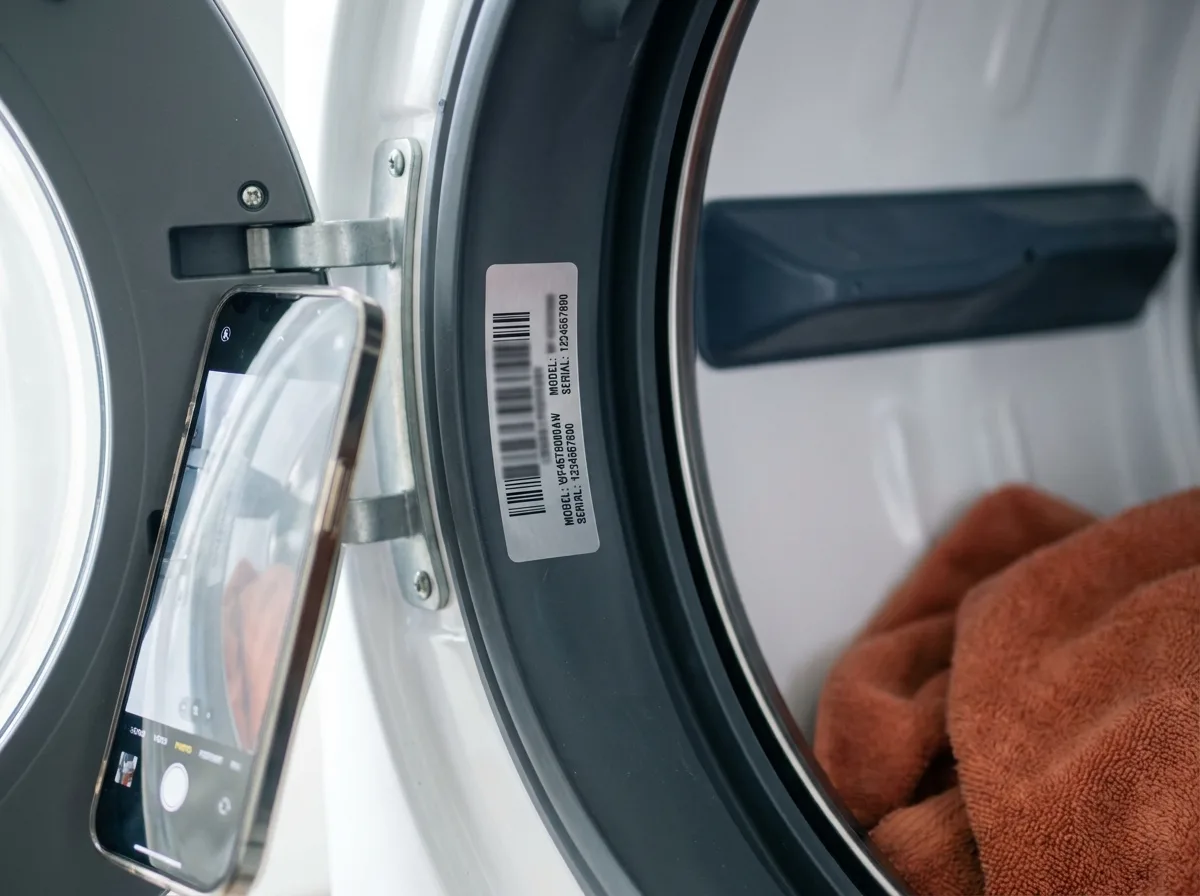
Look for the plate inside the door opening, along the door edge, or on the back panel. Search the manufacturer’s site for your manual and its troubleshooting chart. Error codes on washers and many newer dryers map to specific faults, and the manual names them.
Then run through a short routine:
- Write down exactly what happens and when, such as "stops mid-cycle" or "drum turns but no heat."
- Check the basics: breaker, plug, water valves, door latch, load size and vent.
- Take photos of every connector and belt route before you remove anything.
- Search by symptom plus model number, and watch a repair video for your exact model.
A common mistake is calling for service before checking the breaker and the lint screen.
What safety steps come first?
Unplug the machine and shut off the water or gas before you open a panel. Electric dryers use a 240 volt circuit, and a machine that is "off" can still shock you. Never work on a live appliance, and never bypass a safety switch or thermal cutoff.
Gas dryers add another layer. Burners, valves and gas lines belong to a licensed pro, and so does any wiring change or new circuit. Permit and licensing rules differ by state and city, so check local codes before you touch anything beyond a plug-in part.
Lint is the other hazard. Older NFPA data from 2006 counted roughly 17,700 home fires tied to dryers and washers in a year, and failure to clean was the leading cause. A dryer that needs two cycles is warning you about restricted airflow.
Wear gloves around sheet-metal edges and tip a washer only with a helper. When you smell gas, leave the home and call your gas utility from outside.
What are the most common dryer repair problems and fixes?
Most dryer repair calls trace to four things: no heat, no tumbling, noise and long dry times. Start with the cheapest part and work up.
Dryer won’t heat
On an electric dryer, the usual suspects are a blown thermal fuse, a failed heating element or a bad thermostat. The tricky bit is that a fuse often blows because the vent is clogged. Replace the fuse without clearing the vent and it’ll blow again.
Gas dryers use an igniter and gas valve coils instead. Those sit near the burner, so hand them to a licensed technician.
Dryer won’t tumble
If the motor hums but the drum stays still, think belt. A snapped or stretched belt is one of the most DIY-friendly repairs on any dryer. An idler pulley or a seized motor is the next place to look.
Loud grinding or squealing
Worn drum rollers, a failing idler pulley or a dry bearing usually make that racket. Stop using the dryer when it grinds. Running it can damage the drum or motor and turn a small fix into a big one.
Long dry times
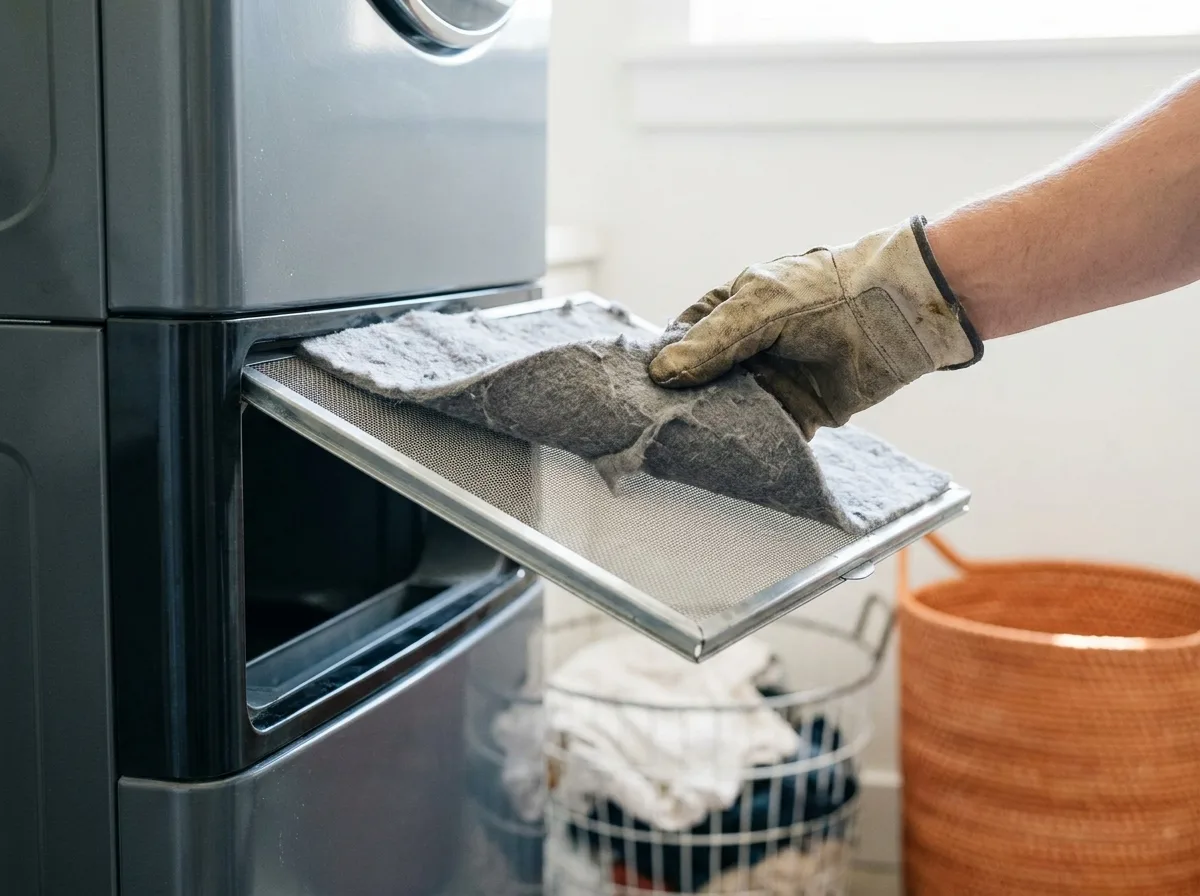
Before blaming parts, clean the lint screen, the lint housing and the full vent run. A crushed foil duct behind the dryer is a common culprit.
What are the most common washer problems and fixes?
Washers fail in a few predictable ways: they won’t drain, won’t spin, leak, shake or smell. Water left in the drum means checking the drain path first.
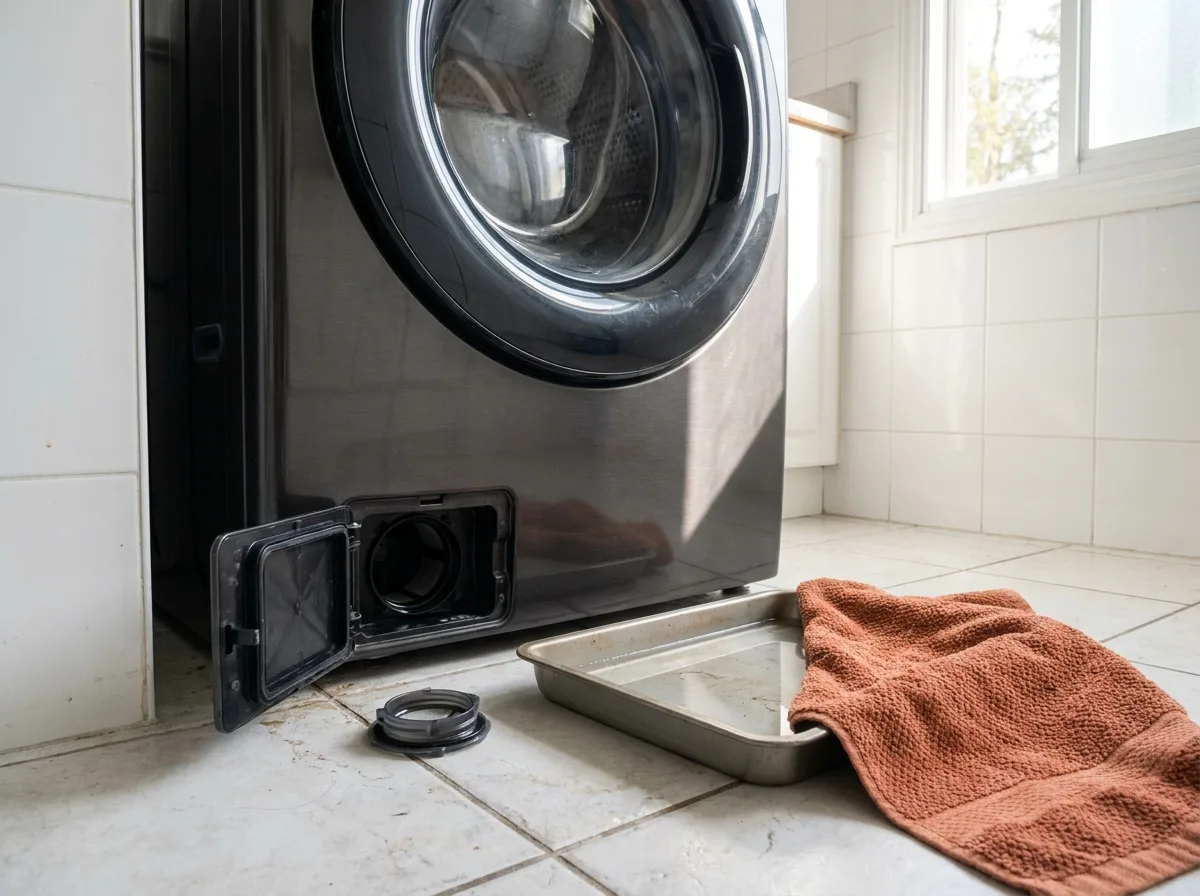
Washing machine repair for drain and spin failures
A washing machine repair for "won’t drain" usually starts at the drain pump filter, found behind a small access door on many front-loaders. Coins, socks and lint jam it. After that, check the drain hose for kinks and the pump itself for a seized impeller.
For "won’t spin," top-loaders often have a worn lid switch or motor coupler. Front-loaders may have a faulty door latch or an out-of-balance load that the sensor keeps rejecting.
Leaks, shaking and smells
Leaks come from door gaskets, loose inlet hoses, a cracked pump housing or overdosed detergent that foams over. Run your hand along the hose connections first. Shaking usually means the machine isn’t level, or a new unit still has its shipping bolts in place.
Odors come from detergent residue and trapped moisture, especially in front-loaders. Use the amount your manual calls for, wipe the door seal and leave the door ajar. Picking a suitable formula helps too, and our roundup of the best laundry detergent covers HE-friendly options.
Which symptom points to which cause?
Use this as a starting map, not a replacement for your manual.
| Symptom | Likely cause | DIY or pro |
|---|---|---|
| Dryer runs, no heat (electric) | Clogged vent, thermal fuse, element | DIY if unplugged |
| Dryer runs, no heat (gas) | Igniter or gas valve coils | Licensed pro |
| Drum won’t turn, motor hums | Worn belt or idler pulley | DIY with a guide |
| Washer won’t drain | Pump filter, kinked hose, pump | DIY first, pro for the pump |
| Washer won’t spin | Lid switch, door latch, unbalanced load | DIY or pro |
| Loud grinding | Rollers, bearing | Pro if it’s the bearing |
| Leak underneath | Hose, gasket, pump housing | DIY for hoses and gaskets |
| Error code on display | Varies by model | Check the manual first |
Which repairs can you do yourself, and which need a pro?
Belts, filters, hoses, door seals, lid switches and fuses are realistic DIY jobs with basic tools. Control boards, sealed tub assemblies, gas components and anything involving the 240 volt supply belong to a pro. Skill matters less than the cost of getting it wrong.
| Job | Difficulty | Who should do it |
|---|---|---|
| Clean lint screen and vent | Easy | You |
| Replace inlet hose or drain hose | Easy | You |
| Clean washer pump filter | Easy | You |
| Replace dryer belt or rollers | Moderate | You, with a guide |
| Replace thermal fuse or element | Moderate | You, if comfortable, unplugged |
| Replace drain pump or door latch | Moderate | You or a pro |
| Replace control board | Hard | Usually a pro |
| Replace drum bearing or tub seal | Hard | Pro in most cases |
| Gas burner, valve or line | Licensed work | Licensed pro only |
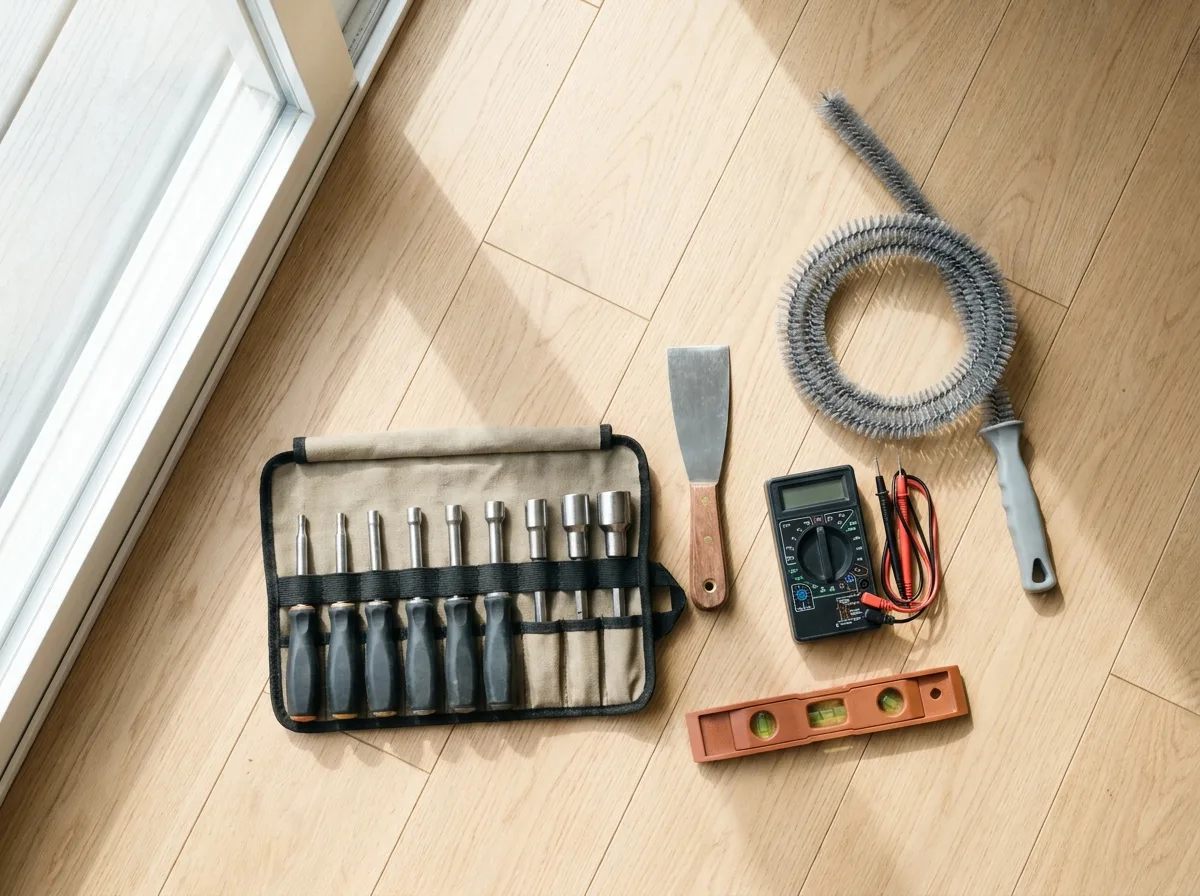
A basic kit covers most of this: a nut driver set, a putty knife, a multimeter, a vent brush and a level. iFixit’s free guides and manufacturer repair pages show the steps for many models.
One caution on warranties. A machine still under warranty may lose coverage if an unauthorized repair causes damage. Read the warranty terms first and call the maker if you’re unsure.
How much does washer and dryer repair cost?
Washer and dryer repair costs depend on five things: the diagnostic fee, the part, the labor time, your brand and your machine’s age. I can’t give honest national dollar figures, because they vary by region and technician. What I can do is show you how a bill is built and what lands at each end.
Home Depot’s pro referral page says most appliance repairs take one to two hours. Visits are short, so parts and the diagnostic fee often decide the bill.
| Repair tier | Typical examples | What drives the price |
|---|---|---|
| Low | Belt, hose, filter, door seal, thermal fuse | Cheap part, short visit |
| Medium | Drain pump, heating element, lid switch (gas dryer igniter: licensed pro) | Part price plus diagnostic and labor |
| High | Control board, motor, drum bearing, tub | Part cost, labor hours, parts availability |
Many shops charge a diagnostic or service-call fee, and some credit it toward the repair. Ask before booking. If the fee alone is a noticeable fraction of a new machine, that’s your hint that replacement deserves a look.
How do you find parts without overpaying?
Search by manufacturer part number, not by model name. A model search floods you with look-alike listings and inflated prices. The number is usually on the old part or in the manual’s parts diagram.
One forum user described a service company quoting about ten times the price they later found for the same part. That’s a single anecdote, but it’s a good reason to compare sellers. Compare at least two sellers, including the manufacturer’s parts site. Match the part number exactly, including any suffix, since many look similar and fit differently.
Original equipment parts cost more and fit reliably. Aftermarket parts can save money on simple items like belts, hoses and rollers. For safety parts such as thermal fuses and igniters, stick with the right spec for your model.
Check whether the part is still sold before you commit. Some owners report that parts for newer electronics were no longer available after a few years, which can end a repair before it begins.
How do you choose a repair service and avoid scams?
For washer and dryer repair, pick a company that gives a written estimate, states its diagnostic fee up front and backs the work with a parts and labor warranty. Be wary of anyone who won’t quote before arriving, demands full payment in cash, or pushes replacement within minutes of walking in.
Questions to ask before you book:
- What’s the diagnostic fee, and is it credited if I approve the repair?
- Do you give a written estimate with parts and labor listed separately?
- What warranty covers the parts and the labor, and for how long?
- Are you licensed or registered where my state requires it, and insured?
- Can you tell me the part number so I can compare it?
Brand sites say authorized service uses original parts and trained technicians. GE Appliances publishes its repair warranty terms, which gives you a benchmark. Independent shops may cost less, so compare both.
Does a home warranty or extended plan help?
It can, but treat it as a contract, not insurance. Read the fine print for payout caps, exclusions and approval rules, especially for older appliances.
Owners on appliance forums describe disputes where a claim on an aging washer was denied or reduced. A service plan may cost less than one major repair, but it won’t pay if the exclusions fit your situation. Check the cap per claim, the service-call fee, who picks the technician and whether parts must be original.
If your machine is new, the manufacturer’s warranty already covers defects. If it’s old, a plan may pay out less than its price. Do the math using your own contract.
How long should a washer and dryer last?
According to AHAM estimates cited by NerdWallet, dryers average about 13.4 years, top-load washers about 11.2 years and front-load washers about 9.1 years. Those are averages, so plenty of machines run longer and plenty fail sooner.
Age shifts the repair math. A 6-year-old front-loader with a bad pump is a strong repair candidate. A 14-year-old washer with a leaking tub isn’t.
Are some brands easier to repair?
No trustworthy national ranking exists, so I won’t invent one. What I can say is that machines from large makers like Whirlpool, GE, Maytag, LG and Samsung have wide parts supply, and simpler mechanical designs tend to be cheaper to fix than heavily electronic ones.
Two patterns come up in owner discussions. Control boards on newer models can be pricey, and some premium or imported brands have fewer independent repairers. Neither is a rule, so before buying a new set, check whether common parts and local service are easy to find.
How do you keep repairs from coming back?
Clean the lint screen after every load and clear the full vent run at least once a year, more often with heavy use or a long duct. Level the washer, don’t overload either machine and replace old rubber hoses before they burst.
A few habits pay off over years:
- Use the detergent amount your manual specifies.
- Wipe the front-loader door seal and leave the door open between loads.
- Empty pockets, and bag small items in mesh bags.
- Inspect hoses and connections twice a year.
- If you line-dry while waiting on a part, skip spots under a mulberry tree or an olive tree, since fruit drop can mark laundry.
Cleaning the vent once doesn’t solve it forever, since lint builds back up.
Washer and Dryer Repair FAQ
Is it worth repairing a washer and dryer?
Often yes, if the part is cheap and the machine is under its average lifespan. Less so if the quote nears half a new unit and the machine is old. Get a written estimate and weigh it against the machine’s age.
How much does a dryer repair cost?
It depends on the part, labor time, brand and any diagnostic fee. Belts and fuses sit at the low end. Boards and motors sit at the high end. Get two written estimates and ask for the diagnostic fee up front.
Why is my dryer not heating?
On an electric model, check the vent first, since a clog often blows the thermal fuse. Then look at the fuse, element and thermostat. On a gas dryer, igniter and valve coils are common causes, and a licensed technician should handle them.
Why is my washer not draining?
Unplug the washer, then check the drain pump filter, the drain hose and the standpipe. Expect some water when you open the filter door. A jammed impeller is the next suspect.
Who fixes washing machines near me?
Start with the manufacturer’s authorized service list, then compare independent shops. Ask friends and neighbors who’ve used a company recently.
Can I fix a dryer myself?
Many dryer jobs are reasonable DIY: belts, rollers, fuses and vent cleaning. Always unplug first. Leave gas parts, wiring changes and anything you can’t safely test to a licensed pro, and check local code requirements.
Is the 50 percent rule still valid?
Think of it as a starting point. Consumer Reports now weighs original price, age and repair cost together, so a half-price repair on a young machine can still make sense, and a cheaper one on a worn-out machine may not.
Does DIY repair void the warranty?
It can, if your work causes damage the warranty would otherwise cover. Policies differ, so read yours or call the maker before opening a machine that’s still covered. After the warranty ends, the question goes away.
How often should I clean the dryer vent?
At least once a year, and sooner if loads take longer to dry, the laundry room smells warm or hot, or the duct is long and bendy. Clean the lint screen every load.
Do I need a permit or license for appliance work?
Codes vary, but plug-in washer and dryer repair rarely needs a permit. Gas line work and new electrical circuits usually do, and licensing rules vary by state and city. When in doubt, hire a licensed pro and ask them about local requirements.
Conclusion
Back to that opening rule of thumb. A quote near half of a new machine, on an appliance past its average life, makes replacement worth serious thought. Age and original price still matter, and most situations reward a calm, diagnose-first approach.
Your next step is simple. Unplug the machine, copy the model number, note the symptom and clear the lint and filters. If the problem stays, get a written estimate and compare it with the machine’s age. For many households, washer and dryer repair still beats a surprise purchase.
Which of your two machines is closer to its average lifespan? That answer usually decides the rest.