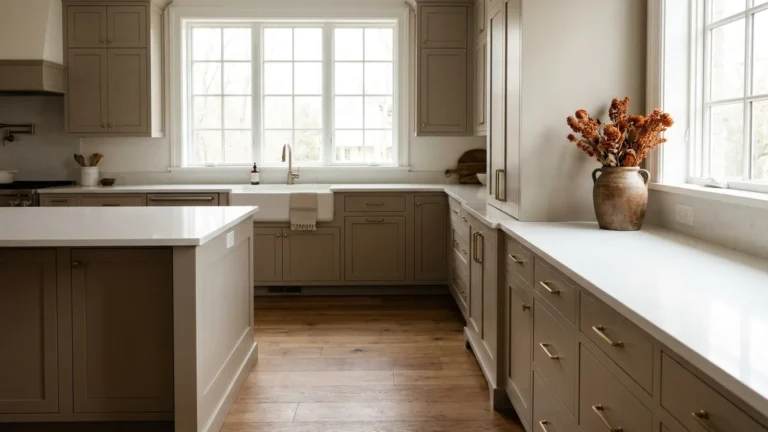
Green Kitchen Ideas That Still Look Good in Ten Years
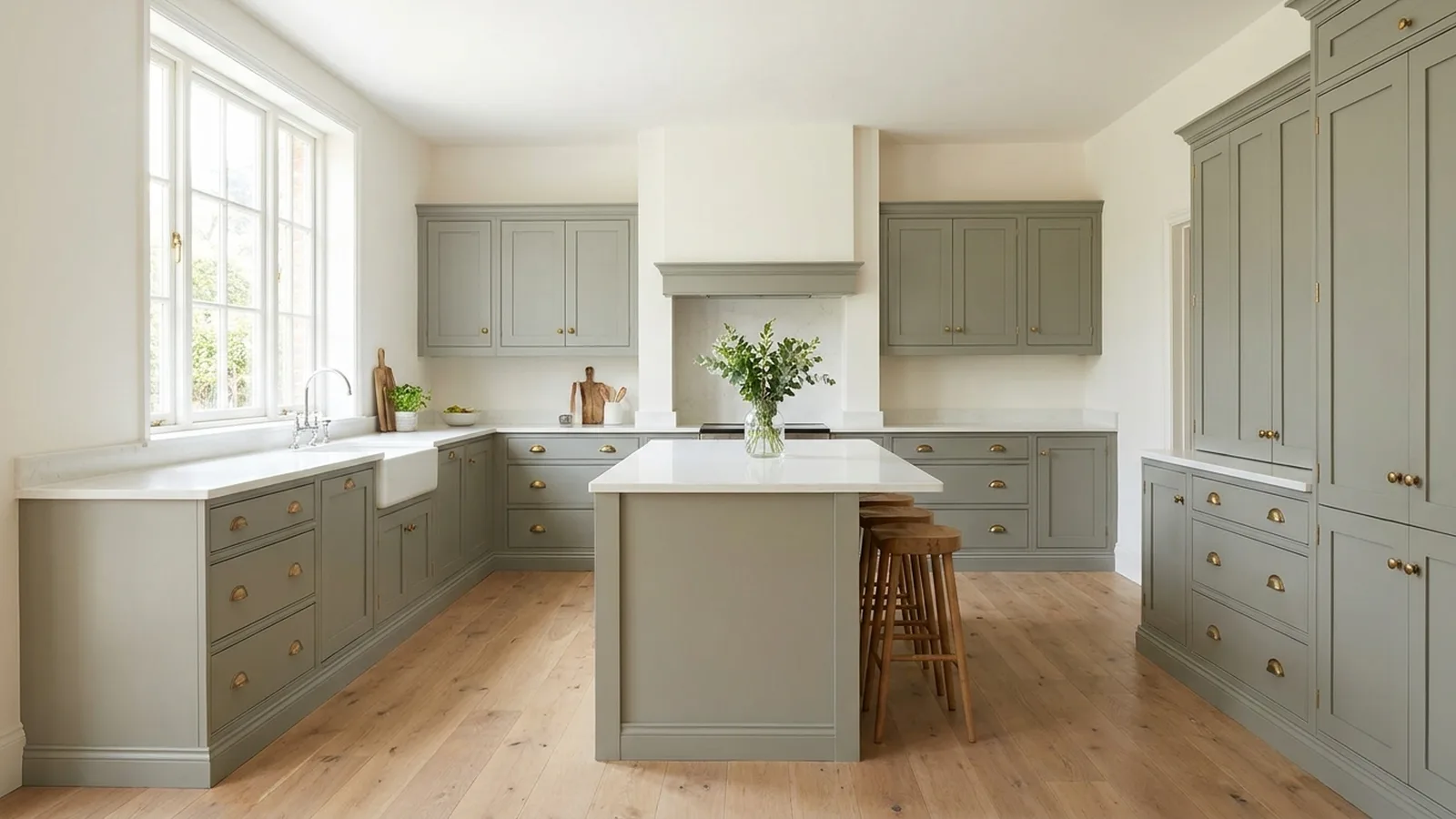
Say a couple repaints their cabinets a soft mint in March. By the following winter, the color looks like a 2010s café, the quartz looks cold beside it, and the white stove looks yellow. Now they’re pricing a second round of paint. A green kitchen can go that way, and it can also be the best color decision you make.
The difference is rarely the green itself. It comes down to shade, undertone, light, the materials sitting next to it, and a layout that works before any paint touches a door. Most inspiration pages skip all of that and show you sixteen pretty photos.
This guide does the unglamorous part. You’ll get a decision rule for each choice, a three-sample light test, honest cost paths and the regrets that keep showing up in homeowner threads. It is one piece of planning a full kitchen remodel, so use it alongside your budget and layout work. Allow about 20 minutes to read and a weekend to run the sample test.
Executive Summary
You can pick a green that lasts by deciding five things in order: shade, undertone, light, surfaces and money. This guide gives you a rule for each one, so you stop guessing from photos.
The short version: choose a gray-green or olive over minty pastels, because muted greens age better. Test three painted samples at three times of day, beside your real countertop, floor and appliances. Pair green with wood or stone rather than stark white if you want warmth. Match your path to your budget. Painting is cheap, ready-to-assemble doors cost more, and semi-custom costs the most.
The biggest worry is probably "will I regret it?" Fair. The real risks are a bad undertone match and a weak layout, not green as a color. Both are fixable before you spend a dollar, and the sections below show how.
Is a green kitchen a fad or here to stay?
Green is popular right now, but popularity and longevity are different things. The National Kitchen & Bath Association’s 2026 trends report, summarized by trade press, found 86 percent of 634 respondents naming greens as popular colors. Muted, earthy greens look deliberate for years. Bright pastel greens tend to date quickly. Your shade decides which group you land in.
Green has a built-in advantage over gray. It comes from nature, so it pairs with wood, stone, brass and plants without effort. One recurring Reddit complaint is people ripping out gray vinyl plank long before it wore out. Still, "all I see is green" is now a real forum comment. If you want a green kitchen that doesn’t announce its year, go deeper and quieter than the feed does.
Which green kitchen shade fits your light: sage, olive or forest?
Pick sage if your kitchen gets plenty of daylight and you want a soft, airy look. Choose olive for a warmer, earthier feel in mixed light. Go forest or dark green for drama in a room with real windows. Gray-green sits in the middle and is the safest. Mint and avocado are the shades most likely to date.
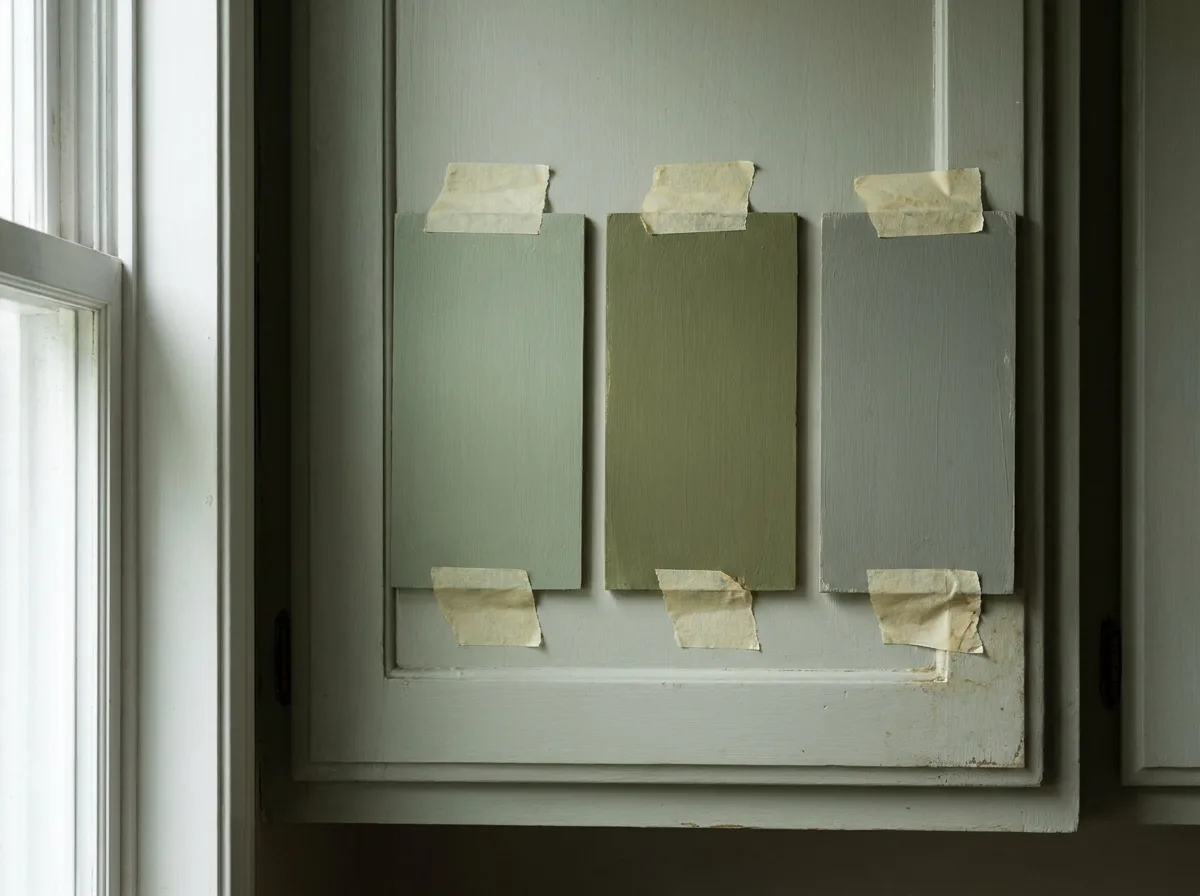
Think of the shades as a dial from light to deep. Sage reads calm but can wash out in a north-facing room. Olive carries yellow, so it goes well with brass and oak. Forest and hunter green hide scuffs better than pale colors do.
My opinion: if you’re unsure, take a gray-green and nudge it darker than feels comfortable. Large cabinet runs can read lighter than a small sample, so I’d rather err deep.
Does dark green make a room look smaller?
Not automatically. Dark colors absorb light, so a small windowless kitchen can feel tighter in deep green. With a good window, light floors and pale walls, a dark green kitchen often feels cozy rather than cramped. The real variables are daylight, ceiling color and how much of the room you paint dark.
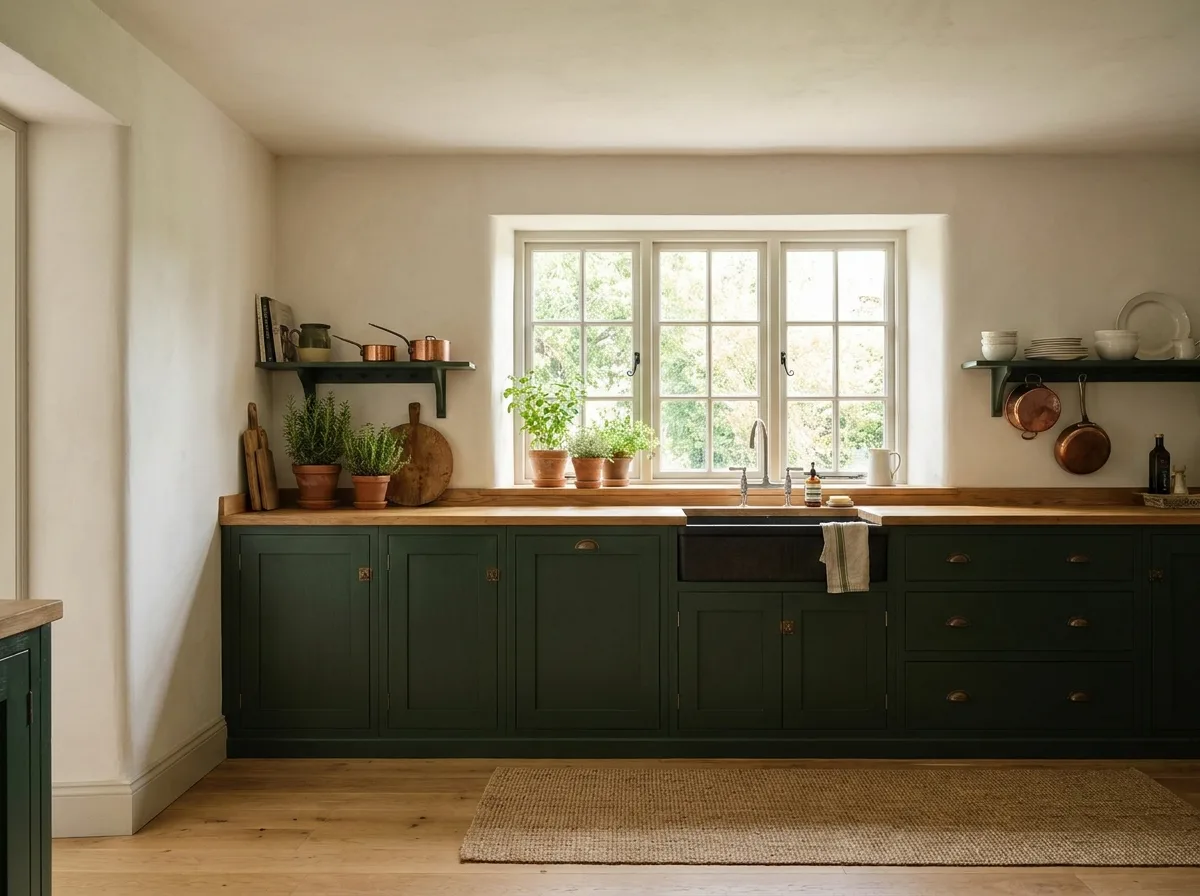
This is the myth worth busting. A painter’s answer on Quora said darker colors make a room look smaller. That holds in a dim room, not everywhere.
A middle path works well. Paint only the lower cabinets or an island dark, and keep the uppers and walls light. If you have no natural light at all, take the sample test below seriously before committing to a dark green kitchen.
How do you test undertone before buying paint?
Buy three sample colors, paint each on a large board, and look at them at morning, midday and evening. Hold each one next to your countertop, floor and appliances. The right green looks good in all three light conditions and doesn’t turn blue, yellow or gray beside your fixed surfaces.
Undertone is the hidden color inside a color. A green can lean yellow, blue or gray, and a white countertop makes the lean jump out. This matters more than the shade name. Here is the routine, about 30 minutes of work spread over a day:
- Paint three 2 by 2 foot boards, two coats each, and let them dry fully.
- Tape them to a cabinet door and to the wall by the window.
- Check at roughly 8 a.m., 1 p.m. and after dark under your own bulbs.
- Set each beside the countertop sample, the floor and the stove.
- Eliminate the one that looks worst at night. Evening is when you cook.
Check the LRV (light reflectance value, a 0 to 100 scale of how much light a paint bounces back) on the can. Higher means lighter. A low LRV in a dim kitchen is where regret starts.
What countertops, backsplash, hardware and appliances work with green?
White or cream quartz, soapstone, butcher block and warm marble-look surfaces suit green cabinets well. Brass or aged gold hardware warms green, while black adds contrast and nickel reads cooler. Stainless appliances work with most greens. The goal is to match warm undertones with warm surfaces, and cool with cool.
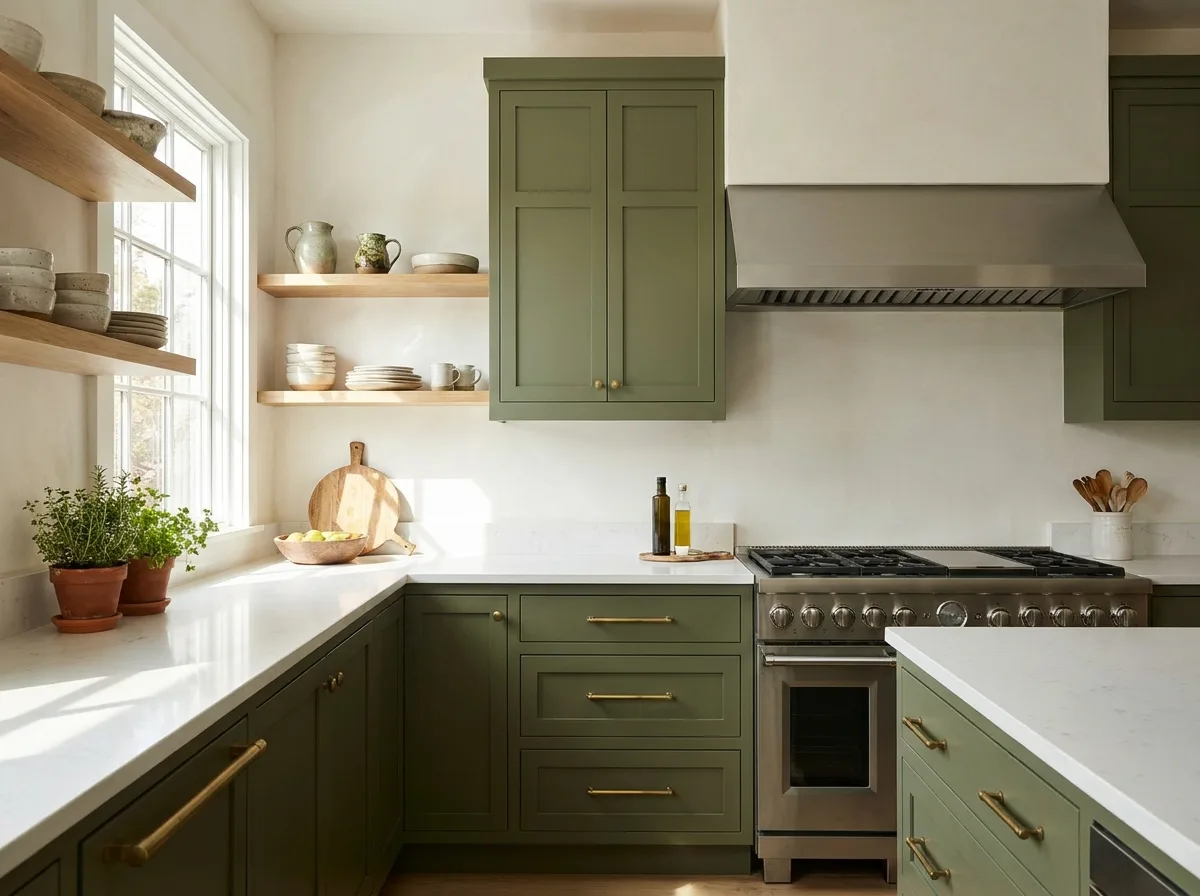
Here’s a quick pairing guide, judged on how each surface treats the green’s undertone:
| Surface | Works best with | Watch out for |
|---|---|---|
| White quartz | Gray-green, sage | Can look cold beside yellow-leaning olive |
| Quartzite or marble | Olive, forest | Needs sealing, costs more |
| Butcher block | Almost all greens | Needs regular oiling |
| Soapstone | Forest, dark green | Darkens over time, which many people like |
| Brass hardware | Olive, forest | Looks yellow on minty greens |
| Stainless appliances | Gray-green, sage | Cool steel can feel cold next to warm greens |
A live Reddit thread asked whether a white countertop works with green. Replies split over warm gold versus cool steel hardware, which is the same undertone question again. A white stove can also look dingy next to a warm green, so check appliances in your sample test.
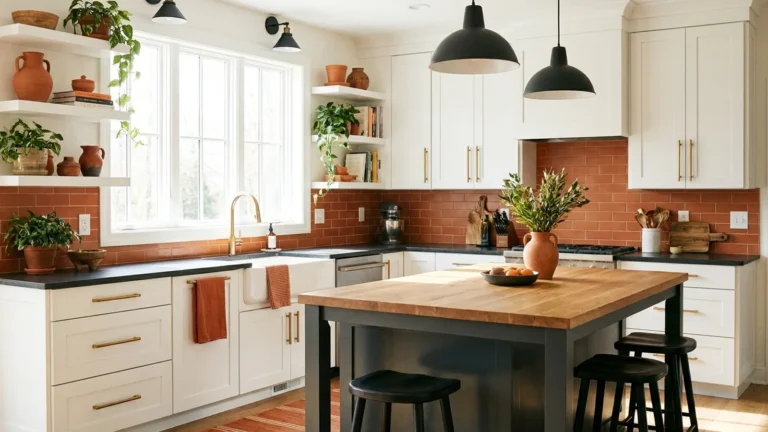
For the backsplash, plain white or cream tile keeps things calm, while handmade-look tile such as zellige adds a soft, uneven shine that suits olive and gray-green. Keep the grout close to the tile color.
Should green cabinets be one color, two-tone or paired with wood?
Two-tone and green-plus-wood are the safest choices for longevity. Green uppers with wood lowers, or a green island in a lighter kitchen, give you color that is easy to change later. NKBA data says wood grain is growing past painted finishes, so mixing green with natural oak is trend-proof.
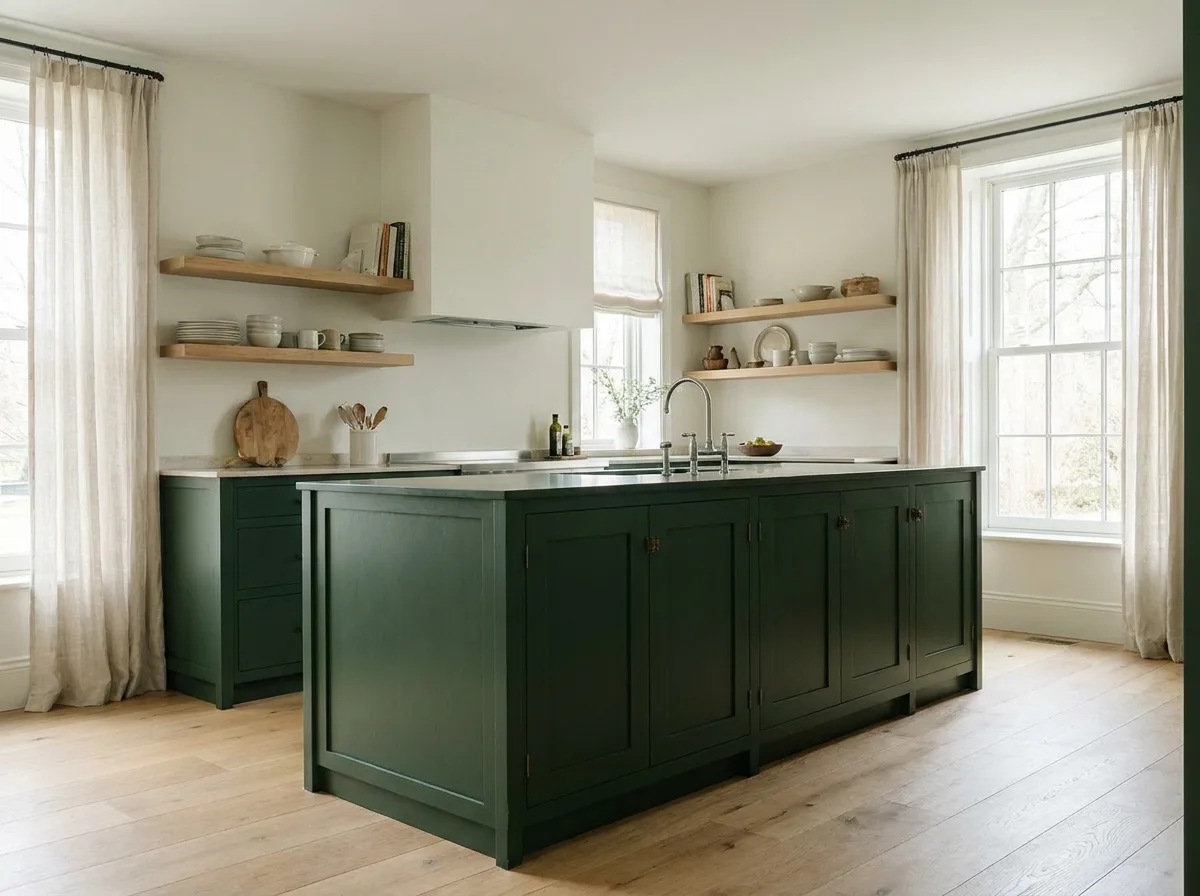
All-green is the highest commitment. If the color dates, you repaint everything. A green island or green lowers cost less to redo.
The NKBA summary also lists white oak as the most popular wood at 51 percent, with 69 percent saying flat slab doors are gaining ground. Shaker isn’t dead, though. A narrow frame in olive, such as the Shaker cabinet door styles covered in our guide, is a comfortable middle. Shaker in green reads classic, slab in forest reads modern, and olive with open shelves leans farmhouse. Choose the door style first, then the green.
How much does a green kitchen cost, and should you paint, refinish or replace?
Painting existing cabinets is the cheapest path, replacing doors only is the middle path, and new cabinets cost the most. One retail anchor: at the time of research, Home Decorators Collection listed a 12-foot green ready-to-assemble kitchen at $2,800 on sale against $4,810 list. Prices change. Labor, countertops and appliances come on top of that.
Treat that as a retailer’s listing, not a promise, and it excludes install. No reliable figures are given here for painting, new doors or semi-custom, so the table ranks the paths by relative cost only. The drivers are cabinet material (plywood versus particleboard), finish, kitchen size and whether you hire a pro.
| Path | Typical cost level | Best when |
|---|---|---|
| Paint or refinish | Lowest | Boxes are solid and layout works |
| New doors on old boxes | Low to middle | Doors are worn, boxes are fine |
| Ready-to-assemble | Middle | You’re comfortable assembling |
| Semi-custom | Highest of the four | You need custom sizes |
IKEA’s SEKTION line carries a 25-year limited warranty, which matters if you plan to stay. Factory-finished green is usually more durable than hand-painted green. If your home was built before 1978, test old paint for lead before sanding, and use a certified pro if it’s positive. Rules vary, so check current EPA guidance and local requirements. See also our gray cabinet guide for how the same cost paths compare in another color.
What do people regret about a green kitchen, and does it hurt resale?
The common regrets are choosing a trendy pastel, skipping the light test, and ignoring layout. On resale, a long-time builder on Quora warned that trend colors can cost owners heavily and that neutral, stained wood sells easily. A muted green is a moderate risk. A bright one is a bigger risk.
A common version of this mistake: a buyer loves a minty sage on a screen, paints in a rush, and finds it reads baby blue in the evening. The fix would have been a proper sample test.
On resale, my honest position is that color rarely sinks a sale, but a kitchen that looks costly to undo can. If you plan to sell within five years, keep cabinets neutral and add a green kitchen look through an island or tile. If you’ll stay ten years, paint what you love.
Does layout matter more than color?
Yes. A well-planned layout in an ordinary color beats a beautiful color in a bad plan. Leave clearance to open the dishwasher, keep filler panels from jamming beside the fridge, and plan about 30 inches of prep space on one side of the range, as one Reddit pro advised.
In a Reddit thread on a sage kitchen, the sharpest criticism wasn’t about the green. It was a dishwasher with no room to open and a range with no landing space. Color can’t rescue a clumsy plan.
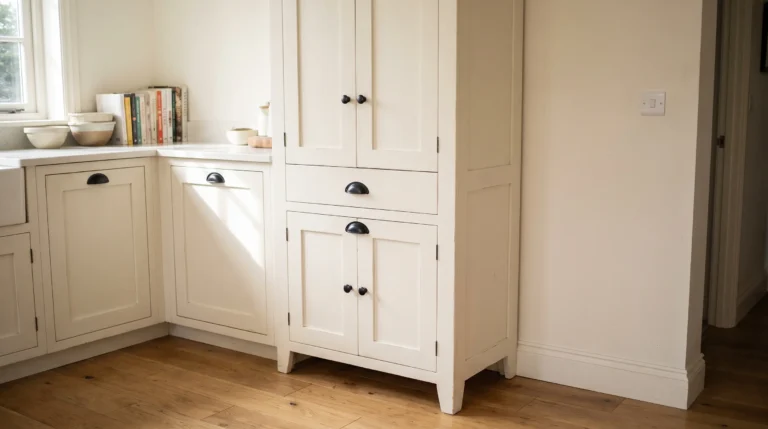
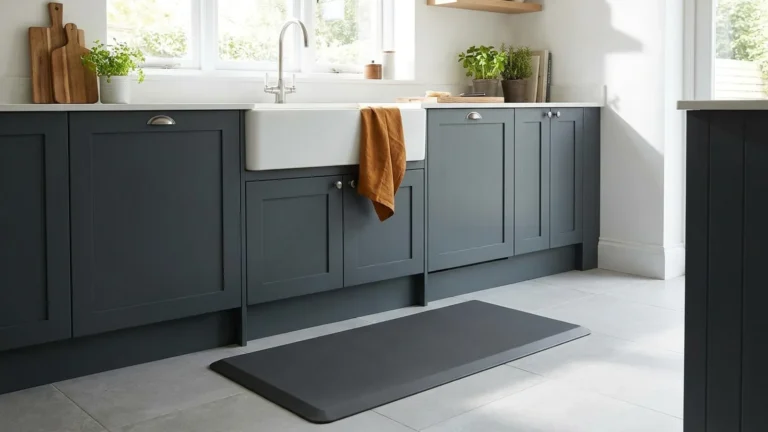
Walk through your cooking routine before ordering. Where do groceries land, where do you chop? A pantry cabinet near the fridge solves a lot of clutter. If you stand at the sink a lot, a cushioned kitchen mat is worth considering for comfort.
Frequently Asked Questions
Is green a good kitchen cabinet color?
Yes, if you choose a muted shade. Gray-green, olive and deep forest pair with wood, stone and brass and tend to age well. Bright mint and avocado are the risky ones. Test samples in your own light before buying.
What color countertop goes with green cabinets?
White or cream quartz, butcher block, soapstone and warm marble-look stone all work. Match the undertone, so warm olive likes warm cream and cool gray-green likes cooler white. If a white countertop looks stark next to your green, add wood or brass nearby to warm it up. Always view the countertop sample beside the paint board.
Is sage green still in style?
Sage still looks fine, but it is a very common green now, so it may feel less distinctive. My own lean would be olive or forest for something quieter. If you love sage, choose a grayer version with a slightly lower LRV so it looks calm and not pastel in your green kitchen.
What color walls go with green cabinets?
Warm white, soft cream or pale greige work well, and they let the cabinets carry the color. Keep walls lighter than the cabinets unless you want a cocoon effect. Avoid cool, bluish whites next to olive, since they make the green look muddy. Check wall paint against the cabinet board at night.
Does green go with stainless steel appliances?
Yes. Stainless works best with gray-green and sage. Against warm olive it can look slightly cold, so brass hardware or a wood element helps balance it. A matte black finish blends into dark green rather than glinting against it. White stoves can clash with warm greens, so test the appliance color near your sample.
Is olive or sage better for a kitchen?
Olive is warmer and hides wear well. Sage is lighter and calmer but can wash out in dim rooms. Pick olive for mixed or low light and sage for a bright south-facing room. If you can’t decide, I’d pick the darker of the two.
Is dark green hard to keep clean?
It’s easier than white in some ways and harder in others. Dark green hides splashes and scuffs, but it shows dust and fingerprints on glossy finishes. Satin or matte finishes hide fingerprints better than gloss. Avoid abrasive cleaners, which can dull a painted finish.
Can I paint existing cabinets green?
Yes, if the boxes are solid. Clean, degrease, sand lightly, prime and use a cabinet-grade paint. Expect a weekend or more of work per kitchen. Pre-1978 homes need a lead test first, and rules vary, so check EPA and local guidance. Refinishing can chip at edges, so consider new doors on old boxes if the fronts are worn. See our Shaker door guide for style options.
Does green always make a kitchen look smaller?
No, that’s a myth. Dark greens absorb light, but a kitchen with a good window, light floors and pale walls handles them well. The size effect depends on daylight, not hue. If your room is dim, use green on the island or lower cabinets only and keep the rest light.
What flooring suits a green kitchen?
Light or mid-tone wood, warm tile and soft neutral stone all work. With dark green cabinets, a lighter floor keeps balance. Avoid cool gray floors beside warm olive, and match the floor sample to your paint board.
Conclusion
A green kitchen lasts when you treat it like a system. Pick a muted shade, check the undertone, test it in your real light and match your countertops, metals and appliances to it. The trick most pages skip is a layout check before a single door is painted.
That answers the opening scenario. The couple with the mint kitchen didn’t pick a bad color. They skipped the process. Looking ahead, my opinion is that deeper greens paired with natural wood are the safer bet.
Your next step is simple: buy three samples this week. To see where green fits in the bigger picture, read our kitchen remodeling guide or compare with our gray kitchen cabinets guide. So which board will still look right to you at 7 p.m. in January?