How to Unclog Shower Drain Fast: Mechanical First, Chemicals Last
Say the water reaches your ankles before the shampoo is rinsed out. Ten minutes later it’s still draining, slowly, with a faint smell that wasn’t there last month. The bottle of cleaner under the sink starts to look tempting.
Knowing how to unclog shower drain trouble starts with one fact: most clogs are a plug of hair glued together by soap scum, and a liquid poured over a plug rarely removes it. Plumbers on Reddit repeat it constantly. Pull the plug out with a cheap tool.
This guide climbs a ladder from the safest, cheapest fix to the point where a plumber is the smarter spend. It’s one part of keeping your plumbing healthy, alongside bigger jobs like a sewer inspection when trouble runs deeper. You’ll get the diagnosis, the tools, and one chemical rule that protects whoever opens your pipes next.
Executive Summary
Learning how to unclog shower drain jams is easier than it looks. Most slow showers clear in about ten minutes with gloves and a plastic barbed strip that typically costs a few dollars. The trick is to diagnose first, then climb a short ladder: pull the hair, plunge with the overflow sealed, snake if needed, and only then consider a cleaner.
Baking soda and vinegar mostly fail on hair, because soap scum cements the strands into a mat. A snake often stops at the P-trap, the U-shaped bend under the drain, and the guide shows how to get past it. Very hot tap water is a safer finishing flush than a rolling boil if you are unsure of your pipe type. And if you ever use a caustic cleaner, tell your plumber, because leftover liquid can burn them. Pipe materials and local codes vary, so anything past the cover or trap belongs with a pro if you are unsure.
Why Does My Shower Drain Clog in the First Place?
Shower drains clog because hair, soap scum, skin oils and minerals stick together inside the pipe. Hair is the frame and soap residue is the glue. Over several weeks the mat narrows the pipe until water backs up. Long hair, hard water, waxy bar soap and heavy conditioners all speed it up.
One homeowner thread described a hair clump "the size of a golf ball" pulled from a drain that had only been slow for a week. Gross, yes, and typical. Slow-then-stopped is the usual pattern, so a slow drain is your cheapest warning.
How Do I Tell Which Kind of Clog I Have?
Check three things: how fast it drains, whether other drains are slow too, and whether you smell sewer gas. A slow shower with every other drain running fine usually means a local hair clog. Several slow drains, gurgling or backups point to the branch line, main line or a vent problem instead.
If only the shower is sluggish, the hair sits within the first foot or two of pipe. If one fixture gurgles when another runs, stop. One Quora answer also blamed poor venting for slow drains, and a vent problem won’t yield to a plunger.
What Do I Need Before I Start?
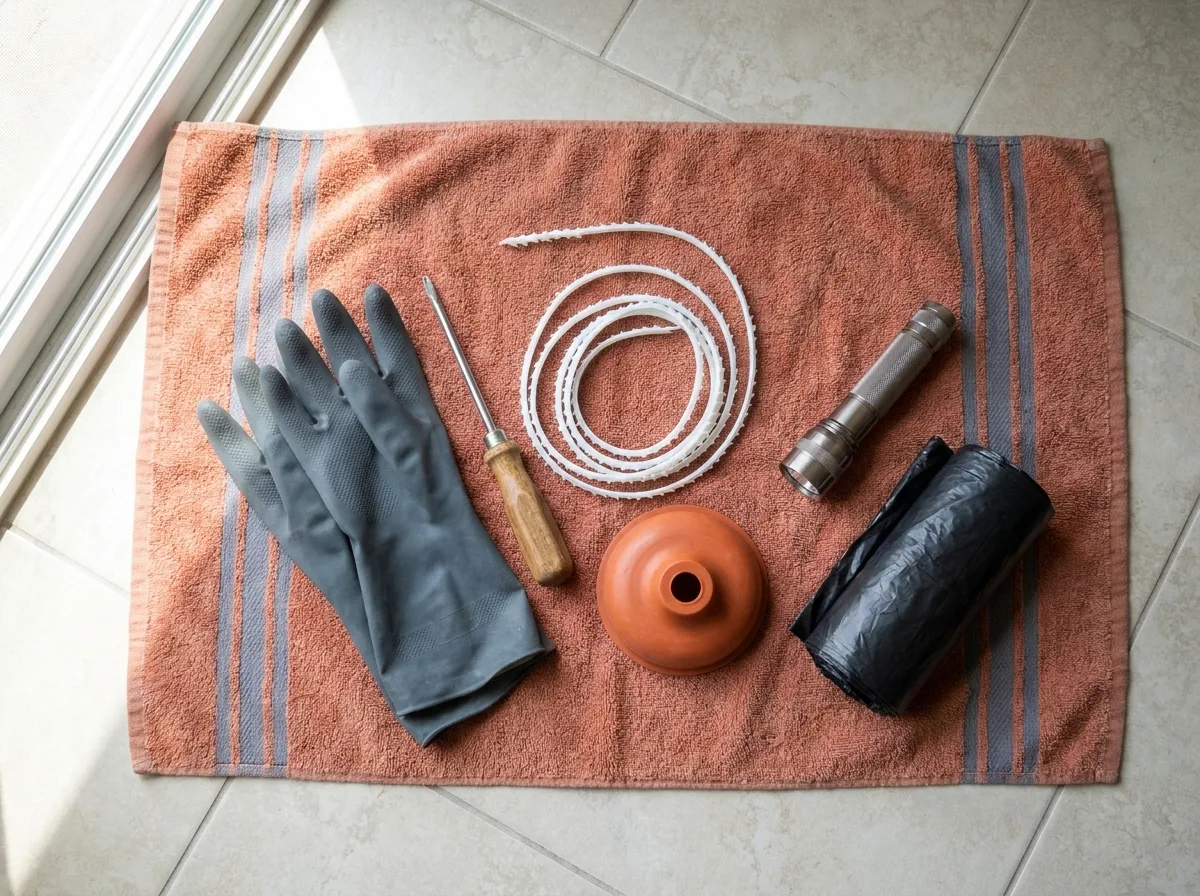
You need rubber gloves, a screwdriver, a plastic barbed drain strip, a cup plunger, a flashlight, a towel and a trash bag. A hand-crank snake and a wet/dry vacuum are optional backups. The basics usually cost well under $25 combined, and you may already own half of them around the house.
| Tool | Best for | Honest limit |
|---|---|---|
| Plastic barbed strip (Zip-It type) | Hair in the first foot or two | Can snap, won’t clear deep clogs |
| Cup plunger | Standing water in the pan | Fails if the overflow leaks air |
| Hand-crank auger | Deeper clogs past the trap | Can jam at the bend |
| Enzymatic cleaner (Zep Drain Defense) | Monthly upkeep | Too slow for a hard clog |
How to Unclog Shower Drain Hair Clogs in 10 Minutes
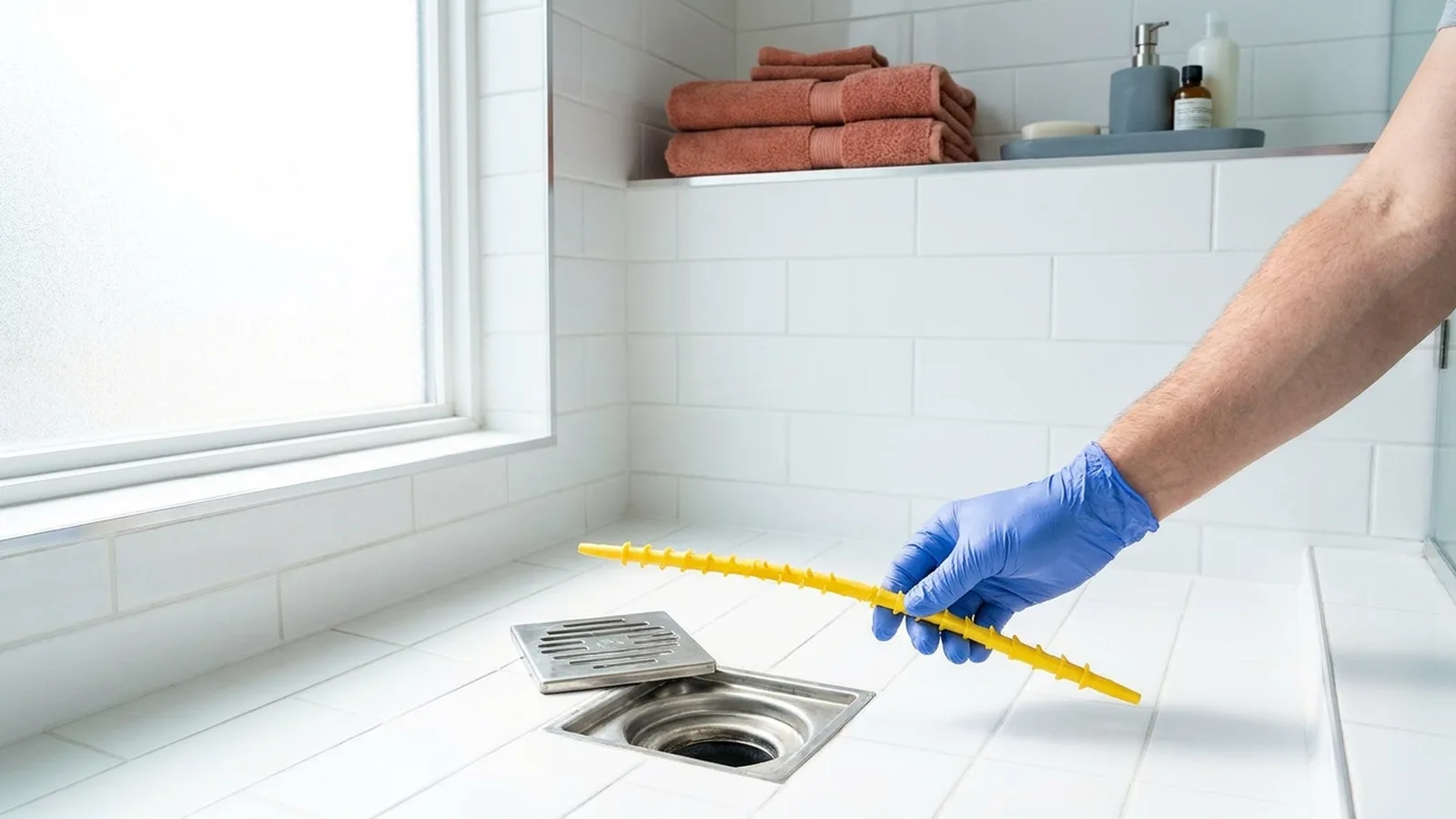
To start how to unclog shower drain hair jams, unscrew the cover, put on gloves, and pull out the visible hair. Then push a plastic barbed strip down, twist, and pull it back slowly to catch more. Repeat until it comes up clean, then flush with hot tap water. Most hair clogs end here.
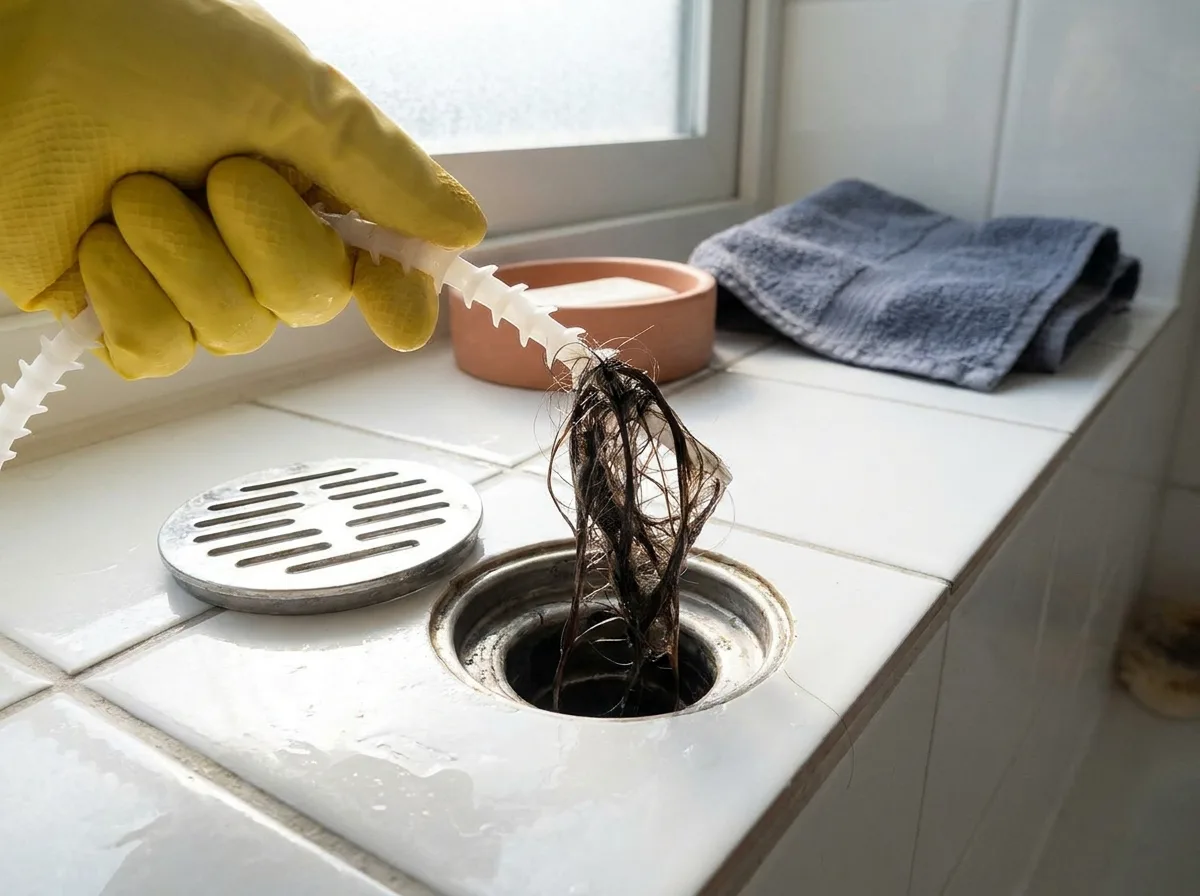
- Lay a towel in the tub and keep the water off. Dry hands grip hair better.
- Look for screws on the cover. Some covers are threaded and turn counterclockwise with a flat-head in the slot. Don’t force it.
- Lift the cover and pull what you see. Expect to learn something about your household.
- Feed the strip straight down, twist, then pull up slowly. Hair rides the barbs out.
- Repeat three or four times. Bag the hair, never flush it.
- Run hot tap water for a minute and watch the speed.
A common version of the mistake: someone pulls the surface hair and walks away, while the stubborn mat sits one inch lower. Always go in once more after the top looks clean. A bent wire coat hanger with a small hook is a free stand-in for the strip, but it scratches fixtures and can push hair deeper if you rush, so wear gloves and go gently. I’d pick the plastic strip over a hand-crank snake for a first try, every time. It’s slightly absurd that something so cheap works so well.
Can You Plunge a Shower Drain, and What About the Overflow?
Yes, a cup plunger works when the pan holds a couple of inches of water and the overflow opening is sealed. Without the seal, pressure escapes through the overflow and nothing moves. Plunge with firm, steady strokes for 20 to 30 seconds, then check the flow and repeat once if needed.
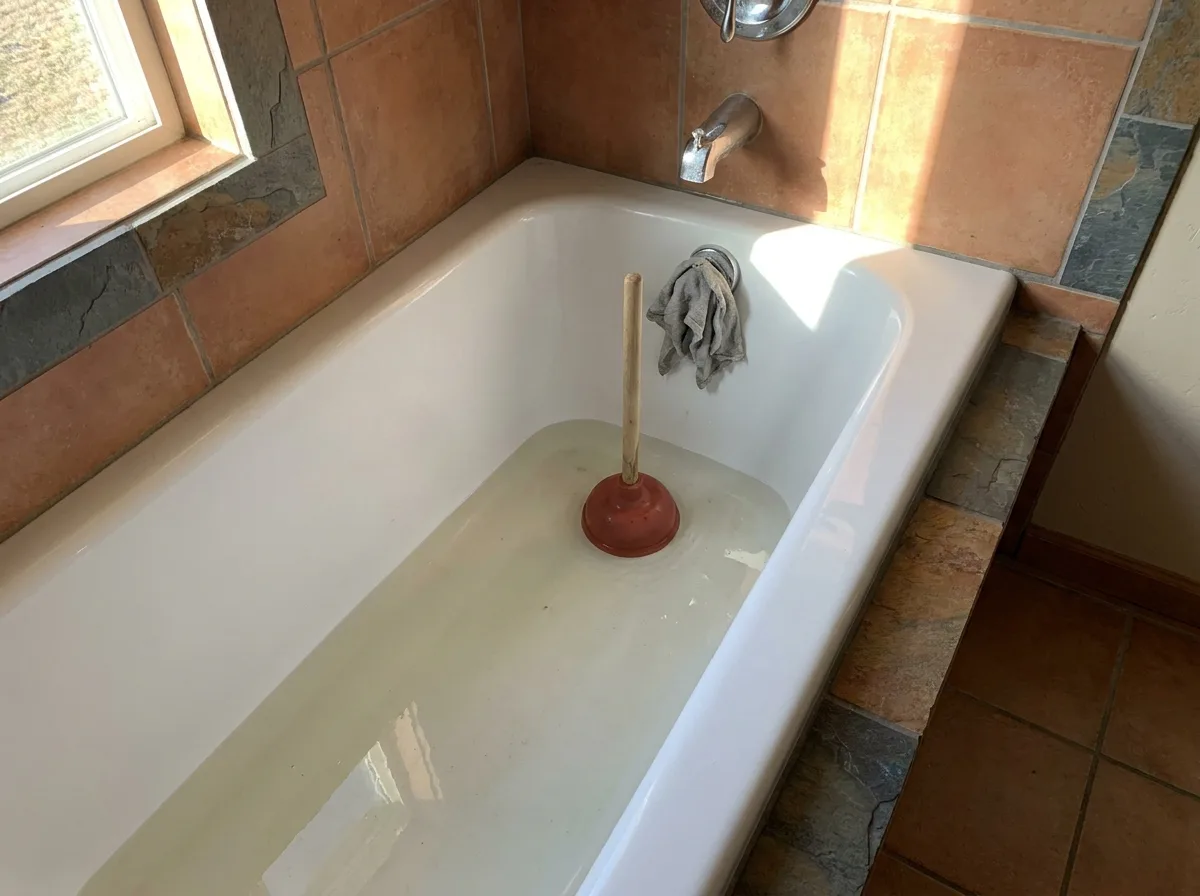
Tub and shower combos have an overflow plate near the top of the tub, and it’s a leak in your pressure. Stuff a wet rag into it or tape over it. Seat the plunger flat, push gently to expel air, then plunge hard and pull up sharply on the last stroke. Dry plunging mostly pushes air.
How to Unclog Shower Drain Problems With a Snake, and Why Does It Stop?
A hand-crank snake, also called an auger, reaches farther than a strip but often stops at the P-trap, the curved pipe that always holds some water. Remove the cover, put a slight kink at the tip, feed it slowly by hand, and rotate gently through the bend. Never force it.
The snake isn’t broken. The trap is a tight U, and a stiff cable bumps into its wall. Other culprits are the cross bars of an X-shaped cover you haven’t removed, and a snake that’s too short. When you feel the clog, crank clockwise, pull back a bit, and repeat. Wear gloves and eye protection, because the cable can spit grime on the way out.
If a full cable length changes nothing, you’re no longer fighting a shower clog. That’s main-line territory, covered in the replace sewer line guide.
What If the Cover Will Not Come Off or the Snake Won’t Fit?
Go through the overflow plate instead. Unscrew the overflow cover, slide the linkage out, and feed the snake down the overflow pipe, which meets the same drain line below the trap. If the drain cover itself is stuck, ease it with a flat-head screwdriver and warm water before trying anything harsher or forcing it.
For a cover that won’t turn, a few drops of dish soap and hot water can free scale.
Does Baking Soda and Vinegar Really Unclog a Shower Drain?
Mostly no, not on hair. Baking soda and white vinegar fizz hard, then leave behind mostly salty water. That can loosen a light soap film and freshen a drain, but it will not dissolve a hair mat held together by soap scum. Treat it as a gentle rinse for odor, never as the cure.
A chemist on Quora described the result as a neutral salt plus water, and a plumber on Reddit disputes it too. It’s harmless, just rarely effective.
Does Boiling Water Work, and Is It Safe for PVC?
Boiling water can loosen soap film, but many plumbers advise caution with plastic pipe, so check your pipe type and any product label first. Very hot tap water is the safer default when you are unsure what is under the floor. Either way, treat it as a finishing flush, not a fix.
If you do use a kettle, let it cool a minute and pour slowly in stages. Water alone can’t pull out a mat it can’t reach.
Are Chemical Drain Cleaners Safe, and What Should You Tell Your Plumber?
Chemical cleaners are a last resort. Caustic ones are corrosive and can burn a plumber who later opens the pipe. Never mix products, wear eye protection and gloves, ventilate the room, and tell any plumber exactly what you poured. Mechanical removal avoids all of these risks for you and the next person.
Here’s the part most people miss. A failed caustic cleaner doesn’t vanish. It sits in the trap, still strong, and the plumber meets it with bare skin a foot from their face. Commenters on Reddit said it plainly: tell the plumber.
One homeowner described four bottles of a foaming product in a month with no luck and a new smell. The fix was physically removing the glob. If you still try one:
- Read the label for pipe type and shower use.
- Use one product only, never with vinegar, bleach or another cleaner.
- Wear goggles and gloves, open a window, run the fan.
- Wait the labeled time, then flush with plenty of water and note the brand for the plumber.
Roto-Rooter’s help pages list non-chemical methods first, which says something.
How to Unclog Shower Drain Problems as a Renter
Renters should start with the cheap mechanical fixes, which are usually allowed and often what the landlord would do anyway. Photograph the problem, try a strip and plunger, then message the landlord in writing if it persists. Skip chemicals and do not dismantle any plumbing past the cover without permission.
Say a landlord refuses a plumber: buy a strip, tape the overflow, plunge, then add a hair catcher. Keep a written paper trail, and clear any P-trap removal with your lease first.
When Should I Call a Plumber?
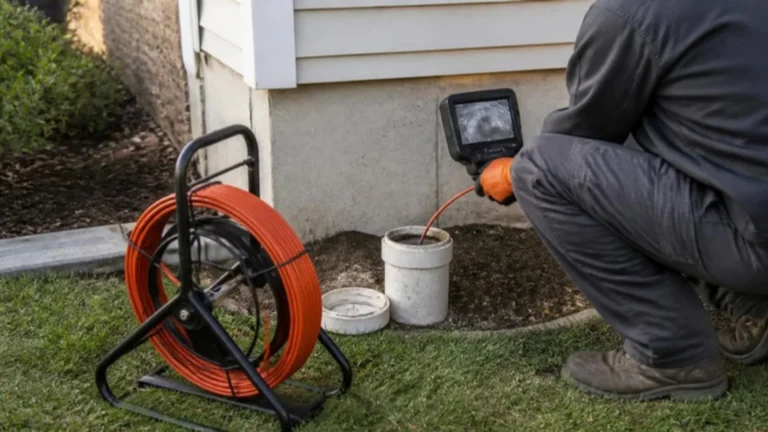
Call a plumber when several drains are slow, another fixture backs up, you smell sewage, the steps above changed nothing, or the clog returns within days. Recurrence means the cause is deeper than hair, and a camera or power auger is the right tool for that job, not another bottle.
Costs vary by region and clog depth, so I won’t invent a number. Ask for a flat rate and whether a camera is included. Decision rule for how to unclog shower drain jobs: if you’ve spent an hour and two methods on one shower, hire help. Sewage in a floor drain or a toilet bubble signals the main line, and on a septic system the septic tank pump out schedule may be involved. Tell the plumber what you used and saw. Pipe materials and local plumbing codes vary, so if you are unsure about anything past the cover or trap, let a plumber handle it.
How Do I Keep a Shower Drain From Clogging Again?
Install a hair catcher, empty it after showers, and flush the drain weekly with hot tap water and dish soap. Add an enzymatic cleaner every month or two if you have long hair. Prevention takes only seconds a week and is far cheaper and less messy than any rescue job later.
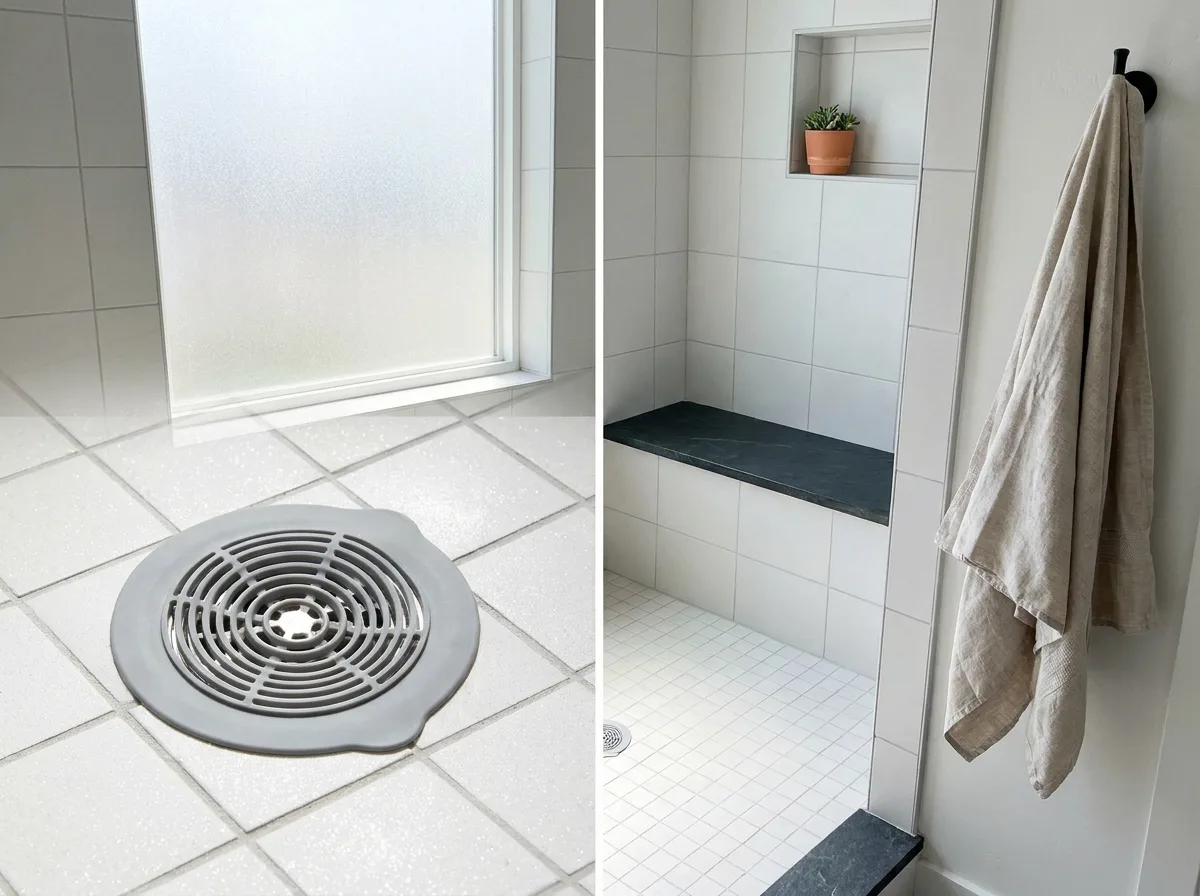
A Tub Shroom style insert or flat silicone catcher traps hair before it enters the pipe. Liquid soap instead of waxy bars also reduces film.
Frequently Asked Questions
Why is my shower drain slow but not fully clogged?
A partial clog means hair and soap film have narrowed the pipe but not sealed it. Water still passes, only slowly. Start with the strip and a hot water flush, since catching it now saves a harder job. If it slows again within days, suspect a deeper clog or vent issue.
Can I use Drano in a shower drain?
Many foaming and gel products are labeled for showers, but they work poorly on hair and carry real risks. They can splash, stress old pipes, and burn whoever opens the trap next. Pull the hair first. If you do use one, follow the label exactly, never mix products, and tell any plumber what you used.
Does vinegar and baking soda work on hair clogs?
Rarely. The fizz produces mostly salty water and can’t dissolve a soap-bound hair mat. It may freshen a drain or loosen thin film, which is why people believe in it. For a real clog, remove the hair with a strip or snake and keep the fizz for odor.
How long should I wait after pouring drain cleaner?
Follow the label, because times differ by product and pipe type. Waiting longer doesn’t help and raises the risk of damage. If nothing changes after one application, go mechanical. Repeated bottles usually add smell and risk. If several drains stay slow, call a plumber instead of buying a second or third bottle, because the cause is probably deeper than a hair clog and more product only adds risk.
Why does my shower drain smell?
Usually it’s a biofilm of soap, hair and bacteria on the pipe wall or strainer, or a trap that dried out from disuse. Clean the cover and the first few inches of pipe, then run water for a minute to refill the trap. A persistent sewer smell with slow drains elsewhere points to a vent or line problem.
Why won’t my drain snake go past the trap?
The tight bend of the P-trap catches stiff cable. Remove the cover, put a slight kink at the tip, and feed slowly by hand while rotating. Try the tub overflow as a second entry. If it stops at the same spot, a dense clog may sit right at the bend, which a wet/dry vacuum can sometimes pull out.
Is it OK to pour boiling water down a shower drain?
Many plumbers advise caution with plastic pipe, so check your pipe type and any product label first. Very hot tap water is the safer default when you are unsure. If you use a kettle, let it cool briefly and pour slowly in stages. It’s a finishing flush, not a cure, and it won’t pull a hair mat out.
How often should I clean my shower drain?
Empty a hair catcher after most showers and do a deeper check every few months. Long hair or hard water may call for monthly attention. A quick hot water and dish soap flush each week is cheap insurance, and it takes under a minute. If the drain starts to slow or smell between checks, pull the cover and look sooner rather than waiting for a full clog.
Can I unclog a shower drain with a wet/dry vac?
Sometimes. Set the vacuum to wet, seal the hose over the drain with a rag, and run it a few seconds to pull a clog back up. It works best on clogs near the trap that a snake keeps bouncing off. It’s messy, so wear gloves and keep a bucket handy. Deep clogs are out of reach.
Myth: do hot water and dish soap dissolve hair?
No. Hot water and soap soften grease and film, but hair doesn’t break down in hot water or soap. That’s why a flush alone leaves the mat behind. Use the combination to loosen and rinse after you’ve pulled the hair out with a strip, never as the main fix, since that is the real order of operations.
Conclusion
The best way for how to unclog shower drain trouble is to follow a boring order. It works: look, pull, plunge, snake, and only then think about chemicals. The real trick isn’t a product. It’s the order, plus one rule that protects the next person who touches your pipes. If you pour a caustic cleaner, say so.
Remember that golf-ball clump? It was never a mystery. It was weeks of hair and soap, and a ten-minute pass with a plastic strip would have removed it. A catcher and a monthly flush make a repeat unlikely.
If the problem is bigger than one shower, read about a sewer inspection next, and keep the septic tank pump out schedule in mind if your home has a tank.
Grab a plastic strip this week. How much hair do you think is down there right now?