Dryer Not Spinning? Find the Cause Before You Buy a Part
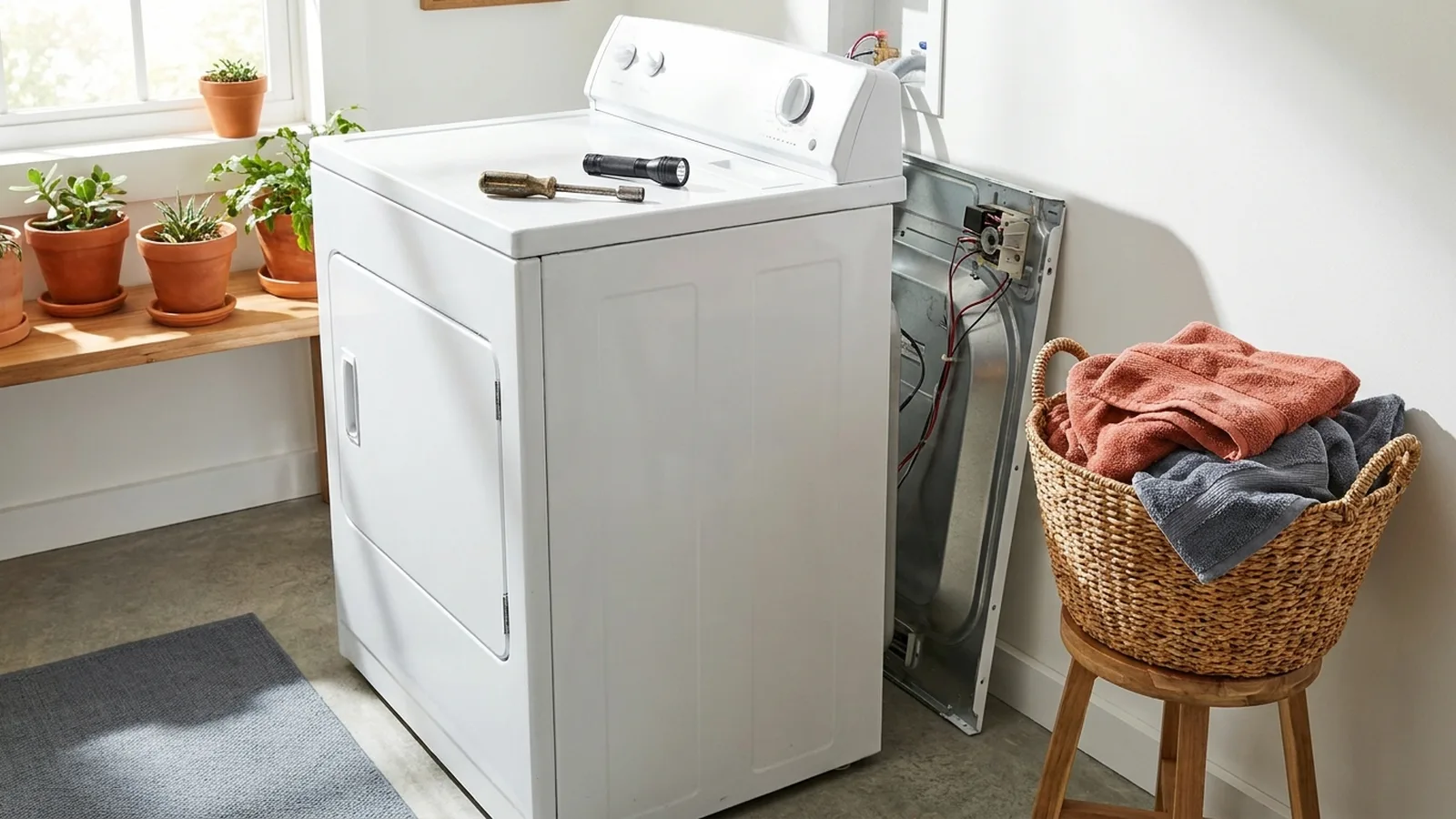
Say the dryer starts, hums, and heats up, but the drum just sits there. Your wet towels are going nowhere. The tempting move is to search a part number, order a belt, and hope. That is how a small repair turns into a pile of returned parts, because a dryer not spinning has at least a dozen possible causes and the belt is only one of them.
The better move is a short, ordered check. You listen to the machine, spin the drum by hand, and match what you find to a cause. Most of it is a short check with one nut driver. This is one part of keeping your laundry room running, and our guide to fixing washer and dryer problems covers the wider picture.
Below you’ll get a symptom table, a Samsung section, and an honest repair-or-replace rule. Unplug it first.
Executive Summary
Most dryers that run but won’t turn have a worn belt, a failed idler pulley, or a motor that can’t start. You can sort these out with a short hand-spin test and your ears. This guide ranks the causes from cheapest to check to most expensive to fix.
Three insights save the most money. First, a drum that spins very easily by hand points at the belt, while a stiff or locked drum points at a bearing or the blower, according to iFixit’s dryer troubleshooting guide. Second, a humming motor with a free drum is usually not a belt problem, so don’t buy one yet. Third, some dryers have no start capacitor at all, so a capacitor swap suggested online can be wasted money.
The biggest worry is "will I make it worse?" You won’t, as long as you unplug the dryer and shut off the gas on a gas model. We also cover Samsung Child Lock, cost drivers, and when a pro is cheaper.
Why is my dryer not spinning?
A dryer not spinning almost always comes down to one of five things: a broken or slipped belt, a failed idler pulley, a motor that won’t start, a jammed drum or blower, or a safety switch that never closes. Each leaves a different clue, such as silence, humming, thumping, or a burning smell.
Think of the drum as a bicycle wheel. The motor is the rider, the belt is the chain, and the idler pulley (the spring-loaded wheel that keeps the belt tight) is the tensioner. If any link fails, the wheel stops, but the rider may keep pedaling and make noise.
What should I do first when the dryer is not spinning?
Unplug the dryer, shut off the gas valve if it is a gas model, and pull it away from the wall. Then check the door, the cycle selection, and the lint trap. These steps take five minutes, cost nothing, and rule out the simplest causes before you open anything.
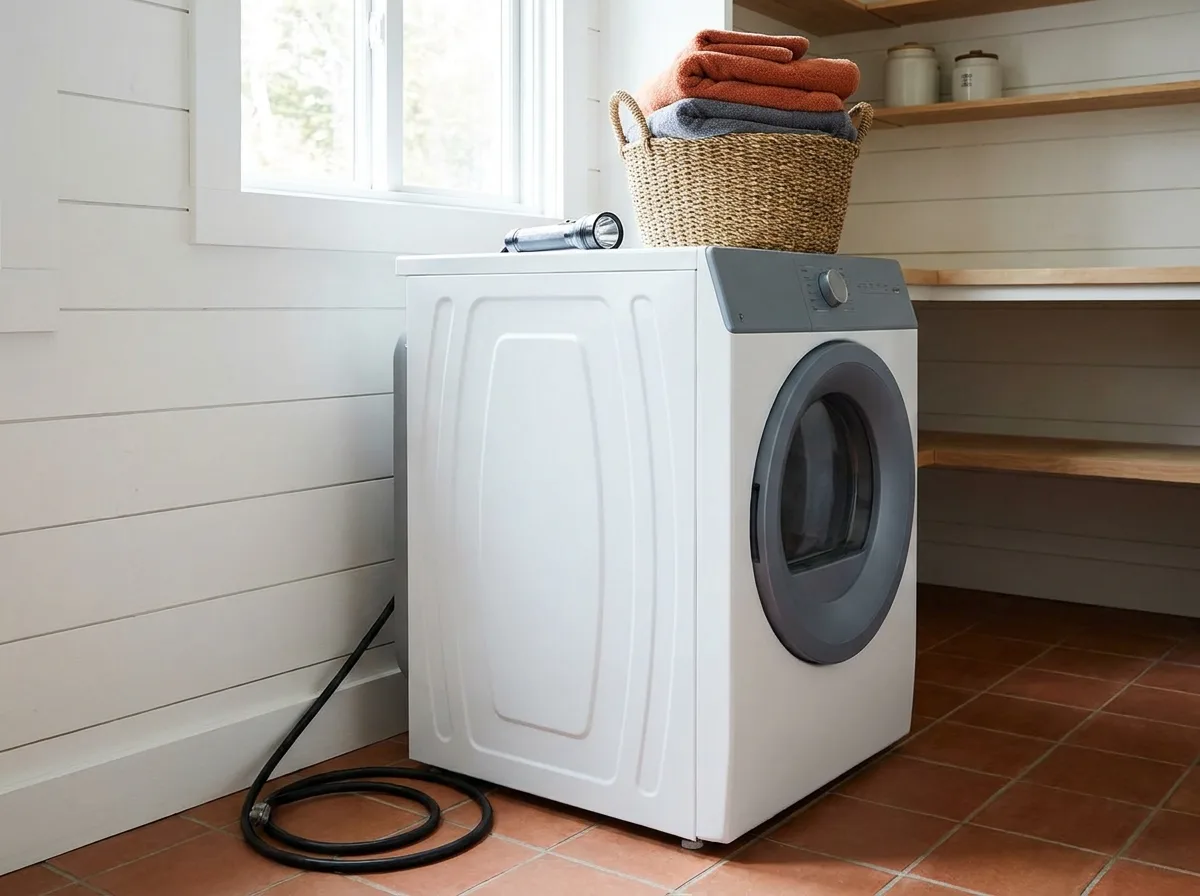
A 240V electric dryer can hurt you even when it looks off, and a gas dryer has a valve to close before you move it. Local codes vary, so a licensed technician handles gas and wiring work.
Then run this quick sequence:
- Close the door firmly and press Start again. A weak door switch can make it seem dead.
- Check that Child Lock is off, which matters on some brands.
- Open the dryer and turn the drum by hand.
That last step sorts everything else, so keep it in mind.
Is the dryer dead or does it run but not spin?
A dead dryer with no sound points to power, the door switch, start switch, thermal fuse, or control board. A dryer that hums or heats but doesn’t turn points to the belt, idler, motor, or a seized drum. Sorting these two groups first stops you from chasing the wrong parts.
This is the gap most guides skip. A silent dryer is an electrical-path problem. A noisy or warm one has power, so the fault sits in the mechanical chain. Use the table with your hand-spin test.
| What you notice | Drum by hand | Likely cause | DIY difficulty |
|---|---|---|---|
| Silent, no sounds | Usually spins easily | Door switch, thermal fuse, start switch | Easy to moderate |
| Motor runs, drum still | Spins very easily | Broken or slipped belt | Moderate |
| Humming, drum still | Spins easily | Motor start problem | Pro often cheaper |
| Humming or thumping | Stiff or locked | Bearing, roller, or blower jam | Moderate to hard |
| Squeal while turning | Rough feel | Idler pulley or rollers | Moderate |
Treat the table as a first guess, not a verdict.
How do I tell a broken belt from a bad motor?
Open the dryer and look. A belt that is snapped or loose on the cabinet floor is the problem, and the motor will usually run freely. If the belt is intact and the drum spins easily by hand but the motor only hums, suspect the motor instead.
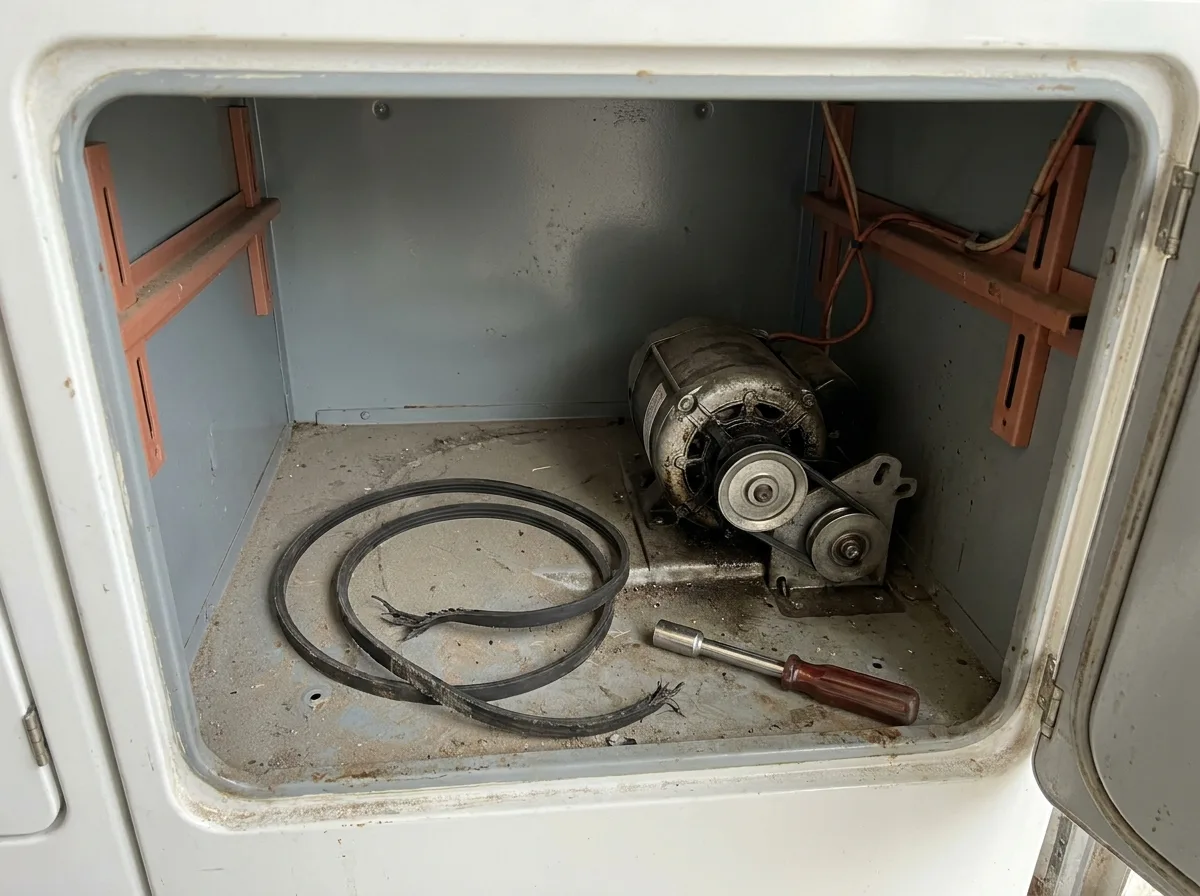
A common version of this mistake goes like this. A homeowner sees a dryer that heats but won’t tumble, orders a belt, and installs it in an hour. Nothing changes. The belt was fine, and the motor was humming because it could not start.
With power off, lift the belt off the motor pulley and spin the motor shaft by hand. It should feel smooth. If the belt is truly shredded, replace it and the idler pulley together, since a worn idler will kill the next belt.
Why is my dryer humming but the drum not turning?
Humming means the motor gets power but can’t start rotating. The cause is a worn motor start winding, a failed centrifugal switch, or mechanical drag from a seized blower or drum. Check for drag first, because it is cheaper to fix than a motor.
Rotate the blower wheel and the drum by hand if you can reach them. Either one stuck? That is your jam. If both turn freely, the motor is the main suspect.
Now the false-fix trap. Forum threads often claim a capacitor swap fixed a dryer not spinning, then someone notes the model has no capacitor. Check your parts diagram first. Motor work involves 240V, so a licensed technician is often the sensible call.
Can a clogged blower or lint buildup stop the drum?
Yes. A jammed blower wheel or heavy lint packed around it can lock the drum, and it mimics a belt failure. If the drum feels stiff by hand, check the blower housing and vent duct before you buy a belt, since clearing lint costs nothing.
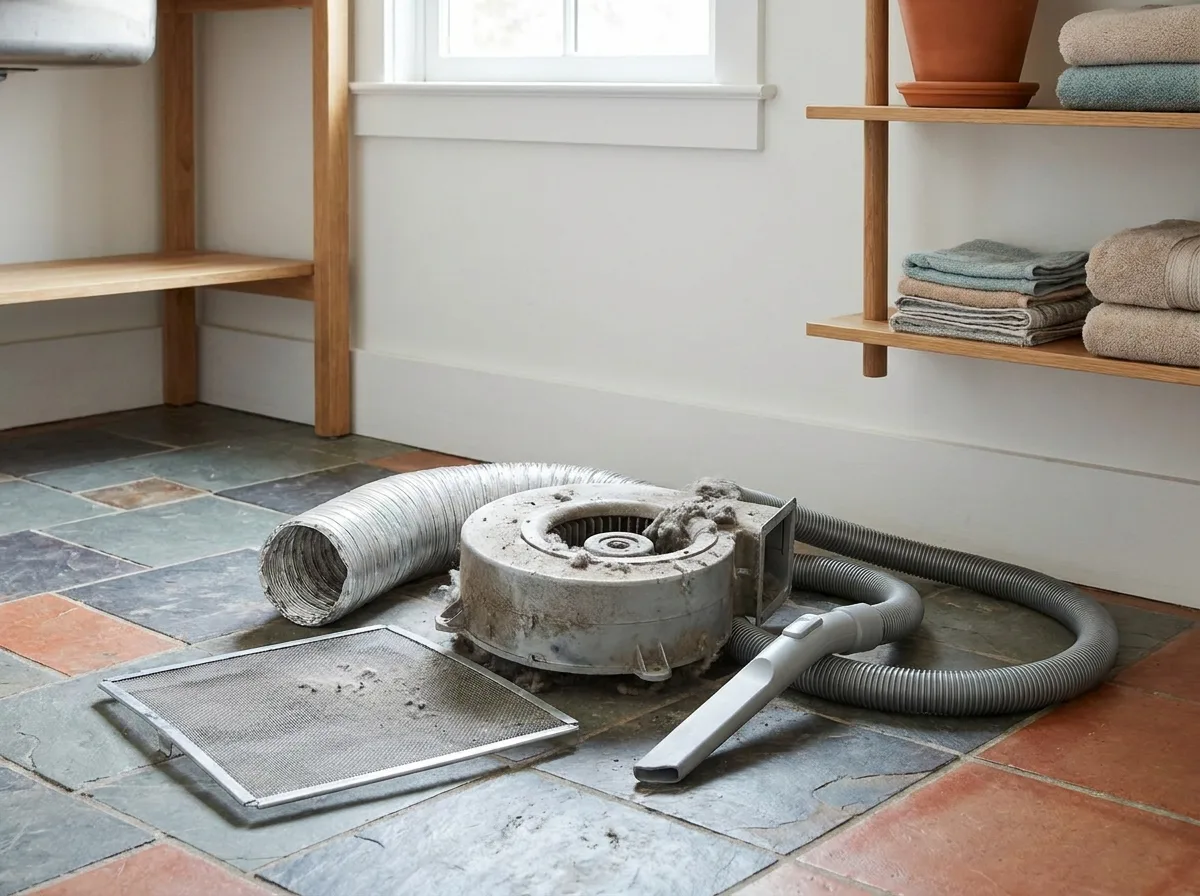
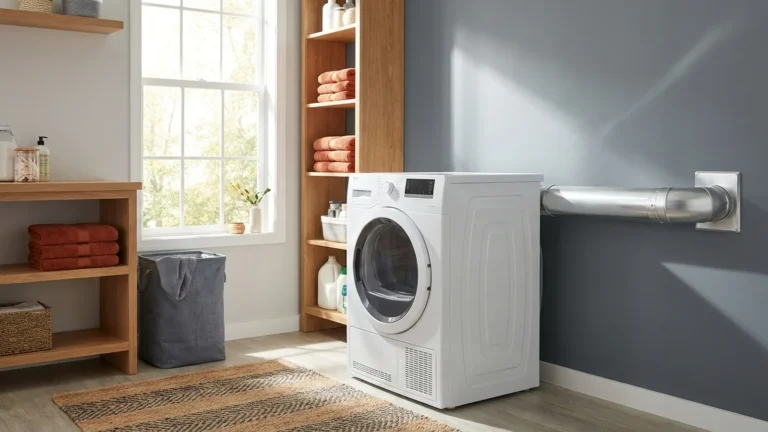
Here is the contrarian point I’d put on a sticky note: check airflow before blaming the belt. Pull the lint screen, vacuum the housing, and clear the duct. Say a family notices longer dry times for months, then the drum stops. A crushed vent and a lint-packed blower fit that pattern, and clearing them can restore motion with no parts bought. Our walkthrough on proper dryer exhaust installation shows how to route a vent so lint doesn’t pile up again. If you smell burning, stop using the dryer until it’s inspected.
What are drum rollers, bearings and the idler pulley, and do they fail?
Yes, all three wear out. Drum rollers and the bearings support the drum so it turns smoothly, and the idler pulley keeps belt tension. When they fail you hear squealing, thumping, or scraping, and the drum may feel rough or stiff by hand.
Rollers are small wheels under the drum that flatten or seize with age. A worn bearing gives a deeper rumble. An idler pulley wobbles or squeals. Each is a moderate job because you lift the drum out. The honest trade-off: if the bearing is shot, other wear parts are usually tired too.
Could the door switch, start switch or thermal fuse be the problem?
Yes, especially if the dryer is silent. The door switch tells the dryer the door is shut, the start switch begins the cycle, and the thermal fuse cuts power if it overheats. A failed one stops the motor from running at all.
These are the cheapest parts to test. With the dryer unplugged, a multimeter set to continuity shows whether each part passes current. A blown thermal fuse deserves a warning. It blows for a reason, usually restricted airflow. Replace it without clearing the vent and it will blow again, or worse, you’ll create a fire risk. Fix the vent first.
Why is my Samsung dryer not spinning?
Check three things first on a Samsung: Child Lock is off, the cycle has really started, and the display shows no error code. If all three are clear and the drum still won’t turn, the machine needs service or a parts check.
Samsung’s support page lists those steps, so do them before opening the cabinet. Child Lock stops the Start button from working, and people trigger it by accident while loading. An error code points at the exact fault. After that, the same mechanical causes apply.
A Samsung washer not spinning is a different machine with different causes, like drainage and unbalanced loads. Check that model’s manual or a washer-specific repair guide before ordering anything.
Is a dryer not spinning worth repairing or replacing?
Repair when the fix is a belt, idler, rollers, switch or fuse on a dryer you otherwise like. Think about replacing when the motor, drum bearing or control board has failed on an older, basic machine. Get a written quote and compare it with a new dryer.
I can’t give you a trustworthy price table, because the main cost drivers are the part itself, the labor, and your region. What I can give you is the logic. Repair when the part is cheap and the labor is small. It gets shaky when two big parts fail together or the quote approaches half the price of a comparable new unit, a common rule of thumb. A one-time belt on a sound machine is usually worth repairing.
Which dryer not spinning fixes can I do myself?
You can usually handle lint cleaning, belt replacement, idler and roller swaps, and switch or fuse testing with basic tools. Leave 240V wiring, gas connections, and motor replacement to a licensed technician, since local codes vary and mistakes carry real risk.

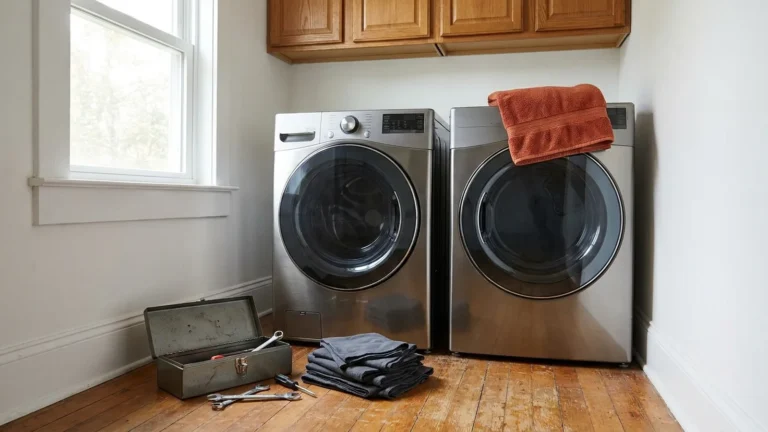
A belt job needs a nut driver, a putty knife for the top panel clips, and patience. Take a photo of the belt path before removing anything. Give yourself plenty of time rather than rushing it on a lunch break. If something feels beyond you, a service visit costs less than a mistake.
How do I stop my dryer from not spinning again?
Clean the lint screen after every load, clear the vent duct and blower housing regularly, avoid overloading, and replace the belt and idler pulley as a pair when one wears out. Poor airflow and heavy loads add wear over time.
A drum packed with wet jeans strains the belt and bearings, so keep loads moderate. A new squeal or thump is the dryer asking for attention before it quits, and it keeps a dryer not spinning from becoming a surprise.
Frequently Asked Questions
Can a dryer heat but not spin?
Yes. The heating element and the drum motor are separate systems. A broken belt or failed idler pulley stops the drum while the heater still works. Because nothing tumbles, clothes can scorch in one spot, so turn the dryer off right away. Running it that way risks damaged fabric and overheated parts.
Can a bad belt cause a humming noise?
Sometimes, but usually not. A snapped belt lets the motor spin freely, so you hear a motor running without turning the drum. A hum with no motor movement points more to a motor that can’t start or a jammed blower. Do the hand-spin test before buying anything.
Do all dryers have a start capacitor?
No. Many models have none, which is why online advice to swap a capacitor can mislead you. Check your model’s parts diagram or manual before ordering one. Buying parts first and diagnosing second is the most common way people waste money when a dryer is not spinning.
Why does the drum spin by hand but not by itself?
A drum that spins easily by hand but not under power means the drum is not the problem. The belt, idler pulley, or motor is. If the belt is intact, the motor start system or a safety switch is next. A stiff drum would point to a bearing or blower jam instead.
Is it safe to run a dryer that won’t tumble?
No. Without tumbling, heat concentrates on one pile of clothes and parts can overheat. Stop the cycle, unplug the dryer, and diagnose first. If you smell burning or see scorched fabric, leave it off until a technician checks it.
Why does my dryer start and then stop?
Start-then-stop usually means a safety or airflow problem. A restricted vent can trip the thermal cutout, a weak door switch can drop power, and a tired motor can overheat and shut itself off. Clear lint and the vent first, then test the door switch with a multimeter.
Does Child Lock stop the drum from turning?
Yes, on models that have it. Child Lock disables the Start button, so the cycle never begins and the drum stays still. Samsung’s support guidance lists it as a first check. Hold the Child Lock button as your manual describes, then try starting a cycle again.
How long does a dryer belt last?
It varies widely with load size, how often you run the dryer, and how well the vent is kept clear. There’s no honest single number. Replace it when it looks glazed, cracked, or frayed, and replace the idler pulley with it. A squeal while turning is an early sign.
Does a gas dryer differ from an electric one for this problem?
The drum, belt, and motor are the same, so the diagnosis is identical. The difference is safety. A gas dryer has a valve and burner, so close the gas valve before moving the unit. An electric dryer uses 240V, so unplug it. Local codes decide what a homeowner may touch.
Myth: does replacing the belt always fix it?
No. A new belt only helps if the belt was the failure. If the idler pulley, motor, blower, or bearings caused the problem, the new belt will slip or snap again. Spin the drum by hand, listen to the motor, and inspect the idler before you order. Diagnosis beats guessing every time.
Conclusion
Back to the stalled drum and the wet towels. The real fix was never a part, it was an order of operations. Unplug, spin the drum by hand, listen, and let the clue pick the cause. That small habit separates a repaired dryer from a pile of returned parts.
The angle worth remembering: sort dead from running first, then free from stiff. Those two checks cut the list of causes in half before you touch a screwdriver. A dryer not spinning rarely needs a mystery solved, just a methodical look.
Looking ahead, more dryers ship with electronic boards and sealed assemblies, which makes the simple mechanical checks even more valuable for homeowners. Your next step is the hand-spin test. For wider help, read our guide to washer and dryer repair or see how dryer venting affects the whole system.
So what will your drum tell you when you give it a gentle push?