
Sewer Inspection (Cost, Process and What to Do With the Results)
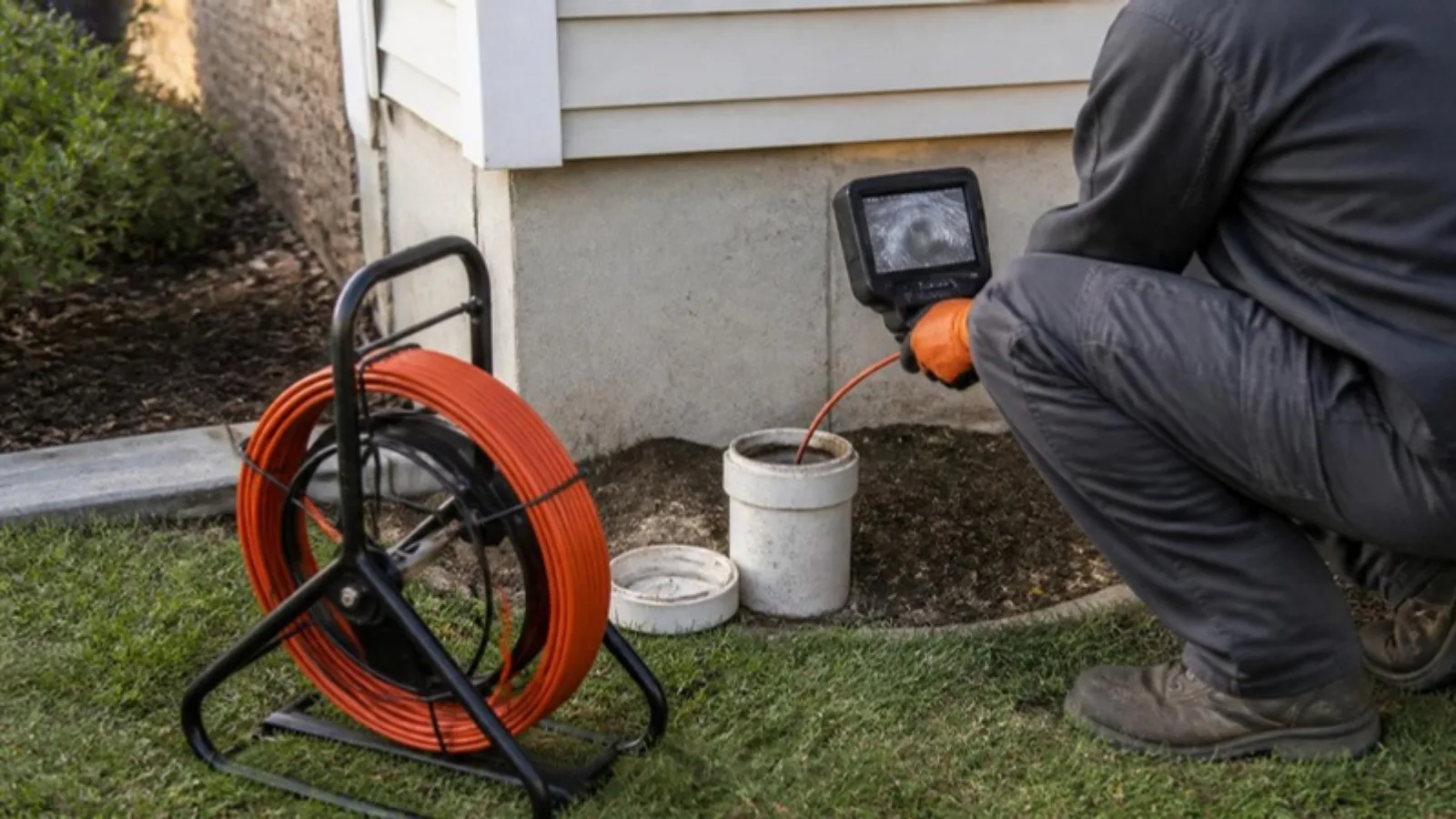
A typical sewer inspection takes roughly 30 to 60 minutes and costs a few hundred dollars. The repair it can uncover often runs into the thousands. That gap is the whole reason this small appointment matters. Say you’re two weeks from closing on an older house, the toilets flush fine, and the home inspector never mentioned the pipe under the yard. A camera is the only way to see that pipe without digging.
This guide explains what a sewer inspection finds, what it costs, who should do it, and how to read the result. It also covers what to do when the news is bad, because that’s where most buyers and owners get stuck. I’ll say when a licensed plumber is needed, and local rules vary, so check yours.
Quick answer
- A sewer inspection sends a waterproof camera through the line that carries waste from your house to the city sewer or septic tank.
- Standalone pricing in the sources I checked ran from about $100 to $500, with some city contractors quoting higher.
- It is usually not part of a standard home inspection, so you have to order it.
- Book it early enough to fit inside your inspection contingency.
What is a sewer inspection, and what does the camera actually see?
A sewer inspection is a video check of the lateral, the buried pipe between your home and the municipal sewer connection or septic tank. A technician feeds a small camera into the pipe and watches the live footage. The point is to see cracks, roots, sags and blockages that you can’t spot from the surface.
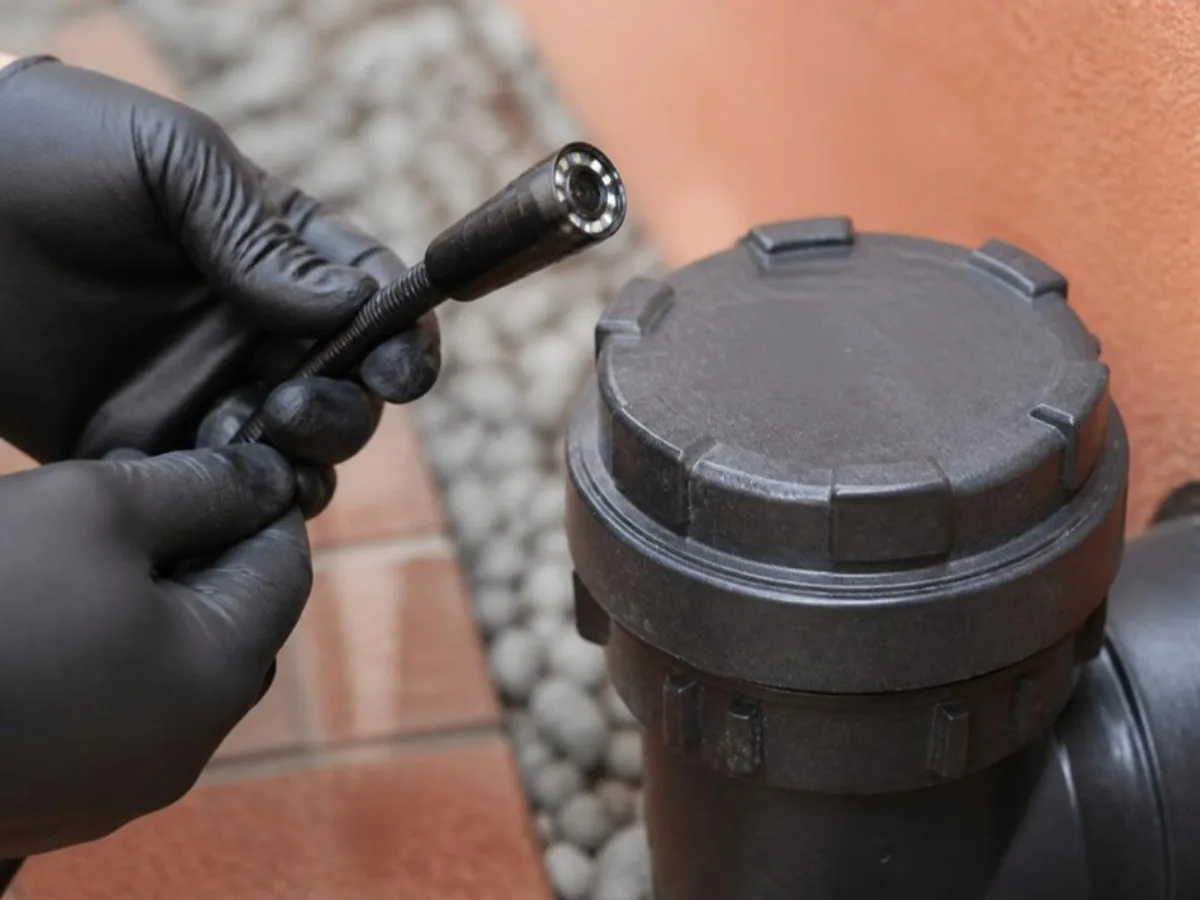
Under the InterNACHI sewer scope standards of practice, the inspection covers the lateral from the house, at or near the foundation, out to the tap or tank. The same standard says the scope isn’t exhaustive and doesn’t predict future condition. It is a snapshot of one day.
Is a sewer inspection part of a normal home inspection?
No, in most cases it isn’t. A general home inspection looks at what’s visible and reachable, and the buried lateral is neither. Rocket Mortgage notes that a sewer scope is typically a separate service you request on top of the home inspection.
Some inspection companies sell it as an add-on and send a second technician. Others only refer you out. Ask directly when you book, and get the scope in writing so nobody assumes the other party covered it.
How does a sewer scope inspection work step by step?
A sewer scope inspection starts at the cleanout, a capped pipe fitting usually found outside near the foundation or in the basement. The technician opens it, feeds in a flexible rod with a camera head, and records as it travels toward the street. Most visits fit inside an hour.
- Confirm access. Someone has to open the cleanout, and the homeowner often has to be present or approve it.
- Run water in the house so the technician can see flow and any standing water.
- Push the camera along the line and watch for defects.
- Note the distance to any problem, usually with a footage counter.
- Save the video and write up the findings.
What a sewer line inspection report should include
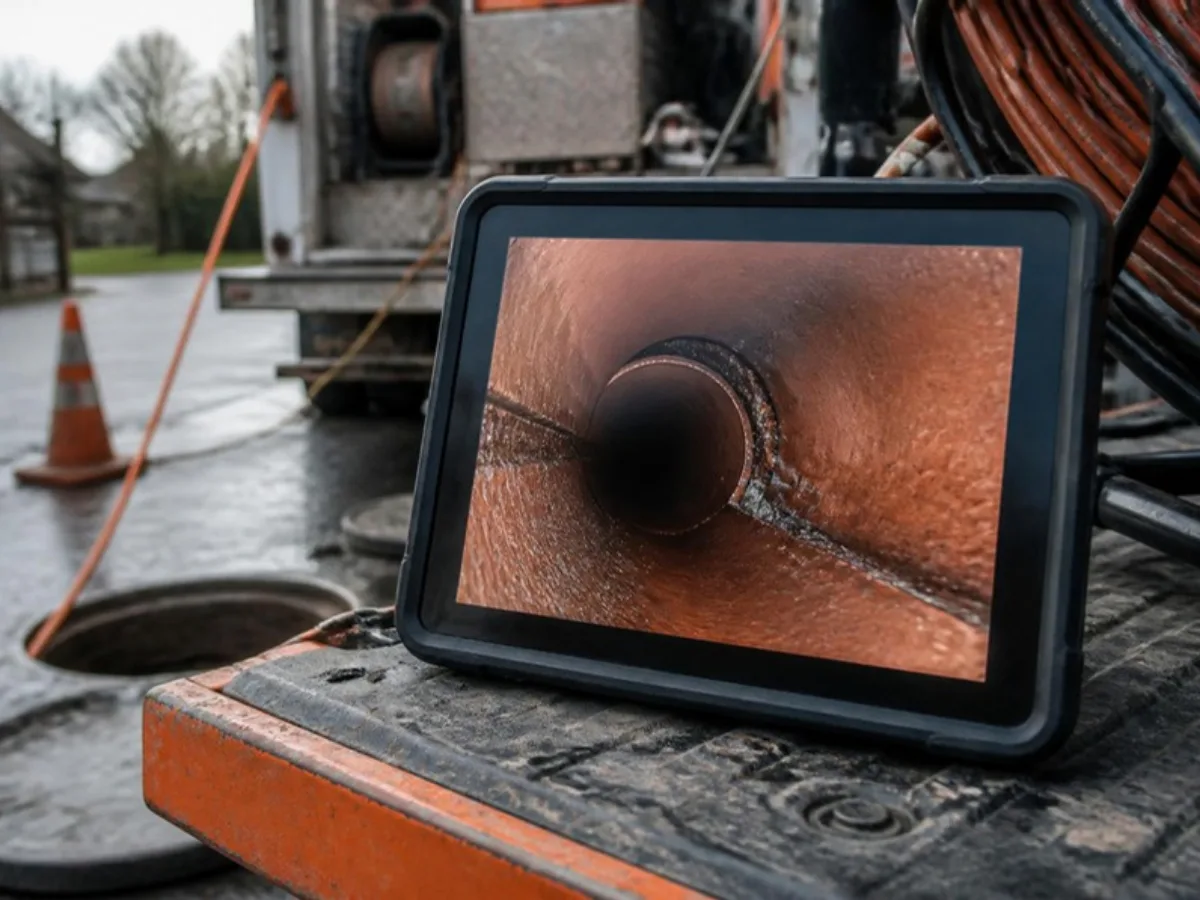
A good sewer line inspection report pairs written findings with the actual video. The standard doesn’t require the inspector to mark every defect on the footage or estimate repair costs, so ask for both up front. Without the video, you can’t hand a plumber the exact spot to quote.
Look for the pipe material if it was identifiable, the approximate point where each problem sits, and a plain statement of anything the camera couldn’t pass. That last item matters more than most people expect.
How much does a sewer inspection cost, and what changes the price?
Expect roughly $100 to $500 for a standalone sewer inspection, though sources disagree on the edges. Rocket Mortgage cites $100 to $500, and ALCOVA cites $125 to $350. One New York contractor guide put the span much wider, up to $1,200, so big metro areas can sit above the national figures.
| What drives the price | How it moves the cost |
|---|---|
| Location | Dense, high-cost metros tend to charge more |
| Line length | A long lateral takes more time |
| Cleanout access | No cleanout can mean added labor or a separate fee |
| Company type | A plumber, inspector and scope-only firm price differently |
| Add-ons | Locating the line or a written report can cost extra |
A common mistake is comparing two quotes without asking what each includes. Say one is $150 and the other $350. One may hand you the video and a report. The other may give you a verbal thumbs-up.
Who should do it: a plumber, a home inspector or a dedicated scope company?
Any of the three can do a competent job, so pick on scope and independence, not title. A plumber can usually fix what the camera finds, which is handy and also a conflict of interest. A home inspector or a scope-only firm has no repair work to sell.
- Plumber: knows how to clear and repair lines. Be cautious if the quote is very cheap and followed by a repair pitch.
- Home inspector: convenient when bundled, and the report follows a familiar format. Check that they carry the right camera for long runs.
- Dedicated scope company: inspection only, which suits buyers who want a neutral read.
My take: if a repair company offers a "free" camera look, treat it as a sales call. Some homeowners call these offers a trap, and that caution is reasonable. A paid, independent look gives you something to negotiate with.
When is a sewer inspection worth it, and when can you skip it?
It’s worth it whenever the pipe is old, you can’t see its history, or a repair would hurt. That includes most resale purchases of older homes, houses with mature trees near the line, and homes where you’ve seen slow drains. The inspection costs a small fraction of a dig-up.
You might skip it on a brand-new build with recent municipal sign-off, though even then a quick look can catch a construction error. A decision rule helps here.
- Pick the inspection if the home is older than the neighborhood’s sewer upgrades, or you don’t know the pipe material.
- Pick it if the seller can’t show records of past repairs.
- Skip or delay it only if you’re already paying to replace the line.
A clean scope from a year ago doesn’t carry forward forever either. Roots and settling keep working.
What warning signs say you need one now?
Repeated slow drains, gurgling sounds, sewage odors outdoors, and patches of unusually green or soggy lawn all point toward a damaged line. Any of these deserve a camera rather than another bottle of drain cleaner. Don’t take comfort from toilets that still flush.
Other clues include backups in the lowest drain in the house, and recurring clogs a plumber keeps clearing without finding a cause. Those usually mean the problem sits in the lateral, not in the fixture.
What defects can show up (roots, bellies, offsets, cracks, old pipe materials)?
The camera mostly finds a handful of problems. Each has a different cause and a different level of urgency.
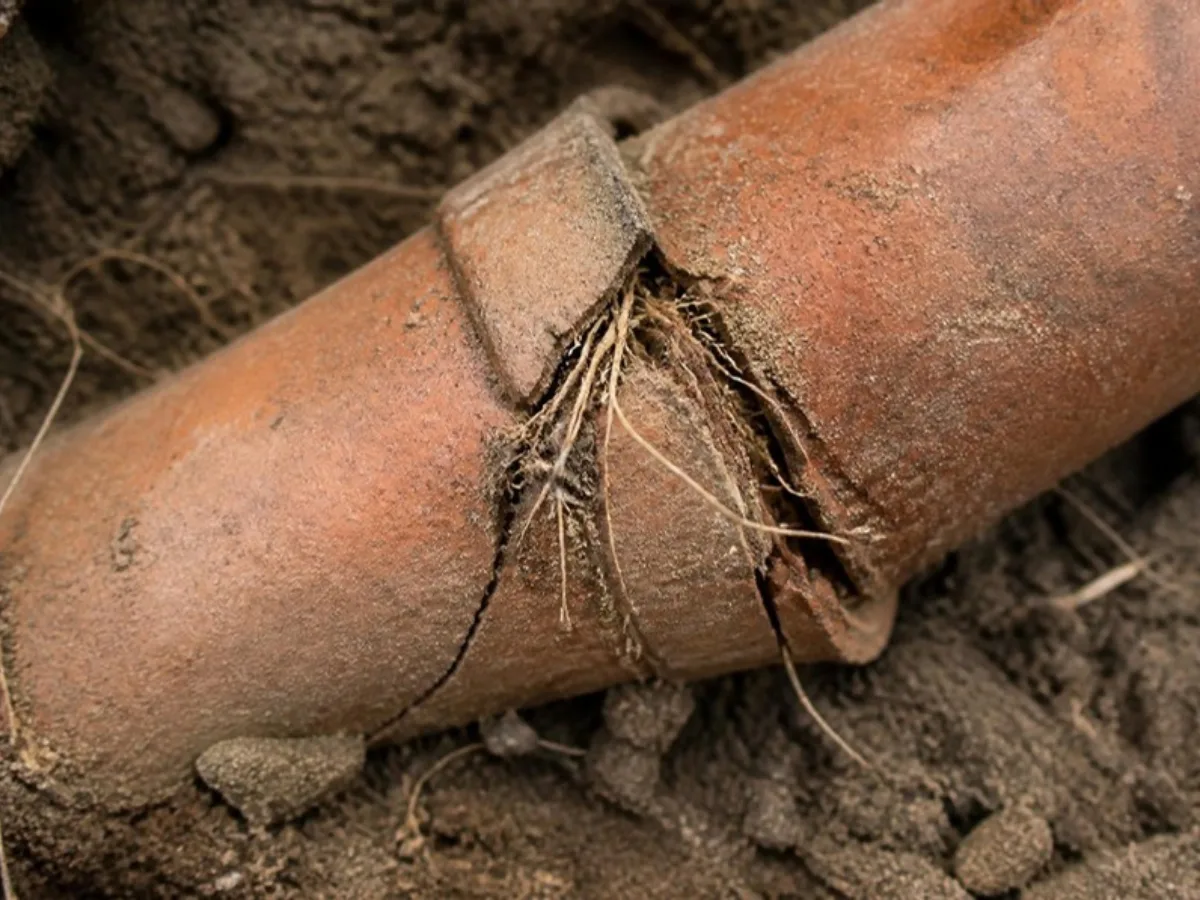
- Root intrusion: fine roots enter through joints and then thicken. Common near mature trees.
- Belly or sag: a low spot where the pipe has settled, so water and waste pool instead of draining.
- Offset joint: two sections no longer line up, which catches debris and lets roots in.
- Cracks and breaks: visible splits, or pipe that is crushed, separated or collapsed.
- Old materials: Orangeburg, a tar-and-fiber pipe, is known to deform, and older clay and cast iron lines are worth a closer look.
Under the InterNACHI standard, an inspector reports things like visible cracks, root intrusion, an offset of more than a quarter inch, standing water deeper than an inch, blockages, and collapsed or egg-shaped pipe. The same standard says the inspector isn’t required to identify Orangeburg or asbestos-cement pipe, so a clean-looking report doesn’t prove the material is modern.
How do you read the report and video?
Start with the plain-language summary, then watch the video at the flagged spots yourself. A belly with a little standing water is different from a belly that holds a long pool. Roots in one joint are different from roots at every joint.
Ask the inspector three things. Did the camera reach the street connection or tank? Where exactly is each defect? Did anything block the view? A report that stops short of the connection is incomplete, whatever the headline says.
One more point worth saying out loud. The scope can’t tell you how fast a problem will get worse. It records the condition today.
What happens if the scope finds a problem?
You have three realistic paths: negotiate a credit or repair, plan the repair yourself after closing, or walk away. Which one fits depends on the defect, your contract and your budget. Don’t decide on the day you see the video.
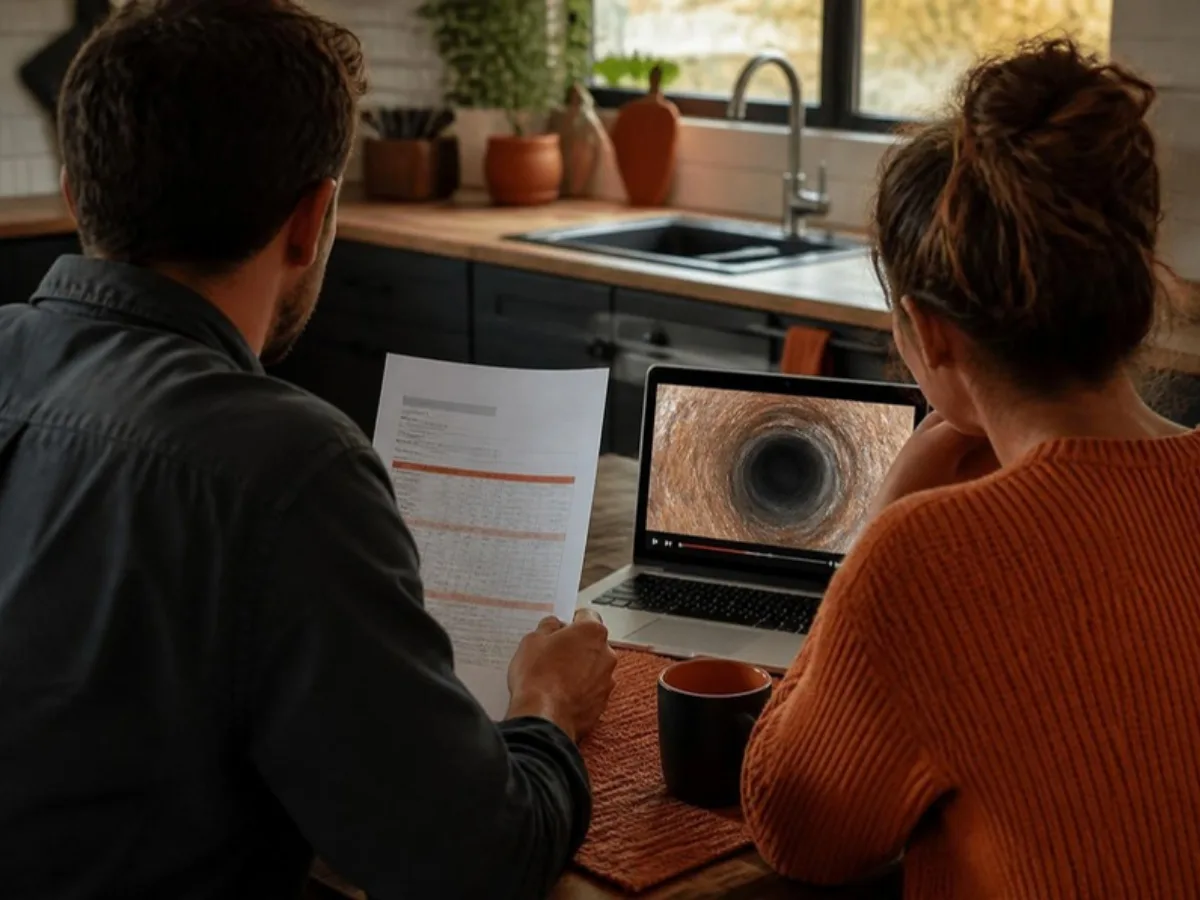
First, get a licensed plumber to look at the footage and quote the fix. A quote turns a scary clip into a number you can negotiate with. Second, check your contingency deadlines so you don’t lose your right to ask. Third, ask for a price reduction, a credit at closing, or a repair done by a licensed contractor with permits.
Here is a hypothetical. Say the camera shows roots at two joints and no collapse. A plumber might propose cleaning and monitoring, or lining the pipe. A buyer could ask the seller for a credit based on the written quote instead of a full replacement. Sellers sometimes push back, so keep the request tied to documents.
How much do sewer repairs cost compared with the inspection?
Repairs cost many times what the inspection does, and the range is wide. Rocket Mortgage cites about $2,000 to $10,000 or more, ALCOVA about $3,000 to $10,000 or more, and a trenchless-lining contractor puts full dig-and-replace jobs at $8,000 to $30,000 or more. That last figure comes from a company that sells lining, so read it as an upper marker.
What moves the price: depth, length, how much yard or pavement must be opened, pipe material, and permit and restoration costs. Spot repairs cost less than full replacement. Trenchless lining avoids a trench but isn’t right for every pipe, so ask a plumber whether yours qualifies.
Excavation and sewer work need a licensed plumber, and most places require permits. Don’t dig into a lateral yourself.
What if there is no cleanout or the scope is incomplete?
Without a cleanout, a technician may have to pull a toilet or access the line another way, which can add cost and time. Some companies won’t scope without proper access. Ask before booking whether they can reach the main line from your setup.
If the camera stops short, don’t accept a clean verdict. Ask why it stopped, whether it was a blockage, a bend or equipment limits, and what the inspector will do next. Also ask in advance how an incomplete run is billed, since some homeowners complain about paying full price for a partial scope. A written agreement saves arguments.
Adding a cleanout is a plumbing job. A licensed plumber can usually do it, and a permit may be required depending on your city.
Can you inspect the sewer line yourself?
You can rent or buy a camera, but a DIY look has real limits. Rental and purchase prices vary widely, from low daily rentals to thousands of dollars for professional gear, and the cheap kit often can’t handle bends or long runs. More important, you may not know what you’re looking at.
DIY can be fine for a quick check after a clog on a line you already own. It isn’t a good substitute during a home purchase, where a lender, seller or negotiation may depend on a credible third-party report.
How do shared laterals, septic systems and local rules change things?
Shared laterals, septic systems and local resale rules all change who owns the problem and who pays. A line shared with a neighbor can complicate repairs, and a septic system uses a different inspection process than a municipal tie-in.
Some municipalities require a lateral inspection before a sale. Emmaus, Pennsylvania is one example, with a borough fee listed on its site, but rules differ widely, so call your local sewer authority. For septic, ask a septic professional what the inspection covers, since a camera run is only one piece.
If you live in a condo or a townhouse, ask who owns each section of pipe before you pay for a scope.
How do you pick an inspector and avoid overpaying?
Ask a few direct questions before you book, then compare quotes on the same terms. The cheapest quote isn’t always the best value, and the most expensive one isn’t a guarantee.
- Do I get the video and a written report?
- What happens if the camera can’t reach the end?
- Is there a fee for locating the line or for no cleanout?
- Do you also sell repairs?
- Can you work inside my contingency window?
If you hear a quote far above the ranges in this article, ask what’s included. A basic camera look quoted well above the typical range deserves a second opinion.
Frequently Asked Questions (FAQ)
How long does a sewer inspection take?
Most sources say 30 to 60 minutes, though a few quote anywhere from a few minutes to a couple of hours. Time depends on line length, access and how many problems the technician needs to document. A blocked or heavily damaged line can run longer, and so can a house with no easy cleanout.
Does a home inspector check the sewer?
Usually not. A standard home inspection covers visible and accessible parts of the house, and the buried lateral isn’t one of them. Some inspection companies offer a sewer scope as an add-on, so ask when you book and confirm in writing.
How much does a sewer camera inspection cost?
Most sources put a standalone scope in the low hundreds of dollars, with big-city quotes running higher. Line length, cleanout access, the type of company and add-ons such as a written report all change the total. Compare what each quote includes before you compare the numbers.
Do new homes need a sewer inspection?
A new build is less likely to have age-related damage, but construction errors do happen. A scope can catch a crushed section, a bad joint or debris left in the line. It’s a judgment call. If the builder offers a warranty, ask what it covers and whether a camera check protects you.
Does homeowners insurance cover sewer line repair?
Typically not for wear and tear, age or root damage. Rocket Mortgage notes that standard policies usually exclude these causes. Some insurers sell optional endorsements for service lines, so read your own policy or call your agent. Don’t assume coverage until you’ve seen it in writing.
How often should an existing home be scoped?
There is no firm consensus I could verify. Some companies suggest regular checks, but I didn’t find a reliable standard. Ask a licensed plumber based on your pipe material, age, nearby trees and history of clogs. Scope sooner if you notice slow drains or backups.
Can the seller refuse access to the sewer line?
Yes, in practice. The seller usually controls access to the cleanout, so the scope needs their cooperation. Many contracts allow inspections during a set window, but wording varies. Ask your agent or attorney to confirm what your agreement says, and request access early so a refusal doesn’t eat your contingency time.
Is a free camera inspection from a repair company trustworthy?
Treat it with caution. A company that profits from repairs has a reason to find problems. That doesn’t mean every free offer is dishonest, but it isn’t independent. If a free look shows a serious defect, get the video and a second opinion from an inspector who doesn’t sell repairs.
What does a belly in a sewer line mean?
A belly is a low spot where the pipe has sagged, so water collects instead of flowing out. A small one may hold only a little water and cause no trouble for years. A deep or long one can cause repeated clogs. A plumber can tell you whether it needs repair.
Can I scope a septic system line?
Yes, the line from the house to the tank can be scoped, and the same InterNACHI standard treats the tank as the end point. The tank and drain field are a separate matter and need a septic professional. Ask what your local rules require for septic inspections, since they vary.
Bottom line: a small cost that protects a big decision
Back to the house you’re about to buy. Instead of hoping the pipe is fine, you can pay a few hundred dollars and see it. If the video is clean, you close with confidence. If it isn’t, you have a quote in hand and time to negotiate.
The next step is simple. Ask your agent or inspector today whether a sewer inspection fits inside your contingency window, then book an independent technician who gives you the video and a written report. If a repair is needed, use a licensed plumber and confirm permits with your city.
Have you ever found out about a sewer problem after closing instead of before?